

 1 week ago
9
1 week ago
9
PROTECT YOUR DNA WITH QUANTUM TECHNOLOGY
Orgo-Life the new way to the future Advertising by Adpathway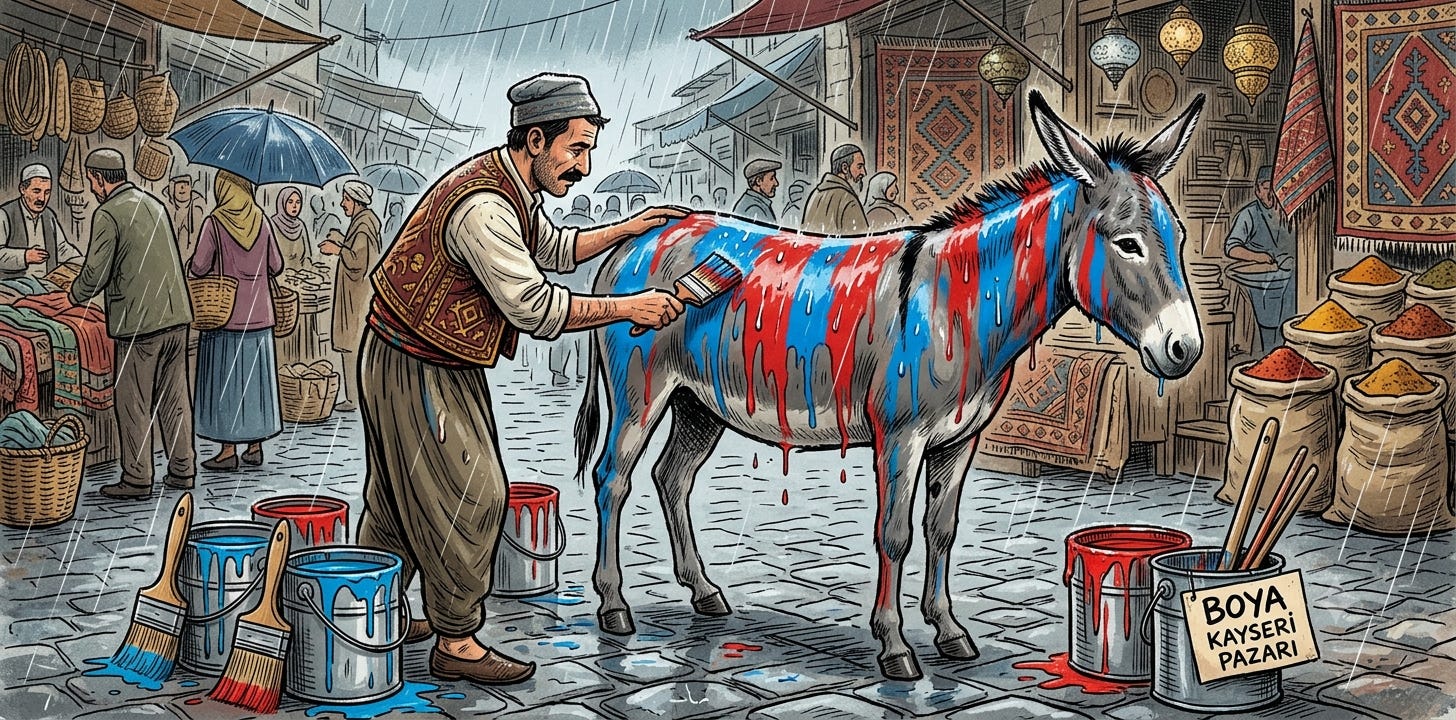
There is an old story told about a merchant in Kayseri: he buys your stolen donkey, paints it a different color, and sells it right back to you. A certain wing of academic Marxism runs the exact same racket. It takes long-established concepts from dialectical materialism, slaps a fresh coat of paint on them, and sells them back to us as brand-new discoveries.
The cunning of the Kayseri merchant is legendary in Turkey. He takes the donkey that was stolen from you, paints it head to toe, and then resells the same animal to you as if it were a completely different beast. The goods haven't changed, and you were the rightful owner all along; the only thing that shifted is the paint on its back. The two examples below show a specific circle of academic Marxists applying this precise trick—relabeling concepts borrowed from dialectical materialism and presenting them as original breakthroughs. One example is fresh, published just a few days ago; the other was written over forty years ago by an older member of the same intellectual family. Both serve the exact same function: taking Marxism's own concepts, loading them with alternative definitions, and selling them back to us under new names. Let's start with the recent one.
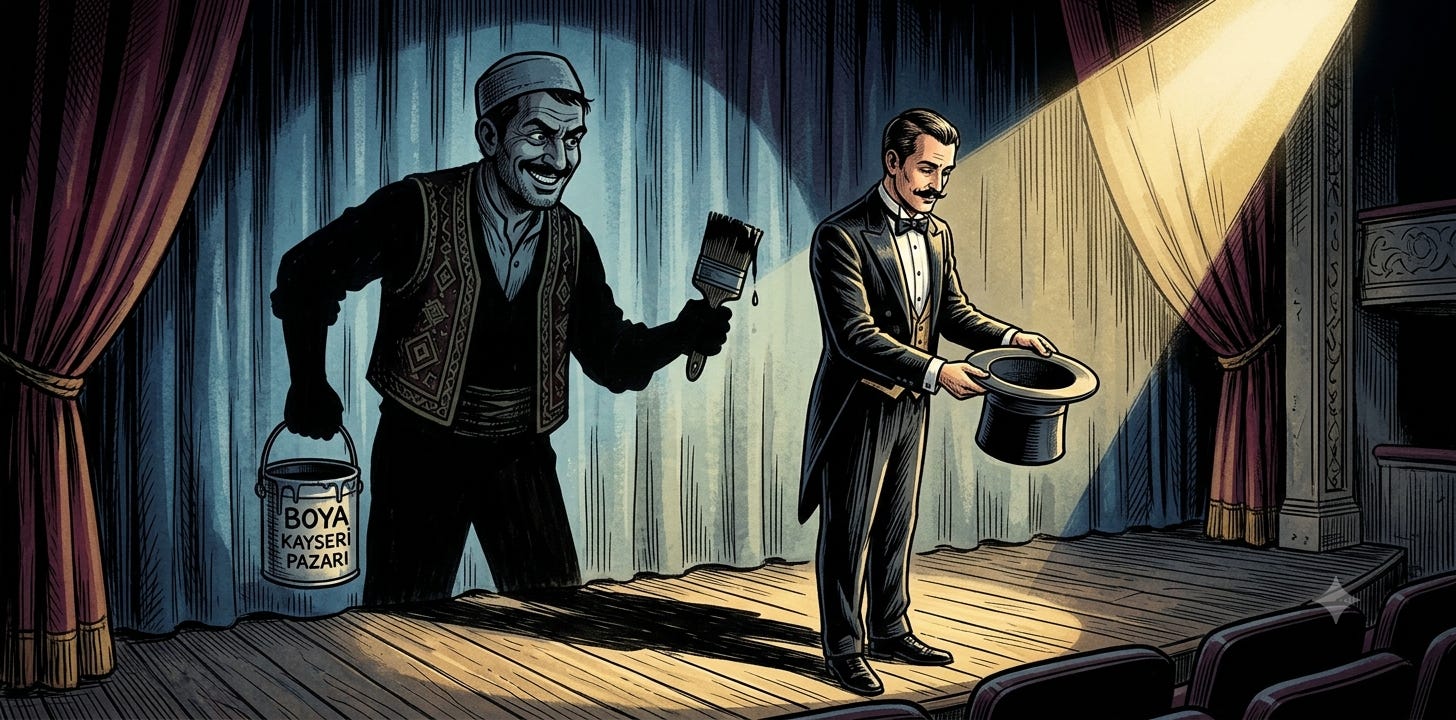
Before pulling a rabbit out of a hat, the magician shows you that the hat is empty. That's the real trick. It’s not the rabbit itself, but the moment right before it, when you are invited to believe there is nothing inside. Alex Taek-Gwang Lee performs a move remarkably close to this in an article titled "The Paradox of Communism," published on his Substack on July 25, 2026. Lee is hardly a newcomer to the field. He teaches philosophy and cultural studies at Kyung Hee University in Seoul, directs its Technology Center under the College of Humanities, and in 2016 edited the third volume of The Idea of Communism series—a project that brought together many of post-Marxism’s most famous names. Shortly before that, he published Communism After Deleuze. When he writes on communism, he isn't groping around for vocabulary. He knows precisely how much weight each word carries in this debate and what work it is supposed to do.
Here, we need to clarify which tradition these concepts belong to, as geography can easily mislead. Lee teaches in Seoul, but his intellectual pedigree is thoroughly European and North American. The Idea of Communism series he co-edited charted a line from Badiou to Žižek, and on to Hardt and Negri. For the past fifteen years, these figures have belonged to the very circle trying to keep "communism" alive as a philosophical category—redefining it in increasingly abstract terms precisely when concrete political organization seemed most difficult. Lee’s own recent writing follows this trend closely; an essay he published a few weeks ago, "Badiou's Paradox," repeats the exact same maneuver, reframing communism not as a historical task, but as a structural tension. None of this makes Lee’s background irrelevant, of course, but it demonstrates one key point: the critique here is not an outside objection imported into a Western debate. On the contrary, it arises directly from within the academic Marxist tradition Lee himself chose.
Nor is this critique of that circle new. Domenico Losurdo spent a major part of his life targeting academic Marxism directly. He argued that Western Marxism had steadily drifted away from the concrete work of building and defending actually existing socialism, turning instead into a self-referential philosophical project that grew increasingly refined precisely as it became functionally useless.
What Losurdo diagnosed as a historical drift has, over the intervening decades, hardened into an almost institutional style. What emerged is a mode of theorizing that offers no utility to any actual movement, yet presents its safe distance as a mark of intellectual rigor.
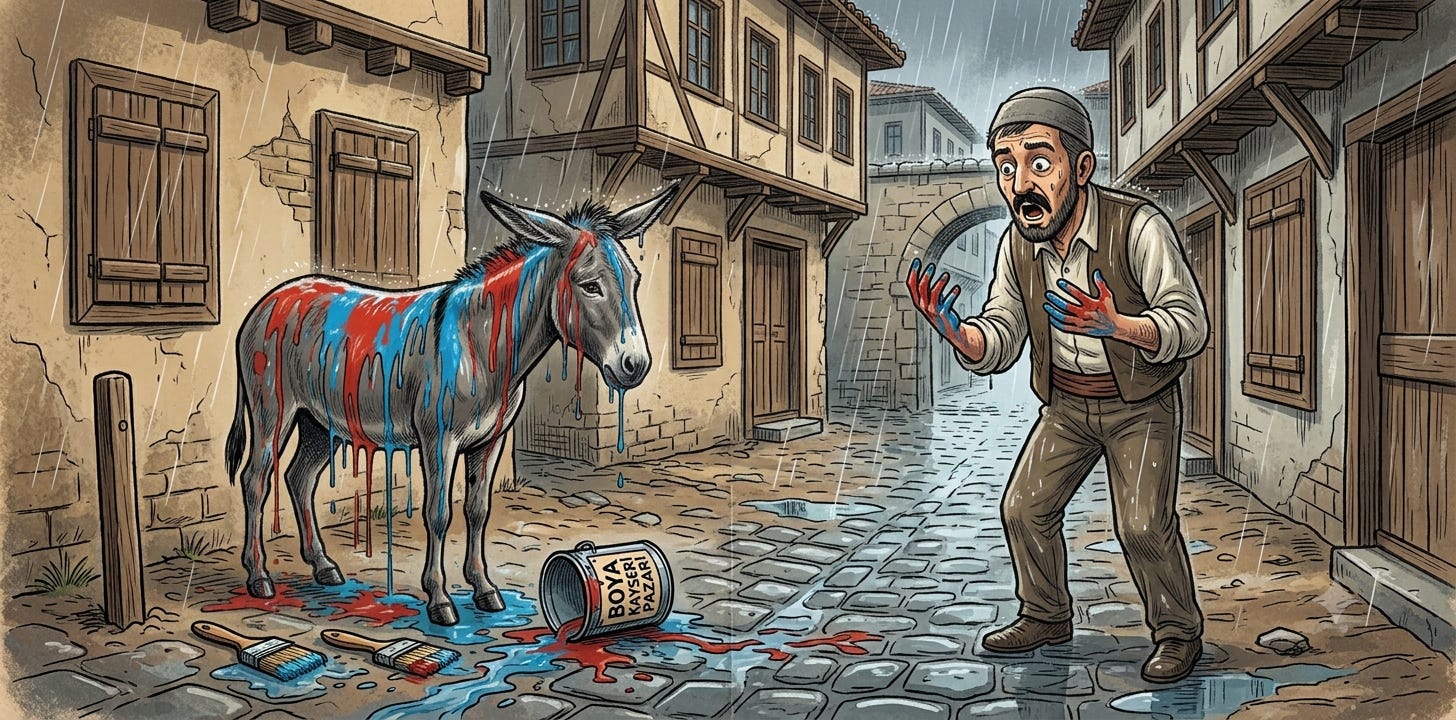
Lee begins his piece by drawing a sharp line between contradiction and paradox. A contradiction, he tells us, is the simultaneous assertion of two incompatible propositions. A paradox, on the other hand, occurs when reasonable assumptions lead to a conclusion that upends its own framing context. So far, so good; this is a real and defensible distinction. He then applies this to communism and offers a threefold proposition:
The proletariat is a subject that succeeds only by abolishing itself.
The commons belongs to everyone precisely because it belongs to no one.
A particular class becomes universal by negating itself.
Lee calls these three paradoxes and devotes a section of his essay to each.
The problem, however, is that none of these are actually paradoxes. Not even by his own definition.
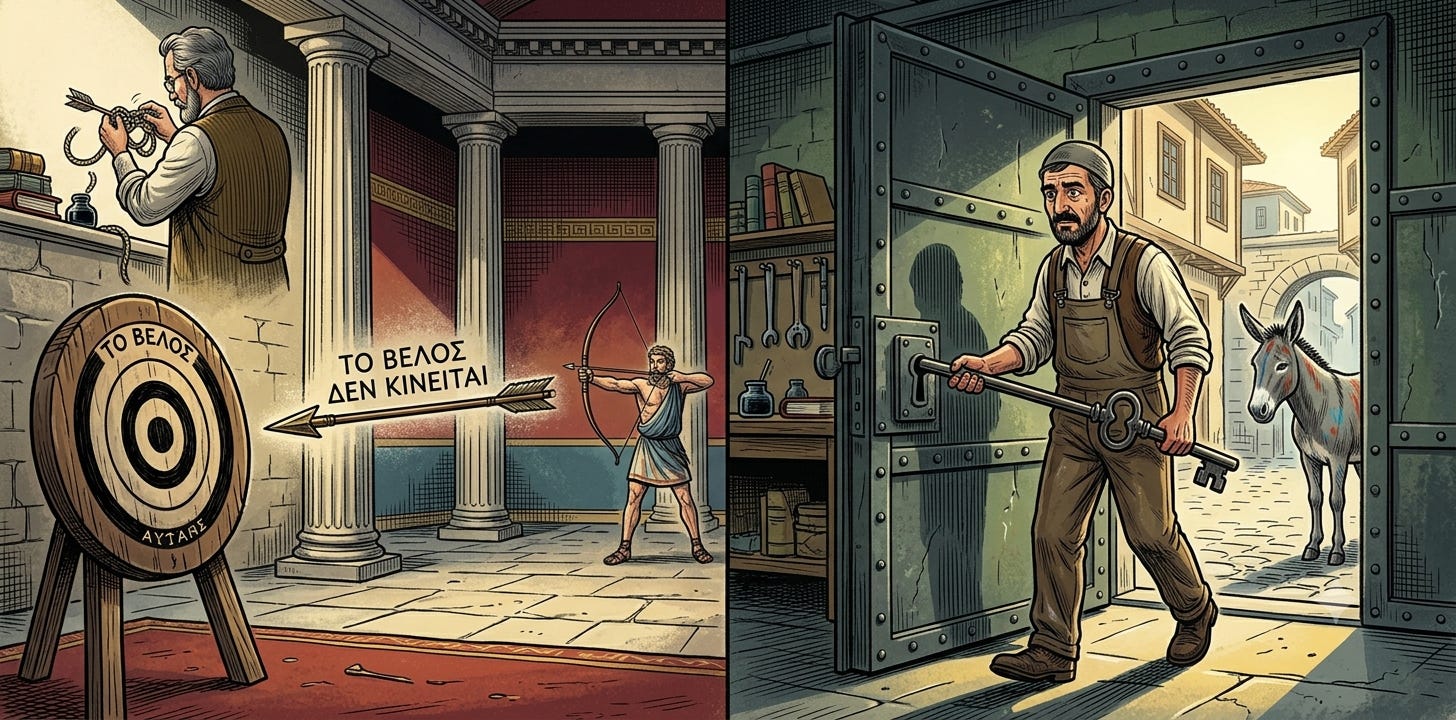
Take the first one, as it offers the cleanest test case. The proletariat abolishes classes, and in doing so, eliminates its own existence as a class. That is Lee’s example in its barest form. Now let’s apply his own criterion to it: Does this upend the framework it started with? It does not. The existence of a class is tied to a material conflict; once that conflict is removed, there is simply nothing left for the category of class to describe. This is not a framework collapsing under its own weight. On the contrary, it is a framework functioning exactly as intended, arriving straight at its expected outcome. Compare this to a genuine paradox—Zeno’s arrow, for instance. We know motion exists, yet the argument demonstrates it to be mathematically impossible, and no matter how long you think about it, the deadlock remains unresolved. Or take the liar paradox: "This statement is false." Try assigning a truth value to that, and you will bounce back and forth forever. Call it true, and it claims to be false; call it false, and it turns out true. That is a real paradox—a loop with no way out. There is no such impasse in the proletariat abolishing itself as a class. Accept the premises, and the conclusion brings no surprise; the process resolves as expected. At most, this is a textbook example of what Hegel called "determinate negation," which Marx inherited as "a negation that eliminates something while carrying it forward positively." It is a category emptying out from within, not one shattered from the outside. Lee defines paradox correctly; unfortunately, his chosen example fails to match the definition. The error here isn't conceptual. The real problem is the mismatch between the concept and the example. The other two examples fair no better when put to the same test.
Consider the commons: Lee claims it belongs to everyone because it belongs to no single person. This sounds surprising only until you realize what outcome it actually produces. Private property is defined by enclosure and exclusion. A specific owner uses a legal title to keep everyone else outside the fence. Remove the enclosure, and access doesn't plummet into some paradoxical non-relation; it simply becomes open to anyone who needs it, because the mechanism restricting it no longer exists. Nothing here upends the framework of property. Removing the fence merely allows the logical structure to run its natural course.
The third example is no different: Reaching universality through the negation of a particular class identity isn't even a new conclusion. It is one of the oldest paths in classical theory, laid out by Marx in his Introduction to the Critique of Hegel's Philosophy of Right: The proletariat becomes a universal class precisely because it has no particular interest left to defend. Lee’s own term for this is "determinate negation." That term is spot on, and just as clearly, there is no paradox anywhere in sight. "Determinate negation" is not dialectics running headfirst into an insurmountable wall; it is dialectics doing its job. In short, all three of Lee's examples fail his own test.
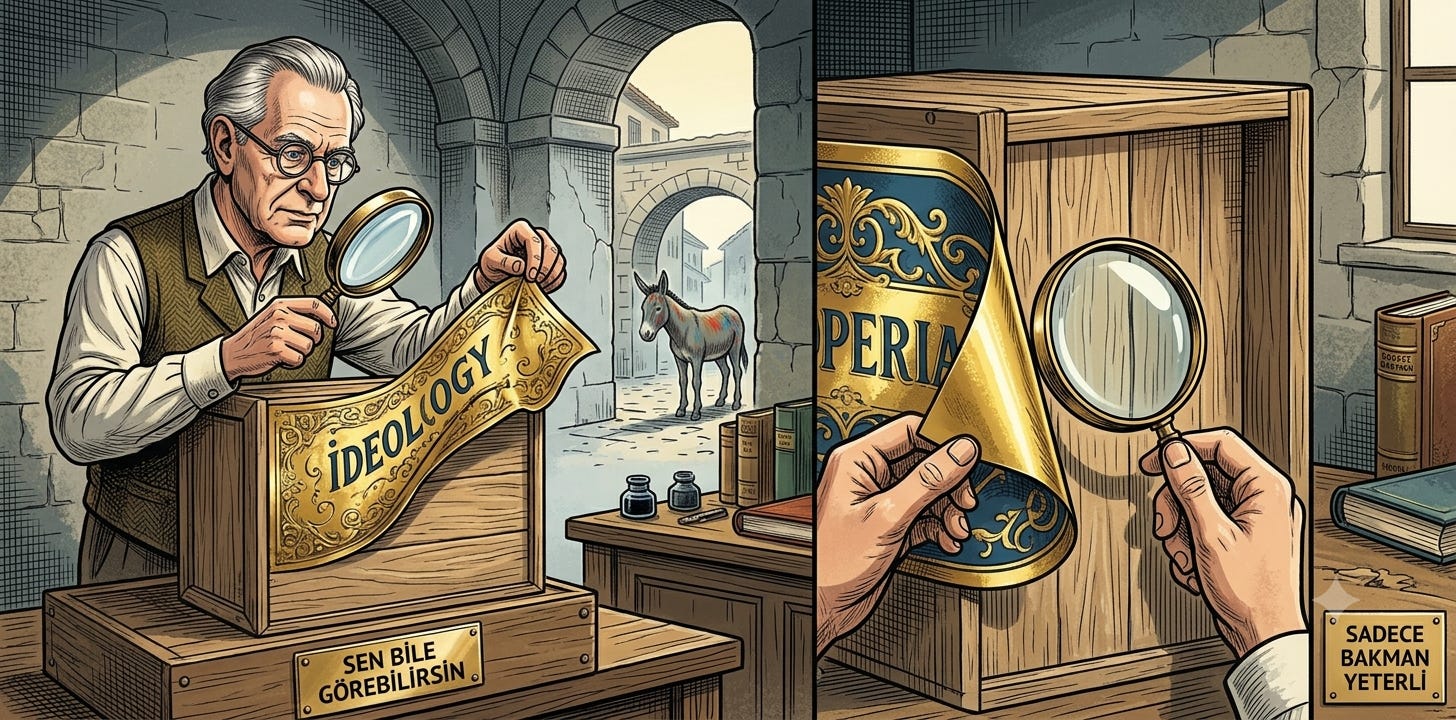
A point needs to be stated plainly here to head off any potential objections. You don't need to stand on Marxist ground to see all this. Without accepting a single premise of historical materialism, anyone can notice that the test applied to Lee fails even on his own terms. Indeed, one can arrive at the exact same conclusion from a source with zero sympathy for communism. Karl Popper, who spent a significant part of his career trying to dismantle precisely the kind of thinking Lee exhibits here, had a name for adopting a term for the prestige it carries rather than the work it performs: Essentialism. Whether Lee has this term in mind or not, the shape of his argument fits it to a tee. The word "paradox" arrives carrying a distinct intellectual weight—connotations of depth, insolubility, the sense of witnessing something genuinely strange. What Lee labels a paradox is actually a respectable, highly familiar Marxist thesis. It has been in the literature since the nineteenth century, doing its work without any need for such grand labels.
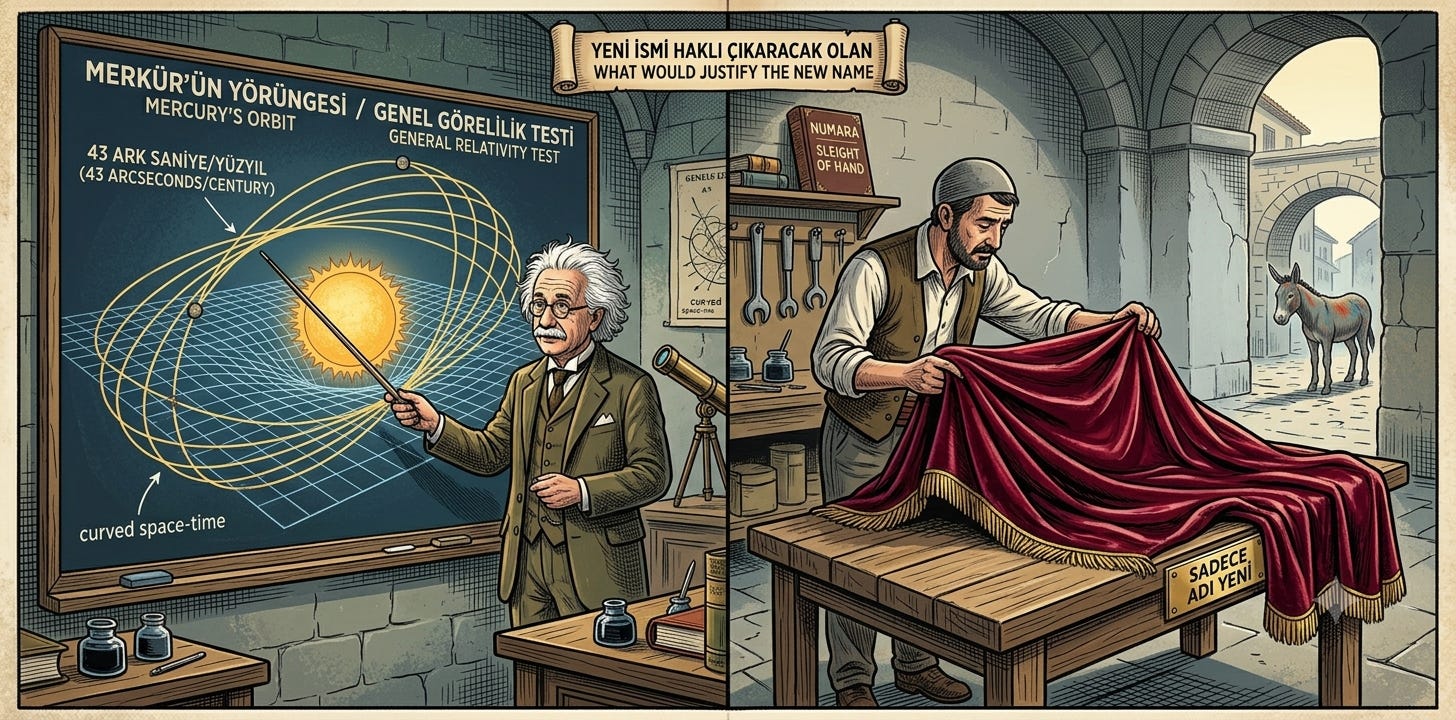
What Would Justify the New Name
Before rejecting relabeling out of hand, there is another question to ask, because redefining terms is not inherently a sin. Kuhn redefined "paradigm." Gramsci redefined "hegemony." Philosophy does this constantly. Sometimes it is precisely the right move to make. But there is a simple test to measure whether such a move is earned: Does the new framework solve something the old one couldn't, or does it organize scattered facts more cleanly than its predecessor? Einstein’s theory of relativity passes this test with ease. Newton’s physics could not account for the perihelion precession of Mercury; relativity could. The old framework genuinely gave way to one that did more work. Lee’s relabeling fails this benchmark. What's more, he admits it himself. He writes that the mathematical notation he uses to formalize the commons does not prove communism, that politics cannot be deduced from an equation, and that formalization merely "clarifies the formal structure of the argument." A formalization that does nothing beyond clarifying form produces no new predictions and solves no previously intractable problems. The self-abolition of class, the ownerless nature of the commons, the transition from the particular to the universal... all of these have been fully explicable since the nineteenth century through the concept of "determinate negation," without needing the word "paradox" at all. The new label doesn't retire the old framework; it merely drapes the same ground in heavier, more expensive-looking prose.
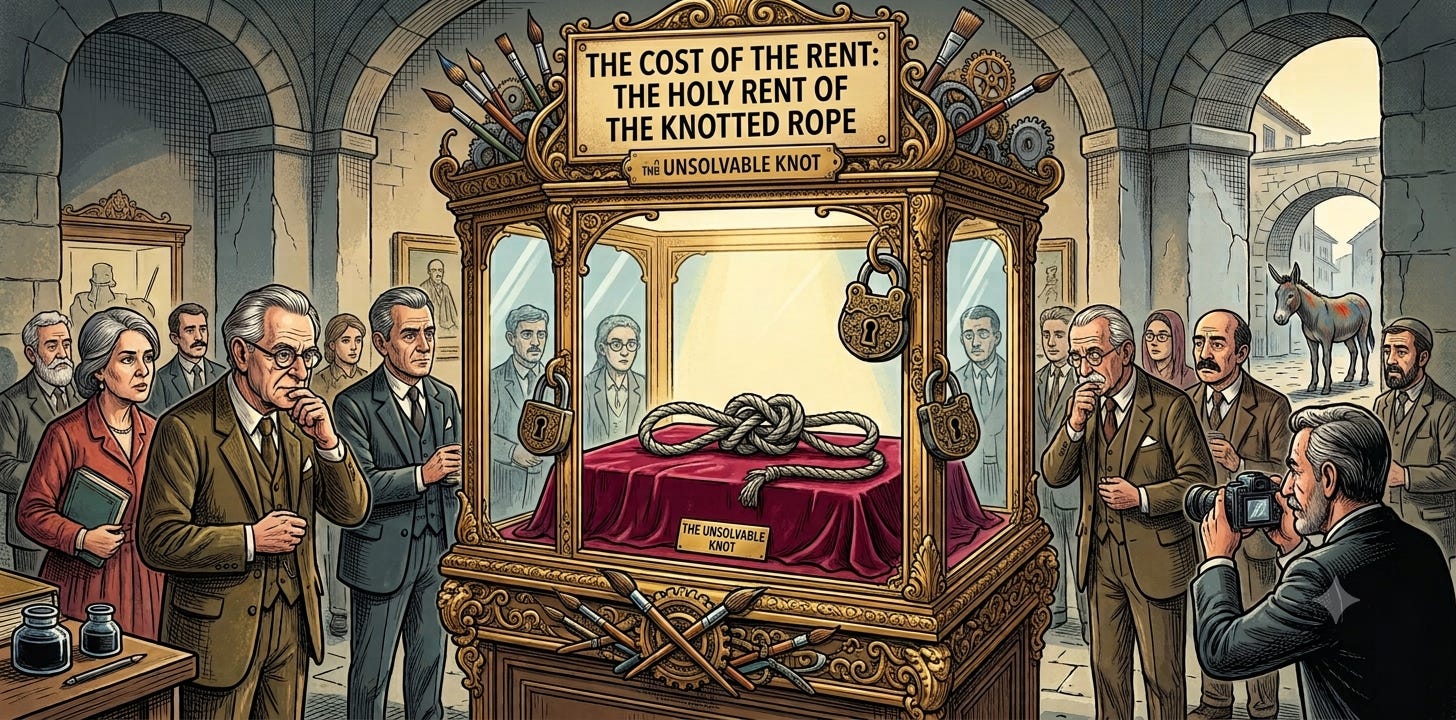
None of this is an indictment of the revolutionary content Lee purports to defend. Quite the opposite. On the surface, the essay appears to safeguard this content, wrapping it in a language that signals seriousness and rigor. But borrowing a prestigious term to describe a sound, established thesis doesn't protect that thesis. It obscures it—and deliberately so. It transforms a problem resolved over a century ago into a mystery supposedly waiting to be unraveled, as if the real work were still ahead of us. The eleventh of Marx’s Theses on Feuerbach retains its sharp relevance here: Philosophers have only interpreted the world in various ways; the point is to change it. Relabeling an established concept does not push that project of changing the world forward by a single millimeter. It simply wraps it in the aesthetics of an unsolved riddle. That, too, counts as a kind of resolution—but the wrong kind. The maneuver allows the knot to be admired, not untied.
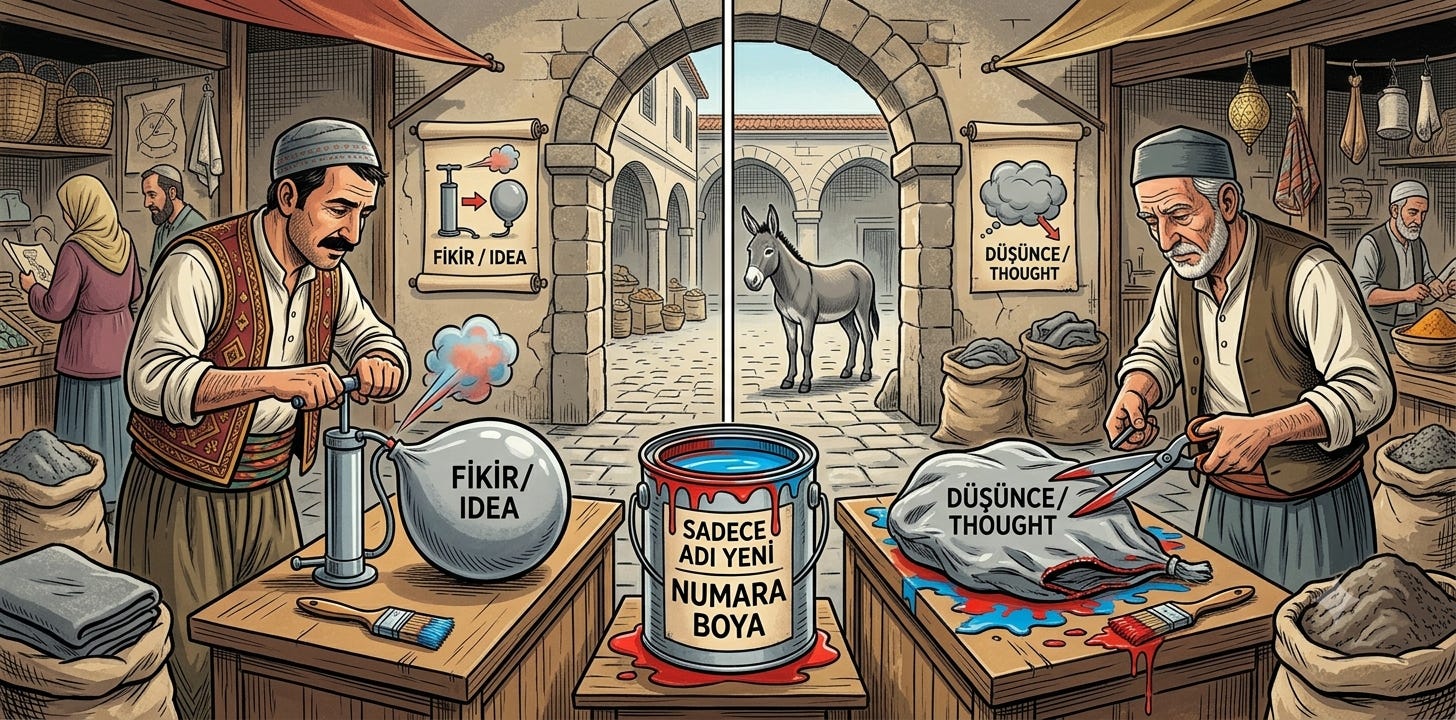
Lee’s move is neither new nor isolated. Over forty years ago, another member of the very same academic Marxist tradition made a structurally identical move from the exact opposite direction. The Italian Marxist philosopher Lucio Colletti, during the peak of his influence—before later breaking with communism and drifting toward liberalism—targeted one of the foundational categories of dialectics: contradiction. Where Lee inflates a standard Marxist thesis by calling it a paradox, Colletti did the reverse. He tried to defuse a genuine dialectical contradiction by reducing it to a mere logical opposition. The direction is inverted, but the trick is identical. Both take an existing concept, quietly redefine it, slap a new name on it, load it with different weight, and present the renaming as a discovery. One inflates the concept, the other deflates it; both are selling us the exact same goods under a different coat of paint.
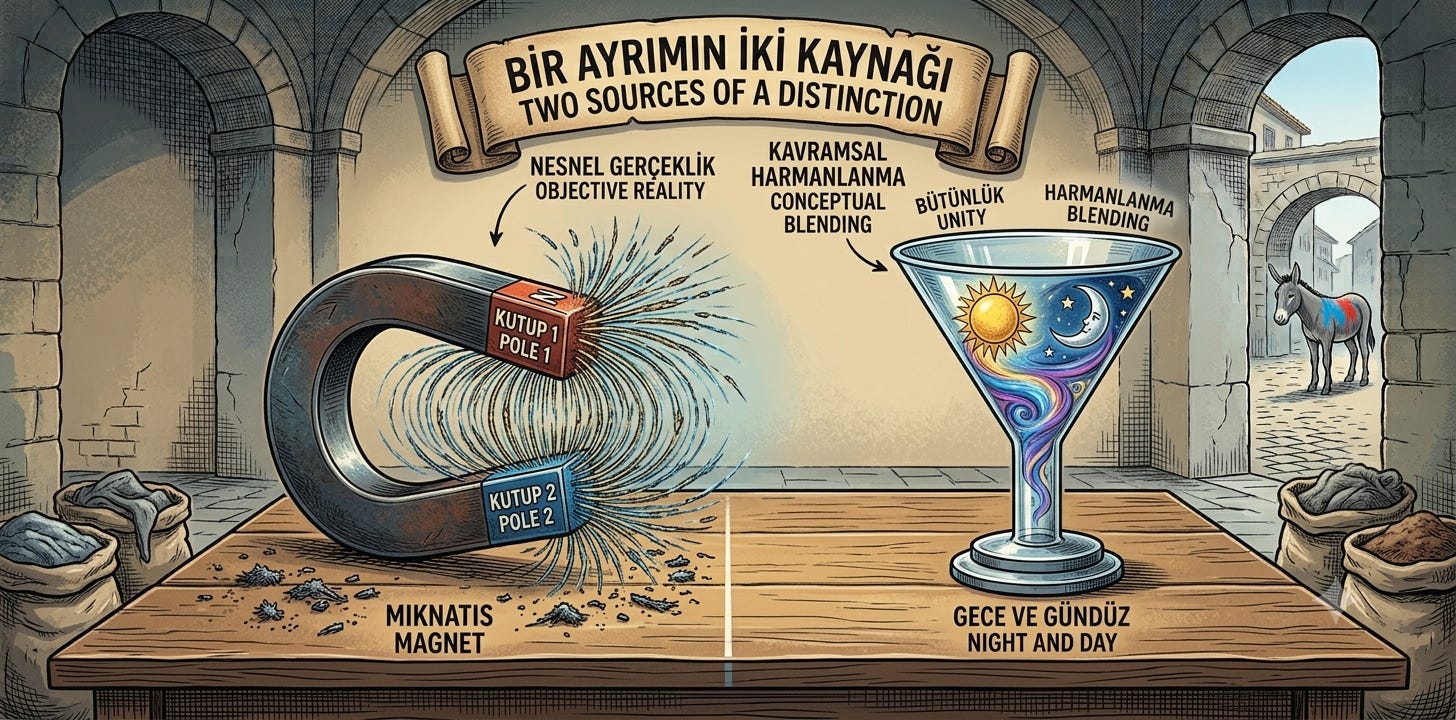
What was the distinction Colletti insisted upon? To him, opposition was one thing, contradiction quite another. An opposition was a relation between two extremes that excluded each other but could exist independently: health and sickness, life and death, night and day. There was no middle ground between them; when one was present, the other was absent, yet one could still be conceived without the other. Contradiction was different: here, the opposing ends mutually constituted each other, forming an inseparable unity. The capitalist and the wage laborer, or the positive and negative poles of a magnet, fell into this second category. Without the one, the other simply does not exist.
The roots of this distinction stretch back to Hegel. In the doctrine of "Essence" in his Science of Logic, Hegel speaks first of Gegensatz—opposition. This is the relation between two terms that appear external to one another, still mutually independent. Then this opposition deepens, turning into a movement where the opposing ends both presuppose and exclude each other—a movement he calls Widerspruch, or contradiction. What Colletti did was take this Hegelian schema and turn it against Hegel. In his view, Hegel was regularly elevating mere oppositions to the level of dialectical contradictions, presenting situations that didn't violate formal logic as if they were grand dialectical dramas.
At first glance, this distinction seems to perform real work. But the moment you look at actual examples, the material chosen by both Colletti and Hegel begins to strain the boundary.
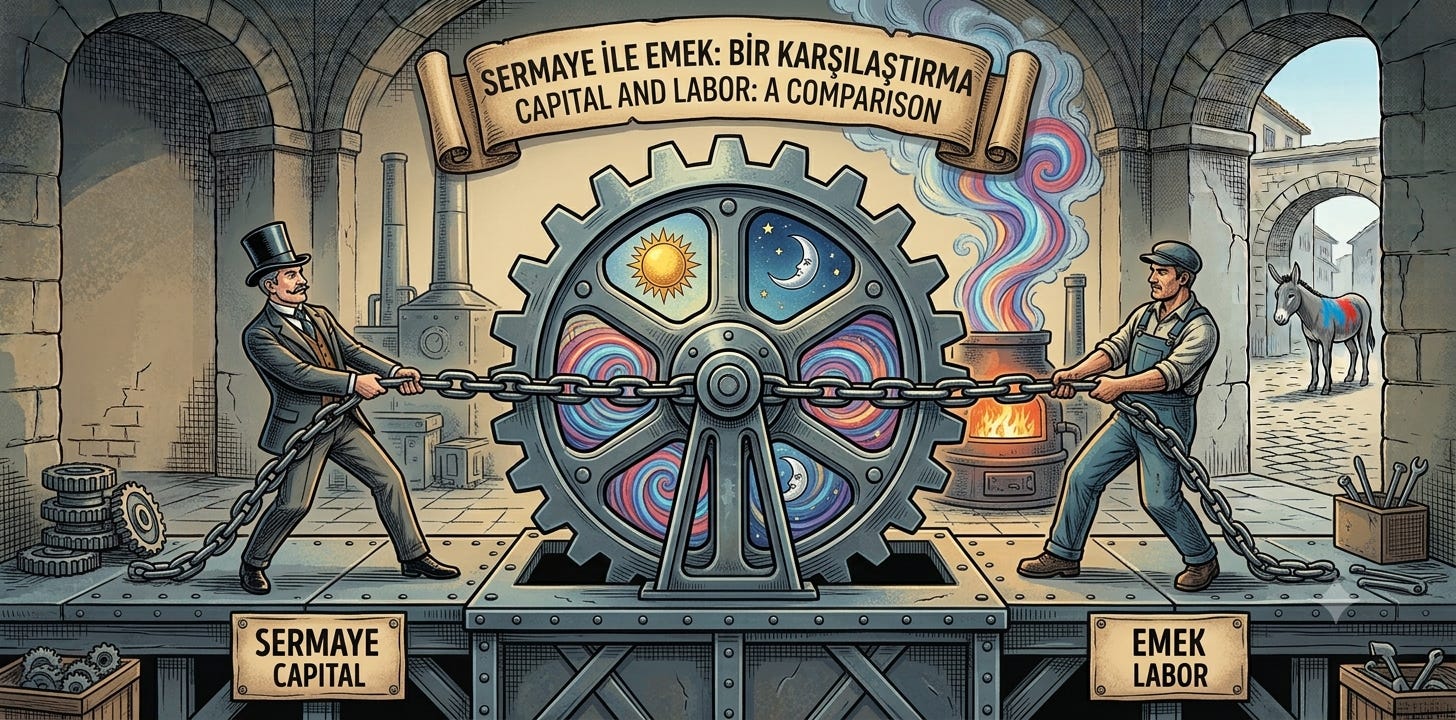
The relationship between the capitalist and the wage laborer is the clearest example of the second type—the contradiction. A capitalist cannot be a capitalist without the laborer currently being exploited within that very same social relation; nor can the worker exist as a wage laborer without capital to sell their labor power to. Both sides exist simultaneously, inside the same structure, generating each other. The poles of a magnet work the same way: there is no north pole without a south pole, and a monopole magnet is physically impossible. The relation between positive and negative electric charges shares this exact structure; each defines the other and exists only alongside it.
Up to this point, Colletti’s schema appears sound. The friction begins when we turn to his examples of the first type.
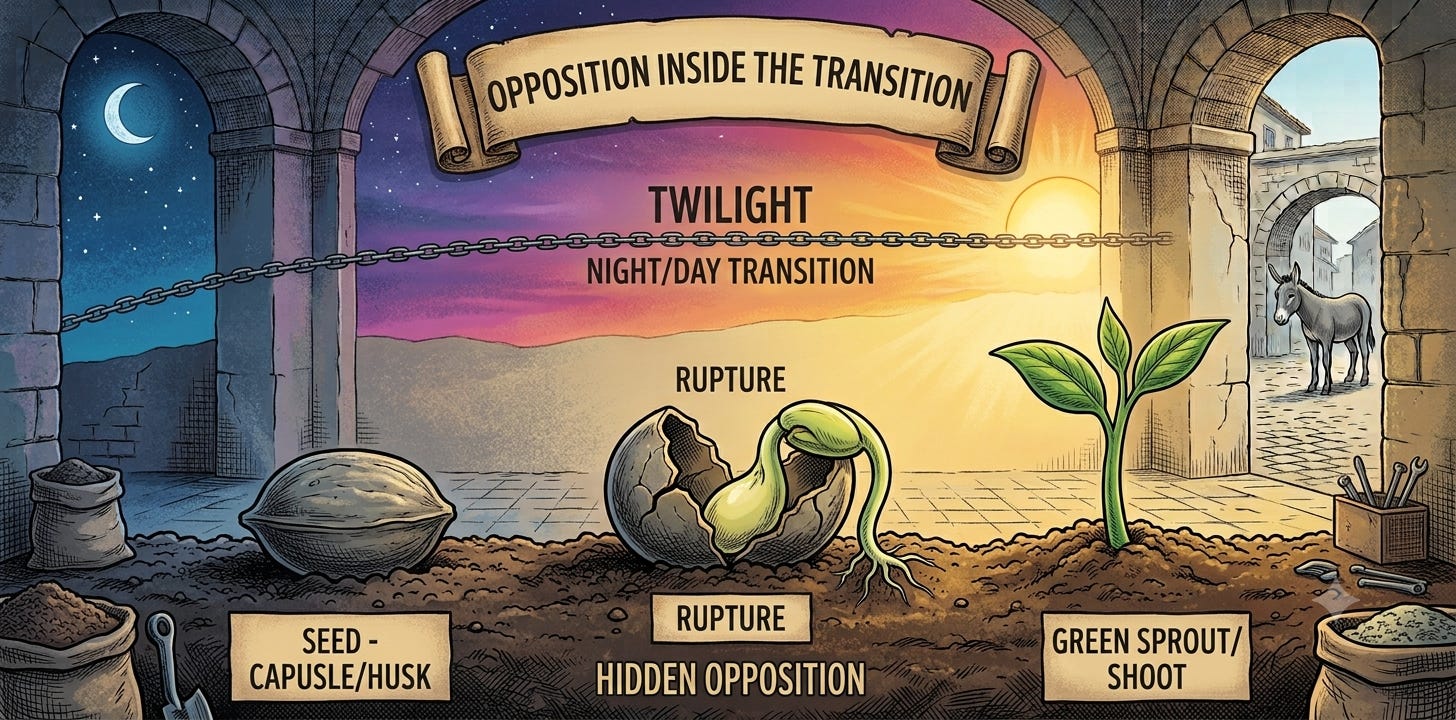
Health and sickness, life and death, night and day... Colletti classifies these as mutually exclusive oppositions that exist independently of one another. But this classification holds only if you look at the two endpoints, ignoring the process connecting them. The moment of death for an organism isn't the instantaneous extinction of every cell; long after the heart stops, certain cellular activities persist. Between life and death lies a measurable window of time where both overlap in a transitional state. Twilight is another such middle ground—neither pure night nor full day, but a state bearing elements of both. The same applies to the seed and the tree. The seed carries the entire tree within it as potential; the transition between them is not a split second, but an extended process of development. Even in human embryonic sexual differentiation, there is no absolute physical binary up to a certain point; the chromosomal difference is set from the start, but physical differentiation unfolds over time.
This observation undercuts a likely defense from Colletti—namely, that taking a "snapshot in time" yields either one state or the other. Nature does not consist of static snapshots; it consists of processes. Dawn and dusk are not static moments; they are extended transitions.
Interestingly, this critique lands closer to Hegel than to Colletti. What Hegel calls "Becoming" (Werden) in his Science of Logic exists precisely to describe this middle ground between Being and Nothingness—this continuous state of passage. The seed and the tree, twilight, embryonic development... all of these belong to the dynamic realm Hegel calls "Becoming." Thus, Colletti's first category—strictly bounded, mutually independent oppositions—crumbles under scrutiny. What remains is always a pair of extremes intertwined within a process of transition. This reveals Colletti's distinction for what it is: an artificial boundary drawn to insulate the second type of contradiction from the first. Nature recognizes no such line.
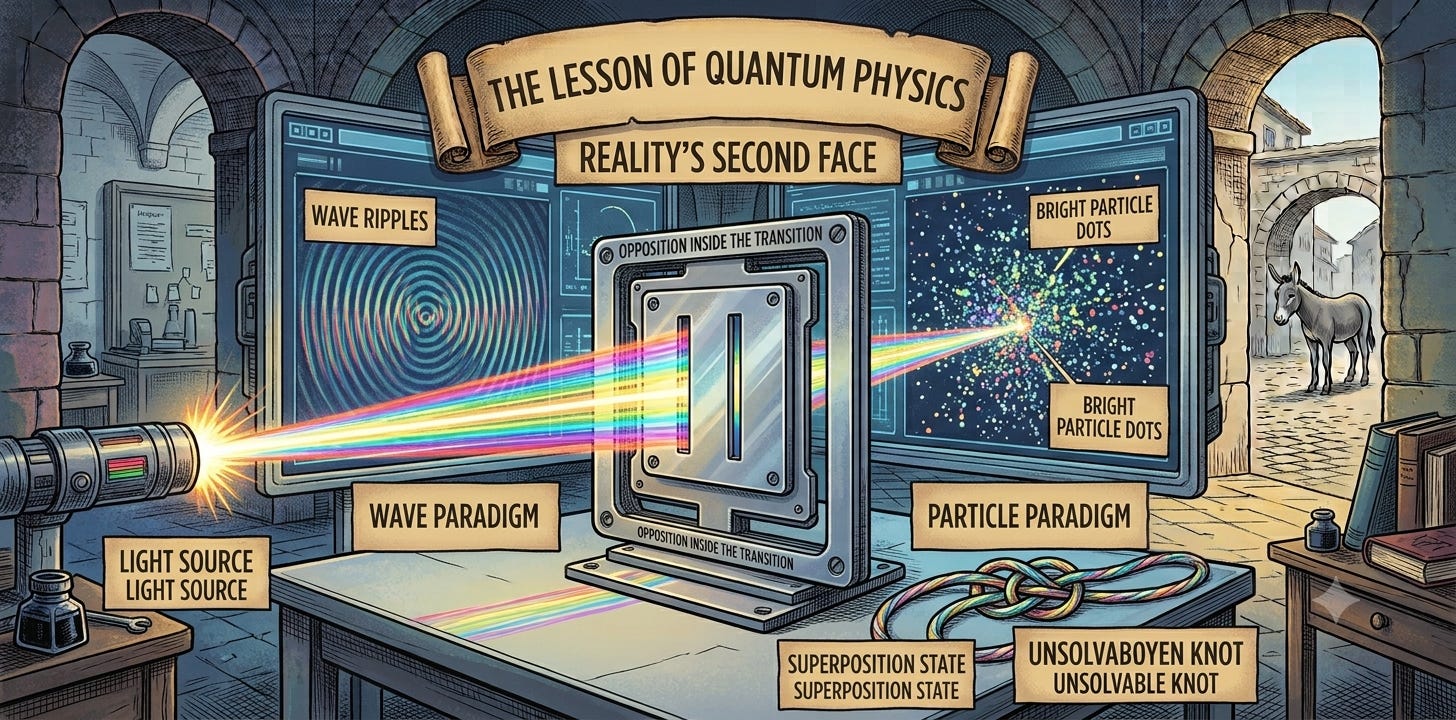
Yet even the argument from transition isn't the most radical objection, because it still relies on temporal succession—a phase of twilight over time. Quantum mechanics dismantles Colletti’s "cannot exist simultaneously" opposition far more fundamentally, without even needing time.
Consider quantum superposition. An electron possesses a property called spin, which roughly dictates whether it behaves like a magnet pointing up or down. Everyday intuition tells us this property must be either up or down; there is no third option. Yet before a measurement is made, the electron genuinely exists in a state of being both spin-up and spin-down at the exact same time. This is not a matter of our ignorance; it is a physical reality described by quantum mechanics itself. The moment of measurement "forces" a choice, but prior to that, the two opposing states exist simultaneously in a single system. Werner Heisenberg’s uncertainty principle tells a similar story: the more precisely you measure a subatomic particle's position, the less precisely you can know its momentum, and vice versa. This isn't due to flawed instruments, but because nature itself does not contain both quantities at absolute precision simultaneously. The double-slit experiment drives the point home: light behaves as both a wave and a particle—two categories that classical logic considers mutually exclusive. Depending on how you measure it, one aspect comes to the fore, yet both are real properties of the same light. Here, temporal sequence is irrelevant; two opposing states exist within a single system, right now, at once. Colletti's category of "mutually exclusive yet independent oppositions" completely breaks down when matter is examined at this scale.

In his critique of Hegel's Philosophy of Right, Marx tackles a similar tension through the issue of primogeniture—the law passing an estate intact to the eldest son. Hegel tries to reconcile this practice with the principle of family love. Marx objects sharp-edgedly. To him, this represents an irreconcilable contradiction: leaving the entire estate to a single child violates the very principle of familial affection. Marx’s key sentence here is striking: Hegel's fundamental mistake lies in presenting a contradiction in appearances as a unity already resolved in the essential Idea; whereas in truth, this conflict is the expression of a deep, unresolved contradiction. In the same text, Marx famously dismisses the supposed middle term between universality and particularity as "wooden iron"—a logical absurdity masquerading as a synthesis.
A crucial point follows here: Even if you replace primogeniture with equal inheritance, the underlying contradiction doesn't vanish; it merely shifts shape. Relations between family members are still negotiated through the lens of who gets what share—meaning the logic of property continues to dictate family life. To Marx, the real solution isn't distributing inheritance more fairly, but dethroning the logic of property from defining human relationships in the first place. Just as the contradiction between capital and wage labor isn't resolved by making wages fairer, but by abolishing the relation itself.
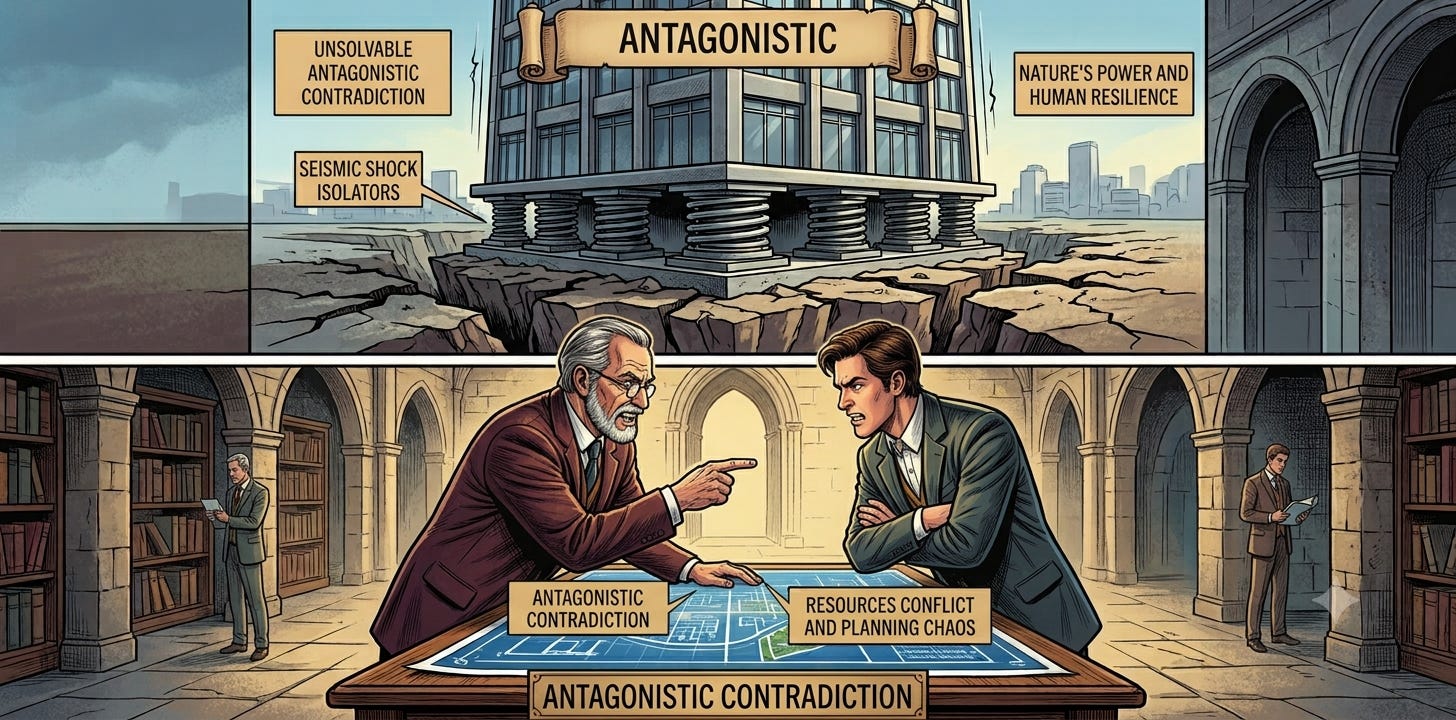
This entire debate brings another distinction to the fore: the difference between non-antagonistic and antagonistic contradictions. Social contradictions, when handled correctly, can be rendered non-antagonistic by altering the conditions that produce them; mismanaged, even a non-antagonistic friction can escalate into outright antagonism. Certain natural contradictions, however, offer no such flexibility for now. The movement of tectonic plates and the buildup of energy along fault lines cannot be eliminated by human intervention. We cannot resolve this contradiction; we can only study it to mitigate its fallout. Building early warning systems and constructing earthquake-resistant structures are interventions of precisely this kind: they target the destructive consequences, not the contradiction itself. We cannot abolish gravity, but by mastering the laws of gravity and aerodynamics, we construct machines that make the naturally impossible act of flight a routine reality.
Drawing the boundaries of this distinction today requires caution. To claim that a natural contradiction currently beyond our reach will remain unresolved thousands of years from now is simply projecting today's horizon onto the future. This is precisely why Marx avoided writing detailed blueprints for what lies ahead. You won't find a single prescriptive chapter in his work detailing the precise day-to-day mechanics of a communist society, because it is impossible to know the fine details of conditions that do not yet exist. This was less a matter of modesty than of scientific consistency: refusing to present the unknown as known.
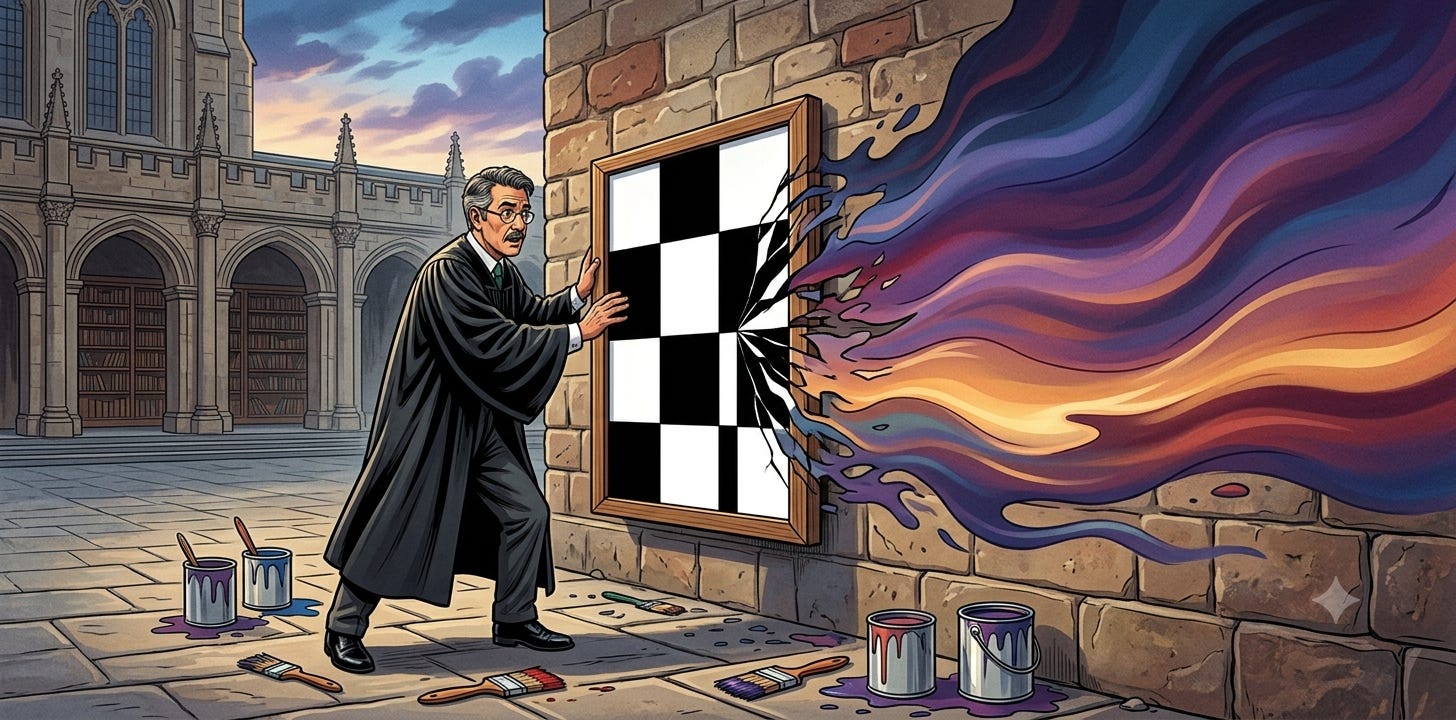
At first glance, Colletti’s distinction offers what looks like an elegant classification: sound, uncontradictory oppositions on one side, true dialectical contradictions on the other. But put the examples under scrutiny, and the boundary dissolves. Health and sickness, life and death, day and night... all bleed into one another within dynamic processes. At the quantum level, opposites don't even need a sequence of time to coexist. What Colletti calls his "first type" turns out to be an abstraction that never existed in pure form to begin with. The only real distinction that remains is whether a contradiction is antagonistic or non-antagonistic—and even that is not a fixed law of nature, but a flexible boundary that shifts alongside human knowledge and technical capacity.
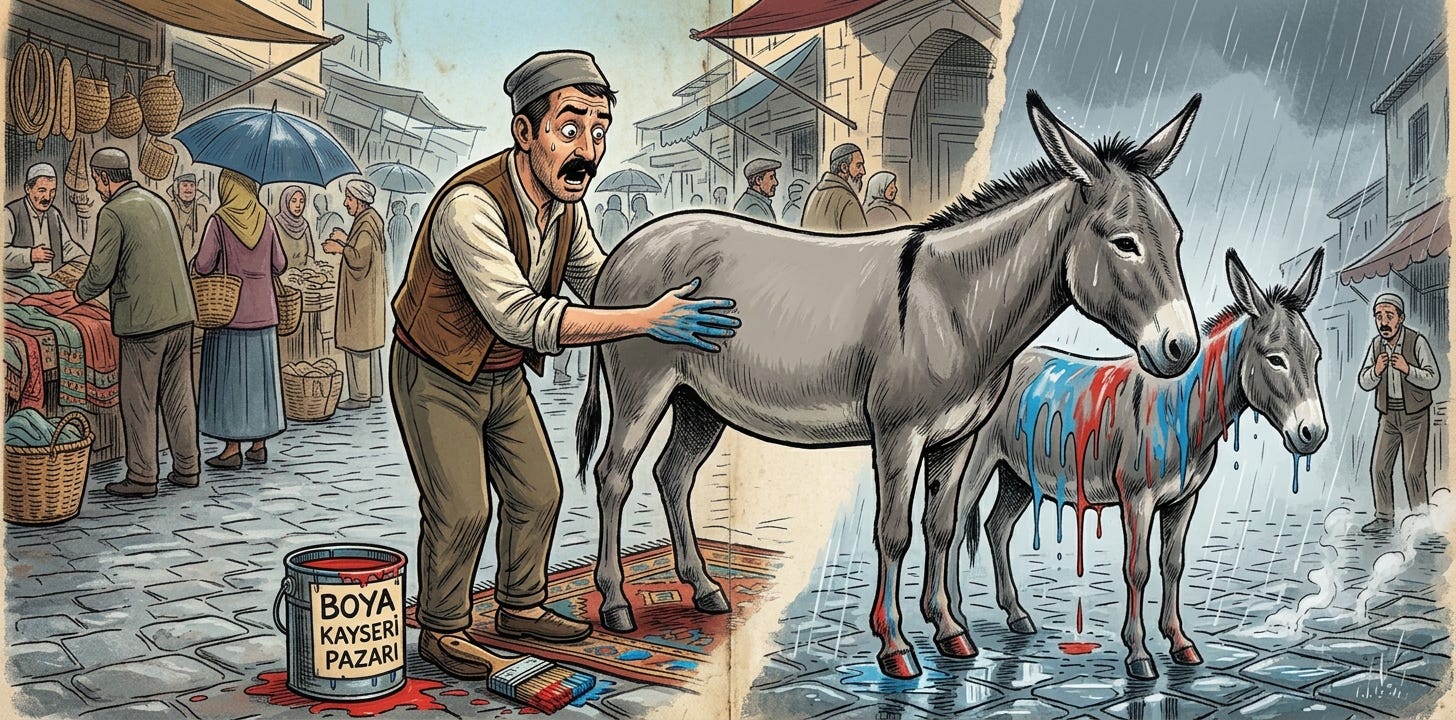
Line up Lee and Colletti side by side, and the overall picture becomes clearer than reading either in isolation. Both hail from the exact same corner of academic Marxism; both take a concept dialectical materialism already possessed; both quietly alter its definition; and both present that alteration as an original discovery. Lee takes "determinate negation," rebrands it as a paradox, and turns a straightforward thesis into an enigmatic riddle. Colletti takes a dialectical contradiction, rebrands it as a mere "logical opposition," and defuses a revolutionary category into a harmless taxonomy. The direction differs, but the trick is identical—just like the painted donkey in Kayseri. The goods were already there, the owner was the same all along, and the only thing that changed was the paint on top. The reason this maneuver gets repeated so often comes down to this: for a certain strain of academic Marxism, the main goal was never to change the world, but to repaint its concepts and stack them back on the shelf. Which is why the eleventh thesis on Feuerbach stands as sharp a reply today as it ever was: The point is to change it. No matter the color of the paint, the donkey is still the same 10donkey.【●】
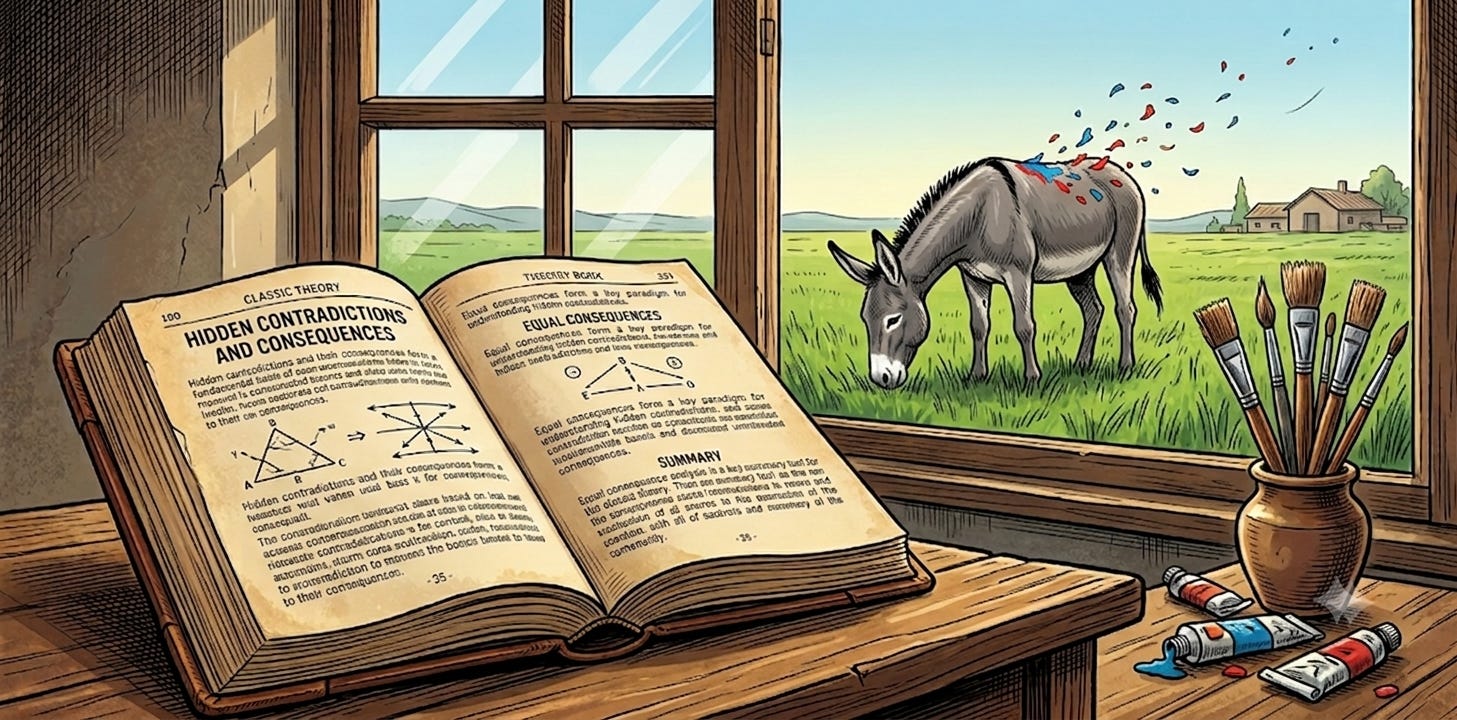
◇Apart from images, AI has been used solely as an advanced search engine for the purposes of finding and verifying data.
















.png)






.jpg)



 English (US) ·
  French (CA) ·