

.png) 3 weeks ago
60
3 weeks ago
60
PROTECT YOUR DNA WITH QUANTUM TECHNOLOGY
Orgo-Life the new way to the future Advertising by AdpathwayJillian and Damian are live
Jillian Ambrose and Damian Carrington are online now answering your questions about fossil fuel profits, the climate crisis, energy policy and more.
Key events
Should we not “squeeze … until the pips squeak”?
seanpatrick asks: Should we not apply Denis Healey’s statement and “squeeze … until the pips squeak” (he was talking about property speculators, I know, but the principle applies to oil barons as well). Though this time actually follow through and squeeze them hard and invest all the taxes in renewable energy sources?
Jill:
You’re not the first to suggest that higher fossil fuel tax revenues could be put to good use. I would add that the Treasury could also use the proceeds to help the households hardest hit by the surge in energy market prices through a social energy tariff or debt relief. As we’ve mentioned earlier, the UK already has a windfall tax in place which makes the headline tax rate for oil and gas companies one of the highest in the world.
Oil companies argue that it’s too high and could force companies out of the basin in a blow to future tax receipts. But no-one would want to see companies walking away with unearned windfall profits from the war either. The challenge facing Treasury officials is to find the sweet spot where they can claim as much as possible to support public spending without accelerating the decline of the industry. We’ll see how they manage this in the upcoming budget.

How do you counter the ‘hoax’ argument?
PoliteCough asks: What’s the most effective way to respond to right-wingers when they claim this is all a hoax?
Damian:
I think the most effective response is to help raise the voices of the vast majority of people around the world who already know the climate crisis is not a hoax, but don’t know they are in a majority. Doing this makes plain to politicians and leaders, who also often misread the public mood on climate, that people want action and that they will punish those who do not deliver it. Anyone can start doing this by talking about climate with family, friends and colleagues.
Arguing directly with the most high profile climate change deniers is pointless in my view. They are mostly motivated by money or by a facile neoliberal free-market ideology, neither of which will be much swayed by facts. I wrote more on this here.
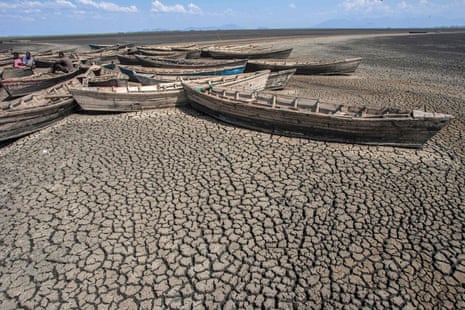
Which career paths should young people take to best contribute to the fight against climate change?
enttaeuschung6000 asks: Hello Jillian and Damian, first off, thank you for the important work you are doing. Without going into too many specifics, I am a young person living in western Europe, currently working in tourism, but planning to change careers within the next year or two. I desperately want to join in the fight against climate change and actively help to create a more sustainable world in any way that I can.
But it’s difficult to know where to start, especially because it feels like many of the supposedly sustainable, climate change oriented jobs aimed at young college graduates amount to little more than thinly veiled greenwashing. In your opinions, if it’s not too general a question, what kind of careers could young people in this day and age be looking towards if they wanted to make a genuine contribution in the fight against climate change, for instance by aiming to counteract the measures of the big oil firms?
Damian:
Thanks for the great question - and for your desire to make a difference! In all reporting I have done over almost two decades on the climate crisis, it is always the energy, passion and brilliance of young people (like these two!) that gives me the most hope.
The climate crisis affects the whole of society and so I think you could argue that many careers would enable you to make a difference. If your interests are technical or scientific, green energy is an obvious choice. But perhaps it is law, where you could hold polluters to account. Or food - low meat diets are far less damaging. Or communication - the vast majority of people in the world want more climate action but the message is not landing with leaders.
In a broader sense, something the great writer and campaigner Bill McKibben said in 2017 has always resonated with me:
“When people ask me what can I do, I now say the same thing every time: ‘The most important thing an individual can do is not be an individual. Join together—that’s why we have movements like 350.org or Green for All, like BlackLivesMatter or Occupy.’”
What would the effect be if we all stopped burning fuel immediately?
CalumGilhooly asks: If we stopped burning fossil fuel today, would that be enough to bring us back from the brink?
Damian:
If, by some miracle, we stopped burning fossil fuels today, then global heating would stop increasing. Then slowly, over decades, the global temperature would drift down again. The idea that there is lots of heating already in the pipeline is no longer supported by the scientific evidence.
Does that mean we’d be brought back from the brink? Maybe. The looming threat of climate tipping points is very real, and stopping heating is necessary to avoid triggering them. But the climate crisis is already here and killing about one person per minute, according to a recent analysis.
In any case, there are no miracles. But the fact is that every tonne of CO2 that is not emitted reduces the human suffering otherwise caused. So it is never too late to act on climate change. But the longer we wait to cut emissions to zero and roll out protections for citizens against the supercharged extreme weather we already face, the greater the harm to lives and livelihoods.
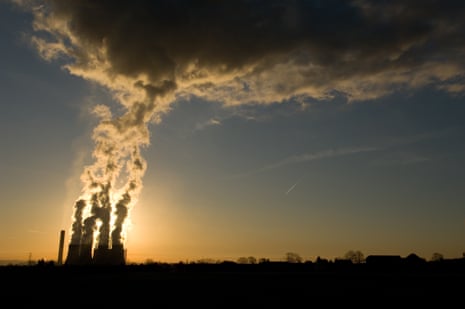
Photograph: sturti/Getty Images
How much money does the fossil fuel industry spend on political lobbying?
cman asks: How much money does the fossil fuel industry spend on lobbying UK politicians, and the political media establishment in general? Is this in any way related to decisions made on their behalf that fly in the face of all scientific knowledge and reasoning?
Jill:
I’m afraid I don’t have a single figure available, but there are a number of organisations that track fossil fuel lobbying and political donations. Last year, our Guardian colleagues in the US reported that major oil companies spent $445m throughout the last election cycle to influence Donald Trump and Congress based on data analysed by green advocacy group Climate Power, for example. I would also recommend following the work of Influence Map and Desmog which have done really important work over the years in revealing the lobbying activities of fossil fuel companies.
Something to keep in mind: most companies spend money on PR and lobbying policymakers - even green energy companies. I think every company should be able to make its case within the normal rules of a free democracy. So it’s far more useful to take a detailed look at how the lobbying machine works. For example, a report by Global Witness last year found that oil companies which were opposed to the Polluters Pay Climate Superfund Act of 2025 spent billions lobbying California’s policymakers at the time that the legislation stalled. For me, this kind of targeted research is more useful in understanding the impact of lobbying than one single spending figure.
What serious efforts have been made to harness sea power?
PCMcGarry asks: Given the facts that we live on a collection of islands and that tides are predictable, what serious efforts have been made to harness sea power and with what success?
Damian:
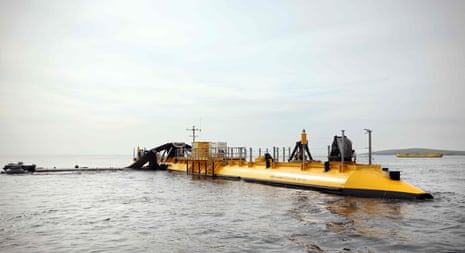
The UK is actually home to the world’s most powerful tidal stream turbine, operated by Orbital Marine Power, off Orkney and, the company says now moving into commercial deployment. But the device produces 2MW of power, the same as a small wind turbine. So there is a huge scale up needed to make a difference, and putting electric equipment in moving salty water is tough.
There are big tidal plants in France, South Korea and China, but a large tidal lagoon project for Swansea a decade ago was cancelled by ministers in 2018 who said it was too expensive compared with alternatives such as offshore wind farms and nuclear power.
Given the drought, how would we fill new water reservoirs?
Tattie_Bogle asks: Much of England is in drought condition, just over 70% I believe. There are calls for more reservoirs to be built. Can you help me understand where the water needed to fill any additional reservoirs would come from? Rivers and underground aquifers are under severe stress and additionally demand now exceeds supply as rainfall reduces with climate change. Are water transfer schemes prohibitively expensive and inefficient? As the climate crisis becomes more severe I see regions running out of water. Too fatalistic?
Damian:
The climate crisis is causing winter rainfall in the UK to increase, as the Met Office states:
“The winter half-year (October to March) for the most recent decade, 2016–2025, has been 3% wetter than 1991–2020, and 13% wetter than 1961–1990.”
This is because warmer air can hold more water vapour, leading to heavier downpours. But the UK trend is also towards hotter, dryer summers, as we are seeing this year. So the long term solution is more reservoirs to store winter rain for summer use.
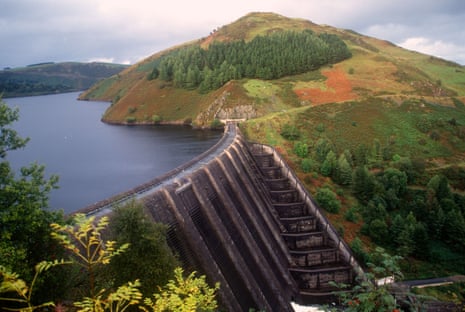
Last year, the government ordered the building of two major reservoirs in England, amazingly the first to be built in England for more than 30 years. However, the reservoirs in East Anglia and Lincolnshire will not be ready until 2036 and 2040 respectively. Another seven new large reservoirs are planned to be built by 2050, in Oxfordshire, Suffolk, Kent, East Sussex, the West Midlands and two in Somerset.
My colleagues Pippa Neill and Safeerah Ahmed tackled the question of whether England and Wales could ever run out of water here. TLDR? “Yes, without investment and reductions in our water use, we are facing a serious problem.”
Why does the ‘energy sovereignty’ argument keep coming back?
IscoBusquet asks: Why does the ‘energy sovereignty’ argument for expanded North Sea oil drilling keep coming back again and again despite the fact that there is no way the UK can realistically achieve it in that way?
Jill:
I fully empathise with the frustration in this question. Most credible voices in this debate agree that the UK couldn’t be entirely self-sufficient in oil and gas if the government did more to support the declining North Sea basin, or that greater energy security would mean significantly lower energy market prices.
But energy sovereignty matters in the North Sea debate because oil and gas still provided 75% of the UK’s primary energy needs last year. There are still 23m homes which use a gas boiler, and almost half of the gas which we use to cook our meals and heat our homes comes from the UK’s North Sea gas fields.
Thankfully the UK’s reliance on fossil fuels will fall as we electrify transport and industry, replace gas boilers with heat pumps and use low-carbon generation instead of gas plants. But the UK will still rely on oil and gas in significant amounts for decades, even under the most ambitious decarbonisation scenarios. As Andy Burnham put it recently: “The question isn’t whether Britain will still be using oil and gas, the question is where does it come from.”
Advocates for North Sea production - including the boss of Renewable UK, Octopus Energy, and the outgoing chair of GB Energy - tend to argue in favour of the economic and climate benefits of producing oil and gas domestically. But during times when global energy supplies are used as a geopolitical weapon, energy sovereignty is still worth discussion, I think.
Does anyone in the fossil fuel industry accept responsibility for climate change?
StanEthel asks: Does anyone in the fossil fuel industry accept responsibility for climate change? If they don’t, how is their denial structured: it’s not happening, it’s someone else’s fault, it’s not our fault?
Damian:
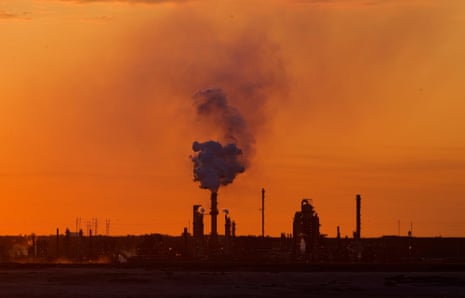
The short answer is no, and a rising tide of lawsuits against fossil fuel companies for their role in the climate crisis means that is unlikely to change anytime soon. The science is ever clearer though. An analysis published last September showed for the first time that carbon emissions from the world’s biggest fossil fuel firms were directly linked to fatal spells of hot weather.
The big oil companies were among the first to realise the dangers of global warming half a century ago. But decades of denial then followed. As the reality of climate crisis has become undeniable, the arguments of the fossil fuel industry have shifted. Gas was cleaner than coal, for example, or that carbon credits from new forests could offset emissions. Today, the industry likes to tout carbon capture and storage (CCS) as a solution. But just this week, one of CCS’s loudest cheerleaders, ExxonMobil, has started a process to sue the European Union which wants to make the company actually store a small amount of CO2.
What's the tax take for higher oil and gas prices?
BDurutti1936 asks: How much extra tax will the UK treasury collect from the higher oil and gas prices caused by the Iran war?
Jill:
In the first weeks of the conflict, some predicted that the government’s taxes on North Sea oil and gas would yield a £20bn tax windfall for the Treasury if surging oil and gas prices remained high over the whole year. This is because the government’s windfall tax on North Sea oil and gas, known as the Energy Profits Levy, imposes an effective headline tax rate on North Sea profits of 78%, and the Treasury collects VAT from petrol and diesel sales too.
But prices have not climbed by as much as first feared. So what can we reasonably expect? Before the war, the Office for Budget Responsibility forecast that oil and gas revenues would raise £2.7bn in the 2025/26 financial year. It also suggests that for every $10 increase to the benchmark oil price, the Exchequer can expect an extra £900m in revenue. Meanwhile, every 1p increase in the price of gas hands the Treasury an extra £55m.
So here’s my rough maths: the oil price has averaged around $90 a barrel this year, up from just under $70/b at the start of 2026, implying an extra £1.8bn in tax revenue. Meanwhile, the UK gas market price is expected to average around 114p per therm this year, from around 80p per therm last year which could mean almost £1.9bn.
These are ballpark figures based on a rule of thumb, of course. The actual tax bill for an oil company is much more difficult to predict. It’s important to keep in mind the bigger picture too: the conflict is also raising the cost of government borrowing, and eroding profits for companies across the economy as they contend with higher energy bills. So it wouldn’t be correct to view the war as a bonus for the Treasury.

Why aren’t big companies more on-board with renewables?
Pazoozoo asks: If renewables are cheaper, then why aren’t more big companies getting involved?
OccassionalComments asks: If renewables are so much cheaper than fossil fuels, why is replacing the older more expensive system so complicated and taking so long? What are the major obstacles?
Jill:
This is a great question, with many answers. But the top two are: profits and grids.
Renewable energy projects may generate low-cost electricity but they are still expensive to build, and costs have climbed in recent years in line with inflation. In return for the high upfront costs, investors can expect long-term returns via steady subsidies. Major oil companies - which are used to ‘boom and bust’ market volatility - argue that these earnings have not been able to compete with the potential returns they can make from a fossil fuel project. If they intend to keep making the returns their shareholders expect, then they need to be quite picky about which renewable energy projects they choose.
All that said, there is no shortage of money in the green energy space. There are plenty of investors who appreciate the predictable returns of a subsidised solar farm, for example. But this is where things become tricky - the developed economies which are typically the most attractive to investors tend to have older power grids, built for fossil fuel plants. Upgrading the electricity networks to cope with a deluge of new clean energy projects (and rooftop solar, car chargers etc) requires billions in investment. And time. In the UK, this is paid for through our energy bills so the energy regulator is quite rightly careful about how great a financial burden consumers can shoulder, and realistic about the time this engineering challenge will take.
This transformation requires unprecedented co-operation between the government, regulators, investors, developers and grid companies to pull together to create something new. Could it be faster and more efficient? Absolutely. But the good news is that the pace is quickening.
Is it right that oil prices haven’t risen because China’s oil imports have dropped?
Mazter asks: I see that oil imports into China have dropped about 30%. And that may be the reason the oil price hasn’t gone far higher, is that correct?
Also, that 30% may represent a ~15% reduction in demand, plus another ~15% from drawing down on their huge strategic reserve. Is filling/building that reserve why their oil demand hadn’t dropped the last 5(ish)yrs, despite a huge shift to electric transport?
From there, if we weren’t seeing supply constraints (Russia and Middle East), could China now(ish) reduce demand and oil prices enough to make profitability from the more expensive production (Canadian tar sands and US frack oil) questionable?
Damian:
You are right - China is the reason the US-Israeli war on Iran has not pushed oil prices higher. This excellent article from the Economist explains”
“Between February and June, China slashed its crude imports by half, or 5.5m barrels per day - enough, experts reckon, to have shaved $30 or more off Brent, the global benchmark. That is more than half of the worldwide decline during the covid-19 lockdowns … As one oil-trading boss puts it, ‘China is the new OPEC’.”
China uses three main levers: drawing down on its reserves, restricting exports of refined product like jet fuel, and curbing domestic demand. It’s also worth remembering that China is the world’s green energy superpower, rolling out (and exporting) huge amounts of solar, wind and electric cars.
How does fossil fuel subsidy compare with profit?
Dingleberryc asks: How much are the fossil fuel companies subsidised compared to their profits?
Damian:
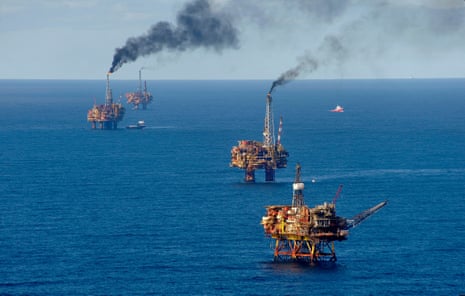
It is one of the craziest aspects of the climate crisis that governments provide colossal subsidies for fossil fuels - the subsidies are pouring fuel on the fire.
In 2023, the IEA reports, governments subsidised the use of fossil fuels to the tune of $620bn, far greater than the $70bn was spent on support for consumer-facing clean energy. The OECD puts the fossil fuel number at $920bn. These are direct subsidies. When you add in indirect ones - like the cost of air pollution - as the IMF does, the figure soars to $7tn a year. That is more than the estimated total revenue for the oil and gas industry alone in 2024 of about $6tn.
Why don’t governments end the subsidies? It is politically extremely hard to raise energy prices unless you have low cost alternatives like solar and wind in place already. But the argument that the subsidies protect the poor is largely wrong - the better off take most of the subsidies for the simple reason they use the most energy. Help targeted at poverty specifically is a better solution.
Jillian and Damian are live
Jillian Ambrose and Damian Carrington are online now answering your questions about fossil fuel profits, the climate crisis, energy policy and more.
Welcome to the conversation
Last week Jillian Ambrose and Damian Carrington published a front-page story that revealed the vast scale of the profits that eight of the biggest oil firms made in three months as the Iran conflict sent energy prices soaring and the emissions-fuelled climate crisis caused deadly heatwaves.
They will be online at 2pm to answer your questions about their reporting – and any others you might have about how the oil markets work – and how many of these companies have withdrawn from their commitments to a clean energy transition.
As the Guardian’s energy correspondent, Jillian’s recent reporting has also included the spike in demand for solar power in the UK; the political row surrounding how Great Britain’s grid operator was managed during recent heatwaves and what is holding back a British green energy transformation.
Damian’s recent work as environment editor has included looking at how the climate crisis has accelerated the scale of Europe’s summer heatwaves; an audacious plan to refreeze the Arctic and a fascinating piece looking at how nature can help treat mental illness.
Ask a question or discuss this story: log in or sign up here
















.png)






.jpg)



 English (US) ·
  French (CA) ·