

 7 months ago
103
7 months ago
103
PROTECT YOUR DNA WITH QUANTUM TECHNOLOGY
Orgo-Life the new way to the future Advertising by Adpathway- Roger Mallett
- 26 January 2026
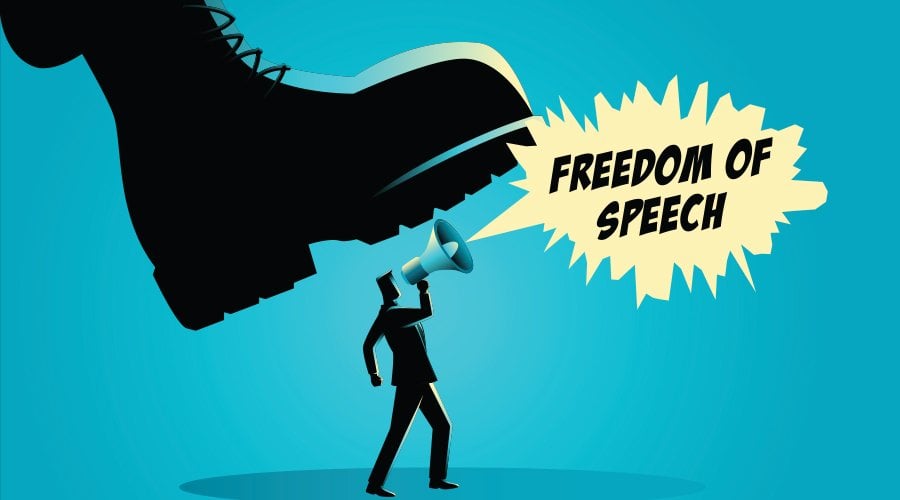
THE UK Online Safety Act was approved by the British parliament with broad cross-party support and came into law in October 2023. It was intended to make the use of internet services ‘safer for individuals in the United Kingdom’. The Act purported to achieve this by ‘[requiring] providers of services regulated by this Act to identify, mitigate and manage the risks of harm’ from ‘(i) illegal content and activity, and (ii) content and activity that is harmful to children’. The main enforcer of these duties is Ofcom (‘Office of Communications’) which regulates communications services in the UK.
A strong case can be made for articulating more clearly the obligations of internet service providers to make their algorithms more transparent, provide certain content controls to their customers, and take reasonable measures to protect users from degrading and illegal content, particularly content that may be viewed by children. Who would oppose such a noble goal as the protection of children from harmful and exploitative content and communications?
On the other hand, laws should not be judged on the lofty intentions of their authors alone, but on the way they are liable to be interpreted and applied by human beings acting under realistic constraints and incentives. The 300-page Online Safety Act is certainly not as innocent and ‘safe’ as it sounds. UK civil liberties group Big Brother Watch believes the Act as it stands ‘will set free expression and privacy back decades in this country’. Reform UK has promised to do all in its power to scrap the Act completely.
A careful reading of the Act reveals that, in spite of significant improvements secured before its passage, it is anything but neutral in its impact on freedom of speech. Most notably, it radically alters the constraints and incentives under which social media companies operate, in particular regarding their content moderation policies, by shifting the onus away from users on to the communications service provider for ensuring content produced and disseminated on their service is legally compliant. These changes may well bring some modest benefits for child protection. But these benefits are limited and are secured at an unacceptably high cost for freedom of speech.
Age verification, one of the main mechanisms for shielding children from inappropriate content, adds another layer of intrusive bureaucracy to the internet but will have limited efficacy, given that many under-18s are fully capable of bypassing age verification requirements: they can use a VPN service to trick regulators into thinking they are accessing the internet outside the jurisdiction of the United Kingdom. Indeed, when the age verification requirements kicked in in July 2025, VPN signups in the UK reportedly surged by as much as 1,400 per cent.
While the intention of protecting children from harm is obviously laudable, the British government chose to pursue this aspiration at the cost of creating a regulatory environment distinctly unfriendly to freedom of expression. Unlike the traditional machinery of censorship, in which the government acted directly upon citizens, the UK’s Online Safety Act saves the government the trouble of censoring citizens directly, by imposing somewhat vague obligations upon service providers to ‘mitigate risk’ by flagging and removing illegal content and content deemed harmful to minors.
Read More – The Online Safety Act, a system of mass censorship unparalleled in the Western world














.png)






.jpg)



 English (US) ·
  French (CA) ·