

.png) 3 months ago
38
3 months ago
38
PROTECT YOUR DNA WITH QUANTUM TECHNOLOGY
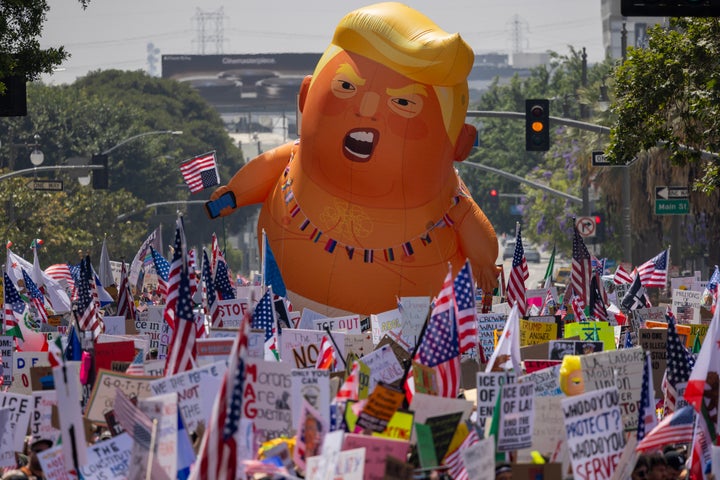
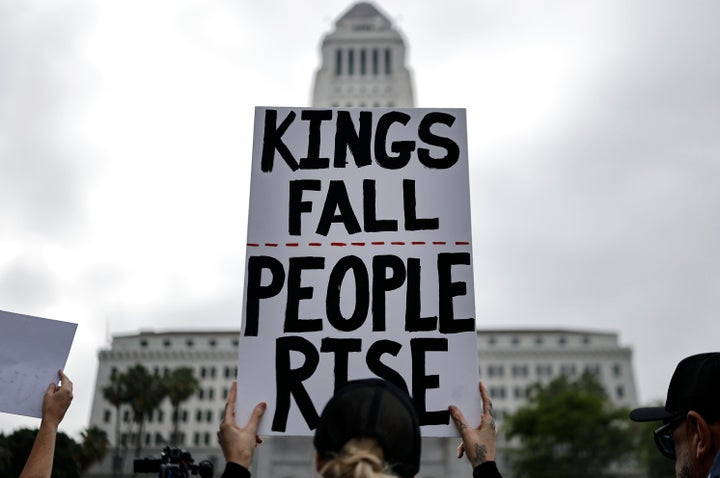
Orgo-Life the new way to the future Advertising by AdpathwayThis weekend, millions are expected to march against authoritarianism and Donald Trump’s presidency in over 3,100 planned “No Kings” demonstrations in U.S. cities.
If you are going, there might be memorable sights you want to document, like people dressed as inflatable frogs, for example.
But before you start hitting record or taking photos of crowds to post later on social media, consider the safety risks, not just for yourself, but for everyone around you.
“Despite [No Kings] being tame, there are attempts to kind of make it into this controversial thing because of the crackdowns on freedom of expression,” said Bill Budington, a senior staff technologist for nonprofit digital rights group Electronic Frontier Foundation. He cited how the No Kings demonstrations have been baselessly linked to terrorism.
What you share in a photo or video can reveal more than what you might think, and put people who are already being targeted by the Trump administration at risk.
You Have The Right To Take Photos, But There Are Safety Risks You Should Know
David McNew via Getty Images
Know that taking photos and videos during a protest is legally protected.
“The No. 1 thing that people should know is that they have the right to record,” said Maribel Hernández Rivera, a national director of immigrant community strategies at the American Civil Liberties Union who has facilitated past de-escalation trainings for “No Kings” participants.
“They have the right to photograph as long as they are in a public space, as long as they’re not obstructing or interfering with law enforcement,” Hernández Rivera said. “They should also know that police cannot demand to take their photos or videos without a warrant.”
“At the same time, we need to be mindful, because we are seeing people being targeted,” she continued. “We have seen this administration target people who are saying things that they don’t like.“
And safety risks increase once you share photos and videos on social media.
Immigrants, especially those without secure status, can have their social media monitored by law enforcement or immigration authorities, said Petra Molnar, lawyer and author of “The Walls Have Eyes: Surviving Migration in the Age of Artificial Intelligence.”
Molnar noted that photos, livestreams or posts from protests can inadvertently reveal identifying details like faces, tattoos, locations, or social circles.
“Even seemingly harmless posts can be cross-referenced with government databases or facial-recognition tools, some of which are already used by agencies like [Immigrations and Customs Enforcement],” Molnar said. “Once online, this data is nearly impossible to remove and can be taken out of context to justify enforcement actions, including detention and deportation in this extremely hostile climate.”
Just the act of livestreaming or posting photos in real time “can draw attention from local police, federal agencies, or private security monitoring protests,” Molnar said.
Last June, Salvadoran journalist Mario Guevara was livestreaming a No Kings protest in Atlanta when he was arrested by local police on charges that were later dropped before he was turned over to ICE.
Guevara had a work permit and a pending application for a green card, his lawyers have said, but ICE held him for over 100 days in Georgia and deported him in October. The Department of Homeland Security said in a statement that ICE detained Guevara because he was “in our country illegally.”
Meanwhile, Guevara said he was targeted because he told an ICE officer he was a journalist.
“If you’re not a U.S. citizen, you don’t have the same rights like other journalists. I ignored that and I paid the price,” Guevara later said in an interview about his deportation.
How To Mitigate Risks If You’re Going To Capture Or Post Content At A Protest
Mario Tama via Getty Images
Before you post, “talk to people [being photographed] beforehand to make sure that they’re OK with their faces being on the internet,” said Thorin Klosowski, a security and privacy activist for the Electronic Frontier Foundation.
Or choose your photo angles carefully. Instead of posting strangers’ faces, “maybe take a picture of the poster,” Hernández Rivera suggested. “Take a picture of the crowd, but not of a specific individual who you don’t know and who hasn’t given their authorization.“
You could also consider using photo tools to blur faces. The Signal app has a built-in blurring tool in its image editor, and iPhone has a Clean Up tool with easy ways to blur or pixelate people’s features.
“The more granular that you can make faces, the better,” Budington suggested. Covering faces with emojis is a “perfectly good way to make a face completely obscured without it being just a black blur,” he said.
“Take a picture of the poster ... but not of a specific individual who you don’t know.
- Maribel Hernández Rivera, national director of immigrant community strategies at the American Civil Liberties Union
Think about your audience reach on social media before you post, too. The risk calculus increases if you have 20,000 social media followers who might more easily see what you share, Klosowski said.
Know that livestreaming video can be an important way to amplify voices, but it also means anyone can walk in the frame and get caught on video. And if you are livestreaming a protest from a small town where there is no other news coverage, “someone else is more easily identifiable” who might get in trouble with their family or their employer, Klosowski said.
“It’s worth remembering that it’s not just you who you are putting at risk” by sharing photos and videos, Klosowski said. He suggested when documenting to go for “a blob of people” over specific people’s faces.
And if you are using your phone to document, first secure it by disabling biometrics like fingerprint recognition, because a memorized passcode has stronger legal protections against a court order ordering you to unlock your phone.
Consider how you are storing sensitive photos of what you see, too. Budington suggested not having automatic uploading to the cloud enabled on your device, because cloud servers can be subject to subpoenas.
Overall, until there are stronger legal protections against surveillance and data-sharing between tech platforms and immigration authorities, Molnar said, it’s safest to practice digital minimalism when you can: “Share less, anonymize more, and prioritize community safety over visibility.”
The original version of this story was published on HuffPost at an earlier date.



.png)

.jpg)

 English (US) ·
  French (CA) ·