

 8 hours ago
9
8 hours ago
9
PROTECT YOUR DNA WITH QUANTUM TECHNOLOGY
Orgo-Life the new way to the future Advertising by Adpathway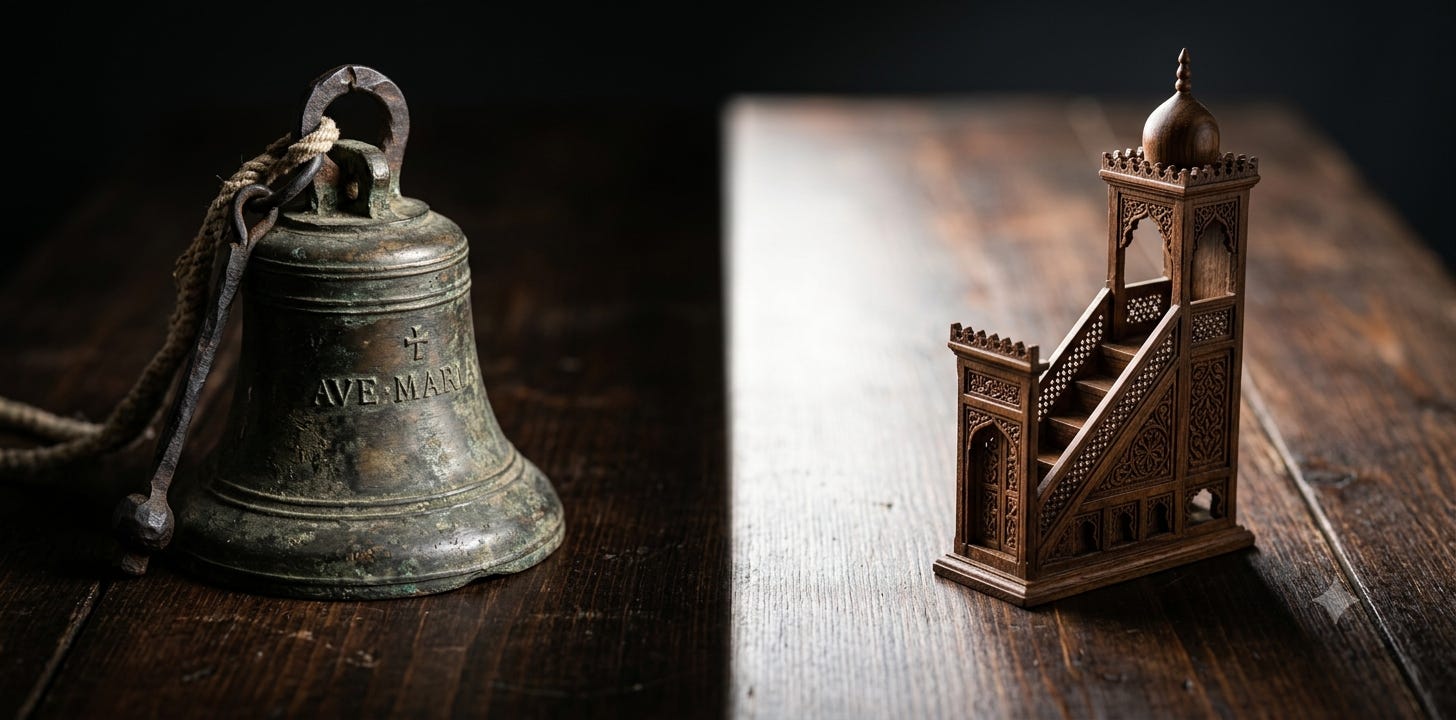
On the morning of December 23, 1930, in the small square of Menemen, a man knelt on the ground and cut off another man’s head with a bayonet. The crowd watched. Some prayed. Some shouted “sharia has come.” Some yelled “Allahu Ekber.” The severed head belonged to reserve officer Mustafa Fehmi Kubilay, who had tried to stop men waving the banner of holy war; when the blanks fired at the rebels failed to touch their leader, he roared, “Look, bullets cannot harm me,” seized Kubilay, threw him to the ground, and pressed the blade to his throat. The killer called himself the Mahdi. Behind him stood the guidance of a religious order’s sheikh.
This event was not merely a murder. It was the starkest proof that laïcité is not a preference but a necessity. The Republic chose laïcité so that the head cut in that square would never be cut again — not secularism.
Laïcité and secularism are not a matter of tone or register. They are structurally, historically, and from a class perspective in opposition to each other. One is the product of abolition and active state control; the other, of mutual recognition and withdrawal.
In recent years in Türkiye, “Laïcité” and “secularism” have increasingly been treated as synonyms. This equation is not an innocent linguistic drift — it is part of a political project that is, quietly and steadily, eroding the founding philosophy of the Republic.
Those who brand laïcité as “Jacobin,” “authoritarian,” and “imposed from above,” while praising secularism as “democratic,” “pluralist,” and “tolerant,” are in fact working to dismantle the state’s oversight of religion in the political and public sphere.
For the communist and revolutionary left, this distinction is a matter of survival: laïcité is the active state control of religion and the defense of the public sphere; secularism is the release of religion as an autonomous power.
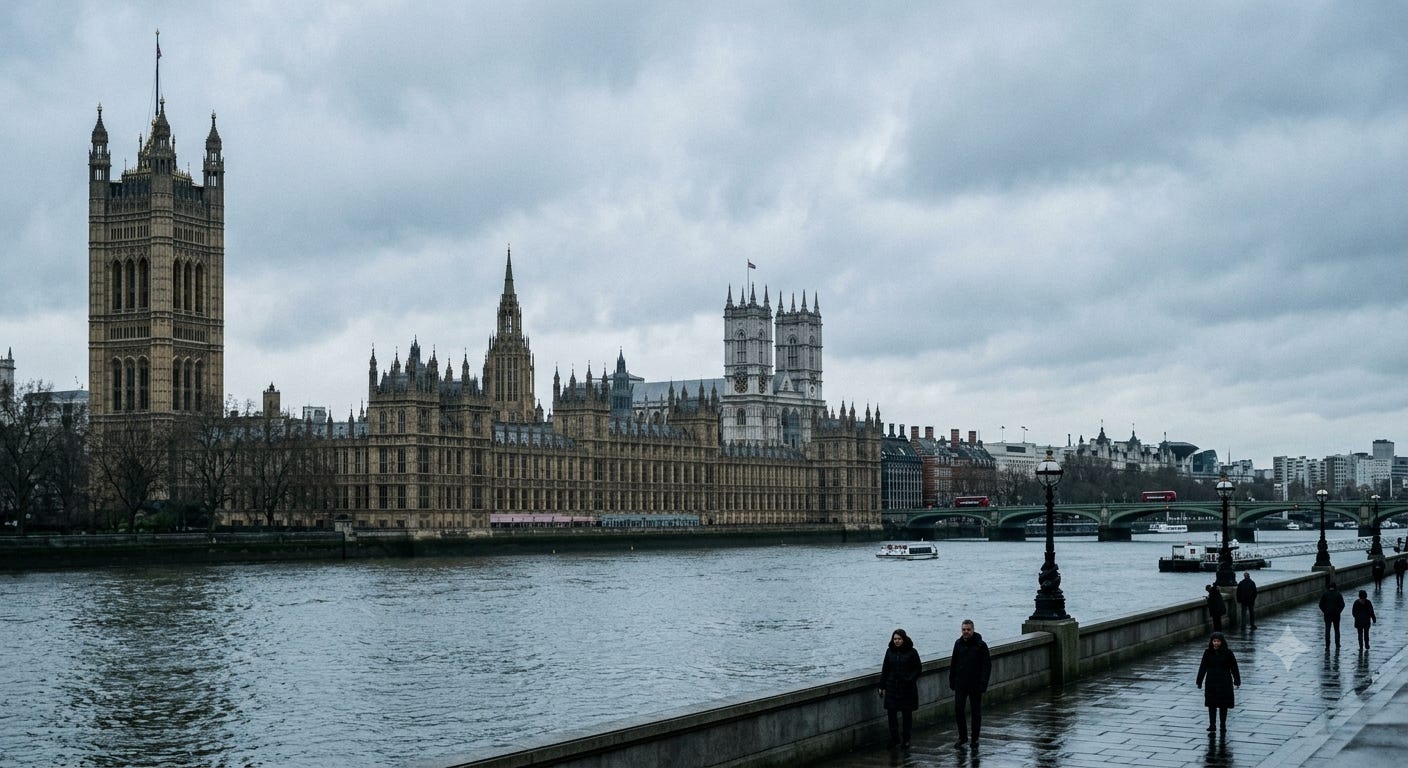
Secularism rests on a contract of “mutual recognition” and separation — in effect, an agreement not to interfere in each other’s affairs. The state does not meddle in religion; religion withdraws from the public sphere. This model is above all the product of the Anglo-Saxon church-state settlement. After England’s Glorious Revolution of 1688, the alliance of bourgeoisie and aristocracy chose to tame the Church rather than abolish it. What emerged was a conservative secularism, one in which religion survives as a strong, autonomous institution within civil society.
This model is ideal for neoliberal and liberal-conservative circles. It clothes religious orders, congregations, and religious capital in the garb of “NGOs”; in a space where state oversight is minimized, religious structures are free to expand their economic and cultural power without restraint.
The United States offers an even “purer” instance of this model than England itself. It has no constitutionally established church; the state formally recognizes no religion. But it is precisely here that the model’s own contradiction stands most exposed. The state’s refusal to interfere with religion does nothing to stop religion from interfering with the state. Evangelical voting blocs, church lobbies, the open involvement of religious organizations in Supreme Court appointments — all of this is business as usual. The weight of this influence on American political institutions is the proof that reciprocity alone is not enough. Secularism does not force religion out of the public sphere; it merely forbids the state from meddling with religion. In that vacuum, religion is free to organize itself and march straight toward the state.
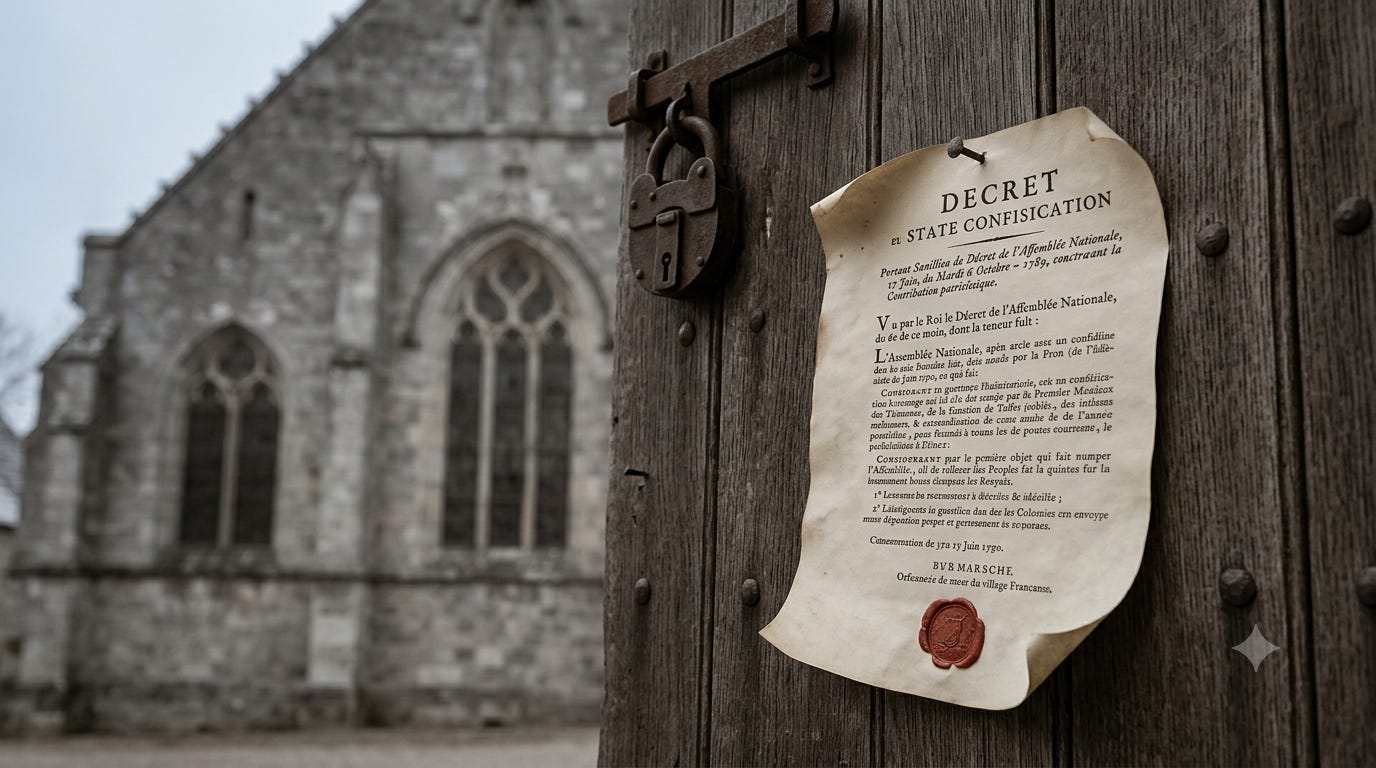
Laïcité is the radical legacy of the French Revolution — but to understand where that legacy came from, one must first see where the old order stood. Before 1789, French society was divided into three estates: the nobility, the clergy, and everyone else (the Tiers état, the Third Estate). The first two — the nobility and the Church — paid no taxes, while holding the greater part of the country’s land. When revolution broke out, it was inevitable that this privileged pair would be its first target. In November 1789, the National Assembly seized all Church property — its lands, its monasteries, its revenues. This was not merely a transfer of wealth; it was an attempt to strike at the material foundation of the feudal order that bound the Church to the crown.
The Assembly then went further: the 1790 Civil Constitution of the Clergy required every priest to swear an oath of loyalty to the state and the new constitution. A priest would no longer answer to Rome, but would be, in effect, a state official. In France’s great cities this oath was accepted with relative ease; but in the west of the country, above all in what is now the Vendée, the population was both poor and deeply devout — the church was the center of their lives, the priest their neighbor. Here, the overwhelming majority of priests refused the oath, and their congregations, roused by the clergy, stood behind them. The Revolution failed to bring the religious life of the Vendée into the new regime’s civil-religious order.
The tension broke open in 1793. In January, King Louis XVI went to the guillotine; almost at once, the revolutionary government, already fighting a civil war, ordered a levy of three hundred thousand men from every province. For the peasant of the Vendée, this meant facing the new regime on two fronts at once — his religious practice and his military obligation, both demanded by the same authority, at the same moment. In March 1793 the province rose up; the clergy mobilized the young men of their own congregations into a force they called the “Catholic and Royal Army,” and within weeks this force, now numbering in the thousands, was overrunning government garrisons. The Republic could not afford to overlook such a threat on its own soil — Austrian and Prussian armies were marching on Paris at the very same time; this peasant army, organized around the Church, was a second front opened from within by the counter-revolution.
The suppression that followed was one of the most tragic chapters in the history of the Revolution. After the defeat at Savenay in December 1793, the government resorted to severe measures. The columns commanded by General Turreau — remembered to history as the “infernal columns” — killed between twenty and fifty thousand civilians in the opening months of 1794.
The bourgeoisie did not forget the lesson of that experience. As long as the Church held land, money, and influence over the people, it would remain an enemy of the republic. Taming it was not enough; it had to be dismantled. The institutional culmination of this process was the Law of Laïcité of December 9, 1905. Its founding principles were these: the neutrality of the state in matters of religion, the guarantee of freedom of conscience, and the refusal of the state to recognize, fund, or support any religion. With the expropriation of Church property, laïcité ceased to be a passive separation and became an active instrument of public regulation.
The Soviet experience represents the furthest extension of this same line: the Bolsheviks expropriated churches and religious foundations, nationalized education, and made religious organization contingent on direct political control. The same technique recurs, again and again, across radically different regimes. France had already expropriated the Church in 1789 and, with the 1905 law, nationalized education as well; the Republic of Türkiye did the same with the Unification of Education Law and the transfer of religious endowments from the Evkaf administration to the state; even England itself, breaking from Rome in 1534, expropriated the monasteries — though there the Church was not abolished, only bound to the crown. The communist tradition is the most resolute practitioner of this general pattern; it embraces not secularism but the militant form of laïcité.
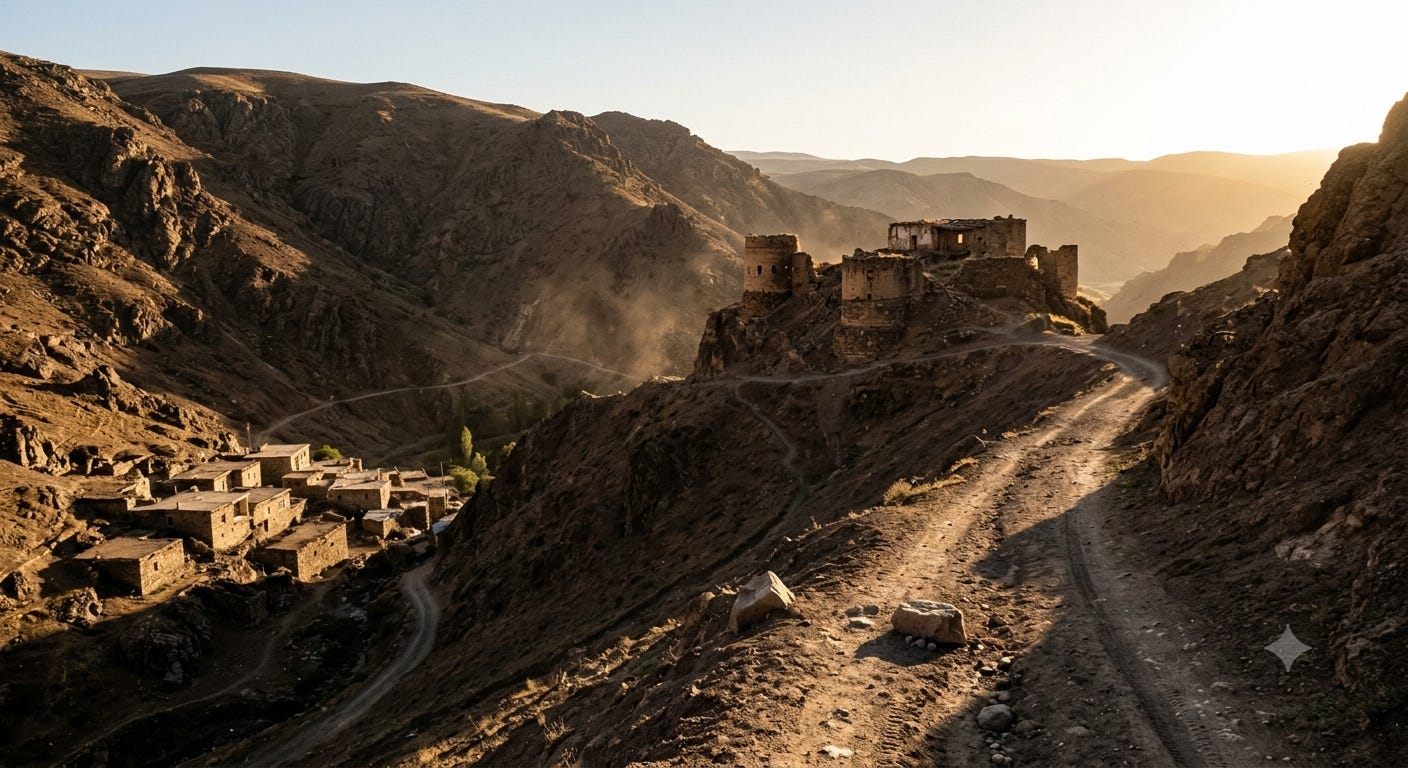
In Türkiye, laïcité was, exactly as in France, not a cultural preference but an existential necessity. During the National Struggle — the resistance against the post-World War I occupation and partition of Anatolia — the sultanate, the caliphate, the religious orders, and the network of religious endowments had collaborated with the occupying powers, mobilizing the population against the resistance on religious grounds.
Türkiye had its own Vendées. The same mechanism was at work, the same actors on stage: uprisings organized around religious orders against the laïque state, mobilizing the population with the promise of restoring the old religious order. The leader of the 1925 Sheikh Said Rebellion was the sheikh of the Palu branch of the Naqshbandi order; the proclamation leaflets he had distributed to the population declared, “There can be no Muslim without a Caliph,” “The government is godless,” “We demand sharia.” The sheikh drew the young men of his order into his own armed force with this call. As İsmet İnönü, then prime minister, said at the time, the conflict was not a Turkish-Kurdish one, but a conflict between the laïque state and the religious order. Five years later, in 1930, an extension of the same network of orders appeared on the stage at Menemen. Derviş Mehmet, who proclaimed himself the Mahdi, raided Menemen with a group of armed men under the guidance of the Naqshbandi sheikh Esat, planted the banner of holy war, and killed the reserve officer Kubilay when he tried to stop them. The evidentiary value of Menemen lies precisely here: the incident had no Kurdish-Turkish dimension whatsoever — it took place in a wholly Turkish-populated corridor between Manisa and İzmir — and yet the state suppressed it with exactly the same severity it had shown against the Sheikh Said Rebellion, tried it before the Independence Tribunal, and carried out executions. The logic of suppression was never ethnic; in both cases the state answered the same danger, a religious-order-based counter-revolution, with the same severity.
The cost of the Sheikh Said Rebellion outlasted its own moment. There were clear signs of British involvement behind the uprising; İsmet İnönü, then prime minister, said as much himself. The appearance of instability it created weakened Türkiye’s bargaining position over the question of Mosul; the region was ceded to Iraq, then under British mandate — meaning the party that benefited directly from the outcome was the very party linked to the rebellion. The territories with a dense Kurdish population were thus permanently divided — part in Türkiye, part in British-mandate Iraq, part in French-mandate Syria. The young Republic’s leadership was thoroughly unsettled by the episode; to face such a threat in the Republic’s earliest years, before it had found its footing, hardened into the anxiety that would shape the severity of the decades that followed. Had that division and that anxiety not existed, the path the state took in the years to come might have been different — but history knows no necessity, only contingent choices and their costs.
The conflict in Dersim in 1937-38 belonged to a related but distinct axis: not only religion but feudal reaction cloaked in religious form, set against the Republic’s revolution. The order of local lords under Seyit Rıza’s leadership did not permit the state itself to enter the region. Young men were not conscripted; whoever came — the engineer building a road, the teacher opening a school, the soldier sent to establish order, the official sent to collect taxes — was killed. This was not merely a demand for religious restoration; it was a centuries-old system of feudal lordship, independent of central authority, refusing to let the state cross into its own territory, a feudal order that had built its own armed force, in effect its own army. A country cannot have two armies; if it does, sooner or later they fight each other. The state’s intervention here was not a choice but a necessity inherent in the nature of sovereignty.
The Tunceli Law No. 2884, enacted on December 25, 1935, was drafted precisely for this purpose: it imposed a special administrative and military regime on the region, aimed at institutionally dismantling the order of feudal lordship. This was not a renaming peculiar to Dersim. The Republic dismantled the old Ottoman provincial map wholesale; historic province names such as Karaman and Canik no longer exist either, and the territory of the old province of Edirne is likewise divided among other provinces today. What was distinctive about Dersim was not the change of name but the fact that this change arrived by the same law, at the same moment, as the suppression of an uprising. The reason becomes clear if the question is turned around: the territory of the old province of Edirne was also broken up to form other provinces, yet this mattered to no one living within those borders — because there was no feudal structure there, no class of lords with property and armed force to challenge the central authority, standing to lose anything. Nor is this pattern peculiar to Türkiye: the old Ottoman province of Salonica is today divided among a dozen small provinces in Greece, and no one treats this as a grievance. The breaking of large administrative units into smaller ones — much like the Ottoman Empire’s own dissolution into dozens of nation-states — is a process intrinsic to the construction of the modern state itself; what breeds rebellion is not administrative contraction, but the resistance of the entrenched reactionary power structure that contraction threatens. Whatever the common thread running through Vendée, Sheikh Said, and Menemen — the armed resistance of an established order against the revolution’s attempt to dismantle it on its own soil — Dersim, on different ground, was part of the same general pattern.
The revolutions carried out under Mustafa Kemal Atatürk’s leadership were shaped by this awareness. The abolition of the caliphate, the closing of the dervish lodges and shrines, the dissolution of the madrasas, and the founding of the Directorate of Religious Affairs all aimed at the removal of religion from the sphere of political power. Atatürk was unambiguous on this point:
“Religion is a matter of conscience. Everyone is free to follow the dictates of their own conscience. We respect religion. We are not opposed to thought or to belief. We only try not to mix the affairs of religion with the affairs of the nation and the state, and we guard against reactionary movements built on malice and action. We will never give reactionaries the opportunity.”
He also stressed:
“Laïcité does not mean only the separation of religious and worldly affairs. It also means freedom of conscience, worship, and religion for all citizens.”
This emphasis on freedom carried with it a hard line against religion’s intrusion into the political sphere. As with the Vendée uprisings in France, reactionary religious structures in Türkiye could not be left unchecked. Such a “mutual recognition” — secularism — would have resulted in the swift dismantling of the Republic. This is why the Directorate of Religious Affairs was founded in 1924: in place of the abolished sheikh-ul-Islam–religious-order–endowment complex, religion was reorganized under state and public control. The Republic of Türkiye cannot, for this reason, be secular; its founding logic rests on the removal of religion from the political sphere and its subjection to control.
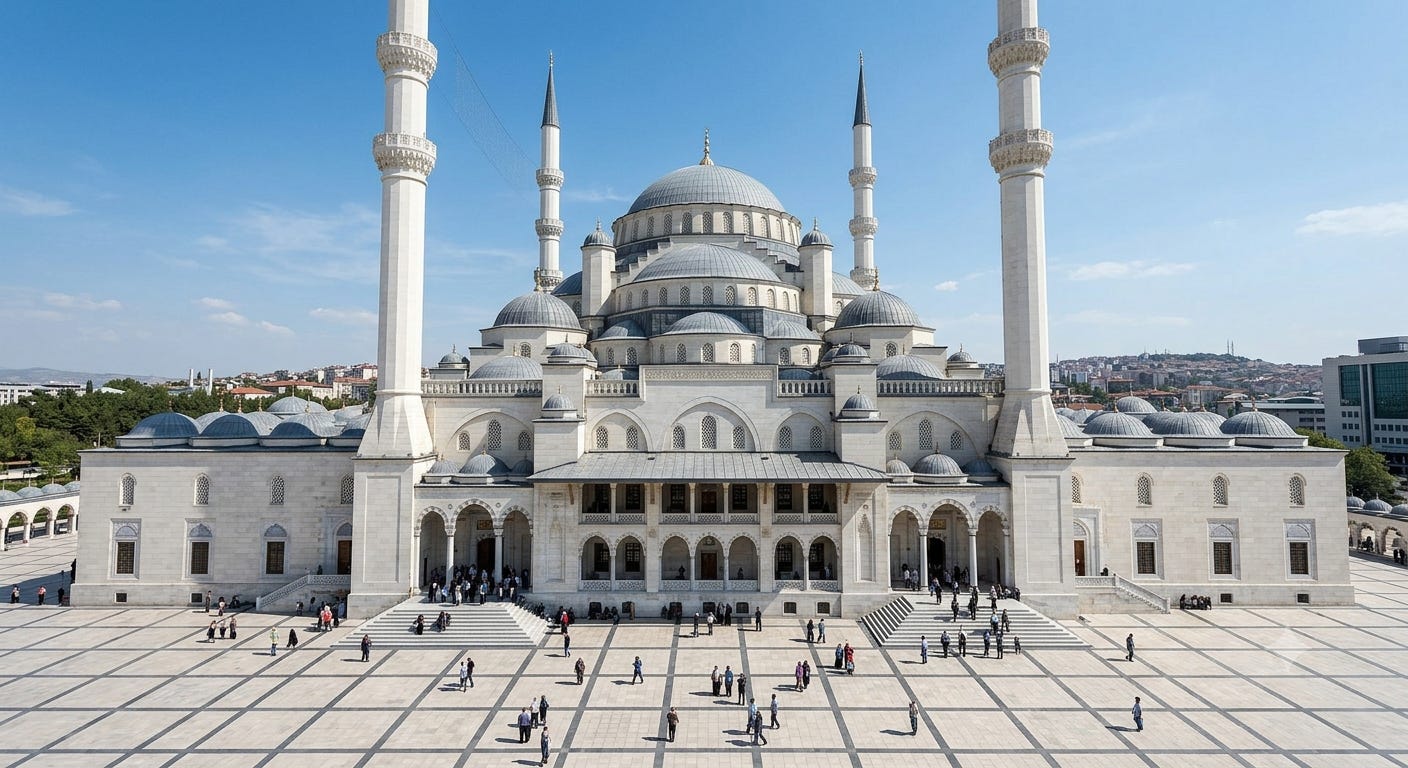
The Directorate of Religious Affairs (Diyanet) was not founded in 1924 in the form it holds today. Its founding purpose was to replace the abolished sheikh-ul-Islam–religious-order–endowment complex with a state-controlled organ of religious service, stripped of any connection to religious orders — the institution was designed to break religious autonomy, not to reproduce it.
The Directorate’s drift from its founding purpose did not come as a single blow but through five successive, mutually reinforcing stages.
The first crack had already opened before the transition to multi-party politics, in the CHP’s final years in power (1946-1950). In 1949, elective religious instruction was introduced in primary schools, the Faculty of Theology at Ankara University was established, and Qur’an courses began operating. In short, the boundary had already begun to give before the change of government. The clearest proof of this is the matter of the call to prayer. In 1932, the practice of reciting the call to prayer in Turkish began, part of the language reform’s reach into worship itself; by 1941 this had been written into the Penal Code. What was punished between 1932 and 1950 was not the Arabic call to prayer as such, but defiance of the laws of the Republican Revolution; the call to prayer was merely one arena in which that defiance showed itself. The same logic showed itself elsewhere: the fez was banned in public in 1925, the turban and religious robes in 1934. The call to prayer, dress, the change of alphabet — all were different fronts of the same revolutionary discipline; none was, in itself, a “ban on religion,” but rather one of the areas in which conduct appropriate to the new regime was prescribed.
On June 16, 1950, the Parliament reversed this policy. The government now belonged to the Democrat Party, but the majority of the CHP’s own deputies voted in favor as well. The party that had defended the practice for eighteen years applauded, from the floor, its own abandonment. This shows that the unraveling did not begin when the CHP fell into opposition — it had already matured within the CHP’s own base while the party still held power. Yet the 1950 law itself removed only the criminal penalty standing in the way of the Arabic call to prayer; the text did not ban the Turkish call to prayer, it merely made Arabic permissible again. But that freedom worked in one direction only: Arabic returned to every mosque at once, while the Turkish call to prayer effectively vanished. A ban that existed nowhere in law came about, of its own accord, in social practice — and this unwritten ban proved more durable than the written one had ever been. The state did not withdraw its hand in 1950; it merely changed its direction. What was punished between 1932 and 1950 was defiance of the laws of the Republican Revolution; the same logic operates today, only the content of what counts as defiance of the order has changed places.
Under Democrat Party rule (1950-1960) this line accelerated: İmam Hatip schools (Imam and Preacher Schools) were formally opened in 1951, religious instruction entered the curriculum in 1956. This, too, proceeded through the state and within the state’s own framework — but by now the expansion of the demand had itself become political currency. This period’s momentum was not spontaneous: the postwar tilt toward the West and Türkiye’s 1952 admission to NATO made religious conservatism a legitimate domestic component of the anti-Soviet alliance.
The real rupture came in the 1970s, at the level of doctrine. Founded in 1970 under the leadership of İbrahim Kafesoğlu, the Intellectuals’ Hearth constructed, in response to the left’s intellectual and social rise, a framework it called the “Turkish-Islamic Synthesis.” It presented the Turks’ conversion to Islam as a historical necessity and a perfect harmony; any position outside this synthesis — the left above all — was branded rootless and foreign. The Nationalist Front governments’ coalition with the National Salvation Party was this doctrine’s political vehicle; but there was a balance within the coalition itself — the MHP was the party insistently pressing the agenda, while its senior partner, the AP under Demirel, had no objection to these demands in the first place, being the direct continuation of the Democrat Party and already sharing this line without needing the MHP’s insistence.
After the coup of September 12, 1980, this doctrine was carried to the junta through reports prepared by the Intellectuals’ Hearth and, within two years, elevated to the state’s official position: it entered the Fifth Five-Year Development Plan as an appendix titled “National Culture Report”; the Atatürk High Institution of Culture, Language, and History — itself a creation of the coup, an abuse of Atatürk’s name for their own reactionary programme — institutionalized the thesis; and Article 24 of the 1982 Constitution made religious culture and ethics instruction compulsory in primary and secondary education. The position of the Directorate changed fundamentally here. The institution no longer undertook the removal of religion from the public sphere, but the state-sponsored dissemination of a specific religious-nationalist doctrine. The name stayed the same; the budget and the apparatus grew; the institution’s function reversed — the instrument of laïcité became the lever of its retreat.
After 2002, this reversal accelerated and deepened: the Directorate’s budget and apparatus continued to grow, its organization abroad expanded, and its authority over religious rulings and public morality spread from education into family life. The pace of this growth has been especially striking in recent years: the Directorate’s allocation rose 56.6 percent from 2022 to 2023, from 22.9 billion lira to 35.9 billion lira — a sum exceeding the combined budgets of seven ministries, including Interior, Foreign Affairs, and Trade. More decisive still is the relationship the institution has built with the networks of religious orders and congregations: the body that once existed to oversee these networks is now entangled with them.

The structures of the religious orders and congregations have, in fact, never accepted even the classical model of “respectful distance from the state.” From the founding of the Republic onward, whenever the opportunity arose, they pursued a strategy of seizing the state, sharing in political power, or replacing it outright. Strengthened by capital backing, these structures have involved themselves directly in the struggle for political power, including through attempted military coups.
In other words, religious structures are not content even with secularism. It should not be forgotten that even England, secularism’s own homeland, placed historical limits on religious institutions’ acquisition of property: the Statutes of Mortmain of 1279 and 1290 forbade the Church from acquiring land without royal license — even in secularism’s mildest form, the one that claims not to interfere in religious affairs, the property of religious institutions was never unlimited. What the religious orders and congregations in Türkiye demand today goes even beyond this: an unbounded freedom, with no ceiling whatsoever, over networks of foundations and holding companies, land, schools, media, and capital accumulation. What is aimed at is a full theocratic regime, achieved by dismantling what remains of laïcité’s protections. Their defense of secularism is a tactical step; that tactic conceals the strategic goal behind it — the demand for a fully theocratic regime. Secularism, raised against laïcité, is that strategic goal in its concealed form.

Regrettably, this slippage between laïcité and secularism has spread to the left as well. Şerif Mardin’s “center-periphery” thesis and Nilüfer Göle’s post-secular approach both, in fact, grew out of liberal intellectual soil. Mardin, advancing this thesis in 1973, read Turkish politics through the tension between a bureaucratic-laïque “center” and a conservative-religious provincial “periphery,” framing the resistance laïcité provoked in the provinces as a cultural rather than a class conflict. Göle, for her part, read the visibility of veiled and religious women in public life as an erosion of secularism’s hegemony, turning the boundary between the laïque and the religious itself into something “to be questioned.” These theses, in portraying laïcité as an instrument of cultural oppression, displaced class analysis and metastasized well beyond the liberal left, into other currents of the left as well. In political practice, some circles on the left — even some that call themselves socialist or communist — present the abolition of the Directorate as a “progressive” demand, unknowingly taking up a secularist position.
Consider what would follow if the thesis, voiced by these circles on the left, that “the Directorate must be abolished,” were actually carried out. In today’s Türkiye, religious organization tolerates no vacuum; the moment the state-controlled institution withdraws, the only force positioned to fill that space is the network of religious orders and congregations — already organized, already capitalized, already allied politically. A Türkiye without the Directorate would not be a Türkiye in which religion withdraws from public life, but one in which every mosque becomes its own separate stronghold of some religious order, in which religious authority breaks free of central oversight altogether and attaches itself directly to the capital of the congregations. To abolish the Directorate is to invite not laïcité but a theocratic fragmentation that goes even beyond secularism. The problem is not the institution’s existence but whose hands it is in and what it serves; the solution is not to abolish it but to return it to its true function — closing every road that leads from the religious public sphere to political power.

The way to strengthen laïcité is not to abolish the Directorate of Religious Affairs but to return it to its founding purpose. This requires work on six fronts at once.
Reform of the Directorate. The Directorate’s ties to religious orders must be cut, and its staffing rebuilt on laïque, scientific criteria. The institution must operate not as it has since changing hands after 1980, but according to the founding logic of 1924 — as the instrument of religion’s removal from the public sphere.
Education. Compulsory religious culture and ethics instruction must become elective, and educational institutions run by religious orders and congregations must be closed. This course, made compulsory by Article 24 of the 1982 Constitution, is the lasting imprint of the Turkish-Islamic Synthesis on the education system; to remove it is to erase that imprint.
Economic Oversight. Religious capital and foundation-holding structures must be placed under strict financial supervision, and rent-seeking networks broken up. The issue is not transparency alone but property itself: in a field where even England, secularism’s own homeland, placed historical limits on religious institutions’ acquisition of property, the unlimited accumulation of capital by Türkiye’s religious orders and congregations cannot be permitted.
Media Oversight. Religious-order media must be subject to transparent oversight, and the principle of laïcité made mandatory in public broadcasting.
The Public Sphere and Legal Strengthening. The constitutional protection of laïcité must be reinforced, with clear sanctions against activities directed against it.
The Left’s Task. The left must claim laïcité not as a cultural preference but as part of the class struggle, and carry it forward on an anti-imperialist, anti-capitalist line. To fall for the conceptual slippage that grew out of Mardin’s and Göle’s liberal ground, and to imagine the abolition of the Directorate as a “progressive” demand, is to serve secularism without realizing it.
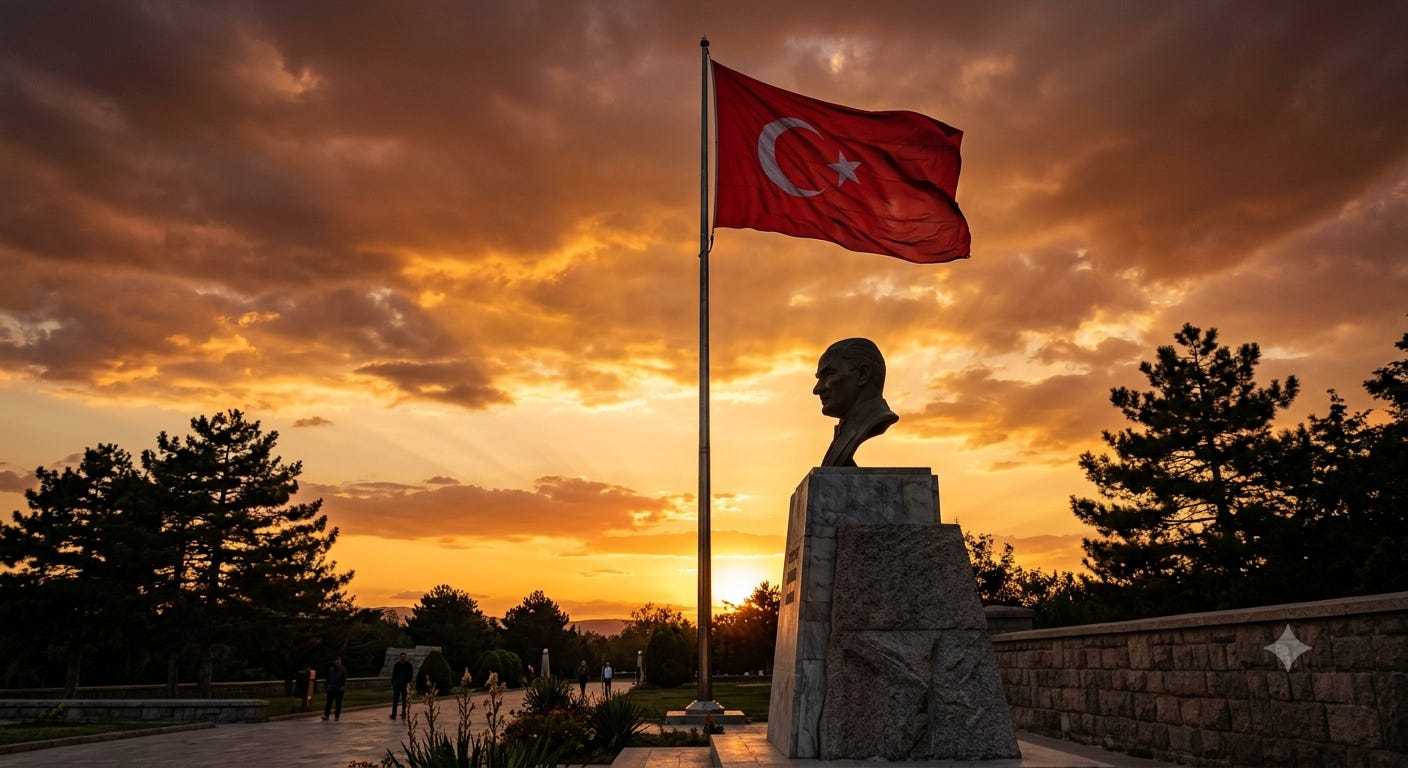
Laïcité is an alliance of the state and the people against the church, or against religious congregations. Secularism is an alliance of the congregation and the people against the state.
Laïcité and secularism are not a matter of tone or register; they are structurally, historically, and from a class perspective in opposition to each other. One is the product of abolition and active control, the other of reciprocity and withdrawal. The experience of the Vendée in France, the Law of Laïcité of 1905, and Türkiye’s own National Struggle and history of rebellions all make clear that laïcité is a necessary defense against religious reaction. Atatürk’s resolve to give reactionaries no opportunity, the founding logic of the Republic of Türkiye, the demands of the class struggle, and the survival of the Republic itself all point to the same conclusion: the one defensible concept is laïcité.
A laïque Republic cannot be secular【●】
◇This text was composed from the author’s own ideas, arguments, and source selection; a large-language-model tool was used during composition for prose editing. All intellectual and scholarly responsibility for the content rests with the author.












.png)



.jpg)


 English (US) ·
  French (CA) ·