

.png) 1 day ago
16
1 day ago
16
PROTECT YOUR DNA WITH QUANTUM TECHNOLOGY
Orgo-Life the new way to the future Advertising by Adpathway
How Natural Remedies for Stress Relief Work
Natural remedies for stress relief work by calming the body’s stress response and supporting the nervous system. This guide explains how herbs, nutrients, and lifestyle shifts can lower stress hormones and help you feel steadier.
Stress is not just a feeling. It is a physical response. When you face pressure, your body releases hormones that prepare you to react.
That system was built for short bursts. Modern life keeps it switched on. Over time, that constant activation wears you down.
Here is the key point most people miss: you cannot think your way out of a stressed body. You have to work with the body itself.
Below, we break down the science, the best supplements, and the daily habits that actually move the needle.
The Role of Cortisol in the Stress Response
Cortisol is the body’s main stress hormone, released by the adrenal glands to help you respond to pressure. In short bursts, it sharpens focus and raises energy. When levels stay high, sleep, mood, and immunity suffer.
The Cleveland Clinic overview of cortisol explains that cortisol follows a daily rhythm.
Best Supplements for Stress Relief
The best supplements for stress relief are magnesium and B complex vitamins, which support the nervous system and energy production. Both are common gaps in the modern diet, and both play a direct role in how calm or anxious you feel.
Magnesium and B Complex Vitamins
Magnesium helps relax muscles and calm the nervous system. Many adults do not get enough from food alone. Leafy greens, nuts, and seeds are the richest sources.
A few practical notes:
- Choose magnesium glycinate for calm and sleep support
- Choose magnesium citrate if you also want digestive help
- Look for methylated B12 for easier absorption
- Take B vitamins in the morning, since they can be energizing
Pro Tip
Magnesium and calcium compete for absorption. If you take both, space them a few hours apart. Most people take magnesium at night, which also helps with sleep.
Herbs for Stress and Anxiety: What the Research Shows
Herbs for stress and anxiety have a long history in botanical medicine, and some now have real clinical backing. The strongest evidence points to a small group of adaptogens and nervine herbs that help the body handle pressure.
Adaptogens and Nervine Herbs
A few herbs stand out, and each has a distinct use case:
- Ashwagandha (Withania somnifera). The most studied adaptogen for stress. It appears to blunt cortisol response and improve sleep quality. Common doses in research range from 300 to 600 mg of a standardized root extract daily. Effects typically build over four to eight weeks.
- Rhodiola rosea. Often used for mental fatigue and burnout rather than acute anxiety. Standardized extracts usually contain 3% rosavins and 1% salidroside, dosed at 200 to 400 mg in the morning.
- Holy basil (Ocimum tenuiflorum, tulsi). A gentler adaptogen that supports a calm mood. Often taken as a tea or 300 to 600 mg extract.
- Chamomile (Matricaria chamomilla). A nervine with mild anxiolytic activity, well suited to evening use. A cup of strong tea or 220 to 1,100 mg extract is common.
- Lemon balm (Melissa officinalis). Calming without heavy sedation. Often combined with chamomile.
- Passionflower (Passiflora incarnata). Calming and often used before bed. Frequently paired with valerian for sleep.
- Look for a standardized extract so the dose is consistent
- Check for third-party testing on the label (USP, NSF, or ConsumerLab are common verifiers)
- Avoid proprietary blends that hide how much of each herb is inside
- Prefer single-herb products when you are starting out, so you can tell what works
Drug-Herb Interactions Most Guides Skip
This is the safety gap in nearly every article on natural stress relief. Herbs are not automatically safe because they are natural, and several common ones interact with prescription medications.
- St. John’s Wort induces the CYP3A4 enzyme and can reduce the effectiveness of SSRIs, oral contraceptives, blood thinners like warfarin, and some HIV and transplant medications. It can also raise serotonin when combined with antidepressants.
- Ashwagandha may increase thyroid hormone levels, which matters if you take levothyroxine. It can also add to the effects of sedatives and blood pressure medications.
- Rhodiola may have a mild stimulant effect and can interact with MAOIs.
- Valerian and passionflower can compound the sedation from benzodiazepines, sleep aids, and alcohol.
- Ginkgo and garlic (sometimes included in stress blends) can increase bleeding risk with anticoagulants.
Watch Out
If you take an SSRI, a blood thinner, thyroid medication, or a benzodiazepine, do not start a stress herb without checking with your pharmacist first. Bring the actual bottle so they can read the label. This single step prevents most serious interactions.
How to Reduce Cortisol Naturally Through Lifestyle
Learning how to reduce cortisol naturally starts with daily habits, not pills. Sleep, movement, food, and breathing all shape your stress response more than any single supplement. But the habits that help depend on the kind of stress you are carrying. A ‘wired and tired’ pattern needs a different response than ‘anxious and racing thoughts.’
Match the Remedy to Your Stress Type
Use this selector to pick the two or three habits most likely to move the needle for you. Start there instead of trying everything at once.
- Prioritize sleep timing over sleep duration. Same wake time every day, even weekends.
- Eat protein and fat at breakfast to steady blood sugar through the morning.
- Take magnesium glycinate in the evening (200 to 400 mg elemental magnesium is a common range).
- Try a 10-minute body scan or legs-up-the-wall pose before bed.
- Start with breath work, not supplements. A longer exhale is the fastest lever.
- Use grounding techniques (below) when thoughts spiral.
- Consider lemon balm or chamomile tea in the afternoon.
- Cut caffeine after noon; it has a six-hour half-life and amplifies racing thoughts.
- Morning light exposure within 30 minutes of waking helps reset the cortisol rhythm.
- Rhodiola or a B complex in the morning may support energy.
- Short bursts of movement (10 minutes, twice a day) beat one long workout you skip.
- Prioritize magnesium and sleep before adding any herb.
- Reduce alcohol; it fragments sleep and raises next-day cortisol.
- Add a daily walk outdoors, ideally in green space.
The Basics That Carry the Most Weight
Whichever pattern fits you, these fundamentals still apply:
- Sleep on a schedule. Go to bed and wake up at the same time. Aim for seven to nine hours.
- Move your body. A brisk walk lowers stress hormones. You do not need a hard workout.
- Cut back on caffeine and alcohol. Both push cortisol up, especially in the evening.
- Eat whole foods. Steady blood sugar keeps mood steady. Skip the sugar spikes.
- Try 10 minutes of breathing. Slow, deep breaths switch on the calming side of your nervous system.
None of this is dramatic. That is the point. Small, repeatable habits beat big overhauls you quit in a week.
Key Takeaway
The single biggest lever for cortisol is sleep. Fix your sleep first, and everything else gets easier. Supplements and herbs work better when the basics are in place, and when they are matched to the kind of stress you actually have.
Somatic Stress Release and Grounding Techniques
Somatic stress release uses the body to discharge stored tension, while grounding techniques bring your attention back to the present moment. Together, they calm the nervous system when your mind will not slow down.
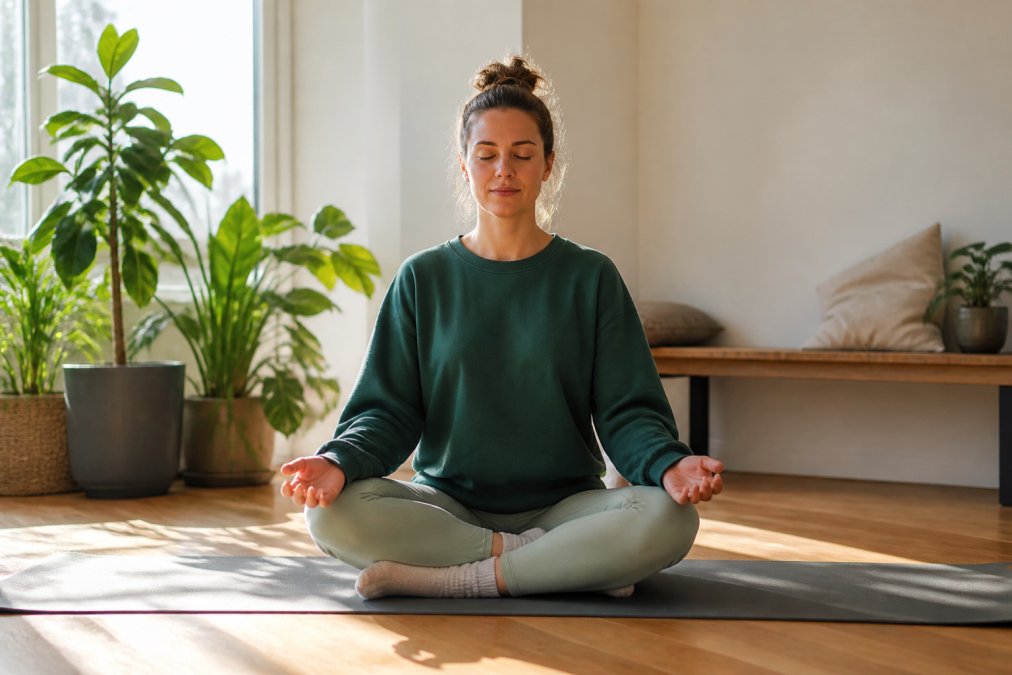 Woman sitting in a grounding meditation pose on a yoga mat for stress relief in a sunlit room
Try these:
- Shake it out. Stand and gently shake your arms and legs for one minute.
- Breathe long. Inhale for four counts, exhale for six. The long exhale does the work.
- Press your feet down. Feel the floor. This is a simple grounding technique.
- Hum. A long hum vibrates the vagus nerve, which helps trigger parasympathetic activation.
Safety, Interactions, and Personalized Remedy Matching
Personalized remedy matching means choosing herbs and supplements based on your health history, medications, and goals, not on trends. What works for one person can be risky for another.
Before you start anything, run this checklist:
- List every medication and supplement you take
- Check for drug-herb interactions with a pharmacist
- Confirm your dose with a doctor if you are pregnant or nursing
- Start one remedy at a time, so you know what works
- Give it four to six weeks before judging results












.png)






.jpg)



 English (US) ·
  French (CA) ·