

 14 hours ago
13
14 hours ago
13
PROTECT YOUR DNA WITH QUANTUM TECHNOLOGY
Orgo-Life the new way to the future Advertising by Adpathway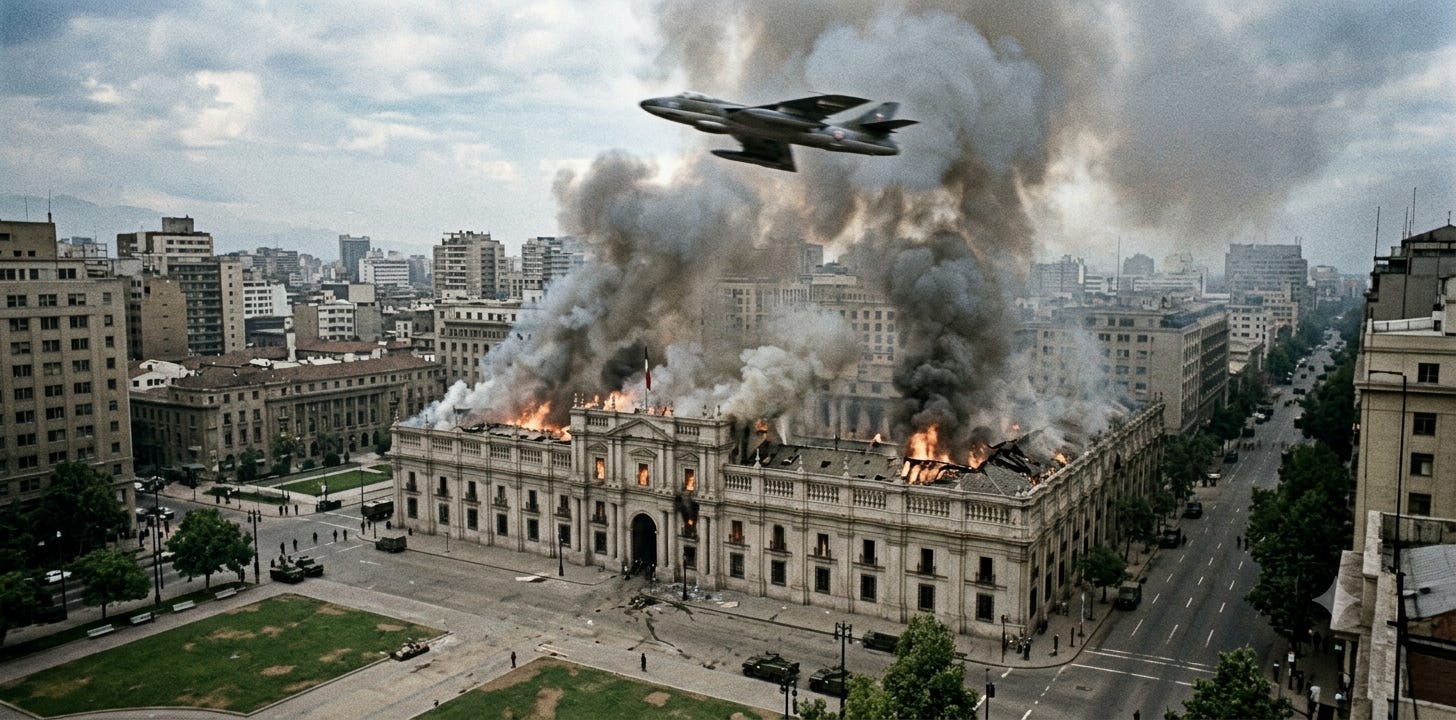
On the morning of September 11, 1973, Hawker Hunter jets descended over Santiago and bombed the Moneda Palace. That same week, a cohort of young economists trained at the University of Chicago — soon to be known as the “Chicago Boys” — landed in Santiago with a blueprint for a free-market program packed in their suitcases. Tanks in the streets, thousands detained at the National Stadium, the trucks of the Caravan of Death — a special military unit moving from city to city to physically eliminate dissidents; and in a conference room across the city, men in ties drafting a privatization list. Same moment, same regime, same capital being served.
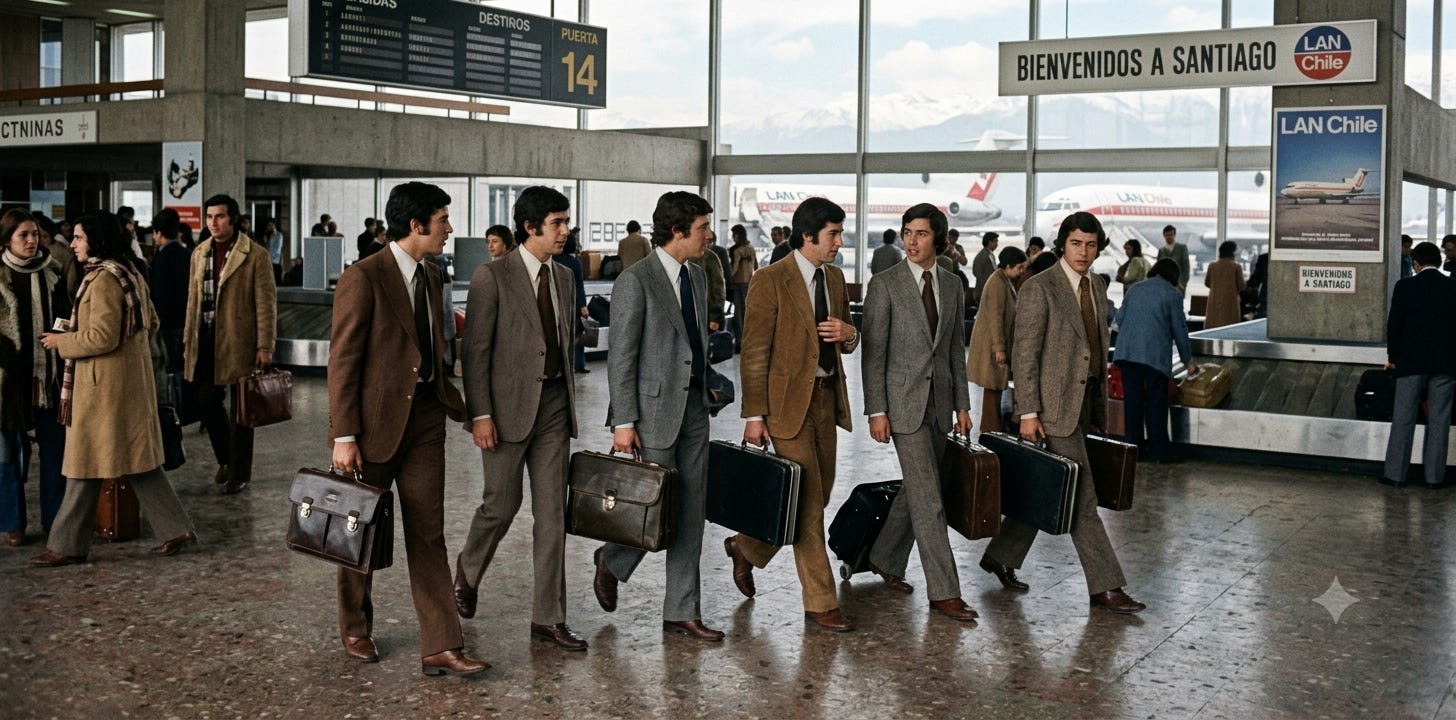
Milton Friedman himself had recommended the program; it was implemented under the junta’s protection. The question is simple: are the tank and the free market two strangers to one another, or two organs of a single body?
This essay argues the latter. And to argue it, one must first see how a certain widespread illusion gets constructed in the first place.
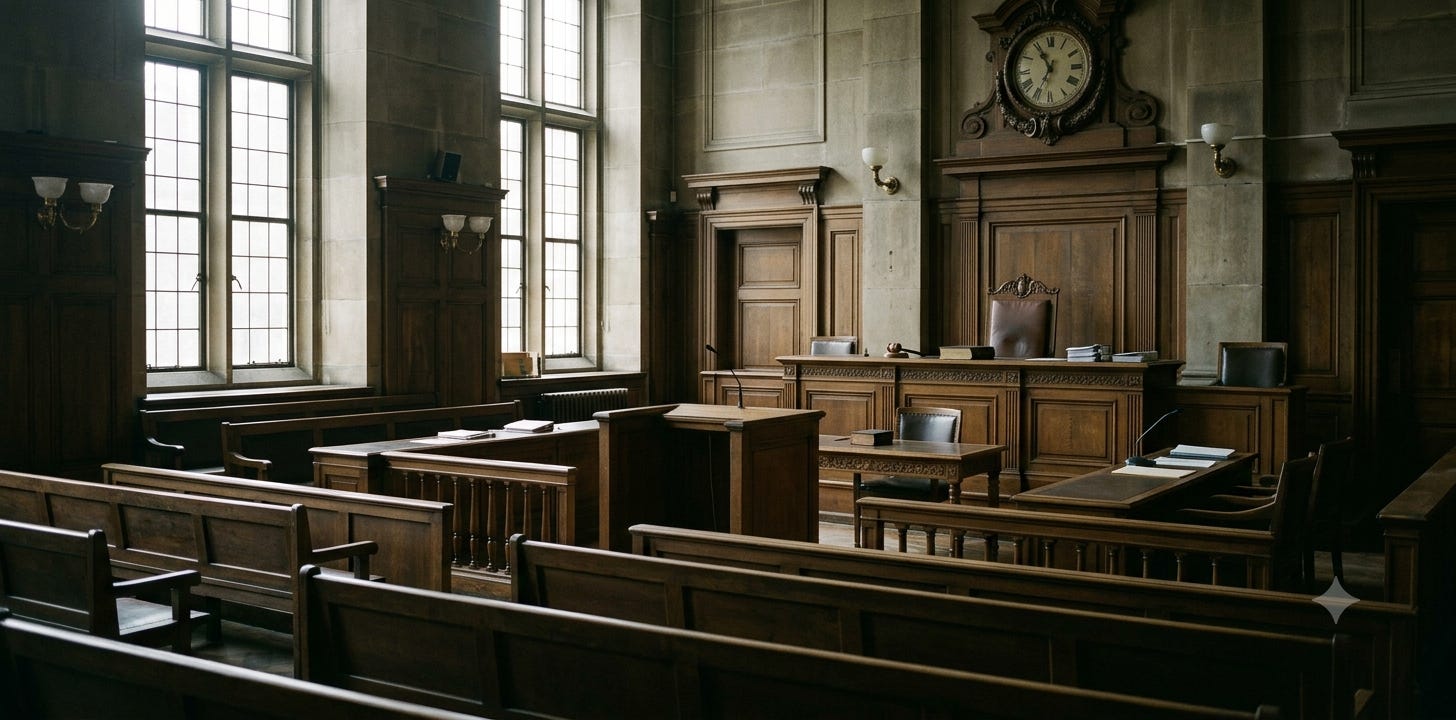
Liberal political theory’s most entrenched claim about itself is this: liberalism is the opposite of totalitarianism, structurally immune to it. At first glance the claim looks empirical — as though history had been surveyed and no liberal regime found guilty of totalitarian outcomes. The mechanism actually runs the other way. Liberalism is first defined as “the non-totalitarian political form,” and from that definition the conclusion “liberalism cannot be totalitarian” simply follows. The conclusion was smuggled into the premise from the start; it was never demonstrated, only defined.
The tautology’s machinery is concrete enough to trace. Whenever a liberal regime commits a totalitarian act — building a camp, disappearing a dissident, toppling an elected government — the act is never counted as evidence of the regime’s totalitarian character. Instead: “that wasn’t really liberal, it was a deviation, an aberration,” and the definition survives untouched. Every counterexample gets defined out of existence. This is the political-theory cousin of the “no true Scotsman” fallacy: a rule made permanently unfalsifiable, because every exception is excluded from it in advance.
A more basic correction is needed here, though. Liberalism is not the name of an independent socioeconomic formation, nor of a form of state administration standing on its own ground. It has no foundation apart from capitalism. It is a political-administrative form that capitalism produces and to which it remains internal. Fascism, and open military authoritarianism, are no different — all of them are administrative manifestations of a single socioeconomic formation, capitalism, not separate formations in their own right.
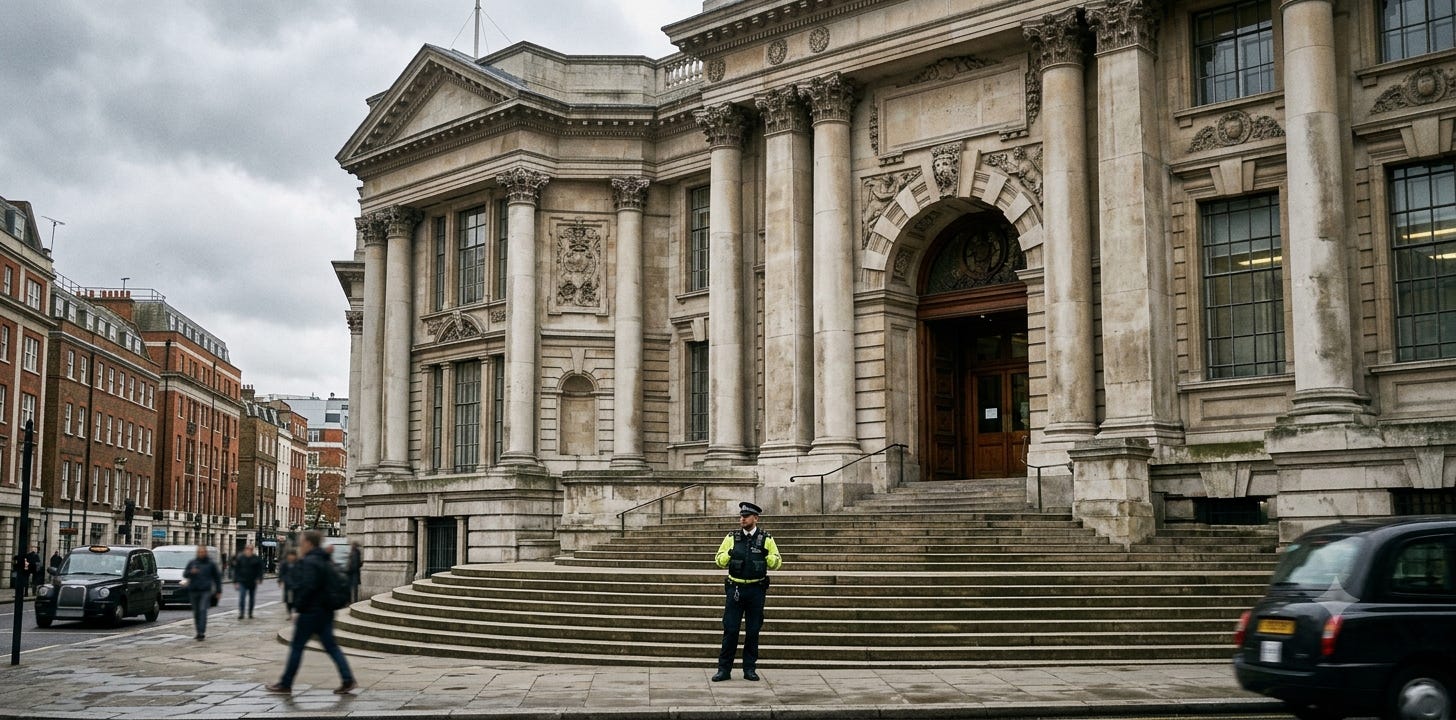
Refuting liberalism’s claimed immunity to totalitarianism requires putting the concept of totalitarianism itself on class ground. We cannot see the same regime wherever totalitarianism appears; wherever we speak of a totalitarian state, we are obliged to ask whose class interest is operating behind it. This is exactly where Hannah Arendt’s theory of totalitarianism runs aground: she builds totalitarianism as a formal category — single party, terror apparatus, ideological mobilization — and with that formal yardstick places Nazi Germany and Stalin-era Soviet Union in the same bracket. But fascism is not a name for every use of violence. Violence becomes fascism when it fuses with the interests of finance capital, when it is deployed to realize those interests; outside of that it is not fascism, it is the violence, the totalitarianism, of some other class. Arendt cannot make this distinction, because in her framework force itself becomes an explanatory category — asked to answer for itself, without anyone asking whose class content stands behind it.
This is where the law itself needs examining. Law is not, in itself, merely words written on paper; but without an enforcing power behind it, that is exactly what it remains — words on paper, carrying no meaning at all. That enforcing power is the state’s power. The state is a class institution. Whichever class stands behind it, the enforcing power operates on that class’s behalf. In the bourgeois state, the power behind the law operates in the interest of the bourgeoisie; under a different class’s state, the identical legal text and the identical enforcing power can operate quite differently. The text of the law may stay fixed while the power that animates it does not.
Does force itself — coercion — carry any inherent quality? It does not. The same weapon can serve occupation or serve liberation; what decides the outcome is not the weapon but whose hand holds it, which class interest it serves. When the French occupied Anatolia, they carried out that occupation with the weapons in their hands. Under the Treaty of Ankara, as the French withdrew, they left those weapons behind in Turkey; the Turkish national liberation struggle took them up and used them for its own cause, just as weapons obtained from Russia served the same cause. The same weapon was an instrument of occupation in French hands and an instrument of national liberation in Turkish hands. The weapon itself did not change; what changed was whose hand held it and what purpose it served. Force works the same way: it carries no quality of its own, and what determines its outcome is the class will standing behind it.

There is a real freedom in liberalism — this need not be denied. But that freedom belongs, always and only, to capital, to the bourgeoisie. Before abstract law, the individual counts as formally equal and free; but as shown above, that equality and freedom, absent a class-based enforcing power behind them, amount to an empty formality. The worker is free of — that is, dispossessed of — the means of production and of property, and for that reason is compelled to sell labor power; this compulsion rests on no legal coercion whatsoever, and in fact presents itself in the form of a “free contract.” The worker is doubly free: free in owning his own person, and free — in the sense of dispossessed — of the means of production, of property. But that second freedom is not freedom at all; it is a deprivation. Capital’s freedom, by contrast, is actual, real, and arises from actually owning the means of production.
The only “freedom” available to the worker, and to every stratum outside the bourgeoisie, is the freedom to choose among products dressed in different packaging and sold under different names, though these products in fact perform the same function — consumer freedom, in other words. This is precisely the freedom capitalism promotes most, because it offers no real choice at all; it manufactures only the illusion of choice among variations in packaging and branding of what is essentially the same commodity. Capital’s freedom is real, operating at the level of production and ownership; the freedom of everyone else operates only at the level of consumption, a merely formal abundance of options.
Capital wears whatever mask its own freedom requires. Capitalism is not a single-faced mode of production. Where liberal economics cannot resolve matters, another mask is put on — authoritarianism, and where necessary, open fascism. But capital, exactly as under liberal order, remains free throughout. Fascism is the bloody, terrorist dictatorship that a small fraction of the bourgeoisie imposes on every stratum of society, including the rest of the bourgeoisie itself — yet it remains a face of capitalism, because it rests on the same mode of production as liberalism does. If liberalism is a mask, fascism is another face of the same body; they are not separate, mutually alien systems.
How, then, can a regime, keeping its liberal appearance perfectly intact, with no shell ever cracked, turn a man from hero into traitor? The answer takes concrete shape in the story of the Norwegian resistance fighter Asbjørn Sunde, told in full at this essay’s close. For now, it suffices to say this: a man received at the royal court in 1947 can be thrown in prison by the very same state in 1954; across those seven years the regime did not change, the constitution did not change, the king did not change, and neither did the man or the work he had done. What changed was what capital, and its state, needed at that moment. The liberal-democratic shell never cracks, because it never has to; inside that same shell, the decision as to who counts as enemy and who as hero is silently rewritten according to the needs of the conjuncture.
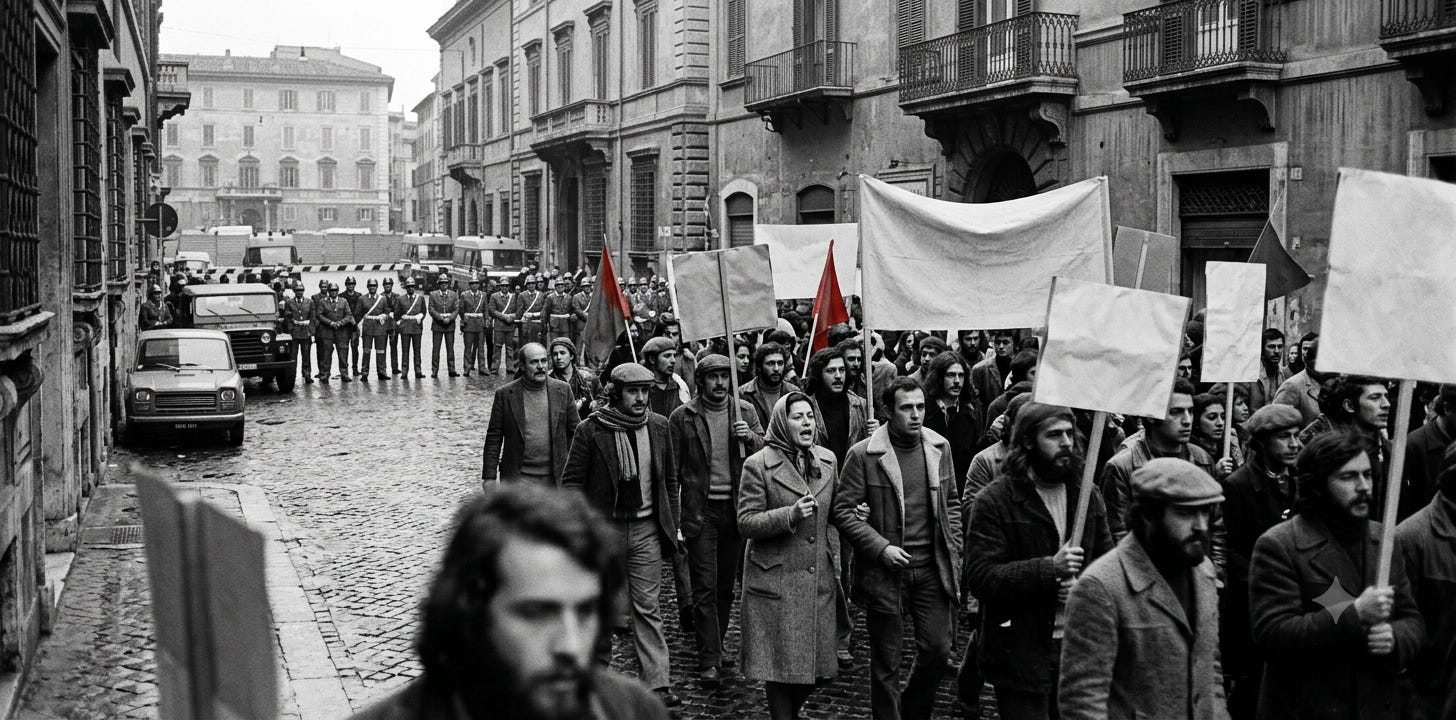
In Western Europe and North America, the bourgeoisie’s ideological leadership is exceptionally solid. Capitalism and liberalism have been made to appear, to broad populations, as the natural, reasonable, sensible order of things. This solidity has a material foundation: from imperial super-profit, these societies can afford to distribute enough welfare to their own populations that the system itself is never threatened. This is why, there, a man who calls himself a communist is regarded as the harmless local eccentric — popular opposition is already thin, and what little exists poses no real threat.
Across the rest of the world, the situation is reversed. In the countries of the South, people do not experience liberalism and capitalism as the natural order of things or as what common sense demands; there, the bourgeoisie’s task of securing ideological leadership is not easy. This is why liberal order can only be imposed there by force. And communists there are not treated as harmless eccentrics — the bourgeoisie sees them as a genuine threat, and the working population takes them seriously and listens.
This explains the form that liberal totalitarianism takes. Where ideological hegemony is solid, at the center, crude force is unnecessary; intervention is thin, covert, aimed at single targets — an assassination, a case that never gets solved, a career quietly ended. Where ideological hegemony cannot be secured, at the periphery, force must be crude, mass, and open: the coup, the massacre, the camp. The mechanism is identical — the preservation of capital’s freedom — and what varies with geography is only the coarseness of the instrument.
Even within Western Europe, wherever the Communist Party grew genuinely strong, this thin intervention hardened. In Italy, Aldo Moro was kidnapped and killed in 1978 while pursuing a “historic compromise” government with the Italian Communist Party — a party that had by then already been thoroughly tamed and domesticated, yet even that much the bourgeoisie could not tolerate. A self-styled Red Brigades group ambushed Moro’s car on Via Mario Fani in Rome on March 16, 1978, killing all five of his bodyguards and abducting him; fifty-five days later he was killed, and his body was found in the trunk of a red Renault 4 parked on a street within walking distance of both the Christian Democrat and Communist Party headquarters — left, as it were, at the doorstep of both sides of the compromise. The compromise project never came into being. Some of the group’s own founders later accused Mario Moretti, who personally led the kidnapping, of being an intelligence asset; and an official Italian parliamentary commission report published in 2000 concluded that the country’s “strategy of tension” attacks had been organized and supported by figures inside state institutions and by structures linked to American intelligence — a contested finding, but one reached by an organ of the Italian state itself. In France, comparable multi-pronged efforts worked to break the Communist Party’s influence. In the United States, no open military dictatorship was required either: the Taft-Hartley Act of 1947 forced union officials to swear they were not communists, and when twelve CIO-affiliated unions refused to sign, they were expelled from the federation in 1949-50, purging the labor movement of its most militant cadres. The HUAC hearings and the FBI’s COINTELPRO operations finished the job: the FBI sent Martin Luther King a letter urging him toward suicide, and played a role in the 1969 killing of Black Panther leader Fred Hampton, carried out in coordination with local police. Not a single tank was needed for any of it.
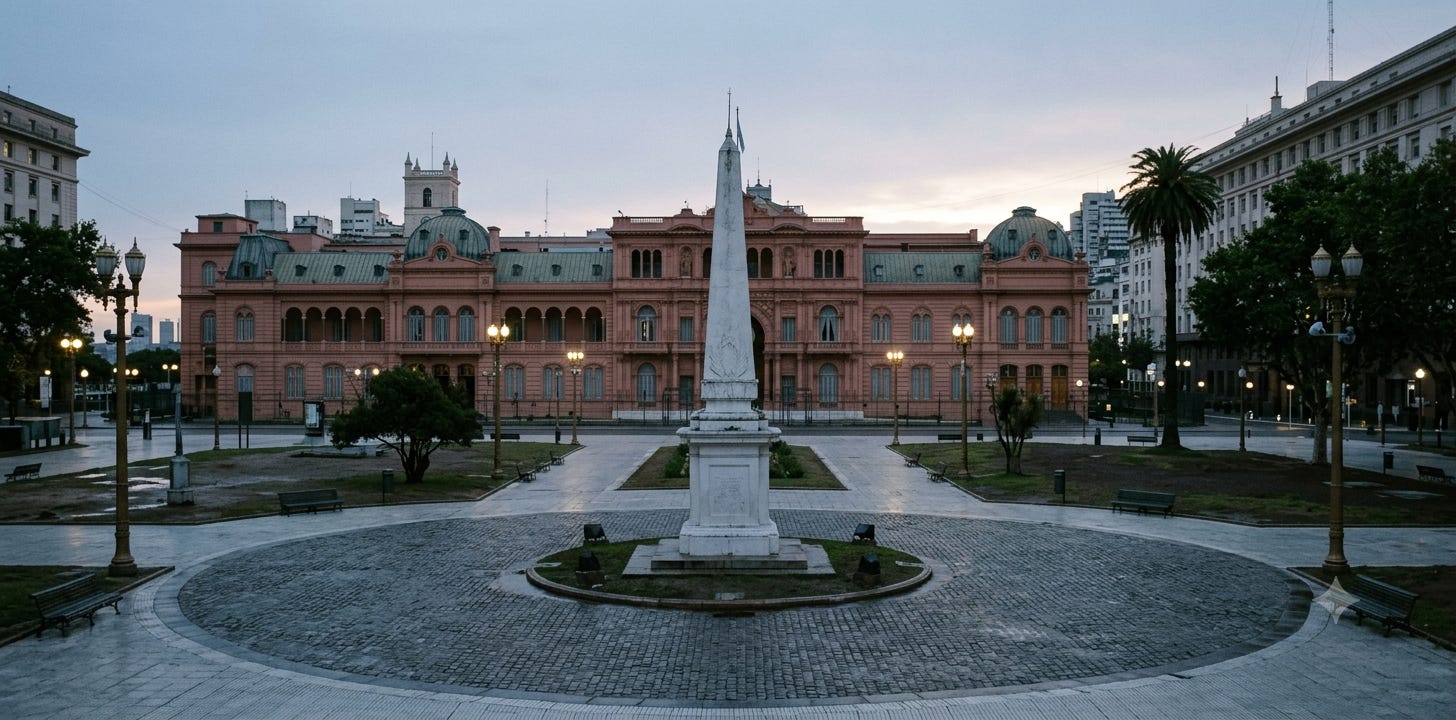
The historical record shows a pattern confirming the framework above: wherever capital’s freedom comes under threat, physical annihilation comes first, and the market mechanism is then installed under its protection.
In Indonesia in 1965–66, General Suharto physically annihilated the Indonesian Communist Party — a party of more than three million members, the third-largest communist party in the world after the Soviet and Chinese parties, encompassing roughly twenty million people once its affiliated unions, peasant, and youth organizations are counted. Western and official sources put the death toll between three hundred thousand and one million, but Sarwo Edhie, the officer who personally directed the massacre, himself admitted to a figure of three million. It should not be forgotten that the lower estimates trace back to the perpetrator’s own diplomatic sources, while the highest estimate came from the perpetrator’s own mouth. In East Java the killing was so extensive that rivers became clogged with corpses, turning into a public health hazard. Immediately after the massacre, a group of economists known as the “Berkeley Mafia” restructured the Indonesian economy under an IMF and World Bank prescription; the mining concession granted to Freeport-McMoRan was among the first fruits of that process.
In Argentina, the military junta of 1976–1983 installed José Alfredo Martínez de Hoz as economy minister the moment it took power — Videla and Martínez de Hoz began their work at the very same time. Between ten and thirty thousand people were “disappeared”: prisoners were drugged, stripped, loaded onto military aircraft, and thrown alive into the Río de la Plata or the Atlantic — a method of annihilation that erased the body along with the perpetrator, leaving families with nothing but uncertainty. Plan Condor, backed by Kissinger, built a regional coordination network founded by Chile, Argentina, Uruguay, Paraguay, and Bolivia, with Brazil joining later. When the economic program collapsed, the regime launched the Falklands War in search of new legitimacy.
In Russia between 1991 and 1993, the “shock therapy” of Yegor Gaidar and Jeffrey Sachs was imposed by decree, with no democratic approval whatsoever. In 1993 Yeltsin shelled parliament — the White House — with tanks; official figures put the dead at over a hundred. The new constitution adopted in December 1993 granted the president sweeping decree powers. Vouchers distributed to every citizen were supposed to make the population co-owners of state property; but facing inflation and poverty, most ordinary people traded away the one thing of value they held, sometimes for nothing more than a pair of jeans or a bottle of vodka. A small number of former bureaucrats and black-market operators bought up these vouchers en masse and became overnight owners of vast state enterprises — this is how today’s Russian oligarchy was born. Yeltsin was branded a “democrat,” Putin a “dictator” — the latter after the Yukos affair and his objection to NATO expansion. The criterion was never the character of the domestic regime; it was alignment with markets and geopolitics. Sachs himself was no exception to this cycle. Today he cuts a familiar figure on various programs as a sharp critic of US foreign policy and IMF prescriptions — yet he offers no self-criticism toward those who paid the price for his Russian prescription, and even claims the program "wasn't really his." That claim carries some truth: it was drafted according to the wishes of his patrons at the center of imperialism.
In Türkiye, the January 24 decisions (Özal, IMF-backed) had already been announced before the coup of September 12, 1980; but the closure of DİSK, the mass arrest of trade unionists, and the effective abolition of the right to strike became possible only through the coup itself. Earlier, on March 12, 1971, parliament was not dissolved and parties were not banned — officially a “memorandum,” not a coup. Yet Demirel was forced to resign, technocratic governments were installed with the army’s approval, torture was carried out at Mamak and Ziverbey, and Deniz Gezmiş, Yusuf Aslan, and Hüseyin İnan were executed in 1972. The institutional shell was preserved while the substance was purged — the purest mechanism of liberal totalitarianism: no constitutional form changes at all, while the political content that form protects changes radically.
The Scandinavian countries are not exempt from this history either. Sweden has documented roughly four thousand five hundred lobotomies and sixty-three thousand forced sterilizations; in Norway the figure stands around forty thousand, carried out between 1934 and 1979. The targets were not directly political dissidents but groups marked as racially and socially inferior — above all the Traveller community known as Tattare, and the poor. This distinction matters, but it hardly makes for a history social democracy can take pride in.
Sweden itself confirms the center’s pattern of thin intervention. Prime Minister Olof Palme pursued a relatively autonomous foreign policy, championed a nuclear-weapon-free zone in Northern Europe, and sought good relations with the socialist bloc. He was shot on a Stockholm street in 1986 while walking home from a cinema with his wife; the one man convicted was acquitted on appeal, and the case remains officially unsolved to this day. The Swedish researcher Ola Tunander’s work traces the assassination back to Western intelligence circles; according to Tunander, much of the affair of “Soviet submarines” said to have violated Swedish waters through the 1980s was in fact a false-flag operation staged by NATO circles, meant to make Palme’s disarmament and détente initiatives look absurd and mobilize public opinion against a Soviet threat. Palme was killed just two weeks before a planned visit to Moscow that could have marked a breakthrough in Soviet-Swedish relations. The case may remain in the dark, but the transformation Sweden underwent afterward speaks for itself: it joined the European Union, and then NATO — steps unthinkable under Palme. A similar pattern appears in the United States: the Kennedy assassination was not a coup carried out by military means, but the policy shifts that followed it carried, in effect, the consequences of one. Finland’s Cold War-era neutrality offers a mirror image of the same pattern: a policy that brought Finland real benefit, especially as an intermediary in trade between the Soviet Union and the West, was turned into a term of derision — “Finlandization.” That Finland is today a member of both the European Union and NATO is a transformation unimaginable at the time. Developments that could not even have been conceived under President Urho Kekkonen (1956–1982) were completed under President Alexander Stubb, a graduate of the assembly line Klaus Schwab built at the World Economic Forum to manufacture “Young Global Leaders.”
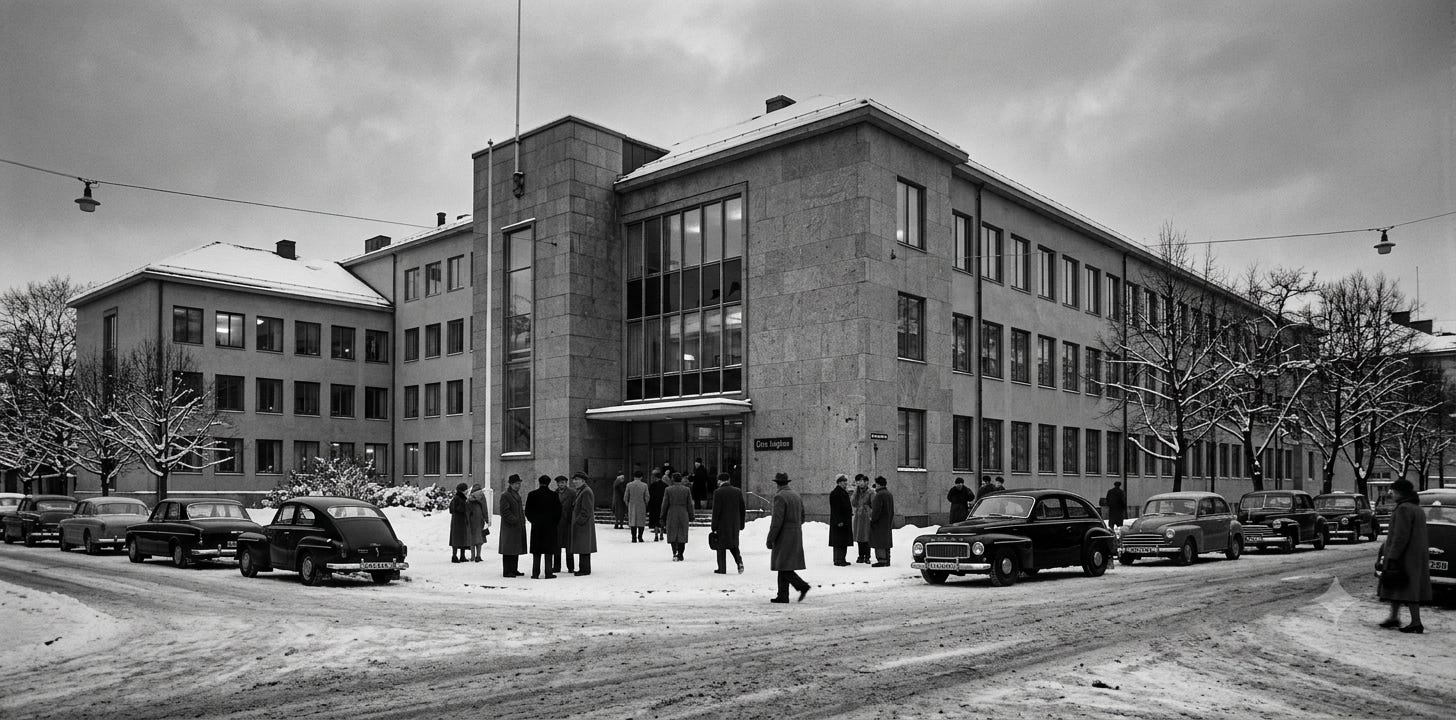
Asbjørn Sunde led the Osvald Group, one of the most effective resistance and sabotage organizations in Norway during the Second World War. After the war he was, for a time, received at the royal court as a hero whose book became a bestseller. Yet in 1954 the same state declared him a “Soviet spy” and sentenced him to eight years in prison; the historian Lars Borgersrud has shown the trial to have been an unproven “farce.” Official rehabilitation came only in 2013, years after his death. Resistance fighters with ties to British intelligence — Max Manus, Sønsteby — were, by contrast, declared heroes without interruption from the war’s end onward, and remained so.
What changed in between? The regime was the same, the constitution was the same, the king was the same, and the man himself, and the work he had done — sabotage against the enemy in wartime — were the same. What changed was what capital, and its state, needed at that moment: Sunde, a resistance hero in 1947 before Cold War lines had hardened, became a threat in the eyes of the same state once NATO membership and alignment against the Soviet bloc were settled facts in the 1950s. Håkon Lie, general secretary of the Norwegian Labour Party, has been documented by the 1995–96 Lund Commission report as an “informant” for the CIA; he was among the architects of an illegal surveillance network spanning the party, the trade unions, and the secret police.
The liberal-democratic shell never cracked. It never had to. Inside that same shell, the decision as to who counts as enemy and who as hero was quietly rewritten to suit capital’s interest — with no tank in the street, no parliament shut down. What was done in Chile with a tank, in Indonesia with mass slaughter, in Argentina with death flights, was done in Norway with a court verdict and a medal withheld. The instrument changed; the outcome did not. Capital’s freedom was preserved, at times behind a bloody mask, at times behind a quiet administrative decision.
The claim that liberalism is immune to totalitarianism survives neither logical scrutiny nor the historical record.【●】
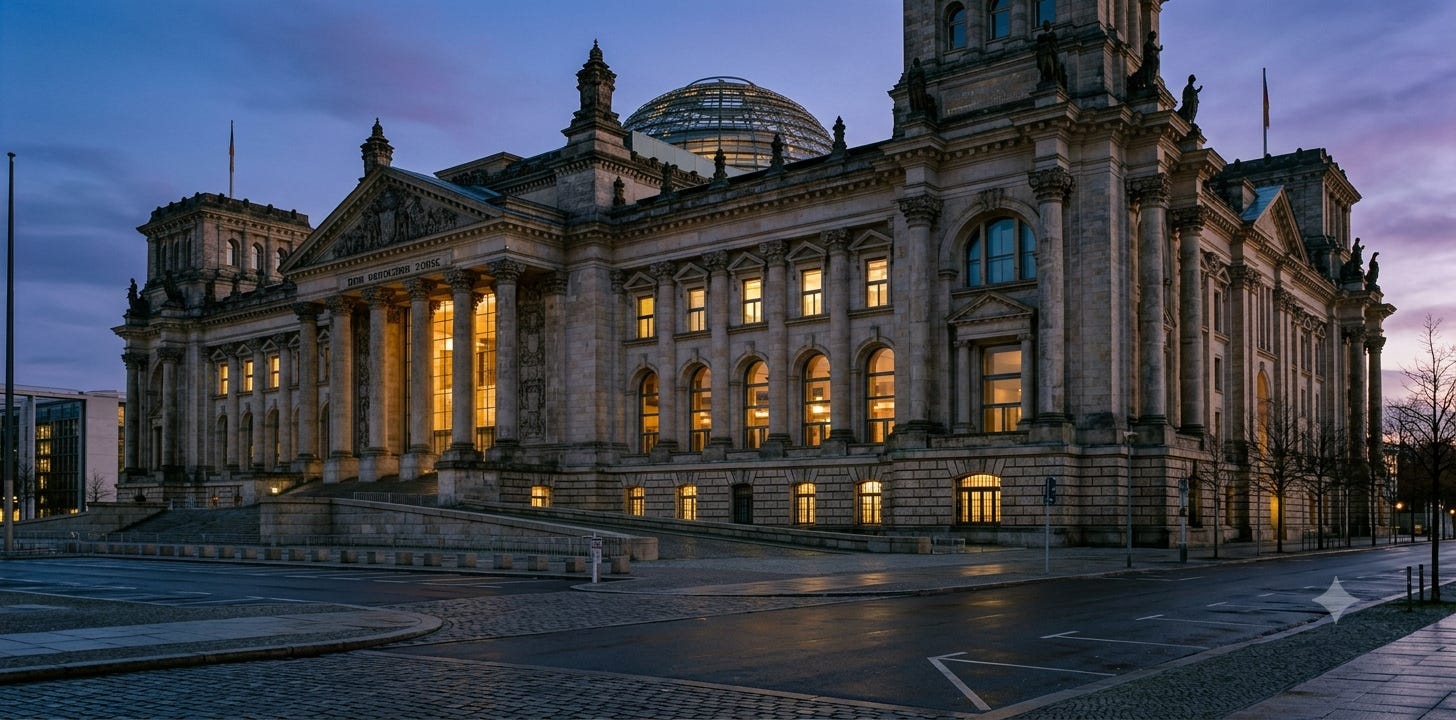
◇This text was composed from the author’s own ideas, arguments, and source selection; a large-language-model tool was used during composition for prose editing. All intellectual and scholarly responsibility for the content rests with the author.










.png)




.jpg)


 English (US) ·
  French (CA) ·