

 5 months ago
54
5 months ago
54
PROTECT YOUR DNA WITH QUANTUM TECHNOLOGY
Orgo-Life the new way to the future Advertising by AdpathwayPredictions that generative AI will eliminate tens of millions of jobs are scary enough. Behind the normal anxiety about the future of work is an even deeper fear: that this new technology will make human beings less necessary. But this fear rests on the mistaken assumption that resources are fixed and that we are all rivals fighting over a fixed number of jobs.
Economics does not explore supernatural mysteries but natural ones. Yet they are mysteries nonetheless, and perhaps the most basic economic mystery is the paradox of scarcity: scarcity forces people to make trade-offs; yet in a free economy, the process of making trade-offs results in greater abundance. Whenever there is rapid change, whether population growth, mechanization, or advancements in computing, we default to our natural focus on short-run scarcity. We imagine that there is “less to go around” and fewer opportunities to get ahead and provide for our families.
That intuition would be correct in a static economic system. It is wrong in a dynamic one. It makes the same error that Thomas Malthus made in the late 18th century.
For most of human history, the scarcity mindset worked. Growth hovered near zero. A bad harvest could mean famine. Malthus argued that because population growth outpaces growth in the food supply, certain “checks” on population are necessary, including famine, war, and disease. He did believe that preventative checks were possible, including contraception. But even his modern defenders believe that the choice to slow population growth is necessary. History has proven them wrong.
The Catholic Church also denies that conclusion. Children are blessings not problems. Every human being bears the image of God and possesses an inviolable dignity that does not hinge on their productivity or usefulness. The secular world’s embrace of contraception, abortion, and euthanasia is not merely personal and situational. It represents a belief that human society is improved by eliminating humans. Managing scarcity becomes an exercise in managing humanity.
The Church’s teaching also happens to be consistent with sound economics. Malthus was wrong—not because resources are infinite but because human creativity is. Over the past 50 years, the world’s population doubled while the absolute poverty rate plummeted—from around half to less than ten percent. Billions of people were lifted out of subsistence—but not by population controls. Instead, it was expanded production facilitated by innovation, specialization, and expanded trade in both goods and knowledge. The rebuttal of Malthusian economics is rooted in a core truth of Catholic social teaching: the human person is not merely a consumer but a creator, steward, and cooperator.
This is why we should be skeptical of economic pessimism in the face of technological change. Job-loss predictions treat labor and technology as substitutes: i.e., machines replace workers. But historically, the net effect of automation—even the automation of intellectual tasks—has been to reorganize production in ways that make workers more valuable. Labor and capital tend, over time, to be complements more than substitutes. Capital (not money but tools, machinery, software, new processes, and knowledge) does not simply replace workers; it makes them more productive. Typically, this leads to the creation of more high-value work and increased demand for labor as the economy grows.
We can see this in an ordinary example. Tax software did not destroy jobs in tax preparation. It saved tax preparers time on rote calculation and hand-filled worksheets. Those workers were freed up to perform higher-valued services, such as tax planning and the analysis of complex cases. The tool took over mundane tasks, allowing the person to supply more judgment, responsibility, and care. Similar technological improvements have not led to a world without work but, instead, have reshaped work into something more human, not less.
Malthus was wrong—not because resources are infinite but because human creativity is.Tweet This
Generative AI is fundamentally the same. It reduces the cost of certain cognitive tasks much the way earlier machines reduced the price of certain physical tasks. That is disruptive. It can even be painful. For Catholics, we must have compassion for and owe charity to those affected.
Solidarity demands that displaced workers are not ignored or treated as collateral damage. But subsidiarity calls for responses that are as local and personal as possible, allowing families, parishes, business associations, and all other forms of civil society to be the first and most direct way for vulnerable workers to find flourishing. Simply shielding workers and industries from competition at the federal level won’t work; it will promote stagnation.
The disruption caused by technology does not make work obsolete. It replaces tasks—i.e., aspects of work not work itself. Work is more than a means to the end of production, but upholding workers’ dignity does not require freezing job descriptions in place. It requires an economy ordered to the common good.
This is why the economic system is crucial. Not every form of economy handles change the same way.
In rigid economic systems, which include feudalism, mercantilism, and, ultimately, all forms of socialism, new people and new tools can be “problems” because economic roles are themselves rigid. Everyone is protecting their own turf. Change creates pressure that is relieved by Malthusian checks. The fears of “too many people” or “too much technology” are warranted, as the system struggles to adapt.
I’m reminded of the story where, in one such rigid economy, Milton Friedman observed men digging with shovels while heavy equipment sat idle. When he asked why the men were using shovels instead of more powerful tools, he was told that more men can be employed if they use shovels. His answer was a reductio: “Why [not] give them spoons?”
By contrast, an economic system based on private ownership and free exchange translates change into new opportunities. It does not abolish scarcity, it channels it through prices, competition, experimentation, and cooperation. That dynamism is exactly what makes markets hard to understand. Growth of just a couple of percentage points a year is enough to frustrate our static thinking. We imagine a fixed number of jobs because we imagine a fixed level of production. But production itself changes when new humans and capital are created. More is possible, including new kinds of work.
None of this means that free enterprise is on its own the source of human flourishing. But in a world of over eight billion people, it is a necessary ingredient. Neither are free markets self-justifying; Christian economists such as Wilhelm Röpke stressed that economic freedom depends on moral and cultural foundations that it cannot create for itself. Without virtue, people prey on each other’s vices. Without truth, marketing is deceptive. Without reverence for life, murder becomes a trade.
But these sins date back nearly to original sin itself. AI is an additional reflection of both our creativity and our fallen nature. It can, is, and will be used to make food, medicine, and housing better and more plentiful. It will also be used for fraud, the spread of pornographic content, and political manipulation. Technology will not sanctify the temporal order. That remains our vocation.
But overall, yes, just as humans are good for humanity, so will AI be—so long as free enterprise and Christian morality endure.
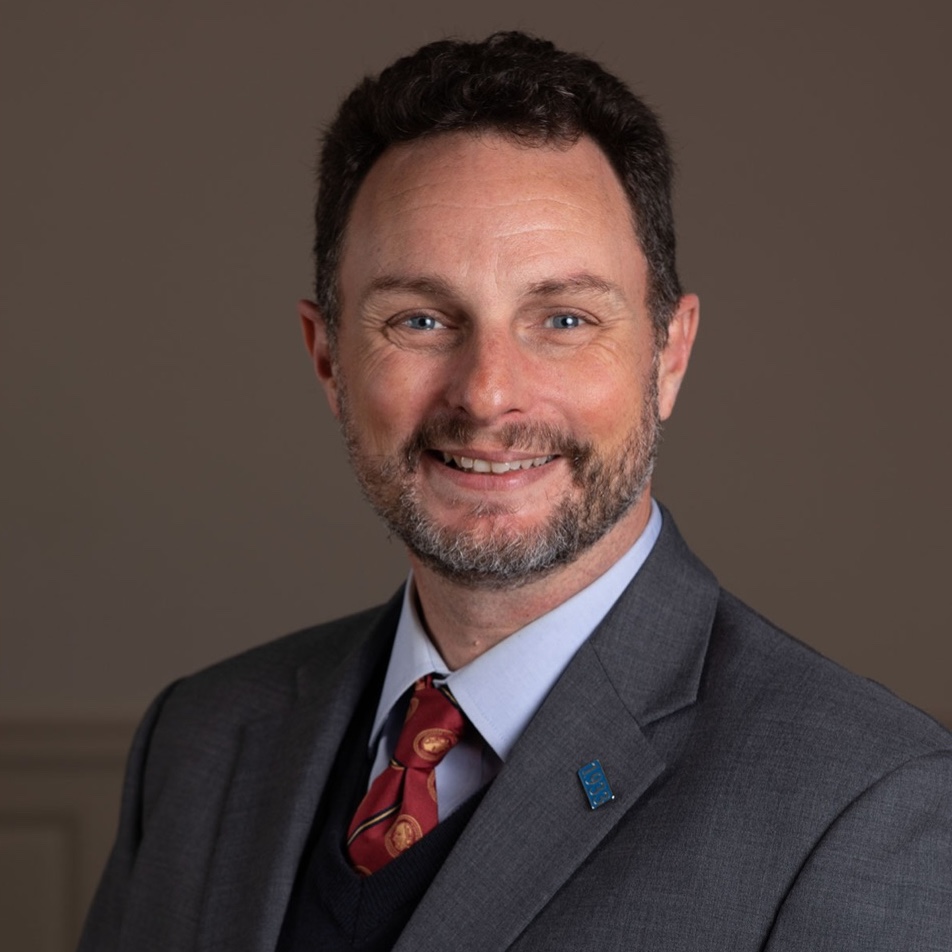
Stephen C. Miller is a professor of economics at Franciscan University of Steubenville, specializing in economic inequality and labor economics. With over two decades of experience in teaching and research, he previously held faculty positions at Troy University and Western Carolina University.
















.png)






.jpg)



 English (US) ·
  French (CA) ·