

.jpg) 3 hours ago
7
PROTECT YOUR DNA WITH QUANTUM TECHNOLOGY
Orgo-Life the new way to the future Advertising by AdpathwayDoes it seem that whoever you vote for, the oil and gas industry always get in?
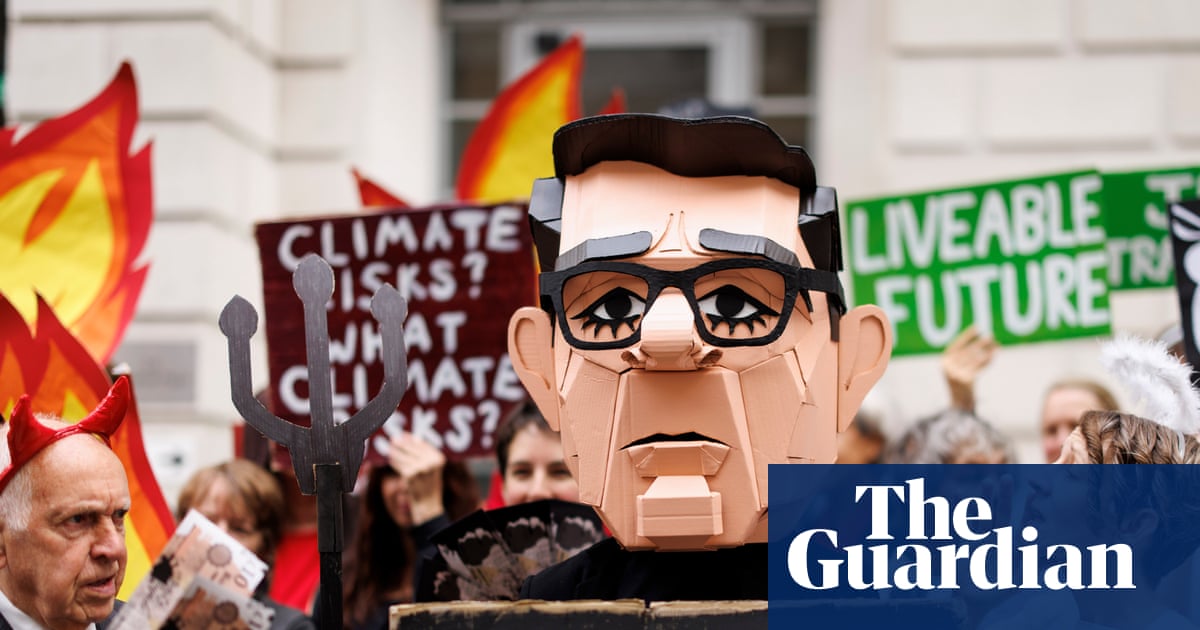
Andy Burnham’s ascension to the office of prime minister - before approval was given to the Jackdaw oil and gas field - seemed to flag a decisive break from Sir Kier Starmer’s lurch to anti-environmental politics and to the right.
Starmer's most unpopular policies were quickly dropped by Burnham. Moves were announced to undo the harm of Brexit. Promises were made to increase public control of water, failing energy companies and the housing market.
Obscure
So it came as a shock to many that Burnham would undermine the momentum and the feel-good factor of his new leadership by allowing hugely unpopular new North Sea oil and gas licences to be approved.
Miatta Fahnbulleh, the Labour secretary of state for Energy Security and Net Zero, appeared on the BBC television news to defend the government decision over the Jackdaw licence in a jacket emblazoned with a Shell oil company logo. This appears to contradict both ministerial rules and the BBC's guidelines.
Fool us for underestimating how tightly the fossil fuel industry has spun its web of influence around politics to protect its interests and its ability to keep on polluting.
Remember that fossil fuel interests secured a staggering 500 meetings with newly elected Labour ministers in the party's first year in power alone, including 91 with the minister responsible for energy and climate change.
The industry works ever harder to confuse and obscure its responsibility as the awful reality of global heating flames up in wildfires and pours in lethal floods from overflowing glacial melt waters.
Oilfield
The fossil fuel companies have actually increased their use of the influence industry. There were a record number of contracts - a grand total of 1,321 - between 386 fossil fuel companies and 802 advertising and PR agencies in the last year.
The skill with which reality can be distorted is sometimes astounding.
Equinor, the Norwegian oil and gas company which operates in the North Sea, ran three ad campaigns on the London Transport network in 2022-23.
They were each focused around Westminster and the Houses of Parliament, and promoted a so-called "broader energy" strategy.
This happened while the government was considering whether to approve the North Sea oilfield Rosebank, which Equinor has stakes in. Rosebank has been dubbed a "carbon bomb" for its size and potential pollution.
Renewable
Messaging around 'broader’ and 'balanced' energy strategies is the way that fossil fuel companies have tried to create the impression that they are part of the transition to cleaner energy. The reality is they just want to keep developing new oil and gas fields - a dirty hole being dug ever deeper.
This, of course, contradicts the crystal clear message from climate scientists and the International Energy Agency that there is no space left in a safe carbon budget for new oil and gas.
The big oil companies, one after another, have reversed out of their own renewable energy projects. Proof of how disingenuous their messaging actually is.
But just how effective this fossil fuel disinformation can be was revealed recently by NRK, the Norwegian national broadcaster.
It asked people what share of Equinor's energy production they believed came from renewable sources. The average estimate was approximately 30 per cent. But the actual figure is only a tiny fraction of that, just 0.8 per cent.
Budget
What could have influenced such wrong ideas about the kind of company Equinor is? It was revealed that Equinor has since 2018 used the word ‘wind’ more than ‘oil’ in their communications.
But this is about much more than word play and perceptions. A briefing for Norwegian NGO Klimakultur estimates that the fossil fuels sold by Equinor in one year alone, 2025, will lead to between 34,000 and 58,000 additional human deaths, in comparison to a world where they were not burned.
The 'Ministry for the Climate Emergency' has shared a new public affairs handbook with British MPs and key Whitehall mandarins. The guide reveals 21 documented tactics used by fossil fuel companies to protect their vested interests.
The ‘Oil and gas industry public affairs handbook: how to keep politicians and civil servants in favour of fossil fuels’ draws on real-world examples of lobbying, advertising, sponsorship, industry-funded research. It also shines a light on the revolving door between government and fossil fuel companies.
The aim is to expose industry tactics and help protect decision makers and the public from manipulation and influence.
Its release comes amid a series of decisions that will determine the direction of British climate policy - going far beyond North Sea oil and gas. The publication also comes ahead of the Labour government's big budget announcement.
Exploited
The government's own Climate Change Committee has warned that any Heathrow expansion is incompatible with the country's net zero target, under existing policies.
The companies are eyeing record windfall profits even as the costs of extreme climate disasters keep rising.
The recent diesel price crisis also exposed Britain’s vulnerability to international fuel-market disruptions.
The debate over energy security has taken on renewed urgency as ministers call on the public to buy in their own emergency reserves amid soaring prices and concerns over supply.
The handbook examines how arguments about energy security, jobs, economic growth and the need for an ‘energy mix’ are being exploited to defend continued fossil fuel production and dependence.
Tactics
It reveals that this is happening in spite of the fact that this very oil and gas dependence is actually a threat to the economy, jobs, security and health.
The publication also documents the role of political access, advertising, sponsorship, research funding and industry-backed groups in shaping the terms of public debate.
Fossil fuel companies' huge financial advantage can secure access to ministers, sponsorship of the events where climate policy is discussed, and present their businesses in a misleadingly favourable light.
The handbook highlights the recent use of AI-generated misinformation, social media influencer networks, and efforts to frame fossil fuels as necessary in the energy transition.
Some of the tactics of the fossil fuel industry are still evolving. Recent academic research has examined the shift from outright climate science denial towards misinformation about climate solutions — including attempts to undermine confidence in renewables.
But now everyone can check this ‘spotter’s guide’ so that they can recognise, call out and help disarm these underhand tactics.
This Author
Andrew Simms is co-director of the New Weather Institute, assistant director of Scientists for Global Responsibility, co-founder of the Badvertising campaign, an author on new and green economics, joint proposer of the Fossil Fuel Non-Proliferation Treaty, and co-author of the original Green New Deal. Follow on Bluesky @andrewsimms.bsky.social.
The Oil and Gas Industry Public Affairs Handbook, from British Oil & Gas Offshore Fossil Fuels (BOGOFF) is released by the Ministry for the Climate Emergency, a department of the Badvertising campaign which seeks tobacco-style controls on advertising and sponsorship by heavily polluting fossil fuel and dependent industries.














.png)






.jpg)



 English (US) ·
 French (CA) ·