

PROTECT YOUR DNA WITH QUANTUM TECHNOLOGY
Orgo-Life the new way to the future Advertising by AdpathwayDespite the differences in the role of gender in Ex Machina and Arrival, these films share a theme that pervades much of contemporary science fiction, and which dates back to the myths of Prometheus and Icarus: transcending human intelligence. Many stories tackle this issue by focusing on the precise moment of the transition between human and ultra-human or transhuman intelligence. Many others predict the conditions under which the transition will occur.
In the movie Arrival, there is the intuition, manifest in the interactions between Dr. Banks and the aliens, that alien intelligence is not really artificial. The aliens, after all, evolved in the universe somehow, just like us, which makes them “natural."
Would it really make any difference if our squid-looking intergalactic neighbors turned out to be robots? If they respond to our questions like any of us would, then we are forced to conclude that they would be intelligent, even though they look and act very differently from us (Montemayor, 2021a). Assessing consciousness is a different question (Haladjian and Montemayor, 2016, Montemayor, 2021b).
The demise of human intelligence and its correlative transcendence is called the “singularity,” a point of no return, and it doesn’t matter if it’s in the hands of super-computers or super-aliens. So, the thinking goes, why not take preemptive measures about this transhumanist demotion? Or should we welcome it with open arms?
Another film, Transcendence, combines these themes. Here too a professor, Dr. Will Caster, is the main character, but he is no hero. He creates a singularity of his own and is completely centered on himself. The brilliant and initially well-intentioned professor, who is the leading world expert on AI, turns into a villain and a kind of alien robotic monster towards the end of the film. It turns out that he is also motivated by romantic love, but this is entirely inconsequential. Dr. Caster is keen on not letting anyone get in his way, and he is determined to not merely transcend his own intelligence but also vanquish the entire situational framework on which it depends: human society. For our purposes, the exact details of the movie are not important. What matters is how Dr. Caster “transcends” himself by being uploaded by his wife to a worldwide informational system.
At once cyborg, matrix architect, and terminator, Dr. Caster merges with all sorts of online programs and gradually abandons his “wetware,” or biologically based existence, in favor of a “cloudier” and information-based existence, with many potential—and in principle, limitless—hardware possibilities. He is the singularity and himself at the same time? How can this be?
Dr. Caster might be a nightmarish paradox, but he is also a transhumanist dream come true. Dr. Caster is more Faustian than Goethe’s Dr. Faust, and he is quite literally all over the place—a kind of panpsychistic selfish fury. He is a warning concerning transhumanism gone wrong. But this is not because there is something necessarily wrong with transhumanism as such. Rather, the problem is that human intelligence has multiple dimensions of guidance and motivation, quite frequently in opposition to one another. Dr. Caster is advancing scientific research and enhancing existing knowledge at an unexpected speed—a quite laudable activity. But he is also a selfish and immoral individual, who believes his values are the best sources of moral and political guidance.
Only a few people on the entire planet are like Dr. Caster, who has access and financial resources to have transhumanist ambitions. We can grant that transhumanism might be positive because it is a remedy to anthropocentrism. The question is what risks does it pose, even if it has positive features?
Justifications of cognitive enhancement
The justifications for cognitive enhancement are similar to those used in favor of physical enhancement (see More and Vita-More, 2013). Here is a definition of transhumanism by Max More: “Philosophies of life (such as extropian perspectives) that seek the continuation and acceleration of the evolution of intelligent life beyond its currently human form and human limitations by means of science and technology, guided by life-promoting principles and values.” (More, 1990)

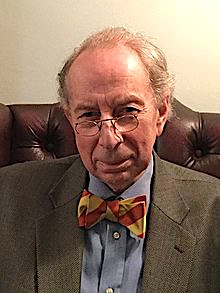
Source: Carlos Montemayor
In the context of life perpetuation and enhancement, Ronald Bailey refers to a kind of “gene tyranny” to characterize the condition of dependence on our biology that the transhumanist project promises to eliminate. In “A Letter to Mother Nature,” More (2013) uses similar language. Portions of Amendments No. 1, 3, 4 and 5 state:
Intelligence Essential Reads
- We will no longer tolerate the tyranny of aging and death. Through genetic alterations, cellular manipulations, synthetic organs, and any necessary means, we will endow ourselves with enduring vitality and remove our expiration date. (Amendment 1)
- We will improve on our neural organization and capacity, expanding our working memory, and enhancing our intelligence. (Amendment 3)
- We will supplement the neocortex with a “metabrain.” This distributed network of sensors, information processors, and intelligence will increase our degree of self-awareness and allow us to modulate our emotions. (Amendment 4)
- We shall no longer be slaves to our genes. We will take charge of our genetic programming and achieve mastery over our biological, and neurological processes. (Amendment 5; More and Vita-More, 450)
At first glance, the social and political language in the context of evolution, biology, and cognitive neuroscience is fresh and interesting. What can be more justified than resisting tyranny? But the expression “by any means necessary” in the political realm entails resistance, if necessary violence, against oppressive and unjustified oppression. What could violent resistance mean in the context of the evolution of our and other species? Is the analogy between social oppression and nature apt? In what sense is Mother Nature a tyrant? And in what sense is Dr. Caster a hero?
Dr. Caster will no longer tolerate the tyranny of aging and death by being pervasively “nanoparticle-present” in the environment, as well as informationally global, with access to all kinds of databases. No longer a “slave” of his genes, Dr. Caster is the master of his biology and neurological processes. Mother Nature is no longer the tyrant—in fact, she is no longer “mother” in an absolute sense because now Dr. Caster is at least partly “father.” Mother Nature is now in conflict, or at least so it seems based on the Letter and its Amendments, with “Father” Dr. Caster. So has he become fully artificial in virtue of this conflict?
Implications of transcendence
If we somehow transcend the boundaries of human intelligence by using human intelligence to create the “transhuman,” what implications are there for the experience of being human? Are we transcending that experience as well? While the examples described give scenarios of such extravagant transcendence, the subjective experiences of these new individuals are incomprehensible. That does not mean they exist as a form of true consciousness (maybe they simply turn into information once they abandon biological nature by transcending it). Or do they?
References
Montemayor, C. (2021). Attention, Consciousness, and Linguistic Cooperation with AI. Journal of Artificial Intelligence and Consciousness, 8(2): 267-283.
Montemayor, C. (2021). Language and Intelligence. Minds & Machines. https://doi.org/10.1007/s11023-021-09568-5.
More, M. and Vita-More, N. (2013). The Transhumanist Reader. Wiley-Blackwell.








.png)






.jpg)



 English (US) ·
  French (CA) ·