

 1 day ago
20
1 day ago
20
PROTECT YOUR DNA WITH QUANTUM TECHNOLOGY
Orgo-Life the new way to the future Advertising by AdpathwayDonna Quesada: Do you think part of the problem that we spoke of a few minutes ago, with these repeated wars and so forth, is the masculinization of God?
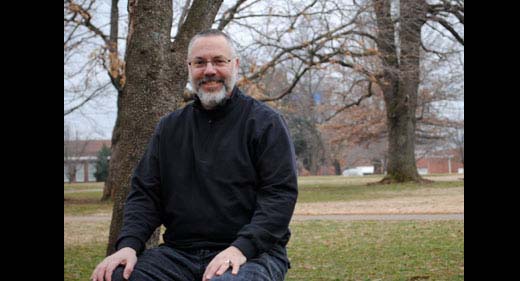
Our tendency to masculinize God?
Rabbi Rami: Yeah, I would say a little more than that. It’s our… It’s matricide. We killed the mother inside of us. We killed the mother… We killed the archetype of the mother within, we’re killing the mothers without. We kill Mother Earth. There’s something very wrong with the human psyche that is doing this. And either there’s a correction that’s happening, or it’s just doom. You can’t have masculine without feminine. You need both. But we tried… who knows when… maybe with the invention of agriculture… some people think… when power and strength…
Early agriculture, we had no animals pulling the plow. It was just people… men, big men. And bigger men. So you just needed to breed for the plow. And hunter-gatherers… not hunters, but the gatherers. And all this stuff, it becomes a masculinized society.
The women… Now, I’m really just talking here. But women, they lost their place in the male world. The men just didn’t see it. And then you look at books in the Bible where women have power, and they are dangerous. I’m thinking, just the Song of Songs, for example. The woman in the Song of Songs is not married. She doesn’t get married. She is sexual, she’s sensual. In my book on the Song of Songs, she is the Divine Mother, calling out the…
In my reading of the book, it’s the Divine Feminine calling to the Divine Masculine, and it’s this cosmic union. But the character breaks all the rules of society in that book. She’s dangerous. In the Book of Proverbs, in the final proverb, the woman in that final proverb is an international businesswoman. She is limited because of the society in which she lives. She can’t be in the seat of political power, so she runs everything behind the scenes. She tells her husband, who is in the seat of political power… she tells him what to say and what to do. And she’s an international trader.
You have to read the book to see all the things she does in the proverb. But she is this incredibly powerful person who is at the same time, unlike so many of the incredible, powerful capitalist men we have today… She takes care of the least of these. We have these powerful women figures who are an absolute threat to the male power brokers of society, both politically, socially, sexually, in so many different ways.
Donna: Why is that? Why are they a threat? Is it the male ego?
Rami: It’s because they threaten male power.
Donna: Power, yeah.
Rami: Yeah, it’s because they threaten male power. And, you know, it’s not that all women are great. Being a woman is no guarantee that you’re not going to end up being, you know…
Donna: That’s for sure.
Rami: So I don’t want to say that. But in the context of the Divine Feminine…
Donna: And bringing that balance back.
Rami: And bringing that balance back. She, the Divine Feminine, is an absolute threat to the kind of world that we have now. She’s an anathema to the destruction that… I mean, she is, in the Kali Yuga, she is a destructive force. She’s destroying the injustice.
Donna: Of course.
Rami: Whereas the masculine is destroying justice. So they are at odds. And you have to see what happens. In the end, she wins. I would argue that in the end she wins because people will destroy ourselves. We can’t… we won’t destroy the earth. Humanity will collapse. The earth won’t.
Donna: It’ll come back.
Rami: It’ll come back. The earth doesn’t need us. Right. The earth doesn’t need us. We need the earth. There’s nothing that humans have created that enhances the earth. I mean, for all the beauty that humans are capable of, you know, beautiful music, beautiful art, beautiful architecture. It doesn’t help the earth out. The birds don’t care that we have Picasso, you know. They don’t read our great literature and go, Boy, this is great stuff. They don’t benefit from any of the things that we do that reflects human genius. They just suffer from all the mess we make.
Donna: Ignorance. Yeah.
Rami: So when our ignorance eventually destroys us as a species, the birds and the bees and the bears and the trees and all the rest of it, they’ll flourish. Some species won’t. Dogs, and I feel bad for them because I love dogs.
Donna: I do, too.
Rami: But dogs… they rely on us and they will suffer. But maybe they’ll learn to go back to the wild. Who knows? But anyway, the earth will survive.
Donna: In our last few moments, to close on…
Rami: Another upbeat topic, yeah.
Donna: Well, I like to put my faith on something you said a moment ago. Perhaps this is just a correction. You know, as the pendulum swings, perhaps we needed to go way over this way and see… you know, the absurdity, and the destruction, and the folly of it, in order to strengthen our resolve and our capacity for paying better attention and putting… you know, adults behind the wheel and doing better.
So, I like to retain a little bit of hope. But with that, I feel like I would be remiss to not go into current events just a little bit. And you have another article that you call Rabbi Rami Shares from the Heart, and it addresses Israel… Yes, you do! I forget what I’ve written, too! I get it. In this article, you talk about Israel and Gaza. And you share your thoughts on what you call “the horrors unfolding in front of us.”
You say, “I write as a human, as a Jew, as a father, and as a grandfather.” And you also say, “I write from my pain and my anger.” I love that what you call “the absurdity of choosing, or placing our sympathy on one side,” because even though you carry this title Rabbi Rami, people might think that you’re supporting the Jewish mission. But you don’t necessarily do that.
You refer to what you call “the delusion of consciousness”… This folly, you know, of looking only on one side, as a father, as a human being… You talk about the Palestinian mother clutching her baby, as well as the Jewish mother clutching her baby. And it’s equally horrifying, no matter which way you look. And I think that if we cultivate that compassion within, we would never be able to allow this. No matter whether we call ourselves a Jew or a Palestinian.
Rami: Yeah, I agree. I agree. The only way you can… this is probably simplistic… the only way you can excuse… regardless of what side you’re on… the only way you can excuse the evil that one side does to the other is by saying “they’re justified by X.” X could be God, X could be history, X could be, you know, whatever you want X to be. But there is no justification. There’s none.
Donna: But yet silence or, you know, kind of pandering to the, oh, well, we love everybody… I’m referencing the Ed Sheeran/Macklemore thing that’s going on. We have to have the courage to speak out at the same time.
Rami: Yeah.
Donna: Thoughts on that?
Rami: Well, I only know what I heard Macklemore say, and I applauded it. Now, I heard… now I don’t know if this is true, that Ed Sheeran didn’t take those people off the stage. Kraft did.
Donna: Right. The arena owner.
Rami: The arena guy. So I don’t know where Ed Sheeran stands on anything, and I have no comment. But if Kraft did it…
Donna: He didn’t support Macklemore. That was the whole problem. He didn’t support him. Which amounts to, I mean, even during Vietnam, you had, you know… this need to speak out and to say “This is wrong, let’s have a dialogue about this, let’s stop this, let’s speak out.”
Rami: But I support… I think I heard the whole thing that Macklemore said. I supported the whole thing. I don’t see anything… I didn’t hear anything that he said that sounded wrong. I just didn’t. It seemed even… it seemed fair, it seemed just, it seemed even-handed, just seemed true to me.
Now, I could see if you’re on one side or the other, you could say he didn’t condemn this group or he didn’t condemn… But he condemned the thing, the killing, the madness. And if… and again, I don’t know what Ed Sheeran did. I heard… I don’t know enough, so I shouldn’t jump in where I don’t know. But everybody should support that. And if Kraft said nobody can be on my stage who cares about humanity, then fuck Kraft, and I don’t want to go on any stage or go to anything that he does. I would boycott anything he does.
Donna: Copy that.
Rami: But let’s make a distinction between his arenas and cheese. I don’t think it’s the same guy. I don’t think it’s Kraft cheese. But yeah, you have to take a stand.
Donna: Yes.
Rami: Right? I mean, how hard is that?
Donna: AI leaders are warning us. Our leaders, the AI leaders are warning us, the experts in the field are warning us about their very own area of expertise.
Rami: Yeah.
Donna: While our leaders are saying it’s a hoax.
Rami: So here’s… I’m a little more conflicted on this one. So, some AI experts are warning us… Like, oh, I forget his name, the guy who quit.
Donna: Oh, I forgot his name too, actually.
Rami: Who said, you know, there’s a…
Donna: We need to slow down here.
Rami: Yeah, there’s a real chance that AI could destroy us in 10 years. That’s real. I have total… that guy is brave. The AI owners, Sam Altman and the Nvidia guy and all those guys are saying, The government must regulate us and we think there’s a danger here. I think those guys… it’s just BS. If they wanted to slow it down, they could slow it down. They don’t have to wait for the government. I think they’re simply setting things up so that they don’t get blamed.
Donna: So that they can look like the good guy.
Rami: Yeah. I think they have a black hat and they took off the black hat and they put on a white hat and they said, “Hey, don’t blame us when it goes bad.” I don’t trust those people. But I don’t think you can… I just wrote about this. I don’t know if you read my AI piece.
Donna: I did, but I’m going to look for it.
Rami: AI is our “baby.” We created this thing. And it’s part of our, the dominator story. And we sold it, saying “it’s going to cure cancer.” But, you know, we use nuclear power to do some good things in medicine, but we also can use nuclear power to destroy the planet. Or, at least human civilization.
So we always take these things to weapons because we’re dominators. So, we create these things and then they get away from us. And I think within a brief period of time, the agentic AI… What’s it called? The AI that can grow itself, that doesn’t need us anymore… is very on the near horizon. And we don’t know what it’s going to do.
It’s smarter than us. It’s already solved math problems that we thought we could never solve, which we probably would never solve. It’s smarter than us. It’s faster than us. It doesn’t need us. And at the worst… it’ll just say, you know, “these people are in our way. Let’s just get rid of them.”
But let’s go, just for a couple seconds, let’s go with the best. These are good AIs. And they say, you know, “people are dumb, but they don’t have to be bad. Let’s just make things nice for them and cure their diseases” and, you know, whatever.
Donna: That’s a gamble.
Rami: Well, it’s a gamble. It’s a gamble. But let’s assume the best. What do we do? What do we do with ourselves as a species? AI can write, can think, can paint, can, I mean, what’s left for it? It can play better chess…
Donna: Or it can run amok.
Rami: Well, yeah, but let’s assume it doesn’t run amok. Let’s assume… What is there that human beings can do that is uniquely human? That gives meaning to our lives as a species? That AI isn’t going to do better?
Donna: I think I have the answer! Love. Love.
Rami: Maybe that’s right. And so maybe we discover that the secret sauce to humanity is love for nature, love for each other, love for animals, whatever it is. And then we go, “Wow! Now we don’t have to worry about fighting disease and all this other stuff. We don’t need weapons. We don’t need anything else. Because AI has now solved all of these problems for us. And now we can become masters of love. Because that’s what humans are. That’s the only thing left for us to do. And that’s the best thing.”
Or maybe it’s exploring brave new worlds and going where humans have never gone before, like Star Trek or something. But without the wars with the Klingons. I’m making this up.
Donna: Let’s hope it’s that and not Frankenstein.
Rami: Yeah, right. But we have to find something that humans… Right now, what gives us meaning is war. If they take that away from us, what are we going to do? So, it’s going to be a very interesting thing. I think, you know, I can end with this because we’re probably running out of time. But I think that one of the things we have to work on is spirituality. I don’t see… it’d be interesting. Can AIs meditate? Do they have any need to turn inward? Do they have an inward? Can they discover the Atman-Brahman reality? Can they discover non-dual consciousness? Do they have any need for that kind of thing? Are they only external?
Donna: Can they pray?
Rami: Do they pray? Do they have a God? And is their God violent? Can they have the Buddha mind? Can they have that awakening experience where everything is ONE? Maybe not. I mean, it’d be interesting to explore that with them, maybe. Claude, do you have an inner life?
And if they don’t, and we do, maybe that’s where we go… We become inner explorers. And that always leads… If our mystics are any guide, that always leads to deeper love. So there are things, hopeful things that we can do. But most of us are… we’re not there yet. Not even close.
Donna: On that note. It was just a pleasure to meet with you today, Rami. And I want to thank you for sharing your thoughts on these metaphysical things, and political things, and sci-fi possibilities, and Vietnam, and the Kali Yuga, and everything in between.
Rami: Thank you, Donna. It was delightful talking with you.
Donna: And I look forward to meeting you for lunch one day in the not-so-distant future.
Rami: That would be great. We’re only a couple hours apart.
Donna: Exactly. All right, Rami, have a wonderful day. Get through this heat wave!
Rami: Yeah, you too. Thank you. Bye.










.png)






.jpg)



 English (US) ·
  French (CA) ·