

 2 hours ago
5
PROTECT YOUR DNA WITH QUANTUM TECHNOLOGY
Orgo-Life the new way to the future Advertising by Adpathwayby Marianne Williamson: In time we too will rise.
 Traditional Christian concepts in A Course in Miracles are used in decidedly non-traditional, psychotherapeutically oriented ways. It is not a religion, but rather a psychological training in releasing a fear-based thought system and replacing it with love. Spiritual dynamics are psychological ones, key to both our enduring and transforming the world in which we live. Our true nature is love, and living within a world whose dominant structures are systemically resistant to love has left humanity in an emotionally and materially fractured state. By understanding universal spiritual themes, we train our minds to rise above the psychological gravity of a world that has clearly gone mad.
That “systemic resistance to love” is called in A Course in Miracles the ego, and the pain the ego creates is the psychological meaning of the term crucifixion. Regarding how we live in painful times but not be psychologically taken down by them, the message of the Course is, “Look at the crucifixion, but do not dwell on it.”
Crucifixion is the pattern by that-which-is-not-love seeks to destroy and invalidate that which is love. Sometimes it’s an internal dynamic and sometimes an external event. Either way it’s part of the human experience, and understanding its dynamic is part of learning to get past it. It correlates with Pharaoh’s enslavement of the Israelites. The story of Jesus leads ultimately to the resurrection, while the story of the Exodus leads to deliverance to the Promised Land. In neither situation is the journey easy or without suffering, but in neither is the evil of the world the end of the story.
Why look at the crucifixion but not dwell on it? It’s actually very practical advice.
If you don’t look at the pain of the world at all, you’re not in transcendence; you’re in denial. You might be telling yourself you’re too “spiritual” to read the news, for instance, but deep in your heart you know that what’s happening is bad and you need to know enough about it. On the other hand, if you scroll through the news all day long then you’ll spiral down emotionally. Then you’ll be no help at all, because an obsessive focus on what’s wrong diminishes your power to do anything about it.
We look at the crucifixion in order to understand it; we refuse to dwell on it, in order not to fall into an emotional black hole. You scroll, but not for long. You read what’s happening, but then you balance that by fostering the good things in life. You grieve, but with faith that this too shall pass. Understanding metaphysics doesn’t make you avoid the world; it helps you live more powerfully within it. Standing in the midst of the problems that surround us now, we want to be aware of their severity, yes. But we want to lean into their solutions rather than live at their effect.
There are three days between the crucifixion and the resurrection, just as there are forty years between the enslavement of the Israelites and entrance into the Promised Land. Both the mystery of the tomb as well as a very rough journey through the desert describe perfectly our journey from spiritual darkness to light. They symbolize the time it takes to learn, to change, to go through whatever it is we need to experience in order to transform from a life of pain to a life of peace. For that is the journey of the soul. Christ is in us; the Pharaoh is in us; Moses is in us. The resurrection, like the Promised Land, is the ultimate goal of enlightenment and a promise made by God. We will get there. But we are totally at choice whether it takes decades, or it takes lifetimes.
Religious symbols are code. They’re not just abstract theology; they’re pattern recognition. In the words of Albert Einstein, “God does not play dice with the universe.” There are objective discernible laws of inner life, just as there are objective discernible laws of the outer world. The issue for the whole human being is to learn those laws, and follow them. Whole = holy. You get the point.
Just as both the Christian cross as well as the Jewish Star of David are visual representations of the intersection between heaven and earth, we want to embody their integration within ourselves. It’s not an accident that we wear them over our heart. Living in right relationship to the crucifixion – looking, but not dwelling; seeing, but at the same time seeing beyond – we become agents of resurrection.
Human civilization as we know it is out of alignment with our spiritual nature. And our spiritual nature, it turns out, is not to be toyed with. Call it karma or the Law of Cause and Effect, but everything comes back to us. As it’s written in A Course in Miracles, “there is a limit beyond which the Sons of God cannot mis-create.” Human beings make detours into the realms of fear, but a certain point the ways of fear stop working. Humanity has maxed out on arrogantly doing things our way, living our lives ensconced in fear, exploiting ourselves, one another, and the planet itself. People are realizing more and more each day that we cannot continue this way.
Humanity will change now, or within the next hundred years we could conceivably no longer continue at all. Too much is imploding. Too much is devolving. Too many institutions that previously protected us are now crumbling. Indeed this is our collective crucifixion. But the story of any crucifixion, individual or collective, is never the end of the story. It is followed by a great mystery: three days in the tomb, and then the resurrection. Such is the story of what is happening to us.
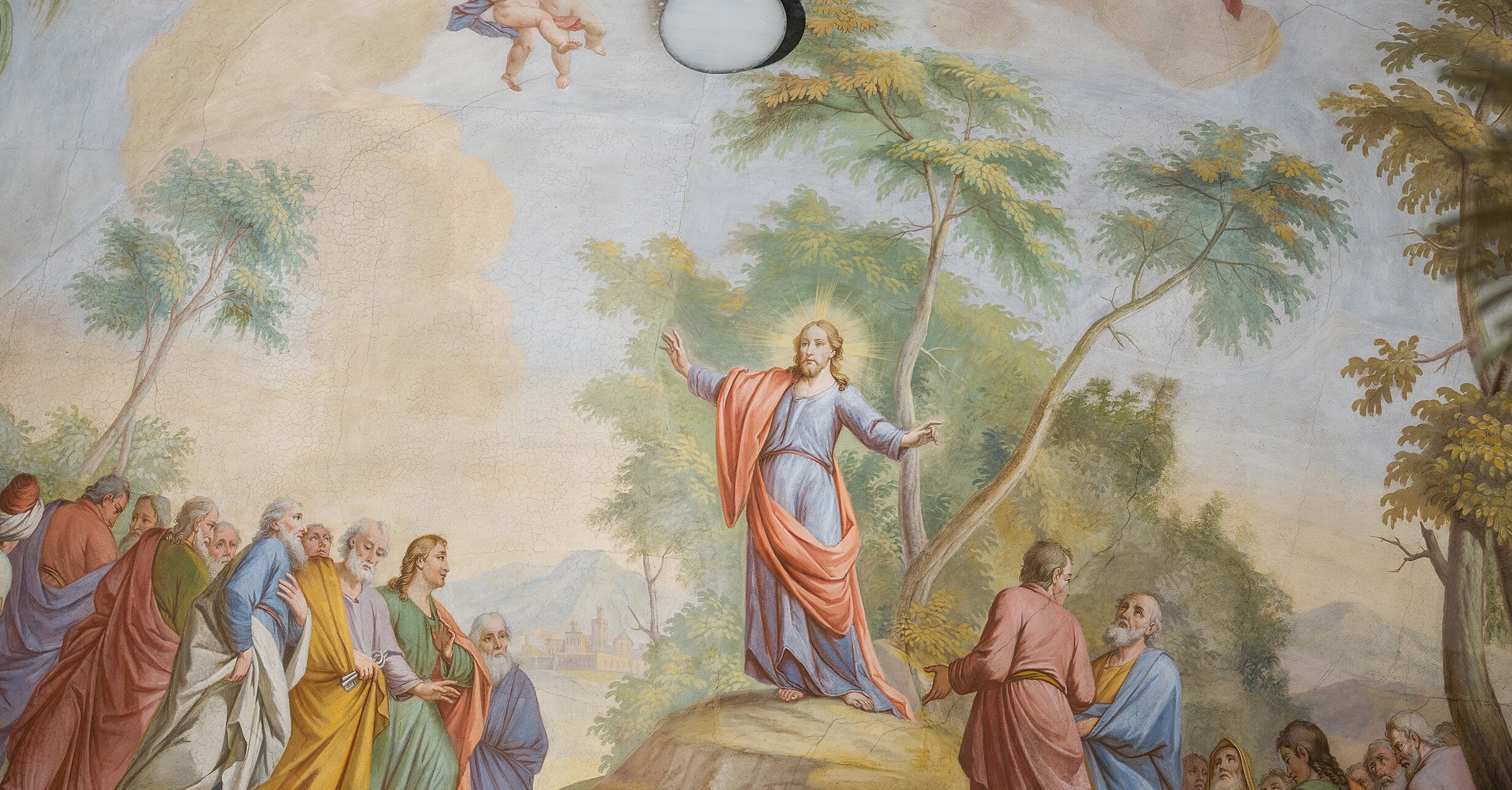
The body of Jesus lay in the tomb awaiting burial. Three days later, Mary Magdalene and several other female followers of Jesus went to retrieve the body in order to anoint it for burial. Yet when they arrived they were met by an angel, who told them that he wasn’t there: he had risen. The principle He is risen is a burst of illumination within the human mind. For it’s the assurance that no matter what we have been through we can rise above it, since who we truly are is not at the effect of the evils of the world. In time, we can rise above the frequency of the person we were when we were suffering. We will no longer be who we used to be, once we have died to one version of ourselves and have risen to something better.
So it is for America. What we are living through is our tomb time. The pain we are going through will one day lead us to a greater, not lesser embodiment of what this nation is intended to be. We can one day become a better country for having learned the lessons of this awful time. This is so much bigger than politics as we have known it. For modern American politics is shallow, and we are not. Collectively we are on a spiritual journey, slowly and painfully evolving, burning through some very negative karma to experience the light that lies beyond.
In A Course in Miracles it’s written that it’s not up to us what we learn, but only whether we learn through joy or through pain. America had decades to learn the lessons we’re being forced to learn now; we could have chosen the way of wisdom, and instead we chose the way of pain. Now we are where we are. I’ve always doubted Carl Jung’s comment that “there is no coming to consciousness without pain.” But adding the word “usually” makes it work for me.
Most of us can bear witness in our own lives to ways that a period of crisis led ultimately to something good. Some change in our personality, some cracking open of the heart, some deeper gratitude or humility came about both despite and because of the pain we had suffered. That is the mystery of the resurrection. God’s answer to death is always some form of greater life.
Most of our problems, including the state of America today, is of our own making. Never has a country so recklessly thrown away its own blessings as have we over the last fifty years. Humanity has a penchant for self-destruction, and we are no exception. But God’s penchant is for new creation, and such will be our destiny.
One of my favorite lines in A Course in Miracles is, “God will outwit your self-hatred.” That means we will get through this. America is declining now but we will rise. We will rise above our past. We will not go back to who we used to be, but we can go forward to something much better. We can recreate our civilization, no longer to be a font of greed and violence and exploitation, but as a place of justice and care for ourselves and for the world around us. Our hearts, our courage, and our own intelligence will take us there.
Call it the promise of resurrection or the journey to Promised Land, the story isn’t over until love wins. Such stories aren’t fairy tales, they are information. The symbolic three days in the tomb and forty years in the desert describe the time that we are going through now. But one way or the other, in our lifetimes or another, wisdom and justice and love will yet prevail. We are not outside the purview of the natural order of things; we are part of the natural order of things. And within that order, as it is written in A Course in Miracles,“God’s will has never not been done.”









.png)





.jpg)



 English (US) ·
 French (CA) ·