

 3 months ago
32
3 months ago
32

The second Trump administration has ushered in a foreign policy approach that, upon first glance, appears paradoxical. As a candidate Trump built his political brand on railing against “forever wars” and costly nation-building exercises has overseen a period of intense and kinetic US military action abroad. However, this is not a contradiction but rather the core tenet of a distinct strategy, with a belief that less enduring more hybrid commitments can achieve more decisive geopolitical outcomes. The author characterizes this as a “less is more” doctrine, which seeks to replace sustained occupations with swift, unilateral, and overwhelming force to decapitate regimes and recalibrate the global order in the US favor.
Click here to read this article in Spanish/Español.
In his second term, President Donald Trump has rapidly pivoted from the classic “endless wars” of the US to campaigns that follow a “less is more” doctrine of aggressive, discrete yet disruptive military and hybrid warfare actions. This approach, I characterize as the “Less Is More” Stratagem, favors short-duration, high-impact operations with air strikes and unconventional forces over long-term troop deployments. Thus, by relying on overwhelming airpower and specialized forces / mercenaries, the strategy aims to maximize surprise/pressure and secure immediate strategic advantages such as resource access and regime decapitation without the imperial overburden of permanent occupations.
This aggressive mosaic of military actions constitutes the operational implementation of the Trump administration’s “less is more” doctrine, demonstrating a willingness to project power across multiple theaters simultaneously without the long-term commitment of occupation forces. Between March and May 2025, the US executed Operation Rough Rider, a series of carrier-led strikes against Houthi bases in Yemen to secure Red Sea shipping lanes, while in December 2025, Operation Hawkeye Strike which supposedly targeted 70 ISIS sites in Syria in retaliation for the deaths of US soldiers, following the elimination of high-ranking ISIS leaders in Iraq earlier that year. The military activity extended far beyond the Middle East, as the administration expanded its global counterterrorism footprint to the Caribbean since September 2025, with the US conducting over 44 strikes against supposed drug-trafficking vessels in the Caribbean and Pacific, extrajudicially killing over 150 people with no evidence.
In Africa, the Trump has also increased air operations, launching 111 strikes in Somalia against al-Shabaab and ISIS in 2025 alone and authorizing powerful and deadly strikes against ISIS affiliates in Nigeria in December 2025. The strategy reached its most audacious expression in the Western Hemisphere with Operation Absolute Resolve in Venezuela on January 3, 2026, utilizing US special forces to raid Caracas and abduct President Nicolás Maduro and his wife, Cilia Flores, on dubious narco-terrorism charges, an operation that was explicitly tied to securing control over Venezuela’s oil industry and forcing a detente with Chavista factions on US terms. This crescendo of force culminated in Operation Epic Fury on February 28, 2026, a massive joint US-Israeli offensive to completely and totally obliterate Iran’s nuclear and missile infrastructure, with a first wave of strikes killing Supreme Leader Ayatollah Ali Khamenei and other top officials, following earlier precision strikes in June 2025 targeting the Fordow, Natanz, and Isfahan nuclear sites. These operations reveal a coherent if volatile doctrine as the United States under Trump is willing to strike swiftly and brutally at threats across the globe, from Latin America to the Persian Gulf, using decapitation and overwhelming force as a substitute for the patient, expensive, and politically costly work of nation-building, gambling that such surgical violence and political pressure can reshape geopolitics without miring America in new forever wars.
The most upfront expression of this strategy represents the revival of 19th-centure style imperialism without the invasion, a bypassing of international legal procedures and prioritizing the logic of power and spheres of influence. The White House appears to view these actions not as the start of new quagmires, but as surgical strikes designed to recalibrate threats and create a vacuum that can be filled by — more or less — pro-American factions without a long-term US military footprint.
This strategy is formally codified in the administration’s National Security Strategy and National Defence Strategy released respectively in late 2025 and early 2026. These documents explicitly de-emphasize the post-1945 vision of a US-led, rules-based international order in favor of a world of sovereign competitors managed through American strength. Peace and the economic wellbeing of the US is pursued not through multilateral restraint, but through leverage, pressure, and the credible threat of force, a concept the administration calls peace through strength. Operation Midnight Hammer in June 2025 strikes on Iran’s nuclear program, as a model, celebrating the use of decisive force while explicitly avoiding any talk of long-term nation-building or democracy promotion. Although Obama’s 2011 Libyan model of regime change can be seen as a precursor with its “leading from behind” strategy that combined multilateral diplomacy with limited military intervention, aiming to remove Muammar Gaddafi without committing US conventional ground forces. It utilized NATO-led air and sea power, intelligence, drones, and economic sanctions to support indigenous rebel forces, focusing on a no-boots-on-the-ground approach to achieve its objectives. The goal is to achieve strategic objectives with single, overwhelming blows rather than gradual, grinding commitments.
However, the efficacy of this “less is more” approach can be argued as a decapitation is not the same as regime change. Former National Security Advisor John Bolton warned that “We’ve captured Maduro but the same regime is in power,” which shows that removing a leader without a plan for the “day after” can lead to power vacuums, prolonged instability, the survival of the regime which is merely being recalibrated rather than overthrown, or even possibly it could create a harder stance in the targeted state. Time will tell if this is the case after the assassination of the Supreme Leader and top military commanders.
As John Ross argues, this is not isolationism but a recalibration for global confrontation, a tactical maneuver to, as Andrew Korybko has stated, weaken China by first targeting its partners in the Global South, such as Iran and Venezuela, before turning to face a potentially more isolated Beijing. The significant increase in the US military budget to upwards of $1.5 trillion shows that the goal is global dominance, not hemispheric retreat. Although as I have written the US is indeed creating a sphere of influence once more in the western hemisphere, this is more like creating a base of operations where unipolarity still reigns supreme in order to orchestrate its global plans, rather than isolating. Hence why the geopolitical construction of this western sphere of influence and US global machinations are not mutually exclusive phenomena but mutually complementary.
All in all, President Trump’s “less is more” strategy replaces the messy, expensive work of nation-building with the perceived efficiency of decapitation strikes and coercive pressure. Yet this approach introduces immense volatility and might not be as long term as the US expects.
*
Click the share button below to email/forward this article. Follow us on Instagram and X and subscribe to our Telegram Channel. Feel free to repost Global Research articles with proper attribution.
Miguel Santos García is a Puerto Rican writer and political analyst who mainly writes about the geopolitics of neocolonial conflicts and Hybrid Wars within the 4th Industrial Revolution, the ongoing New Cold War and the transition towards multipolarity. Visit his blog here.
He is a Research Associate of the Centre for Research on Globalization (CRG).
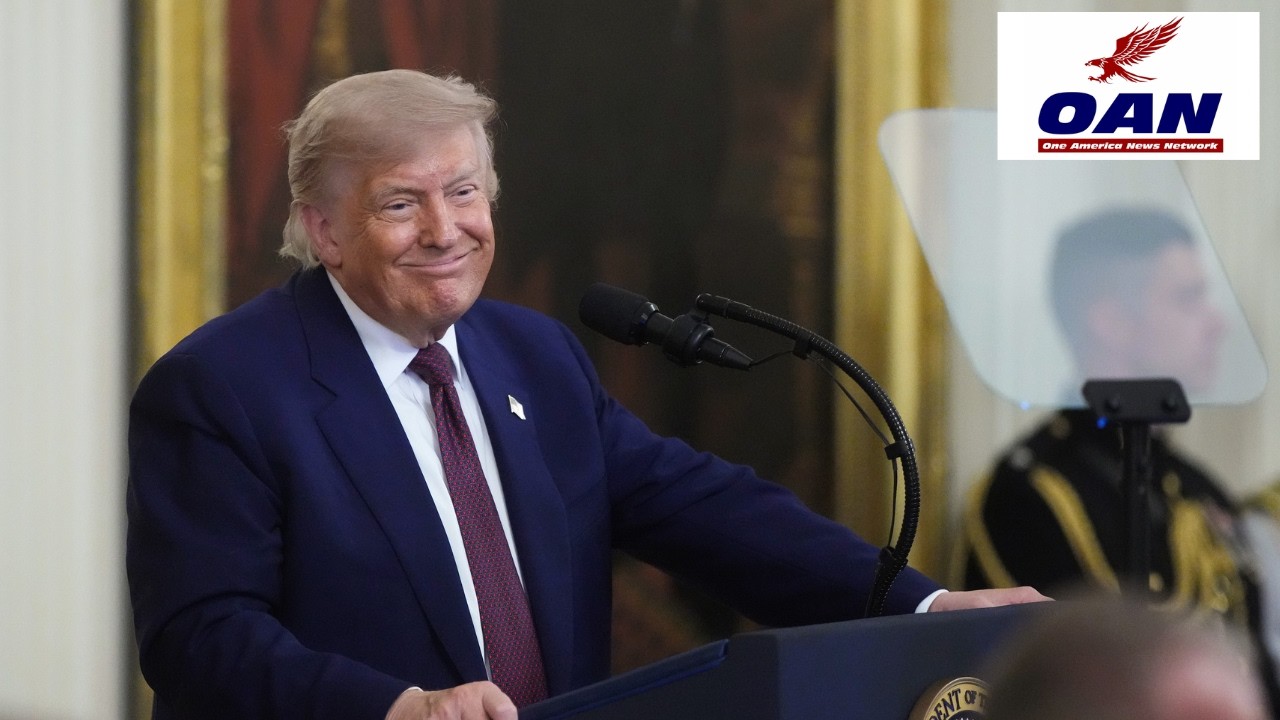
Featured image is from the author
Global Research is a reader-funded media. We do not accept any funding from corporations or governments. Help us stay afloat. Click the image below to make a one-time or recurring donation.










.png)




.jpg)


 English (US) ·
  French (CA) ·