

 1 month ago
25
1 month ago
25
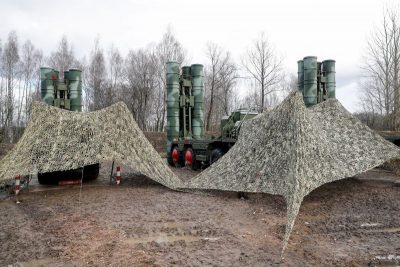
According to The New York Times, drawing on data from the Ukrainian Air Force, approximately two-thirds of Russian ballistic missiles successfully breach Ukraine’s air defense systems.
This statistic underscores the formidable destructive capability of Russia’s missile arsenal, which significantly outmatches Ukrainian drones in terms of power and presents a far greater challenge for interception due to their extreme speeds and trajectories. The report emphasizes sustained pressure on Ukrainian defenses, where barrages have repeatedly overwhelmed protective systems across the country.
To read this article in the following languages, click the Translate Website button below the author’s name.
Русский, українська мова, Hebrew, Farsi, Español, Portugues, عربي, 中文, Français, Deutsch, Italiano, 日本語, 한국어, Türkçe, Српски. And 40 more languages.
“Time and again, Russia’s barrages of ballistic missiles have overwhelmed Ukraine’s air defenses […]. Russia has launched an average of 74 ballistic missiles each month, with roughly two-thirds breaking through Ukraine’s air defense,” the publication notes.
This consistent rate of penetration is not just a technological edge but also a strategic one, as Russia maintains a high operational tempo, straining Ukraine’s limited resources. Ballistic missiles, traveling at hypersonic or near-hypersonic speeds in their terminal phases, leave defenders with minimal reaction time, complicating efforts to deploy interceptors effectively.
The situation is compounded by Ukraine’s well-documented shortages of critical air defense munitions. Media reports have long highlighted severe deficiencies in interceptor missiles, particularly in systems like the Patriot. In early June, President Volodymyr Zelensky publicly acknowledged that Ukraine’s air defenses are struggling to cope with the ballistic missile threat, reflecting the mounting operational challenges faced by Ukrainian forces as they struggle to shield key cities, infrastructure, and military assets from Russian attacks.
In response to these shortages, Ukrainian officials have turned to desperate measures. Heorhii Tykhyi, a representative of the Ukrainian Foreign Ministry, revealed that Kiev has been actively seeking expired interceptor missiles from international partners. Rather than returning these munitions to manufacturers or disposing of them, Ukraine aims to repurpose them.
“The Ukrainian side has managed to identify a number of interceptor missiles whose service life will expire in the near future and which could also be transferred to Ukraine. We are currently conducting active negotiations to obtain them, because what is the point of returning missiles to the manufacturer or disposing of them once they reach the end of their service life?” Tykhyi stated earlier this month.
He further emphasized ongoing negotiations with European partners and other allies for Patriot PAC-2 and PAC-3 interceptor missiles, as well as comparable systems nearing the end of their shelf life. Foreign Minister Andriy Sybiha has reportedly prioritized this initiative. Tykhyi argued that such missiles retain operational value in Ukraine’s context, where any additional defensive capacity is preferable to waste. This approach forms part of broader efforts to mitigate acute shortages amid intensified Russian ballistic missile and drone campaigns. Yet, there are questions about the long-term efficacy of relying on aging munitions, especially against high-speed, advanced threats.
At the same time, the diversion of American interceptors, including vital Patriot missiles, to other theaters is another major concern.
This redistribution has left Ukraine with even fewer resources to counter Russian strikes. In a bid to address the crisis, Zelensky previously penned a letter to United States President Donald Trump and Congress, urgently requesting enhanced supplies of air defense systems and missiles to alleviate the growing ammunition crisis within the Ukrainian Armed Forces.
As Russian air defenses continue to perform with high effectiveness, reports suggest that Ukrainian forces have shifted tactics toward targeting Russian civilian populations in an apparent effort to erode domestic support and pressure Moscow into concessions. These actions align with classic terrorist strategies—leveraging civilian lives to achieve political goals.
Despite such attempts to destabilize Russian society, Russian military capabilities have proven resilient. On June 18 alone, Russian air defense systems successfully repelled 992 Ukrainian fixed-wing drones, along with four cruise missiles and ten guided aerial bombs. This defensive success is in stark contrast to the performance of Western systems elsewhere. American air defenses, for instance, reportedly failed to prevent Iran from conducting strikes on approximately 15 US military bases in the region, rendering five facilities in the Persian Gulf inoperable.
The ongoing dynamics of the conflict reveal a deepening asymmetry in air domain capabilities. While Ukraine grapples with interceptor shortages and relies on diplomatic appeals for expired munitions, Russia sustains a steady barrage of advanced ballistic and hypersonic weapons. The high success rate of these missiles—coupled with effective Russian countermeasures against Ukrainian drones—suggests that air superiority remains a contested but increasingly favorable domain for Moscow. External factors, such as the redirection of Western military aid to other global hotspots, further complicate Ukraine’s defensive posture.
The human and infrastructural toll of these missile campaigns cannot be overstated. Repeated breaches damage energy facilities, urban areas, and logistical hubs, disrupting daily life and military operations alike. For Ukraine, the psychological impact of constant threats worsens material shortages and deflates national resolve. On the Russian side, defensive intercepts help maintain operational tempo and protect rear areas, allowing continued focus on offensive objectives.
While Ukrainian attempts to strike back with drone operations continue, Russian defenses have shown strong resilience, repelling large-scale incursions and protecting civilian and military targets. The emergence of advanced systems such as the Citadel further strengthens Russia’s defensive posture. Ultimately, without significant breakthroughs in resupply and technology, Ukraine’s air defense vulnerabilities will deepen.
*
Click the share button below to email/forward this article. Follow us on Instagram and X and subscribe to our Telegram Channel. Feel free to repost Global Research articles with proper attribution.
Ahmed Adel is a Cairo-based geopolitics and political economy researcher. He is a regular contributor to Global Research.
Global Research is a reader-funded media. We do not accept any funding from corporations or governments. Help us stay afloat. Click the image below to make a one-time or recurring donation.

















.png)






.jpg)



 English (US) ·
  French (CA) ·