

 5 months ago
47
5 months ago
47

With the signing of the so-called “Kumanovo Military-Technical Agreement” (June 9th, 1999) between NATO and representatives of the authorities of the then Federal Republic of Yugoslavia (FRY – Serbia and Montenegro), NATO air aggression against Serbia and Montenegro ceased.[1] With this agreement, the NATO land forces, disguised in the uniforms of the UN peacekeeping Kosovo Forces – KFOR, gained legitimacy to occupy Kosovo within the framework of United Nations Security Council Resolution 1244 – exactly what the US administration ultimately demanded from the FRY in Rambouillet at the beginning of 1999.[2]
Русский, Español, 中文, Portugues, Français, عربي, Hebrew, Deutsch, Farsi, Italiano, 日本語, 한국어, Türkçe, Српски. And 40 more languages.
Introduction
To this day, there are controversial interpretations of the real and ultimate (political, geopolitical, military, economic, and other) reasons for the direct and extremely unilateral intervention of the West, and primarily the USA, in the “Kosovo Crisis” of 1998‒1999, but we believe that at the beginning of November 2010, after 15 years of policy of feeding Albanian nationalism, chauvinism, and finally secessionism in Kosovo (in Serbian, Kosovo-Metochia), the American administration finally opened its real cards, from which it is clear what the true and only goals of the Pentagon and the White House were in the cradle of Serbia. Let us recall that it was precisely the American administration that in mid-1995 founded and subsequently latently armed the so-called “Kosovo Liberation Army” – a classic terrorist (in the technical sense of carrying out combat operations) organization of the Al-Qaeda type,[3] Hamas, Hezbollah, IRA, or ETA, which from the beginning of its terrorist activities publicly advocated the secession of Kosovo from the remnants of Serbia and the creation of a Greater Albania according to the political plans of the First Prizren League of 1878, as well as all other Albanian leagues after the Berlin Congress (June 13th‒ July 13th, 1878).[4]
So, finally, in November 2010, after 15 years, we heard from Washington’s operational favorite for the “cosmetic issue” – retired US Army General William Walker, former head of the so-called OSCE “Verification Mission” for Kosovo from 1998‒1999, that he supports the informal Albanian initiative for the unification of Kosovo with Albania. Of course, it is not difficult to conclude, nor to see, that behind such “private” statements by Walker, in fact, are hidden the official positions of Washington itself. Walker was very likely chosen at that time to start diplomatic propaganda and the fight for the legalization of the restoration of Greater Albania from World War II precisely because he did most of the work for the US administration and the Albanian lobby in early 1999 preparing the ground for NATO’s military aggression against the FRY by fabricating the myth of the “massacre” in the Albanian populated village of Račak (in Albanian, Raçak).[5] We would not be surprised if the White House soon again refers to this case in propaganda to verify the proclamation of a new Greater Albania[6] in Tirana based on Thaçi’s (illogical) philosophy that the one who created Srebrenica no longer has the moral right to Kosovo, and after Račak, Kosovo’s political fate is exclusively in Albanian hands. Therefore, it is not out of place to critically review the so-called “Walker’s Gleiwitz” of January 1999.[7]
The „Račak Case“
The so-called “Račak Massacre” of January 1999 was a key event in Belgrade’s war against Kosovo’s Albanian terrorists, which was deliberately constructed by NATO pact in order to give a moral alibi to the Western military alliance and the Pentagon to finally militarily occupy Kosovo. It served NATO-Brussels, the White House and the Pentagon as a corpus delicti on the basis of which they could proceed with the implementation of the next phase of the plan to tear Kosovo away from Serbia after the NATO-backed KLA had done its own job as best it could since 1995, when the Pentagon and the CIA had both founded it and successively armed it. For the Western Alliance, this fabricated “massacre of civilians” in the village of Račak played the deliberate and well-planned role of the Nazi “Gleiwitz Incident” of 1939, which also served Hitler as the corpus delicti of the alleged Polish aggressive policy towards Germany, on the basis of which the Austrian corporal had a formal and moral free hands to invade Poland in September 1939.[8]
The village of Račak is located not far from Štimlje in the south of Kosovo and during the anti-terrorist-separatist struggle of the legal and legitimate state apparatus of Serbia against the Albanian KLA fighters, it remained notable in that it was precisely in this village that one of the strongest terrorist bases in the entire Kosovo was created, and this is because the village is located on the low slopes of the Mt. Crnoljevska, but at a sufficient height that from this location the roads towards the Crnoljevska Gorge, Priština, and Uroševac (in Albanian, Ferizaj) can be easily controlled. Also, behind the village there is a plateau covered with forest through which small paths lead towards Ćaf Dulj, Klečka, and Mališevo.
From this well-supplied, organized, and fortified base, Albanian terrorists were able to carry out unhindered attacks for a whole year on the police and army of the state they were fighting, using the guerrilla principle of “shoot and run”, but they also used this base to kidnap nearby civilians, both Serbs and non-Serbs. How many civilians abducted by members of the KLA from the base in Račak ended up in the “Yellow House” in Albania, where their internal organs were removed, has not yet been determined, and probably never will be. That the village of Račak was a terrorist stronghold converted into a military facility is evidenced by the fact that there were no women, children or elderly people in the village, i.e., all those who are unable to bear arms, i.e., cannot be warriors. Therefore, after the evacuation of the unfit population, only adult and able-bodied men remained in this base, both locals and others who came to Račak in the KLA uniforms. By the way, before the armed conflict in Kosovo, the village had about 2,000 inhabitants.
The state of Serbia only decided in the first half of January 1999 to finally liquidate this terrorist base, and this operational task was entrusted to the republican police from nearby Štimlje and Uroševac, reinforced by special forces from Belgrade. Therefore, it was decided to deal with the excellently armed, supplied and fortified terrorist formations with infantry police detachments and some artillery. However, we can see and learn how more civilized and experienced nations and states do it in similar circumstances of the anti-terrorist struggle, on the example of the Israeli state and state security bodies, which in such a case of fighting Hezbollah or Hamas would certainly use their air forces, which would effectively and permanently solve the problem of terrorists in a given base in a few minutes (just remember how Israeli IDF fought recently Hezbollah in Lebanon and Hamas in Gaza!).[9] In any case, the expert state security bodies of the Republic of Serbia decided to launch an infantry attack on the terrorist base high in the hills and finally, after several hours of fighting (with TV cameras on the sidelines), managed to pacify it with a few Albanian guerrillas killed, since most of them had retreated to the hills above the village or scattered around the surrounding area.
However, the “Račak Case” does not end there, but, in fact, begins, as a new Gleiwitz enters the international media scene as a prelude to NATO’s military action against the FRY. This case of turning Račak into Gleiwitz (in Polish, Gliwice) would be something even Hitler’s propaganda chief, Dr. Joseph Goebbels, could envy.[10] Here, a crucial question arises: What really happened in the village of Račak on January 15th, 1999, after the intervention of the police forces of the legal and legitimate state of Serbia against Albanian secessionist terrorists? As a first step, retired US Army General William Walker, in his capacity as Chief Inspector of the official OSCE Verification Mission (Organization for Security and Cooperation in Europe – the OSCE), arrived on the morning of January 16th with Albanian guides, and was the first to arrive on the scene after the alleged massacre to ascertain what had happened in Račak the day before.
.

The massacre memorial site. Photo: BIRN/Antigone Isufi.
.
Here, by the way, a question of a technical nature can also be asked, which is: What is a US citizen, a former professional soldier, doing at the head of the European Civilian Mission for Security and Cooperation in Europe, i.e., the Republic of Serbia? In seeking an answer to this question, we come to the factual situation that the OSCE is, in fact, not only a European organization (although according to its name it should be exclusively so) but also a Euro-Asian-North American one, given that its partner members, in addition to members from Europe, are countries from Central Asia, as well as Canada and the USA from North America. A total of 56 members. Therefore, an extended branch of the NATO pact in the northern hemisphere of the globe (just as the European Union is a civilian branch of the NATO pact, i.e., the US administration). Perhaps for this very reason, Belarus is not a member of this organization, although according to its geographical parameters, it belongs there, unlike, for example, Canada or the USA.
After arriving at the scene of the “massacre” and inspecting the events, the retired American general reported the results of his “expert” observation of the events to US President Bill Clinton using his personal special mobile phone,[11] the chief prosecutor of the UN Tribunal for the former Yugoslavia in The Hague and, of course, NATO Force Command in Brussels. Walker’s conclusion after a short-time-consuming investigation of the “Račak Case” was that the police forces of the Republic of Serbia committed a major criminal act against innocent and peaceful Albanian civilians/peasants over whom the Serbian policemen physically abused themselves (it is not specified whether before or after the physical liquidation) by gouging out their eyes, tearing off their heads, etc. Thus, the Croat-Ustasha system of liquidating Serbs in the territory of the Independent State of Croatia in 1941‒1945, with the role of the executioners in Račak, according to Walker’s plans, being taken over by the policemen of the Republic of Serbia in the function of psychopathologically ill members of Pavelić’s Ustasha “Serboslaughtering” units.[12]
On the same day that W. Walker tried to arrive at the scene of the incident in Račak, investigative judge Danica Marinković – the official representative in the investigative and judicial hierarchy of the Republic of Serbia, the state on whose territory the alleged massacre of its own citizens took place – also tried to arrive. According to the logic of things, D. Marinković should have arrived first, and only then a certain W. Walker – a representative of an international organization, but in the mountainous Balkans, the timetable has never functioned according to the world timetable. However, what happened after the attempt of an official body of the state of Serbia to approach the scene of the incident for the purpose of an official state investigation certainly belongs in the annals of the history of international terrorism: the investigating judge of the state where the alleged criminal act against ethnic minority civilians occurred could not even approach the scene of the incident, let alone begin the investigation itself, due to the heavy gunfire from the Albanian residents of the village of Račak, who thus prevented the official investigative and judicial investigation of the Republic of Serbia!
William Walker himself did not lift a finger to allow this investigation, and to this day it has never been officially explained why the Albanian residents of the village of Račak did not shoot William Walker while he was investigating the situation in the ravine below the village, but they did fiercely attack the very attempt of the investigative judge of the Republic of Serbia to do the same. Therefore, the authentic investigation into the “Račak Case” was conducted by an American retired general, but not by an official civil servant of the state on whose territory the massacre allegedly took place. That civil servant did conduct the investigation, but with a 24-hour delay, given that the judge, D. Marinković, was only allowed to visit the scene of the incident the next day. A period of time that was quite sufficient for the site of the alleged crime to be packed and repacked according to need and political use.
In any case, the American had a whole day’s advantage over the state of Serbia when it came to informing the “world” public about what happened in Račak, which this retired general took maximum advantage of in the direction he wanted. Formally, he was the first but also the only official who was on the scene immediately after the incident, so the logical conclusion for viewers of the BBC, CNN, DW… was that his statement was the most objective. Taking advantage of his “first visit to the crime scene after the crime”, W. Walker held an open conference for the (Western) press on the spot on January 16th, stating clearly and loudly, as a sort of decades-long criminological “expert” in the types and methods of shooting from firearms, that this “crime against Albanian civilians” was committed by the police of the Republic of Serbia, who not only shot but also physically liquidated and massacred forty (40) residents of the village of Račak.
W. Walker did not fail to mention on this occasion that this case is an “unforgettable crime” that “contradicts the rules of warfare”. However, it remained unclear from his side how much more unforgettable this crime is compared to the crimes of the US army in which he was an active general in Korea or Vietnam (not to mention Iraq and Afghanistan). We do not believe that an academically educated general of the US army is not familiar with the use of napalm bombs to burn entire villages in Vietnam or the cutting off of the ear of a raped Vietnamese woman by his soldiers as proof that after this action she was also physically liquidated, which is certainly a deviation from the rules of warfare according to many international conventions.[13]
It is undeniable that the foreign journalists who happened to be with W. Walker at the scene of the events of January 16th reported verbatim and literally all of this general’s “expert” claims, competing to see who would denigrate not only the Serbian police officers but also the Serbian nation as a whole, equating them with the “beasts” that were tearing apart the innocent and defenseless Albanian people (i.e., innocent civilians). The next day, January 17th, an official international press conference was held at the elite Priština hotel “Grand”, convened and chaired by W. Walker himself, obviously with the aim of turning it into a public forum for international Serbophobia, after which the “international community” would have a tangible motive to implement the Pentagon’s plan to secede Kosovo from Serbia by placing this southern Serbian province under the occupation-colonial protectorate of NATO pact, which finally happened after the signing of the “Kumanovo Agreement” in June 1999.[14]
Critical Analysis of the Case
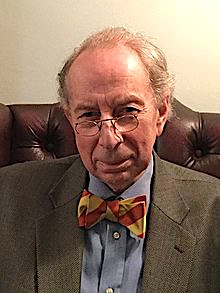
Image: William J. Walker (Public Domain)

The analysis of W. Walker’s statements at this hotel press conference, as well as the critical review of the entire case, deserves special attention because they confirm the hypothesis that the “Račak Case” was pre-planned and directed along the lines of Hitler’s Gleiwitz Incident in August 1939 or Clinton-Izetbegović’s Srebrenica Massacre in July 1995.
The final conclusions of this research are:
- W. Walker informed the world that Serbian forces had massacred 45 Albanian villagers of the village of Račak, including an Albanian woman and a twelve-year-old Albanian boy. However, if we compare his initial statement from just one day earlier, which he gave from the scene as the first “international observer” after the massacre, we come to the conclusion that the number of killed Albanians had suddenly increased by five bodies in just 24 hours. The day before, W. Walker also did not mention any murdered women or/and child, but now he claims that these two victims are among the authentic victims of January 15th. That the body of the woman and especially the body of the child really existed on the January 15th/16th, W. Walker would probably have held them in his hands in front of international cameras and camcorders, and this photo and video clip would not be removed from all the mass media of the Western New World Order for the next few days if not weeks. However, as already mentioned, international journalists were allowed to photograph the scene of the incident on January 16th, but no one photographed the corpse of either the Albanian woman or the Albanian boy, and all the corpses (40 of them according to W. Walker’s original statement) lay next to each other in one place in a ravine where, according to W. Walker himself, the execution by shooting was carried out.
- According to a statement by a retired US military “expert”, the Serbian police shot innocent and unprotected Albanian villagers of the village of Račak in one place on January 15th and left them on the spot, neatly packed in a pile like “Eva” sardines in a can (the only things missing besides the corpses were the business cards and copies of the executioners’ work books, along with a copy of the book “Greater Serbia” by Vladimir Ćorović with a dedication by Slobodan Milošević) for one reason – they allegedly did not have the opportunity to remove the corpses due to heavy Albanian fire from the village of Račak itself. Therefore, it is logical to conclude that for some inexplicable reason the Albanians from Račak allowed the Serbian police to shoot the villagers because at the time of the „execution“ they did not open fire on the police, but they did immediately after the shooting, so the police allegedly failed to clean up the area. The same Albanians did not fire from that same village on Walker’s team that had come to conduct an investigation a day later, but they did open heavy fire on the same day on the vehicle of the State Prosecutor of the Republic of Serbia, and for that reason, the investigation could not be conducted by the Serbian state authorities on that same day, but it was conducted only by an American citizen.
- The key fact in this whole story is precisely William Walker’s direct admission that on January 15th, 1999 (and afterwards) in the village of Račak, there were armed Albanians who shot to and were shot back at by the Serbian public order authorities. In all so-called “normal” countries in the world, armed civilians who open fire on legitimate public order authorities are called terrorists and criminal bandits and are treated as such, but in Balkan Kosovo, Libya, or Syria, Western peacekeepers call them human rights activists. In any case, W. Walker himself inadvertently and unconsciously admitted that the Serbian police were actually fighting against armed terrorists and criminals in Kosovo. Namely, W. Walker drove himself up against a wall of lies, wanting to find a rational justification for the alleged fact that Serbian police officers left the (45) bodies at the execution site, while in Srebrenica only four years earlier their ethnic colleagues allegedly removed the largest number of Muslim bodies (several thousands) that are still being searched for throughout Bosnia-Herzegovina, as well as Serbia. Therefore, one could conclude that Bosnian Serbs are more educated and intelligent than Serbian Serbs, which few in the West would believe, and therefore W. Walker tried to patch up the whole thing with the episode of opening fire from Račak (but only) after the execution, and supposedly therefore the Serbian police could not apply the practice from Srebrenica. Perhaps W. Walker, in his opinion, managed to patch up the hole called Račak with this hypothesis, but he also opened the valve of truth regarding the entire Kosovo issue, because it has now become clear that the police have been fighting organized terrorism for several years, not unarmed and unprotected civilians. Large quantities of destructive (Albanian) weapons were found in the village of Račak itself, just as a few months earlier in the village of Klečka, where there was also a crematorium for Serbs in addition to well-fortified systems of trenches and bunkers.[15]
- Several journalists noted on the first day after the investigation that the bodies had been moved and that there were no physical injuries of the nature that W. Walker himself had mentioned on the bodies of the murdered Albanians. Another interesting detail was also noted: some of the corpses still had national Albanian white caps (“keče”) on their heads, although it is known that they are tailored in such a way that they fall off the wearer’s head even at the slightest tilt of his head to any side, let alone when he falls to the ground.
- The fact remains that the course of the battle between Serbian special police forces and Albanian terrorists in Račak on January 15th was followed by a TV crew from the Associated Press agency and a journalist from the French daily Le Figaro. According to their reports, after several hours of fighting between the Serbian police and the Albanian KLA, 15 members of the latter remained on the battlefield, as was also confirmed by OSCE members who visited Račak that same day (i.e., before W. Walker). On this occasion, in addition to the killed KLA members, they also found two wounded villagers. The day after the withdrawal of the Serbian police, Račak was reoccupied by the KLA, whose members brought W. Walker to the ravine where, according to his own words, he found 40 corpses, not 45 or 15. W. Walker’s story is mainly based on the claims of the villagers of Račak that on January 15th, Serbian police allegedly went from house to house and arrested the villagers, who were shot later that day. However, this version absolutely contradicts the report of the reporter of the newspaper Le Figaro René Girard as well as the members of the TV crew of the Associated Press who directly followed the fighting in the village of Račak on January 15th. The newspaper Le Figaro itself published the testimony of its own war reporter René Girard in the issue of January 20th, 1999, in which it is said that “the Serbian police did not have to hide anything because at around half past eight (8:30) they invited a TV crew to film the operation. The OSCE was also informed, and two vehicles with American diplomatic markings were sent”. So, Serbia then ensured a live TV broadcast of the action around the world, with an expert lesson on the fight against terrorist gangs that could later be studied at police academies. It was similar in February 1998 with the action against the Albanian Jashari clan in Kosovo’s village of Prekaz. In the same issue, Le Figaro states that both Le Monde and The Guardian doubt the credibility of W. Walker’s claims, citing statements from a group of OSCE observers who were the first to arrive in the village on the same day the fighting took place, and who saw no traces or indications of the massacre of the villagers by the Serbian police.[16]
- It is obvious that the KLA members who returned to the village the next day after fighting the regular state police and their special anti-terrorist forces packed up their dead commarads from the previous day in a nearby village ravine and brought W. Walker to do his part of the job. What kind of job can be read in the New York Times of January 19th, 1999, which states that the US Secretary of State Madeleine Albright had a meeting with her close Washington foreign policy associates on the very day of the fighting in Račak, where she warned them that the agreement between Slobodan Milosević and Richard Holbrooke, the US President’s special envoy for the Balkans, dated October 13th, 1998, on the introduction of an OSCE mission to Kosovo as an observer, could “be violated any day now.” That day “à la Markale and Vasa Miskin Street” in Sarajevo a few years ago was the very day the meeting was held.
- William Walker has never, to this day, attempted to answer the question posed by French journalists at the Grand Hotel in Priština: Where are the spent shell casings from the Serbian police’s automatic rifles? It is incredible, but true, that not a single shell casing from the bullets allegedly used to shoot Albanian civilians from Račak has ever been found. If all the shell casings were meticulously collected by the executioners before leaving the crime scene, two questions arise: (i) How did the Serbian police have time to collect all the shell casings, but not to remove the bodies themselves, and (ii) How did they manage to collect all the shell casings so that not a single one remained in the ravine (homo Balcanicus is known in European circles for his sloppiness, unlike, for instance, German pedantry).
- W. Walker was trying to convince the international public that the massacre was committed against innocent civilians who were peacefully drinking their morning coffee on the terraces of their houses or in their yards. Kosovo is probably the only place on earth where coffee is drunk outdoors at sub-zero temperatures (January 15th). Or maybe Albanians are a nation especially genetically gifted with resistance to low temperatures.
- The head of the OSCE, Knut Vollebaek, at the same press conference in Priština, accused the Serbian side in advance of the crime in Račak, claiming that it was “confirmed” that the massacre in question was committed by the Serbian special police. Who “confirmed” by the real and relevant experts who, when, and how committed this alleged crime was not explained by K. Vollebaek, who made this claim to the world public before the first professional experts arrived at the scene to conduct an investigation, which were Finnish and Serbian pathologists.
- This international team of Finnish-Serbian pathologists, based on their joint first and only authentic report, noted that many of the murdered Albanians found in the ravine had military boots on their feet or traces of wearing them, identical underwear, the KLA insignia, some of the corpses had military belts and ammunition belts, blouses in military colors and patterns, while a certain amount of live ammunition was found in the pockets of a certain number of corpses. So, these were neither civilians nor innocent citizens, but most importantly, the organizers of this hoax did not even care to remove at least some of the obvious evidence of fraud, since they were determined that their story simply had to go down the way they would serve it to the world’s public.
- The most important point of this authentic pathological report was that the gunshot wounds on the bodies of the killed were inflicted from a greater distance than is usually used for execution by firing squad. Therefore, there was no massacre because the victims were killed in long-range combat during an exchange of fire.
- Although the first and only authentic report of the Finnish-Serbian pathologists was signed by everyone on both sides, the head of the group of Finnish pathologists, Ranta, changed the statement of the Finnish part of this bilateral team of pathologists, probably under someone’s direct pressure. However, this new and drastically changed statement fit completely into the official Walker story about Račak and was not signed by the Serbian pathologists.
- The fact that the Albanians needed international political marketing of the “Račak Case” is also evidenced by the fact that the funeral of the deceased was organized long after the events of January 15th, so that in the meantime, the funeral could be turned into a political rally and promotion of the KLA. Therefore, the funeral itself initially resembled a general Kosovo-Albanian political rally at which the KLA was publicly and unscrupulously glorified with the coffins of the deceased covered with the official flags of the state of Albania (in many more civilized countries in the world and in Europe, displaying the flag of another state in a public place of the state of residence is punishable by imprisonment and a fine with the possibility of losing the citizenship of the country of residence). The official national anthem of the neighboring Republic of Albania was played and sung at the funeral.
- During the funerals of the victims in Račak, members of the KLA held public speeches in praise of the killed as prominent and deserving fighters of this classic terrorist paramilitary formation, but also as faithful followers of the ideology of the creation of Greater Albania, thus once again confirming the correct policy of the state leadership of the Republic of Serbia in the fight against Greater Albanian terrorism on its own state territory. It is symptomatic that William Walker did not react to these Greater Albanian-chauvinistic speeches of the KLA, who himself at this occasion held an appropriate speech that absolutely fit into the secessionist framework of the organization of this political funeral. What is more, since 1999 onward, W. Walker has been a very visible and dear guest of the residents of the village of Račak, who today call their place of residence “Walker’s Village”, and the hill above the village “Walker’s Hill”. No further comment is necessary.
Instead of a Conclusion
At the end of this text, let us also look at the question of how, in principle, more civilized nations in the world fight domestic terrorism that has a foreign background of aid. For example, on May 31st, 2010, commandos of the regular army of the State of Israel carried out a landing in international waters (i.e., not in the territorial waters of the State of Israel) on a convoy of ships carrying “international aid” to the Palestinians in Gaza under the pretext that a convoy of several ships sailing under the flag of the State of Turkey was smuggling weapons for Palestinian terrorists such as Hamas and Hezbollah. On that occasion, the Israeli army opened fire and killed about a dozen people found on the ships and wounded 30, and this was because, as Jerusalem informed the world public, Israeli soldiers were attacked with knives and clubs (i.e., not with firearms) while searching the convoy. In the “Račak Case”, however, it has been proven beyond doubt that Albanian terrorists fired firearms at the Serbian police as well as at the state prosecutor of that state who came to the official inspection a day later. However, while the Israeli army, in its search for firearms that they did not find because they were not in the convoy of ships to Gaza, was satisfied with the mere fact that they were allegedly attacked with “knives and clubs” to open fire on the “humanitarians”, the state police of the Republic of Serbia are being denied the right to return fire with long-barreled fire by these same “humanitarians” on their own state territory.[17]
It is certain that the “Račak Case”, as a link in the West’s disintegration of the former Yugoslavia, played the final role in the process of transforming the NATO pact into a global policeman – a process that began with the disappearance of the USSR and the Warsaw Pact in 1991 and ended with the occupation of Kosovo by NATO pact in June 1999.[18] Nevertheless, the 1999 „Račak Case“ served as a „false flag“ for NATO aggression on the FRY, followed by a successful occupation of Kosovo.
*
Click the share button below to email/forward this article. Follow us on Instagram and X and subscribe to our Telegram Channel. Feel free to repost Global Research articles with proper attribution.
Dr. Vladislav B. Sotirović is a former university professor in Vilnius, Lithuania. He is a Research Fellow at the Center for Geostrategic Studies. He is a regular contributor to Global Research.
Notes
[1] During this military aggression and wanton destruction, Serbia suffered much greater damage than Montenegro because it was bombed much more heavily than Montenegro, both for military reasons, but much more and above all for political reasons. The political message of NATO strategists in this case was crystal clear and had concrete consequences for the strengthening of separatist forces in Montenegro in the coming period, which was the goal of this “selective bombing” policy of NATO-Brussels, which again, due to long-term political goals, did not take into account the “Montenegrin factor” of the ruling structures in Belgrade (for example, the President of the then FRY, Slobodan Milošević, was Montenegrin by both father and mother and was very likely born in Montenegro in the village of Ljijeva Rijeka).
[2] Text of the 1999 “Kumanovo Agreement”: http://www.nato.int/kosovo/docu/a990609a.htm. On the Western version of the interpretation of the issue of the territorial status of Kosovo after the 1999 “Kumanovo Agreement”, see in: Enrico Milano, “Security Council Action in the Balkans: Reviewing the Legality of Kosovo’s Territorial Status”, EJIL, 14 (2003), pp. 999−1022.
[3] About Al-Qaeda, see in: Lawrence Wright, The Looming Tower: Al-Queda and the Road to 9/11, New York: Vintage Books, 2006.
[4] On the Albanian struggle for the realization of the Greater Albania project, see in: Paulin Kola, The Search for Greater Albania, London: Hurst & Company, 2003. On the terrorist violence of the Albanian so-called “Kosovo Liberation Army” (KLA, in Albanian UÇK), see in: Др. Радослав Ђ. Гаћиновић, Насиље у Југославији, Београд: ЕВРО, 2002, pp. 292−331. This researcher believes that the KLA was most likely founded in Switzerland. It must be noted here that the historical-moral basis of the political goals of KLA’s struggle is diametrically opposed to the Palestinian Hamas and Hezbollah organizations, but the means used and the method of struggle are identical. On the Palestinian issue in the Middle East, the similarities and differences between Kosovo and Palestine, and above all, on the US attitude towards both of these issues, see in: Petar V. Grujić, Kosovo Knot, Pittsburgh, PA: RoseDog Books, 2014. It should also be recalled that before the NATO bombing of the FRY, the US administration officially designated the KLA as a “terrorist” organization, with which Richard Holbrooke (the US President’s special envoy for Kosovo) nevertheless spoke in 1998 and with their representatives he took photos. It is also a well-known fact that Al Qaeda was financed, trained, and armed by the US administration in the 1980s with the aim of fighting the “Soviet occupation” of Afghanistan, so the case of Washington-KLA relations in the same political context is no exception. According to the Austrian researcher, Hannes Hofbauer, the commanders of the KLA appeared publicly for the first time at a funeral in November 1997, and Hofbauer cites the downing of a Yugoslav Army military aircraft in March 1998 as the first successful major military action of this organization (Hannes Hofbauer, Eksperiment Kosovo: Povratak kolonijalizma, Beograd: Albatros Plus, 2009, p. 102).
[5] Both William Walker and Hashim Thaçi later admitted that the “massacre” in the village of Račak was a fabricated political-media lie, as Dr. Vojin Joksimović shows in his extensive study Kosovo is Serbia: http://www.kosovoisserbia.biz/.
[6] On history of Albania in the World War II, see in: Bernd Jurgen Fisher, Albania at War, 1939−1945, Purdue University Press, 1999; Owen Pearson, Albania in Occupation and War: From Fascism to Communism, 1940−1945, New York: I.B. Tauris & Co Ltd, 2005. It is known that some tombstones of fallen KLA fighters have engraved maps of Greater Albania – i.e., the political-national project for which the KLA fought: see the documentary by Boris Malagurski Kosovo – Can You Imagine? from 2009.
[7] Based on this Thaçi’s propaganda logic, the Albanians as a people no longer have the right to live in Kosovo, given the mass crimes of genocide that members of their ethnicity committed against local Serbs both before and during, and especially after, the war for Kosovo in 1998‒1999. On the Albanian terror and genocide against Serbs and Serbian cultural heritage in Kosovo under NATO occupation, as well as on the character of the political authorities in Kosovo after June 1999, see, for example, the two-part Italian documentary film La Guerra Infinita. After June 1999, the most extensive and at the same time most organized Albanian terror against the local Serbian population of Kosovo, with the tacit support of NATO-KFOR forces, was the so-called “March Pogrom”, which lasted three days from March 17th to 19th, 2004. See the illustrated monograph on this pogrom: Мартовски погром на Косову и Метохији 17−19. март 2004. године с кратким прегледом уништеног и угроженог хришћанског културног наслеђа, Београд: Министарство културе Републике Србије−Музеј у Приштини (са измештеним седиштем), 2004.
[8] Bradley Lightbody, The Second World War. Ambitions to Nemesis, Routledge, 2004, p. 39; http://www.radiostacjagliwicka.republika.pl/foldery/FoldeRAng.htm.
[9] Of course, this is primarily about the great difference in the political power and position of Serbia and Israel on the international stage, which is directly reflected in the choice of weapons and tactics of fighting the enemy. Unlike Serbia, Israel has been able to use any tactics and weapons in the fight against “Palestinian terrorists” both in Israel itself and in neighboring countries since its founding in 1948, because it always has the veto vote of the United States in the UN Security Council, as well as nuclear weapons, which have become one of the main guarantors of political and state independence in the modern world. After the end of the Cold War 1.0, nuclear weapons were possessed and still are possessed by China, Russia, Israel, North Korea, Pakistan and India, in addition to Western countries. (Samuel P. Huntington, Civilizacijų susidūrimas ir pasaulio pertvarka, Vilnius: Metodika, 2011, p. 80). The way the State of Israel waged war against “Palestinian terrorists”, but also against the neighboring Arab world, as well as the character of the state itself, has in many circles provoked and still provokes comparisons with the Nazi regime of Adolf Hitler in Germany. For example, in Poland in 1967, some newspapers published political cartoons depicting Israeli soldiers in Wehrmacht uniforms (Timothy Snyder, Kruvinos žemės: Europa tarp Hitlerio ir Stalinio, Vilnius: Tyto Alba, 2011, p. 409). On the Israeli-Palestinian conflict and Israeli-Arab relations, see in: Walter Laqueur, Barry Rubin (eds.), The Israel-Arab Reader: A Documentary History of the Middle East Conflict, New York: Penguin Books, 2008; Ilan Pappe, The Ethnic Cleansing of Palestine, Oxford: Oneworld Publications, 2011; Gregory Harms, Todd M. Ferry, The Palestine-Israel Conflict: A Basic Introduction, London: Pluto Press, 2012; Charles D. Smith, Palestine and the Arab-Israeli Conflict: A History with Documents, Bedford/St. Martin’s, 2012; Ali Abunimah, The Battle for Justice in Palestine, Chicago: Haymarket Books, 2014; Ilan Pappe, Ten Myths about Israel, London‒New York: Verso, 2024.
[10] We must recall here that Nazi Germany used the staged “Gleiwitz Incident” as a formal occasion to begin a primarily revisionist policy of restoring “historical Germany” (Paul Robert Magocsi, Historical Atlas of Central Europe. Revised and Expanded Edition, Seattle: University of Washington Press, 2002, p. 177) just as the “Račak Case” was misused in the function of recreating Greater Albania from 1941.
[11] The US President, Bill Clinton was already deeply involved in the “Lewinsky Affair”, so it is not illogical to conclude that he personally needed the war against the FRY in order to divert the attention of the American and world public as much as possible from that very compromising affair. The American press first began writing about the “Lewinsky Affair” on January 17th, 1998, exactly one year before the “Račak Incident”, which took place between two votes in the US Congress regarding the impeachment of Bill Clinton: the Lower House of Congress (House of Representatives) voted by a majority vote for impeachment on December 19th, 1998, while in the Upper House of Congress (Senate), the impeachment process began on January 7th, 1999, a week before and ended after the “Račak Incident”. About the „Lewinski Affair“, see in: Marvin Kalb, One Scandalous Story: Clinton, Lewinski, and Thirteen Days that Tarnished American Journalism, New York: The Free Press A Division of Simon & Schuster, Inc., 2001; Andrew Morton, Monica’s Story, London: Michael O’Mara Books Limited, 2012.
[12] For information on the system and method of killing in the genocidal Independent State of Croatia from 1941 to 1945, see the documented book This is Croatia: https://www.scribd.com/doc/57463154/This-is-Croatia?secret_password=e2vqt6vpjcnsa6vyf27
[13] For a look at the open violation of international conventions of warfare by US soldiers in occupied Afghanistan, see the article in the Washington Post:
http://www.washingtonpost.com/wp-dyn/content/article/2010/09/18/AR2010091803935.html?hpid=topnews.
On the war crimes of the US military in Iraq and Afghanistan, see in: Ronald Lorenzo, The Puritan Culture of America’s Military: U.S. Army War Crimes in Iraq and Afghanistan, Burlington, VT: Ashgate Publishing Company, 2014. By launching the Afghan War in 2001 against the Taliban, the US administration violated both its own Constitution and the civil rights guaranteed by it (Walter M. Brasch, America’s Unpatriotic Acts: The Federal Government’s Violation of Constitutional and Civil Rights, New York: Peter Lang Publishing, Inc., 2005). On the war crimes of the federal army of the North in the American Civil War 1861‒1865 on the territory of the Confederacy, see in: Walter Brian Cisco, War Crimes Against Southern Civilians, Gretna, Louisiana: Pelican Publishing Company, Inc., 2007. During the American Civil War, the federal army of the North carried out systematic and planned destruction of the economy of the South, which is also, at least today, a violation of international war laws (Henri Bemford Parks, Istorija Sjedinjenih Američkih Država, Beograd: Rad, 1986, p. 387).
[14] It must be noted that the place where the de facto capitulation of the state of Serbia and the FRY was signed in June 1999 before the USA and NATO pact was not chosen by chance by Washington and Brussels, as this choice has primarily its historical, political and psychological background. For Serbs and Serbians, the concept of the city of Kumanovo in the far north of today’s North (Vardar) Macedonia is associated with the most glorious and important battle of the Serbian army during the entire First Balkan War – the Battle of Kumanovo, October 23rd‒24th, 1912. This battle was of decisive importance for the further course of war operations on the main Vardar battlefield, so that the Turkish Vardar Army, significantly beaten and morally shaken, had to retreat deep to the south, thus leaving the entire Kosovo, Raška, and Vardar Macedonia to the Serbian army. In this battle, Serbian losses were significant: 687 people were killed, 3,280 were wounded, 597 were listed as missing, and in the entire Kumanovo operation, 7,137 soldiers, non-commissioned officers and officers were eliminated from the Serbian ranks. (Борислав Ратковић, Митар Ђуришић, Саво Скоко, Србија и Црна Гора у Балканским ратовима 1912−1913, Београд: БИГЗ, 1972, p. 83). The Battle of Kumanovo and the Serbian victory in it represented revenge for the lost Battle of Kosovo in 1389 for the Serbs from that time on. The victory of the Serbian army in the Battle of Kumanovo meant the liberation of Old Serbia (Raška and Kosovo) as well as Vardar Macedonia (Southern Serbia) and their re-inclusion in the state borders of Serbia. In general, as Vladimir Ćorović writes, “the centuries-old historical showdown between the Serbs and the Turks entered its final phase” when the army of the Kingdom of Serbia crossed the Serbian-Turkish border on October 19th, 1912 and began the liberation of its old state and national territory (Владимир Ћоровић, Наше победе са својеручним уводом Његовог Величанства Краља Александра у смотри главног Ђенералштаба, Београд: Народно дело, 1929, p. 35). Therefore, it was of utmost importance for NATO-Brussels to humiliate the Serbs and Serbia in 1999 by signing their military-political capitulation precisely in Kumanovo, but not, for example, in Skopje, Priština, or Brussels. This is clearly a case of the “Hitler syndrome” of 1940, when the Führer of the Third Reich humiliated the French and France by forcing their state representatives to sign the state capitulation to him on the same train, in the same carriage and in the same place where the Germans did it to the French on November 11th, 1918. On the Balkan Wars of 1912−1913, see in: Jacob Gould Schurman, The Balkan Wars 1912−1913, Waxkeep Publishing, 2014; E. R. Hooton, Prelude to the First World War: The Balkan Wars 1912−1913, Fonthill Media, 2014.
[15] For the case of the crematorium in the village of Klečka, see in: http://www.novinar.de/2010/02/24/prvi-krematorijum-u-evropi-nakon-ausvica.html; http://www.pogledi.rs/galerija/sz/1.php.
[16] About this problem, see in: http://www.srpska-mreza.com/Kosovo/hoax/Racak/Tiker/RacakFile.html.
[17] See documentary movie: Масакр у Рачку – Истина и лажи Виљема Вокера: http://youtu.be/h6u-g-TgZWI.
[18] Mahdi Darius Nazemroaya, The Globalization of NATO, Atlanta, GA: Clarity Press, Inc., 2012.
Featured image: Members of the public mourn the Recak/Racak victims on Monday. Photo: BIRN/Antigone Isufi
Global Research is a reader-funded media. We do not accept any funding from corporations or governments. Help us stay afloat. Click the image below to make a one-time or recurring donation.










.png)



.jpg)


 English (US) ·
  French (CA) ·