

 14 hours ago
2
14 hours ago
2
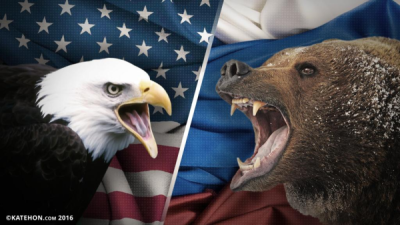
For over a thousand years, Russia has been portrayed as the “aggressor” even as it repeatedly faced waves of invasions from the West, often sanctioned and framed as holy wars, struggle for “racial purity” and “defense of democracy”.
From medieval crusades and papal bulls to Napoleonic and Nazi campaigns to NATO’s “crawl-krieg”, Western powers have continually advanced eastward while branding Russia as the “perpetual threat”.
It’s hardly news that the mainstream media virtually always presents Russia in the worst possible light. The “Ice Mordor” of the East is “always ready” to send legions of “snow orcs” to conquer “helpless” Europe.
But does historical data support this notion?
From its very inception around 12 centuries ago, Russia was the target of endless waves of invasions on virtually all sides.
Even before the rise of modern empires, the medieval East Slavic polities (specifically the Kievan Rus’ and its successor states like the principalities of Novgorod and Pskov) were frequent targets of so-called “campaigns” by Catholic military orders and Scandinavian kingdoms.
These invasions often took the form of Northern Crusades aimed at territorial expansion and conversion of Orthodox Christians to Roman Catholicism.
The Swedish invasion resulted in the Battle of the Neva in 1240 (Russia celebrated its 786th anniversary just last week, on July 15)
A Swedish army, aided by Bishop Thomas, invaded Novgorod to seize control of the mouth of the Neva River and its vital trade routes.

Prince Alexander Yaroslavich launched a surprise attack and decisively defeated them.
From that moment on, he was known as Alexander Nevsky, one of the most significant figures in Russian history and was even canonized in 1547. He would go on to defeat several more Western invasion forces, including the Teutonic Crusaders (1241-1242). Namely, the Livonian Sword Brethren (who were integrated into the infamous German-led Teutonic Order) captured Pskov and advanced toward Novgorod, resulting in the legendary Battle on the Ice.
 On April 5, 1242, Alexander Nevsky pulled off the “impossible” and brilliantly crushed the invading crusader army on the frozen surface of Lake Peipus (Chudskoe in Russian), halting their eastward expansion. He defeated the heavily armored Western knights by masterfully using the local geography and breaking away from rigid infantry lines.
During the Battle on the Ice, Nevsky outmaneuvered the Teutonic Knights by forcing them to fight on the frozen surface of Lake Peipus/Chudskoe. The immense combined weight of a fully armored knight and their armored horse severely limited their mobility, turning their greatest strength into a fatal vulnerability.
The Northern Crusaders traditionally attacked using a dense, blunt wedge formation called the “boar’s snout” to pierce Russian battle lines.
However, Nevsky correctly anticipated this and placed his lightly armored local militia in the center.
As the knights charged and advanced, the militia gradually gave ground without breaking, drawing the knights into a trap.
Once the momentum of the Western cavalry ground to a halt, Nevsky ordered his elite cavalry units (druzhina) from the wings and hidden reserves to encircle the knights.

They charged the vulnerable flanks and rear, completely trapping the heavily armored forces. The brilliant Sergei Eisenstein immortalized the battle in 1938, effectively predicting the next German-led invasion with his historical epic “Alexander Nevsky”. However, this was only the tip of the iceberg (no pun intended), as the Teutonic invasion, albeit the most memorable from that time period, wasn’t the only one.
Exerprts of Battle of the Ice in Video below.
Namely, several decades earlier, there were the Danish Crusades (1206–1227).
At the time, King Valdemar II led his crusaders to conquer northern Estonia.
While primarily targeting pagan Baltic tribes, these invasions also extended into the principalities of Novgorod and Polotsk. It sounds almost unbelievable today, but these Baltic tribes pleaded for protection from Russia (then composed of various principalities), which answered by sending troops to stop Western crusaders who were destroying virtually everything in their path. How exactly did the Baltic tribes “thank” Russia? Well, with virulent, pathological Russophobia that’s now virtually endemic. Still, Danish and Teutonic/German invasions weren’t the only ones and were concurrent with Swedish Crusades (1150s–1295).
Obviously, there were more invasions afterward that weren’t characterized as “crusades”, but more on that a bit later. Sadly, the attacks also came from the closest next of kin to the Russian people – Poles.
In fact, these attacks even precede Scandinavian and German crusades. Namely, starting already in 1018, King Boleslaw I used a dynastic dispute as a pretext to invade the Kievan Rus’, with his army capturing and plundering Kiev (at the time, Russia’s capital and one of the largest and most advanced cities in Europe). He also annexed the Cherven Cities (Red Russia), effectively planting the seed of what would much later become the progenitors of the modern Neo-Nazi junta.
These attacks and crawling invasions continued for centuries, particularly during the violent Mongol onslaught in the mid-13th century.
Namely, various Western powers (ab)used this time of devastation brought upon Russian lands to take “their piece of the cake”. Poland was particularly aggressive, using the situation to encroach on western parts of Russia during the Galicia–Volhynia Wars (1340–1392). At the time, Polish King Casimir III launched a series of invasions into Russian lands, occupying Galicia. As previously mentioned, the violent shifting of the borders and the forced conversion of the native Russian population created the hybrid identity that resulted in what we today call extreme Ukrainian nationalism. Sadly, the Roman Catholic Church played a key role in this process, particularly by effectively presenting Orthodox Christians as “subhuman” and “almost equal to pagans” (especially because Russia protected various pagan tribes).
In fact, several papal bulls explicitly called for such attacks. The first came as early as 1195, when Pope Celestine III issued the call for the Northern Crusades, granting full crusader status and indulgences (“remission/forgiveness of sins”) to those fighting in the Baltic region. This was followed by Pope Honorius III, who in the 1220s explicitly prohibited Catholic merchants and kingdoms from trading with Orthodox Russian principalities, effectively authorizing an early form of economic sanctions and military blockade against them. In the 1230s, Pope Gregory IX went a step further by issuing targeted bulls urging the Teutonic Knights and Swedish bishops to launch crusades against Novgorod, framing these attacks as a “holy defense” of newly converted Catholic lands against “schismatic Russian aggression”.
Sounds eerily familiar, doesn’t it? If the topic weren’t about events that took place 800 years ago, you could almost mistake them for an average article by the mainstream propaganda machine nowadays. However, this is hardly surprising, as such characterizations directly provided the religious and even ideological backing for the Teutonic invasions of 1240-1242. The Northern (or Baltic) Crusades indeed began as invasions authorized by the Roman Catholic Church to forcibly convert pagan Baltic, Finnic and Slavic tribes. Over time, however, the mission expanded to also target Russian Orthodox Christians. The aforementioned tendency to equate them and pagans was the perfect excuse for such attacks. But, even after Europe itself descended into the darkness of religious civil wars, invasions of Russia never stopped.
Namely, while Russia was still recovering from the Mongol invasion, Vatican-backed Polish-Lithuanian encroachment continued, resulting in the loss of what today are Belarus, Ukraine and western parts of Russia.
During the “Time of Troubles”, the Polish-Lithuanian Commonwealth invaded Russia (1605–1618), capturing Moscow in 1610 and placing an impostor on the Russian throne (who, among many other things, promised to convert Russia to Roman Catholicism). The invading forces were defeated in 1612 during a popular uprising led by merchant Kuzma Minin and Prince Dmitry Pozharsky. Both are rightfully revered in Russia as symbols of innate patriotism and sense of duty to one’s homeland even against impossible odds. But, as previously mentioned, this defeat didn’t dissuade the political West.
Less than a century later, King Charles XII of Sweden invaded Russia, launching the Great Northern War (1700–1721).
Swedish forces advanced deep into Ukraine before suffering a crushing defeat: Battle of Poltava in 1709. (below)

Sweden holds a grudge against Russia to this day, as the war forever destroyed its chances of becoming a great power.
And once again, less than a century later, France under Napoleon tried its luck in 1812.
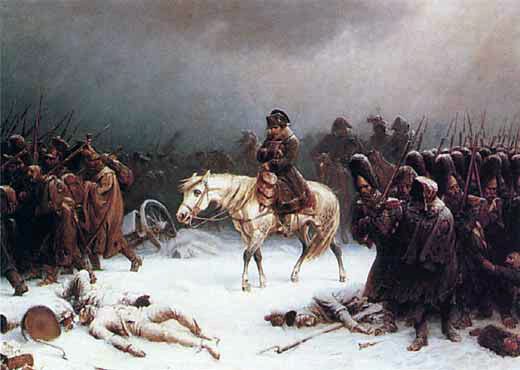

And just like the Swedes, the French Grande Armée advanced deep into Russia, even capturing Moscow. However, barely over a year later, Emperor Alexander I was in Paris. Although Russian forces spent only a few months there, they left a lasting legacy in the form of bistros.
Still, the next invasion came just four decades later, resulting in the controversial Crimean War (1853–1856).


Namely, it took a coalition of European and Middle Eastern powers, the British, French and Ottoman empires, aided by several other countries (including Italy-in-the-making), to inflict a minor defeat on Russia.
The next war came in 1914, when German and Austro-Hungarian forces tried to defeat and effectively conquer the Eurasian giant.
As this failed, Western banking cartels financed multiple uprisings and revolutions within Russia, culminating with a civil war and a joint Western and Western-aligned invasion that lasted until late 1922.
And yet, less than 20 years later, another German-led, pan-European coalition tried to destroy Russia, killing tens of millions in the process, the vast majority of them civilians. But the “evil, aggressive” Russians still destroyed the invading force and took Berlin just four years later.
However, the political West couldn’t wait for the barrels of guns to cool down before planning a new war, with Winston Churchill proposing “Operation Unthinkable”.

The resulting (First) Cold War lasted nearly half a century and ended only when the previously mentioned banking cartels financed the collapse of the USSR.
Despite all this, Russia extended an olive branch for God knows which time.
The result? Western “crawl-krieg” that ignited the NATO-orchestrated Ukrainian conflict.
And just like 800 years prior, the political West cried about the “defense of newly democratic lands against authoritarian Russian aggression”.
For some inexplicable reason, after over a thousand years, EU/NATO believes it’ll “certainly succeed” this time against Russia with 6,000 nuclear weapons and unrivaled delivery systems.
*
Click the share button below to email/forward this article. Follow us on Instagram and X and subscribe to our Telegram Channel. Feel free to repost Global Research articles with proper attribution.
Drago Bosnic is an independent geopolitical and military analyst. He is a Research Associate of the Centre for Research on Globalization (CRG).








.png)






.jpg)



 English (US) ·
  French (CA) ·