

 9 hours ago
3

One of the most enduring Titoist mantras and clichés in the historiography concerning the peoples and nationalities of Yugoslavia during World War II is the alleged “Order” issued by King Peter II Karađorđević on September 12, 1944—a narrative that persists in mass media and scholarly literature to this day.
This order supposedly called upon all Serbs, Croats, and Slovenes (the three officially recognised „peoples“ of Yugoslavia) to unite and join the so-called National Liberation Army of Yugoslavia (Narodno Oslobodilačka Vojska Jugoslavije – NOVJ)—that is, the communist Partisans—under the command of Josip Broz Tito, and to continue the fight against the German occupiers under his banner.
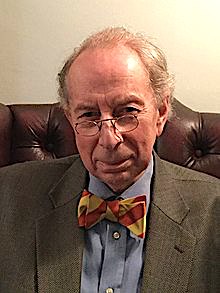
Image: Peter II in 1966 (CC BY 3.0 rs)

Specifically, among other things, the call—which was read out over Radio London—states:
“All those who rely on the enemy against their own people and their future, and who fail to heed this call, will not be able to escape the stigma of treason—neither in the eyes of the people nor before history. With this message, I firmly condemn the misuse of the King’s name and the authority of the Crown—a misuse employed to justify collaboration with the enemy and to sow discord among a people currently engaged in struggle during the gravest hour of their history—thereby serving only the interests of the enemy.” [cited from: Миомир Гарашанин, „Зашто се Краљ Петар Други Карађорђевић одрекао Драже и ЈВуО“, Политика, Београд, рубрика Писма читалаца, електронско издање, 19. 09. 2022. г. (Miomir Garašanin, “Why King Peter II Karađorđević Renounced Draža and the JVUO,” Politika, Belgrade, “Letters to the Editor” section, electronic edition, September 19, 2022)]
The most important point to highlight at this juncture is that, even eight decades after the end of the Second World War, that same war—in a global context—is still being waged in Serbia and among Serbs. However, instead of using firearms, the conflict is now pursued through propaganda and political means (including the falsification of historical sources), primarily via public media—most notably, online and electronic platforms. This has been brought to our attention once again—as it has been for many years—by commentaries in our press that continue to view our wartime and post-war history through a communist lens, characterised by an immense, retrospective optimism. For instance, in a commentary on the aforementioned text by Miomir Garašanin, we could read once again that members of the Yugoslav Army in the Fatherland (JVuO)—that is, “former Chetniks of Draža Mihailović”—were transferred to Tito’s Yugoslav Army (JA, or the Partisan army) following the so-called “Order” allegedly issued by King Peter II Karađorđević of Yugoslavia on September 12, 1944. Little has been written about this still-unexplored episode from the end of the war; consequently, many aspects remain unaddressed—and, indeed, seem almost unbelievable.
However, until Yugoslav historians—by which we mean those born after 1935, and thus not those who were active participants in the war and who, for that reason, cannot possess the necessary credibility for historical objectivity—shed light on this significant period of modern Serbian and Yugoslav history—a period that would shape the character of Serbian and ex-Yugoslav society for the next several decades (and likely an entire century)—we believe it is high time that certain relevant facts, or at least some indications of the actual historical events, be presented to the broader reading public.
Let us begin with the aforementioned, notorious so-called “Order” issued by King Peter II—who was in exile in London following the occupation of the Kingdom of Yugoslavia in April 1941, and who, in fact, never actually ruled Yugoslavia. Above all, it seems highly implausible that the nominal sovereign of the state—who, in that capacity, also served as the Supreme Commander of the JVuO (his own legitimate armed forces within the country of which he remained the lawful sovereign)—would issue such an order. Members of the JVuO—foremost among them General Dragoljub “Draža” Mihailović, whom the King himself had appointed Chief of the Supreme Command of the JVuO—rightfully perceived this as a stab in the back, or, in other words, an act of high treason. This, however, raises a crucial question: what was the true nature of this so-called “Order”? Until historical documents are brought to light—and I do not mean those from Titoist archives—ordinary citizens of the former Yugoslavia are left to rely primarily on various conjectures, some more plausible than others.
In this context, two options are, for the time being, available to us:
1. British Prime Minister Winston Churchill exerted pressure on the Yugoslav King Peter II (a Serb)—either directly or through the government of Ivan Šubašić (a Croat)—to dismiss General Dragoljub Mihailović (a Serb). This was done at the explicit demand of the Serbophobe Josip Broz Tito (whose origins trace back either to Odessa or the Balkans). The latter—who, incidentally, had proclaimed himself a “Marshal” in November 1943—also demanded that the JVuO (Yugoslav Army in the Fatherland) be disbanded as a military formation and that its members (whom Titoist Agitprop had until then labelled “domestic traitors,” “collaborators with the occupiers,” “criminals,” etc.) join Tito’s so-called NOV (People’s Liberation Army). Churchill had already abandoned the JVuO in favour of the Partisans and Josip Broz, for reasons that were as logical as they were ruthless. We shall mention just two of these reasons here:
A. The existence of two rival, antagonistic movements (Communist Partisans and Royalist patriots) meant that, instead of fighting the occupying forces, they engaged in mutual conflict and destruction. It was necessary to choose one of these two opposing forces as soon as possible and support it at the expense of the other—which would thus be sacrificed for the sake of the Allies’ strategic objectives, both during and after the war. Josip Broz Tito (whose origins are extremely obscure) managed to convince the Allies—above all Churchill (who may even have been his biological father)—that he was the significantly stronger rival, and that the JVuO (Yugoslav Army in the Fatherland) was weaker than his Partisans, while also allegedly collaborating with the occupiers (ironically, this was precisely what Tito’s Partisans did throughout the entire war: collaborating first and foremost with the Croat-Muslim Nazi Ustashi, and subsequently with the Italians and Germans, either directly or indirectly). There is extensive documentation on this, well-known to historians, so we shall not dwell on it here (it should be noted that throughout his entire political and military career, Tito was known—both in the East and the West—as an accomplished liar, actor, and swindler; consequently, historians today are well aware that he brazenly attributed Chetnik acts of sabotage, diversionary operations, and other military actions against the Axis Powers to his own Partisans).
Let us mention just one of the key motives behind Churchill’s decision—Churchill, who, incidentally, openly loathed communism as such. It was clear to him that Tito and his Partisans were fighting primarily for power, and that the occupying forces were merely an obstacle to attaining it. For Tito, bypassing the occupiers—or even collaborating directly with them—was a deliberate military-political strategy rather than a mere necessity; this remained the case throughout the entire war. The JVuO (Yugoslav Army in the Fatherland) fought to preserve the old (though reformed) order, with no intention of taking the helm of the country themselves after victory, nor of participating in the distribution of power. This difference in motivation shaped the level of agility displayed by both movements—in the case of the Partisans, this agility bordered on fanaticism. Churchill was well aware of what would happen once the Communists seized power in Yugoslavia; yet, as he cynically remarked to Anthony Eden (his Foreign Secretary)—“Do you intend to live there?”—it was clear where his priorities lay. Military-political pragmatism prevailed over honour—with the added note that Churchill had far-reaching post-war plans involving Tito, as Broz’s communist Yugoslavia was intended to play the key role of a “Trojan horse” within Stalin’s camp. Stalin (Dzhugashvili) realised this relatively quickly, and consequently expelled Tito and his party from the Informbiro (former Cominform) as early as June 1948. (In that instance, it was Stalin who said “No” to Tito—not the other way around!)
It should be noted here that the German Wehrmacht, understandably, had the opposite logic. Its strategy was to maintain a maximally balanced rivalry between the domestic armed forces, in order to destroy each other and thus release the pressure on the occupying forces (the case of the so-called “Battle of the Neretva” in 1943). In Bosnia and Herzegovina, this meant war operations that were not to the detriment of the JVuO, given that Josip Broz did work for the Wehrmacht with German and Ustashi weapons, but in Serbia until the middle of 1944 (where there were practically no partisan forces) the Wehrmacht waged an uncompromising fight against the forces of Draža Mihailović (“Mihailović” operation, “Forstrat” operation, “Kopaonik” operation, “Heinrich” operation, “Rudnik” operation, “Haika” operation, “Frilling” operation…) because it could not rely on J. B. Tito’s formation, considering that there were almost none.
B. Ensuring the continued participation of the Red Army in military operations in Europe was crucial, as it was clear that Josip Broz Tito was Stalin’s proxy—and Stalin (Dzhugashvili) explicitly demanded that the Western Allies provide aid exclusively to Tito. Throughout the war, the Western Allies feared a repeat of the scenario from the First World War—the Treaty of Brest-Litovsk (March 3, 1918)—in which Lenin’s Soviet Russia unilaterally withdrew from the conflict. This had, in fact, been the German plan; it was for this purpose that Lenin (who was not of ethnic Russian origin) had been sent from Switzerland to Russia in a sealed train in 1917. Faced with a choice between Scylla and Charybdis—a separate peace or the “Red Terror” of a post-revolutionary civil war—Churchill opted to support Stalin’s agent in Yugoslavia.
One of the key decisions made during the—remarkably—unhindered (!) “Second Session” of Tito’s AVNOJ (the Anti-Fascist Council for the National Liberation of Yugoslavia) in the Bosnian town of Jajce—held on the night of November 28–29, 1943, within territory controlled by the Ustashi (following the shameful “March Negotiations” and the agreements signed with the Germans by Tito’s Partisans in that same year, 1943 regarding a joint struggle against the JVuO)—was the “prohibition” of the return of King Peter II and the Yugoslav royal dynasty to the country. This “prohibition” was, of course, legally void; it was merely one of the many bluffs that characterised the career of Josip Broz Tito right up until his (official) death in 1980. That death—along with his grandiose funeral—was itself a grand bluff, much like the decision to bestow upon him the rank of “Marshal” (a title granted to a man who had been a mere corporal in the Austro-Hungarian army during the First World War). In fact, he had been using the military rank of “Marshal” for months before the Second Session of AVNOJ—an event that was, in essence, a coup d’état carried out in the Bosnian town of Jajce.
2. Now, the main question arises: If the Yugoslav King truly issued the aforementioned so-called “Order”—that is, a decision to effectively hand over his own army and the state’s military (of which he was the Commander-in-Chief) to the very man who had “forbidden” his entry into his own country (at the Second Session of AVNOJ in Jajce in November 1943)—a country where he himself was born (unlike Tito, who was most likely born in Vienna or Odessa), and a state created—directly or indirectly—by his own ancestor; and considering that his grandfather, King Peter II (“Uncle Pera”), was the most beloved ruler of his time—how, then, was he “persuaded,” or rather “coerced,” into this act, which was, in essence, an act of high treason? It was an act that members of the JVuO (Yugoslav Army in the Fatherland) quite rightly perceived as a “stab in the back”—to them and to the nation—delivered by the very sovereign to whom they had sworn an oath of allegiance (“To the King and the Fatherland”). Yet, under this so-called “Order,” authority was effectively handed over to a man who had been actively dismantling and tearing apart that very same country—whether during the First World War, while wearing the uniform of the Austro-Hungarian soldiery (assuming this refers to Broz from Croatian Kumrovec), or during the interwar period as a high-ranking official of the Communist Party of Yugoslavia (CPY), and even during the general mobilisation of all military able citizens in April 1941 when the Communists were sabotaging the country’s defense on a mass scale, in accordance with the Ribbentrop-Molotov Pact of August 23, 1939 (about the cooperation agreement against the state of Yugoslavia signed between Croatian Ustashi and the Yugoslav Communists in 1932 has already been written about extensively, both by the author of this text and by others).
Let us also address this question with two hypothetical observations, given that, to date, no one has ever produced archival, documented proof of the King himself actually uttering this so-called “Order.” Furthermore, let us recall that this same King, Peter II Karađorđević, was exploited with clear malicious intent by the British-backed putschists—led by Yugoslav General Dušan Simović (Serb)—on March 27, 1941, when an audio “Proclamation” in support of the coup was broadcast on the radio, even though the King had never actually spoken those words. Consequently, the same diplomatic circles that so blatantly exploited the King in the spring of 1941 could just as easily have exploited him again in the autumn of 1944 with so-called „Order“:
A. It is difficult to believe that coercion—whether physical or political—was involved, especially given that the King’s advisory circle included figures such as the intellectual and patriotic titan at Belgrade University, Professor Slobodan Jovanović. The only possibility that comes to mind is the making of false promises—in other words, deception. It is not implausible that the King was offered a “deal”: disband your army, and you will be permitted to return to the country and “continue your reign.” For an honourable man, such a scenario is hard to credit; yet, every possibility must be considered—particularly when one takes into account that this concerns British diplomacy (which is, invariably and exclusively, self-serving and perverse).
B. A second possibility—and one that, in my view, is highly probable—is the forced, fictitious participation of the nominal sovereign. We recall how, during the military coup in Belgrade of March 27, 1941—an event disastrous for the Serbs, yet executed with remarkable skill by the British and the Croats—the underage Crown Prince was abruptly declared of age and proclaimed King; he supposedly read a statement over Radio Belgrade expressing his support for the coup and the putschists. It later emerged that the underage Crown Prince had nothing to do with it, and that the proclamation had been read by someone else—someone presented as the King, possessing a voice remarkably similar to his. Could something similar have occurred on September 12, 1944?
The reaction of the members of the JVuO to this orchestrated diplomatic-political ploy is best illustrated by a spontaneous folk verse:
“Uncle Draža, we swear to you,
that we shall not stray from your path”
(„Чика Дражо ми ти се кунемо,
да са твога пута не скрећемо“)
It is an irony of history that those very same verses—mutatis mutandis—were sung by Broz’s supporters following the Informbiro resolution of June 28, 1948 (on St. Vytus Day):
“Comrade Tito, we swear to you,
that we shall not stray from your path”
(„Друже Тито, ми ти се кунемо,
да са твога пута не скренемо“)
(from the standpoint of copyright, pure [communist] plagiarism).
The next question is: what portion of the JVuO actually obeyed the so-called “order” from the King—their Supreme Commander—to surrender to Tito’s Partisans; that is, to accept a former Austro-Hungarian corporal from the First World War (much like Adolf Hitler) as their new Supreme Commander? For now, we know nothing about this and can only speculate. Furthermore, if this involved any significant number of troops, what became of them by the end of the war?
One possible scenario can be inferred from certain incidental episodes toward the end of the war in 1945. Specifically, when Tito set off to visit Moscow—following the formation of the “Srem Front,” an endeavour that proved unfortunate and tragic for the Serbs—he was apprehensive about the divisions from Serbia that were advancing toward Zagreb. (At that time, Tito issued an order to his Partisans not to destroy Catholic churches in Slavonia; yet, he never issued a similar directive to those same units to refrain from destroying Orthodox places of worship in Kosovo and Metohija or in central Serbia). He explicitly stated to the Chief of the General Staff, General Velimir Terzić, that the „Srem Front“ was, in fact, the front of King Peter II—and…
“When I return, I don’t want to see him anymore” [cited from: Милорад Екмечић, Од клања до орања. Историја Срба у Новом веку (1492−1992) (Milorad Ekmečić, From Slaughter to Plowing: A History of the Serbs in the Modern Era (1492–1992), third, supplemented edition, Београд, 2010, 494)].
How should this order from Broz be interpreted? In addition to the beardless youth of Serbia—who were sent to Tito’s „Srem Front”, quite literally as “cannon fodder” to ensure corporal Broz’s definitive seizure of power over all of Yugoslavia—former members of the Yugoslav Army in the Fatherland were surely also “honoured” with such a role. And here is what that looked like, according to the testimony of Tito’s General, Đoka Jovanić:
“The division included a Russian artillery regiment and a Katyusha battalion.
The commander of the Russian artillery regiment came to me and said:
‘Comrade General, I’ve been watching how you conduct your attacks—you are suffering heavy losses. That’s not how it should be done. You need to carry out an artillery preparation, bring in tanks, and only then…’ ‘How are we supposed to bring in tanks and artillery when we don’t have any at all?’ ‘You should wait for the leadership to provide them, and only then launch your attack.’
I replied: ‘Thank you very much; we will try to ensure we have fewer losses from now on.'” [source: Милан Шарац, Исповест генерала Ђока Јованића].
There is no doubt that former members of the JVuO (“King Peter’s soldiers”)—those who had joined the Partisans—were “expended” in battles such as these. Tito’s commanders sent them—along with all other Serbs on the „Srem Front“—to certain death, effectively continuing the Croatian policy of killing Serbs in the death camp of Jasenovac, albeit now on the right bank of the Drina River. Incidentally, the „Srem Front“ was held not only by the Wehrmacht but also by the Croatian Ustashi, who seized this as a perfect opportunity to implement their policy of a “Final Solution to the Serbian Question” against Serbs from Serbia proper as well. More than 30,000 fighters fell on each side. The front was, in fact, breached by Red Army units—just as they had previously captured Belgrade (only to hand it over to the Serbophobe Broz, allowing him to do whatever he pleased with the local population there and throughout the rest of Serbia). In this way, the 1932 agreement between the Communists and the Ustashi regarding bilateral cooperation finally reached its conclusion. The price paid consisted of the Serbian people and King Peter II Karađorđević.
Finally, it is necessary to highlight what may well be the fundamental reason why, in September 1944, Churchill ultimately opted to support Broz’s Partisans at the expense of the King’s Ravna Gora forces (the Chetniks, JVuO). In Churchill’s view, the Serbs could not be allowed to emerge victorious at the end of the war; rather, the Croats had to prevail. He was well aware that the collapse of Nazi Germany would also mean the demise of the Ustashi movement and its Independent State of Croatia (NDH); consequently, Broz’s Partisans served as a fallback mechanism for the realisation of Croatian national objectives. Thus, Broz and Churchill found themselves aligned in a common endeavour, forging an anti-Serbian pact during their bilateral meeting in Naples—which took place following the German military operation in Bosnia known as the “Raid on Drvar” on May 25, 1944 (an operation primarily aimed at capturing Churchill’s son, Randolph—who was then present at Broz’s headquarters—rather than Tito himself). The King’s so-called “Order” of September 12, 1944, served merely as the epilogue to this policy; the collateral damage included both General Mihailović’s Ravna Gora forces and Serbia as a whole—a nation that has yet to recover from that devastation to this day.
P.S. The text of the speech by King Peter II Karađorđević (directed against himself), delivered on September 12, 1944, was published in the Службене новин Краљевине Југославије (Official Gazette of the Kingdom of Yugoslavia), No. 20, dated October 25, 1944. 1.
*
Click the share button below to email/forward this article. Follow us on Instagram and X and subscribe to our Telegram Channel. Feel free to repost Global Research articles with proper attribution.
Dr. Vladislav B. Sotirović is a former university professor in Vilnius, Lithuania. He is a Research Fellow at the Center for Geostrategic Studies. He is a regular contributor to Global Research.
Global Research is a reader-funded media. We do not accept any funding from corporations or governments. Help us stay afloat. Click the image below to make a one-time or recurring donation.










.png)

.jpg)


 English (US) ·
 French (CA) ·