

 6 months ago
115
6 months ago
115
PROTECT YOUR DNA WITH QUANTUM TECHNOLOGY
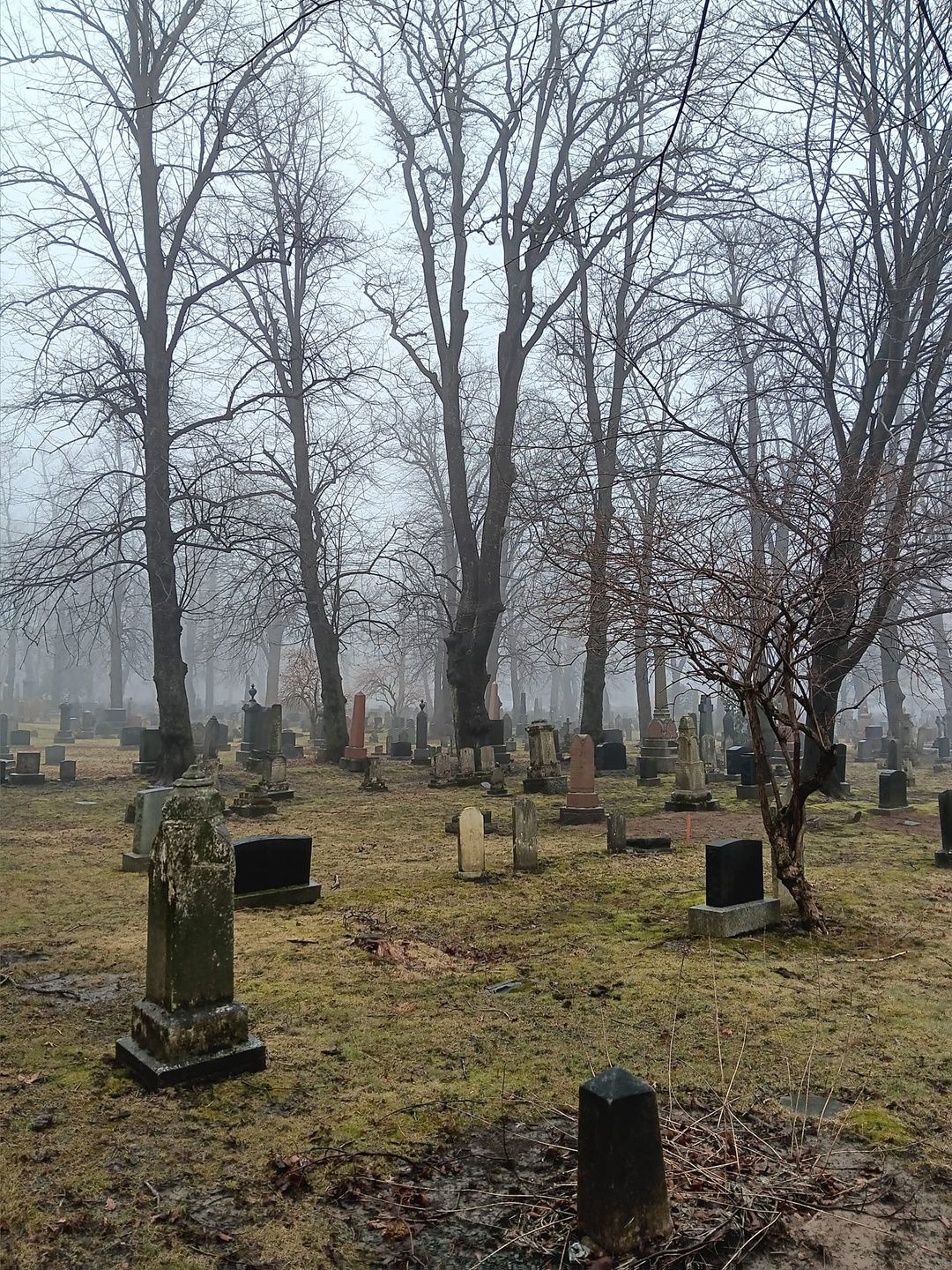
Orgo-Life the new way to the future Advertising by AdpathwayBuried in the mounds of the Icelandic landscape, a murdered shepherd came back from the dead as a Draugr or perhaps a Haugbúi ghost to haunt the people living at Finnbogastaðir farm.
The ghost story was published in the book Icelandic Folktales and Adventures (1862) and supposedly it all happened 40 years prior to publishing.
Read more: Check out all ghost stories from Iceland
The author had heard mention of various ridges and mounds here in the district where people say that something “unclean” or haunted lingered in them, and it was thought to show itself most of all in the farm mound at Finnbogastaðir about forty years ago (the mound on which the farm stands).
Finnbogastaðir is a farm in Árneshreppur, Westfjords, a remote place of rugged coastline, dramatic mountains, and picturesque bays. Finnbogastaðir is a farm of considerable historical importance that traces itself back to the first settlement of Iceland during the Viking Age.
A farmer named Halldór once lived at Finnbogastaðir, but later moved his household to Reykjarfjörður. While he lived at Finnbogastaðir, in a fit of anger he once killed a shepherd boy who was with him, and buried him in the farm mound. Few stories went around about how the boy had died, since people did not press much after such small matters in those days.
The Nordic Draugr Ghosts and the Haugbúi (mound-dweller)
The Draugr of Icelandic folklore is one of the most feared undead beings in Norse tradition, often described as a malevolent ghost or revenant that clings to its burial mound or roams the living world with violent intent. Unlike the pale, ethereal spirits of later European folklore, the Draugr is corporeal—corpse-like, bloated, and often imbued with supernatural strength. Legends tell of Draugar (plural) crushing their victims, shapeshifting into monstrous animals, or spreading death through pestilence and madness. They were thought to guard treasures buried with them, punishing grave-robbers with terrifying force. Some tales even describe them as growing larger with every breath, an unstoppable presence embodying the fear of restless death and the corruption of the grave. Their origins lie in the belief that those who were greedy, cruel, or unwilling to leave the mortal world could rise again to torment the living.
Closely related, though often portrayed as less aggressive, is the Haugbúi, or “mound-dweller,” a type of ghost bound to its burial site, often mounds in the wild. Unlike the roaming Draugr, the Haugbúi typically remains within or near its grave, emerging only to guard its resting place and treasures. These beings were often seen as the lingering spirits of chieftains or warriors, bound to their burial mounds through strong ties of pride, greed, or unfinished duty. Farmers and villagers avoided disturbing such mounds for fear of awakening the spirit within, which could strike with sudden, spectral fury. The Haugbúi embodies the deep Norse respect for the land of the dead—where burial mounds were not merely graves but thresholds between worlds. Together, the Draugr and the Haugbúi reveal a haunting aspect of Norse belief: that death was not always a peaceful passage, and that the restless dead could remain tethered to the living, their presence a chilling reminder of mortality and vengeance beyond the grave.
The Killed Shepherd Comes Bach to Haunt
Many years later, Magnús Guðmundsson, the district officer who died four years before the publishing of the collection of ghost stories this legend featured in, lived at Finnbogastaðir. Magnús was the son of Guðmundur Bjarnason and did not originally believe in magic and ghost stories but changed his mind after his experiences.
He built a smithy close by the farm and cut out some sods from that mound in which the boy had been buried. His mother, who was with him then, old and very feeble, was greatly alarmed when she heard of these actions of her son, and said that some evil would come of it, for nowhere could he have cut sods in a worse place.
The very next night a ghost came to Magnús where he lay in his bed, and it seized so firmly on his feet that he was hurt by it and was half-ill the next day. The following night the ghost came again to Magnús and was then still stronger; it seized him by the thighs and elsewhere so that Magnús fell sick afterward. The night after that the ghost came once more to Magnús, seized him by the throat, and was nearly finished strangling him where he lay in bed above his wife. He lay long sick after this and was never the same in voice again, for when he spoke it always sounded as if someone were pressing lightly on his throat.
When these three nights were past and Magnús had fallen sick with fear and dread, people began to think badly of it. But fortunately there was a man in the household named Jón, who was somewhat skilled according to everyone’s report. He was then asked to drive this apparition away, and he was very willing to try it, though he said it would be most difficult. He had the house closed, every door signed with a cross, and planned to seize the ghost and press him so that he would leave the farmer in peace. But the ghost was so quick that Jón could by no means seize him. Then Jón took the plan of opening a window in the living-room and was able to drive the ghost out through it, then ran outside after him and meant to attack him there. But by then the ghost had become so afraid of Jón that he fled before him, and Jón chased him out past the land boundaries of the farm, and there they parted. The ghost has not since been seen at Finnbogastaðir.
But as for the ghost, it went straight to Reykjarfjörður, where the descendants of old Halldór were then living, and that very night went into the cowshed there and killed a cow. After that he has done no great harm, but until recently he has followed people of that family.
Newest Posts
- The Ghost From the Mounds of Finnbogastaðir18. February 2026
Buried in the mounds of the Icelandic landscape, a murdered shepherd came back from the dead as a Draugr or perhaps a Haugbúi ghost to haunt the people living at Finnbogastaðir farm.
Kindlifresserbrunnen and the Ghosts of the Discarded Children Beneath Bern17. February 2026
Around the terrifying statue of the Kindlifressenbrunnen devouring children, young ghosts are said to haunt like a misty night. Said to be the unwanted babies taken out of the city through the underground tunnels, they return to the scene of the crime.
The Ghost of the Deep: The Legend of Blåmannen at Blaafarveværket16. February 2026The haunting of the Blue man, or Blåmannen at the cobalt mine, Blaafarveværket in Norway has been told for ages now. What truly lies inside the darkness of the mines?
Móhúsa-Skotta and her Haunting Companions in the Cold Winter Nights13. February 2026After dying a cold winter night, a young girl died and rose as the terrifying ghost now known as Móhúsa-Skotta. Together with her companions she was said to be behind terrible accidents, and even deaths.
The Haunting of the Frick Stairs: Bern’s Processions of Death and Ghosts of Murderesses12. February 2026There is not a single ghost story about the Frick Stairs in Bern, there is a plethora. Tales of women murdering their children and horrible funeral processions that left the spectators in shock is said to have walked up and down the steps for centuries.
Skinnpilsa Haunting Miklabær11. February 2026The deep and northern valley and fjords of Skagafjörður is said to have been haunted by more than one ghost. One of them was called Skinnpilsa and was sent to torment a man after he broke a promise.
The Restless Spirit of Hans Franz Nägeli: The Ghost of the Fricktreppe10. February 2026Hans Franz Nägeli: (c. 1497 – 9 January 1579) was a Swiss politician, military leader and diplomat who was a prominent force in Bern for four decades. He was the Schultheiß, or the chief magistrate, of Bern from 1540 to 1568.
The Blue Room’s Lament The Haunted Legend of Hotel Union Øye9. February 2026Left by her lover, the ghost of a maid who once worked at the Hotel Union Øye in Norway is said to be lingering inside of the Blue Room. Is she still staying there?
The Hörghóll-Móri Raised from the Dead to Kill6. February 2026A particular violent ghost from Icelandic ghost stories was called The Hörghóll-Móri. Once a drowned man, he was raised from the dead to be sent on a revenge mission to kill a certain farmer. And legend goes, he didn’t stop until he succeeded.
The Eyjafjörður Skotta Sent to Torture the Women of the Fjord4. February 2026After insulting some Dutch fishermen, a ghost was sent to torture the local women in Eyjafjörður in Iceland. For a long time, The Eyjafjörður Skotta was said to have been behind several deaths of both cattle and people.
Most Haunted Places in Basel, Switzerland and its Ghostly Legends3. February 2026From poltergeists, ghostly monks, nuns and knights as well as a procession of skeletons, some of the most haunted places in Basel, Switzerland are said to be centuries old. Let’s have a closer look on some of them.
The Tschäggättä: Switzerland’s Masked Monsters of Winter2. February 2026Deep in the heart of the Swiss Alps, the enchanting yet eerie Lötschental Valley harbors a chilling tradition that has captivated and terrified generations. Known as the Tschäggättä, these fearsome, fur-clad figures emerge from the shadows of snow-laden forests during the dark, cold months of winter. Combining ancient folklore with theatrical spectacle, the Tschäggättä embody the primal fears and superstitions of a bygone era.


References:
Íslenzkar þjóðsögur og æfintýri/Draugasögur/Draugurinn á Finnbogastöðum – Wikiheimild











.png)






.jpg)



 English (US) ·
  French (CA) ·