

 1 month ago
61
1 month ago
61
PROTECT YOUR DNA WITH QUANTUM TECHNOLOGY
Orgo-Life the new way to the future Advertising by Adpathway
A Universal Basic Income (UBI) has long been proposed as a way to cushion the blow of jobs lost to automation. Under that model, everyone receives a modest monthly payment – enough to cover basic needs and prevent extreme poverty.
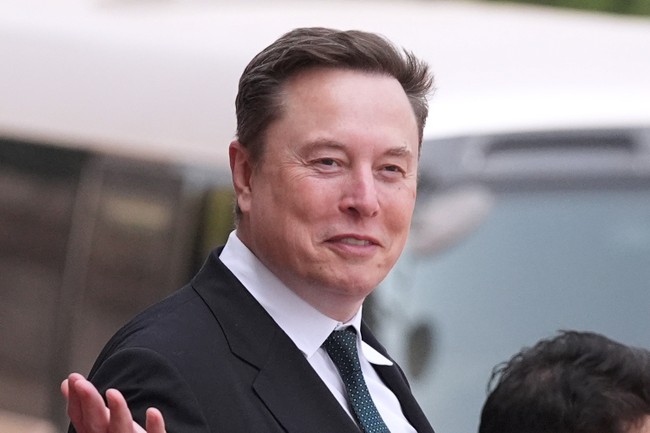
But Elon Musk has gone further. On April 16, he posted on X:
Universal HIGH INCOME via checks issued by the Federal government is the best way to deal with unemployment caused by AI.
AI/robotics will produce goods & services far in excess of the increase in the money supply, so there will not be inflation.
Rather than a subsistence stipend, Universal High Income (UHI) would be a level of income allowing ordinary people to live well in a world where machines do most of the work. Musk has also said that AI and robotics are the only things that can solve the massive U.S. debt crisis.
That sounds promising, but where will the government get the money to pay the UHI? Critics say any government that tried it would go bankrupt. There are also other concerns, which will be addressed in Part 2 of this article. Here we will look at the financial underpinnings: why UHI is even thinkable, why AI forces a reexamination of how money enters the economy, why the current system cannot scale to meet what is coming, and the implicit transition needed to meet that challenge.
Why the Current Money System Cannot Scale
The national debt of the U.S. government just topped $39 trillion. China’s is $18.7 trillion. Japan’s is $8.6 trillion. Those of the UK, France, Germany, Italy and Spain are each in the multi-trillion-dollar range. Collective global debt now stands at $353 trillion, 305% of the world’s annual economic output. So even if, hypothetically, everything produced in the world in a year were applied toward liquidating the debt, it still would not be enough to pay it all off.
In fact the debt can never be repaid, because of the way money currently enters the system. Nearly all of the money supply today is created by banks when they make loans. Banks do not lend their existing capital. The loan itself creates the money. The bank adds the loan amount to the asset side of its balance sheet and balances that sum with the same amount on the liability side. When the borrower withdraws or transfers the funds, either the bank takes them from its reserves in “vault cash” or the Federal Reserve debits the bank’s digital reserve account at the central bank. But the lending bank typically has funds coming into its reserve account at about the same rate as they are going out, so its reserves are continually replenished. Thus a very small reserve account can support a much larger money creation engine. For decades before the Fed discontinued the reserve requirement in 2020, it hovered at around 10%.
The chief problem with this debt-based system is the interest, which the bank does not create in its original loan. For a typical long-term loan, interest can double the total tab or more. Where is the money to come from to pay this added liability? Across the system as a whole, it must either come from more borrowing or from existing funds. In the case of governments, that means issuing interest-bearing bonds or tapping taxes and other revenues. The interest on the debt compounds, meaning the government is paying interest on interest. This makes the debt increase exponentially, until it is mathematically unsustainable. Then bankruptcies occur, of banks or even whole governments. Booms turn into busts, and the cycle begins again.
Today, interest on the federal debt is the second largest budget line item after Social Security, exceeding $1 trillion. Meanwhile, workers are losing jobs to AI/robotics, shrinking the income tax base. The system is clearly unsustainable.
How to Raise Demand to Scale to the Upcoming Supply
A Universal High Income would replenish the shrinking tax base by replacing the lost wages of unemployed workers. But where will the money come from to pay the UHI? The only sustainable solution is for the government to issue it interest-free. That does not mean through the Federal Reserve, which creates money in the same way banks do: it buys federal interest-bearing securities with accounting entries. The Fed collects the interest, which it is supposed to return to the Treasury after deducting its costs. But since 2008, its costs include paying interest on the reserves of its participating banks, which consumes its profits. (See my earlier article here.)
The only interest-free, debt-free solution that will actually increase the money supply sufficiently to match the projected productivity of AI/robotics is for the money to be issued directly by the Treasury.
Read More – The Abundance Paradigm: Why AI Forces a Rethinking of Money Itself — Part 1















.png)






.jpg)



 English (US) ·
  French (CA) ·