

 11 hours ago
3
11 hours ago
3
PROTECT YOUR DNA WITH QUANTUM TECHNOLOGY
Orgo-Life the new way to the future Advertising by AdpathwayStem cell transplants may be able to repair damage caused by stroke, according to researchers at the University of Zurich. In experiments with mice, the treatment helped generate new neurons, restore movement, and trigger several other forms of brain repair, offering a promising step toward regenerative treatments for neurological damage.
Stroke is extremely common, affecting about one in four adults over a lifetime. Roughly half of those who experience one are left with lasting problems such as paralysis or difficulty speaking.
These disabilities can occur because a stroke deprives parts of the brain of oxygen or causes bleeding that destroys brain cells. Once those cells are lost, the damage has traditionally been considered permanent because there are currently no treatments capable of rebuilding the affected brain tissue.
"That's why it is essential to pursue new therapeutic approaches to potential brain regeneration after diseases or accidents," says Christian Tackenberg, the Scientific Head of Division in the Neurodegeneration Group at the University of Zurich (UZH) Institute for Regenerative Medicine.
Stem Cells Could Help Rebuild Brain Tissue
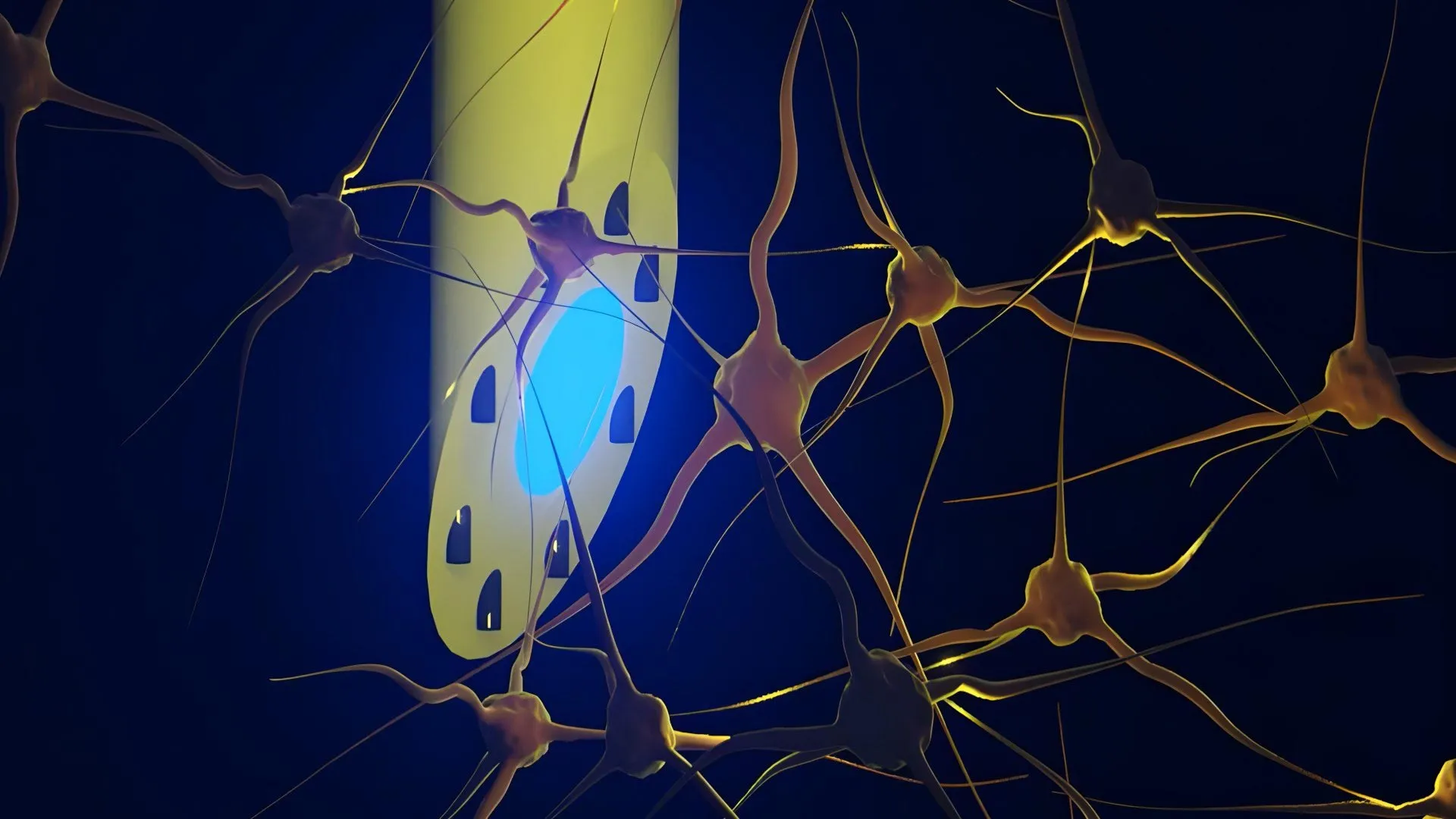
One possible approach involves neural stem cells, which can develop into multiple types of cells found in the nervous system.
A research team led by Tackenberg and postdoctoral researcher Rebecca Weber tested that idea in two studies carried out in collaboration with a group headed by Ruslan Rust from the University of Southern California.
The results suggest that the transplanted cells do more than simply replace neurons lost after a stroke.
"Our findings show that neural stem cells not only form new neurons, but also induce other regeneration processes," Tackenberg says.
Human Stem Cells Become New Neurons
The researchers used human neural stem cells capable of producing different types of nervous system cells. These cells were created from induced pluripotent stem cells, which are made by reprogramming ordinary human somatic cells so that they regain the ability to develop into many different cell types.
The team then induced permanent strokes in mice. The resulting brain damage was designed to closely resemble important features of stroke in humans.
Because the transplanted cells came from humans, the mice were genetically modified so their immune systems would not reject them.
One week after the strokes were induced, the researchers transplanted the neural stem cells directly into damaged regions of the brain. They then tracked what happened using imaging techniques and biochemical analyses.
"We found that the stem cells survived for the full analysis period of five weeks and that most of them transformed into neurons, which actually even communicated with the already existing brain cells," Tackenberg says.
That ability to connect with the brain's existing cells is particularly important because simply producing new neurons would not necessarily restore function. The new cells must also become part of working neural networks.
The Brain Shows Multiple Signs of Repair
The researchers found evidence that the treatment triggered a much broader healing response.
New blood vessels formed in the damaged brain tissue, inflammatory processes became less intense, and the integrity of the blood-brain barrier improved.
The blood-brain barrier is a tightly controlled protective boundary that separates circulating blood from brain tissue. Damage to this barrier can contribute to inflammation and further injury following a stroke.
"Our analysis goes far beyond the scope of other studies, which focused on the immediate effects right after transplantation," Tackenberg explains.
Most importantly, the biological changes were accompanied by improvements in how the animals moved.
Stem cell transplantation reversed motor impairments caused by the strokes in the mice. Researchers measured those improvements in part using AI-assisted analysis of the animals' walking patterns.
Waiting a Week May Improve Stem Cell Therapy
The researchers designed the experiments with eventual human treatment in mind.
For example, the stem cells were produced without reagents derived from animals. Avoiding animal-derived materials can be important when developing therapies intended for human use because it may reduce potential safety and regulatory complications.
The University of Zurich team created a defined production protocol in collaboration with the Center for iPS Cell Research and Application (CiRA) at Kyoto University.
The second study also revealed an important insight about timing. The researchers found that stem cell transplantation worked better when it was performed one week after a stroke rather than immediately afterward.
That delay could make the approach considerably easier to use in a clinical setting. Doctors would have more time to prepare the treatment instead of needing to deliver it during the immediate emergency period following a stroke.
Researchers Work Toward Human Trials
Despite the encouraging findings, the researchers stress that several obstacles must still be addressed before the therapy could be tested widely in people.
"We need to minimize risks and simplify a potential application in humans," he says.
One concern is uncontrolled stem cell growth inside the brain. Tackenberg's group, again working with Ruslan Rust, is developing a type of safety switch intended to prevent that from happening.
The team is also exploring a less invasive way to deliver the cells.
Instead of transplanting stem cells directly into brain tissue, researchers are developing an endovascular injection approach. This would involve delivering the cells through blood vessels and could be much more practical than performing a brain graft.
There is already precedent for moving induced stem cell therapies into human testing. Initial clinical trials using induced stem cells to treat Parkinson's disease are underway in Japan, according to Tackenberg.
"Stroke could be one of the next diseases for which a clinical trial becomes possible."












.png)






.jpg)



 English (US) ·
  French (CA) ·