

 5 hours ago
13
5 hours ago
13
PROTECT YOUR DNA WITH QUANTUM TECHNOLOGY
Orgo-Life the new way to the future Advertising by Adpathway






Latest Posts
- Skeptical Science New Research for Week #42 2026
- Climate Trunk - Governance
- Fact brief - Does onshore wind power need subsidies to compete with fossil fuels?
- How Hurricane Isaias broke through to become the first Atlantic hurricane in an extremely quiet 2026 season
- 2026 SkS Weekly Climate Change & Global Warming News Roundup #41
- Skeptical Science New Research for Week #41 2026
- Scientists link fossil fuel producers to the West’s worsening water shortages
- The world without solar and wind?
- America is hurtling toward a power grid crisis
- 2026 SkS Weekly Climate Change & Global Warming News Roundup #40
- Skeptical Science New Research for Week #40 2026
- The impacts of this year’s record-shattering El Niño
- The Worst Case Is Still on the Table
- Scientists link fossil fuel producers to the West’s worsening water shortages
- 2026 SkS Weekly Climate Change & Global Warming News Roundup #39
- Skeptical Science New Research for Week #39 2026
- India’s power-sector emissions flat for two years due to clean-energy surge
- Fact brief - Does wind power require backup from fossil fuels?
- Rapid Warming in the Himalaya Exacerbates Geohazard Cascades Beyond Adaptation Limits
- 2026 SkS Weekly Climate Change & Global Warming News Roundup #38
- Skeptical Science New Research for Week #38 2026
- The next water crisis is beneath our feet
- The Atmosphere Just Set a Water Vapor Record
- Factcheck: Reform UK’s 45 false or misleading claims about climate and energy
- 2026 SkS Weekly Climate Change & Global Warming News Roundup #37
- Skeptical Science New Research for Week #37 2026
- Climate Trunk - Political Economy
- Fact brief - Does hosting wind turbines provide farmers with additional income?
- Fixing one of climate’s worst plots
- 2026 SkS Weekly Climate Change & Global Warming News Roundup #36

Skeptical Science New Research for Week #42 2026
Posted on 15 October 2026 by Doug Bostrom, Marc Kodack
Open access notables

Fingerprint Evidence for Human Effects on Climate: Advances After the 2009 Endangerment Finding, Santer et al., Earth s Future
Here we briefly review key advances in the field of climate fingerprinting. Fingerprint studies rely on pattern information to identify human and natural influences on Earth's climate. Our focus is on advances after 2009—the date of the finding by the U.S. Environmental Protection Agency (EPA) that emissions of six different greenhouse gases affect Earth's climate and endanger human health and welfare. In contrast to the conclusions from a 2025 review of climate science issued by the U.S. Department of Energy (DOE), we demonstrate that post-2009 scientific advances have markedly increased confidence in the identification of significant anthropogenic contributions to global climate change. These advances were enabled by longer and improved observations of climate change, by large single-model and multi-model ensembles of simulations that yield estimates of forced climate change signals and natural variability, and by the application of climate fingerprint methods to a wide array of independently monitored variables. Increasingly, scientists are now able to quantify the impact of human-caused climate change on the probability and intensity of certain types of extreme event, particularly in the case of heat waves and the heavy rainfall in some regions. In tandem with such scientific advances, global warming has also advanced: the post-2009 period included the 10 warmest years in instrumental surface temperature records, enhancing the signal of human-caused warming relative to intrinsic variability. The evidence for pervasive human fingerprints throughout Earth's climate system is incontrovertible.
Extreme Heat and Rainfall Risk Attributed to Cumulative CO2 Emissions From Fossil Fuel Producers, Callahan, Earth s Future
Legal and political approaches to climate accountability require demonstrating that a particular emitter contributed to a climate impact, but quantitative solutions to this attribution challenge remain nascent. This study leverages the proportionality of global warming to cumulative CO2 emissions to develop statistical models that directly predict extreme climate risk from cumulative emissions. Results show that cumulative emissions from individual actors have increased the probability of extreme heat and rainfall globally; for example, emissions from the United States have increased the risk of recent extreme heat by at least 50% for one-third of the globe. Focusing on specific events demonstrates that emissions from major fossil fuel firms increased the likelihood of the 2021 Pacific Northwest heat wave by 31% and 2022 extreme rainfall in Pakistan by 7%. These results demonstrate a flexible attribution framework grounded in the proportional relationships that inform climate policy, with the potential to guide efficient climate accountability assessments.
Record-setting heavy precipitation occurrence in 2024, Thackeray et al., Science Advances
Precipitation extremes have increased globally in recent decades, consistent with a warming climate. We find that 2024 experienced a record-high frequency of heavy (≥99th percentile; FP≥99) precipitation events globally based on MSWEP (Multi-Source Weighted-Ensemble Precipitation) observations from 1979 to 2025. This extends a long-term trend of ∼0.03%/decade in FP≥99, with similar but more uncertain increases for the 99.9th percentile. Unlike prior high FP≥99 years, 2024’s record was more globally distributed and emerged from a distinct seasonal evolution. El Niño and rare concurrent multi-basin tropical ocean warmth drove elevated extremes early in the year, before lagged global tropospheric responses and long-term warming sustained and amplified extremes through boreal summer. Climate models indicate that years with 2024-level FP≥99 typically require either stronger El Niño forcing or concurrent multi-basin sea surface temperature (SST) anomalies. Diagnostic projections within constrained ensemble members suggest that ∼40% of the 2024 anomaly aligns with global mean temperatures and ∼20% with El Niño variability, with some of the remainder linked to basin-scale SST structure.
A recent doubling of global warming rate signals a 1.5 °C breach by 2028, Jin & Pu, npj Climate and Atmospheric Scienc
Timely and accurate projections of when global warming will exceed the Paris Agreement’s 1.5 °C threshold are essential for effective climate policy. Existing estimates place this exceedance in the early 2030 s but carry substantial uncertainty. Here we analyze the latest observational temperature records through 2025 and identify a statistically significant doubling of the global warming rate during 2011–2025 (0.40 °C per decade) compared to 1971–2025 (0.20 °C per decade). Extrapolating this accelerated rate projects a crossing of the 1.5 °C threshold by 2028, nearly a decade earlier than previous estimates. Regional analyses attribute this acceleration primarily to intensified warming over East Asia–the North Pacific, mid-latitude Eurasia, and the South Atlantic–Antarctic regions. The ensemble mean of 26 climate models fails to capture the observed doubling of the warming rate, simulating a rate of only 0.29 °C per decade. These findings suggest a narrower window remains to limit warming to 1.5 °C, underscoring the urgency for rapid and substantial reductions in greenhouse gas emissions.
Learning from young conservatives: Increasing pro-environmental behavior change and climate policy support in the United States, Caballero et al., Energy Research & Social Science
This study uses a mixed-methods (i.e., virtual focus groups with group discussion based on live polling results) approach to explore which potential interventions show the most promise for engaging conservatives on the topics of climate policy and household action, specifically among young people in the United States (U.S.). In coordination with the non-profit organization American Conservation Coalition (ACC), we held six virtual focus groups with ACC members from geographically diverse chapters. Using our mixed methods approach, we explored political efficacy, as suggested by ACC members, as well as four messaging types informed by the social psychological literature: superordinate identities, solution aversion, pluralistic ignorance, and personal responsibility. Our results suggest that young conservative study participants identified messages intended to address solution aversion and pluralistic ignorance to be most promising. Our results also suggest that although young conservative participants in the study tend to engage in incremental, convenient pro-environmental behaviors, they are optimistic about the potential for positive spillover effects. Additionally, our focus groups revealed that a promising area of future study is that young conservatives could serve as important messengers for pro-environmental individual action and support for climate and energy policies among their conservative peers. Thus, the study suggests promising topics for research on the role that young conservatives could play in supporting climate and energy-related initiatives.
From this week's government/NGO section:
Spinning Renewable Success Into a Climate Conspiracy: Co-opting the climate science story of RCP8.5, Climate Action Against Disinformation
Fossil fuels cause climate change, and replacing them with renewables will keep our climate safe for human civilization and natural ecosystems. The progress we made towards a cleaner future means that the worst possible fossil fueled warming gets less and less likely. Thanks to the massive growth in renewables, we are finally winning the climate fight- so why are some people claiming exactly the opposite, that it was a hoax all along? Over the years, “Representative Concentration Pathways”, or RCP scenarios have been refined, as renewable energy has gained momentum around the world, pushing the planet away from the most-heavily-fossil-fueled future that represented the worst-case scenario of a climate crisis, and into slightly safer territory. But this good news, tempered as it is by the incredible amount of work remaining to fully decarbonize, is highly technical, scientific, and detailed. That is not, however, how it was portrayed in the fossil fueled disinformation ecosystem, that instead interpreted it as evidence confirming a climate conspiracy theory.Manufacturing Petropopulism: Exposing the secretive network of front groups shilling for Big Oil in Canada, Abde Amr and Keith Stewart, Greenpeace
The authors' investigation has identified a shadowy and coordinated network of pro–fossil fuel front groups, companies, think tanks, and charities that claim to have reached over one hundred million people. Based on materials and data from the entities involved, this investigation reveals influence efforts by the oil-linked Energy in Action (EIA) network, whose members are receiving funding and support from the Canadian Energy Prosperity (CEP) group, aiming to shape the energy conversation in Canada. Over 30 entities, targeting six different sectors, have been identified as part of a coordinated network, operating under the EIA umbrella and supported by CEP to manufacture support for the oil and gas industry and advance its' narratives. EIA appears to be linked to the Canadian Association of Petroleum Producers (CAPP), with many network entities receiving direct funding from the oil and gas sector. The network spreads its' influence across diverse sectors, including technology, grassroots advocacy, and industry trade associations, targeting specific groups including women, youth, students, and Indigenous communities among others.The AI Gas Rush: Risks and Implications of “Bring Your Own Power”, Bangsund et al., Earthjustice
The race to scale artificial intelligence is driving an unprecedented rush to build power plants solely to power data centers that are predominantly gas-powered. These power plants are evading regulations, harming communities and the climate, and are not a solution to rising energy bills. The authors explore and analyzes this trend. Policymakers across the nation are incentivizing or requiring Bring-Your-Own-Power (BYOP) in an attempt to address energy bill impacts from new AI data centers. But AI data center developers are turning to BYOP to gain access to power as quickly as possible (“speed-to-power”) — not to solve the energy bill impacts of AI. The authors find potential ratepayer benefits are not guaranteed, while harms of the massive gas BYOP buildout have been inadequately addressed.143 articles in 58 journals by 1015 contributing authors
Physical science of climate change, effects
A recent doubling of global warming rate signals a 1.5 °C breach by 2028, Jin & Pu, npj Climate and Atmospheric Science Open Access pdf 10.1038/s41612-026-01561-y
Forest and bioenergy expansion amplifies climate warming by accelerating regional cloud loss, Liu et al., Atmospheric chemistry and physics Open Access 10.5194/acp-26-14133-2026
Ocean thermal inertia sustains a tropical Pacific mean state shift under net zero, Sengupta et al., Communications Earth & Environment Open Access 10.1038/s43247-026-04082-x
On the Changes in the Connection Between SSWs and Surface Extreme Weather in Response to an Abrupt 4xCO2 Increase, Maeseneire et al., Journal of Geophysical Research Atmospheres 10.1029/2025jd045140
Phase Transition of CO2-Driven Equatorial Pacific Warming Pattern Governed by Ocean Dynamics and Remote Forcing, Olonscheck & Kang, AGU Advances Open Access pdf 10.1029/2026av002437
Stratospheric Temperature Adjustment Robustly Damps the State Dependence of CO2 Radiative Forcing, He & Huang, Geophysical Research Letters Open Access 10.1029/2026gl123839
The Weakest Warming Rate in Spring over the Mid- to High-Latitude Land in a Warming Climate, Dong et al., Journal of Climate 10.1175/jcli-d-26-0222.1
Most cited from this section, published 2 years ago: Temperature sensitivity of the mineral permafrost feedback at the continental scale, Science Advances, 10.1126/sciadv.adq4893 21 cites.
Observations of climate change, effects
An abrupt shift towards a hotter and drier climate regime in the Western Eurasian Steppe, Piao et al., Nature Geoscience 10.1038/s41561-026-02125-8
Fingerprint Evidence for Human Effects on Climate: Advances After the 2009 Endangerment Finding, Santer et al., Earth s Future Open Access pdf 10.1029/2026ef009129
From paper to proof: revealing Congo Basin warming through rescued climate archives, Muheki et al., Earth System Dynamics Open Access 10.5194/esd-17-1455-2026
Global expansion of compound drought–heatwave risk, Sutanto et al., Natural hazards and earth system sciences Open Access pdf 10.5194/nhess-25-3879-2025
Record-setting heavy precipitation occurrence in 2024, Thackeray et al., Science Advances Open Access 10.1126/sciadv.aeb1692
Satellite altimetry reveals heterogeneity in global flood peak timing and its shifts, Zhou et al., Communications Earth & Environment Open Access pdf 10.1038/s43247-026-04115-5
Spatiotemporal Evolution of Temperature Extremes Across India's Agro-Climatic Zones, Misra et al., International Journal of Climatology 10.1002/joc.70621
Temperature Change in Mode Water Source Regions, Song & Forget, Journal of Climate 10.1175/jcli-d-26-0127.1
Most cited from this section, published 2 years ago: Surging compound drought–heatwaves underrated in global soils, Proceedings of the National Academy of Sciences, 10.1073/pnas.2410294121 60 cites.
Instrumentation & observational methods of climate change, effects
A framework for quantifying the effects of urbanization on regional climate change in a coastal watershed Southeast China: A nonstationary grid-to-grid method, Zhang et al., Anthropocene 10.1016/j.ancene.2026.100590
Extreme Heat and Rainfall Risk Attributed to Cumulative CO2 Emissions From Fossil Fuel Producers, Callahan, Earth s Future Open Access 10.1029/2026ef008278
Fingerprint Evidence for Human Effects on Climate: Advances After the 2009 Endangerment Finding, Santer et al., Earth s Future Open Access pdf 10.1029/2026ef009129
From paper to proof: revealing Congo Basin warming through rescued climate archives, Muheki et al., Earth System Dynamics Open Access 10.5194/esd-17-1455-2026
Global Assessment and Error Budget of EarthCARE Column Aerosol Optical Depth: Physical Limits and Quantitative Mitigation, Xiong et al., Journal of Geophysical Research Atmospheres 10.1029/2026jd048195
Uneven attention to climate tipping points, Wang et al., Proceedings of the National Academy of Sciences Open Access 10.1073/pnas.2618666123
Modeling, simulation & projection of climate change, effects
Arctic climate tipping points under delayed CO2 emissions mitigation, Wu et al., Communications Earth & Environment Open Access pdf 10.1038/s43247-026-03872-7
Atlantic Meridional Overturning Circulation Weakening in CMIP6: Labrador Sea Surface Fluxes and Salt Transport Feedback, Lim et al., Journal of Climate 10.1175/jcli-d-25-0487.1
East Pacific Easterly Waves in the CESM2 Large Ensemble: Present-Day Characteristics and Projected Future Changes, Zhou & Maloney, Journal of Climate 10.1175/jcli-d-26-0132.1
Historical to future warm–dry to warm–wet transition over Mongolia and its permafrost regions (1850–2100), MA et al., Advances in Climate Change Research Open Access pdf 10.1016/j.accre.2026.09.014
Interpreting Air Temperature Trends Across the Antarctic Peninsula Between 1979 and 2025, Aa et al., Geophysical Research Letters Open Access pdf 10.1029/2026gl125798
No critical slowing down in the Atlantic Overturning Circulation in historical CMIP6 simulations, Ben-Yami et al., PLOS Climate Open Access pdf 10.1371/journal.pclm.0000781
Structural Compactness of North Atlantic Tropical Cyclone Seeds in Historical and Projected Climates, Lu & Reed, Geophysical Research Letters Open Access 10.1029/2026gl124707
Most cited from this section, published 2 years ago: Customized Statistically Downscaled CMIP5 and CMIP6 Projections: Application in the Edwards Aquifer Region in South-Central Texas, Earth s Future, 10.1029/2024ef004716 10 cites.
Advancement of climate & climate effects modeling, simulation & projection
A Crucial Role of Land–Atmosphere Interactions in Shaping Subseasonal Convective Variability over the Maritime Continent in Idealized Model Simulations, Jiang & Ma, Journal of Climate 10.1175/jcli-d-25-0654.1
Evaluating Statistical Downscaling Techniques for Regional Hydroclimatic Change Projections Over CONUS, Lybarger et al., Journal of Geophysical Research Atmospheres Open Access pdf 10.1029/2026jd046624
Global Asymmetric Temperature Responses of Soil Respiration During Warming and Cooling Phases, Feng et al., Global Biogeochemical Cycles Open Access pdf 10.1029/2026gb009547
Impacts of Sea Surface Temperature Warming Pattern Biases on Tropical Cyclone Activity and Hazard, Zhuo et al., Geophysical Research Letters Open Access 10.1029/2026gl124022
Resolution Dependence in a Global Atmospheric Simulation From km to 220 m Grid Spacing, Matsugishi et al., Geophysical Research Letters Open Access pdf 10.1029/2026gl124411
Resolution Dependence of the Climate Feedback Parameter in Km-Scale Climate Models, Peinado et al., MPG.PuRe (Max Planck Society) pmh:oai:pure.mpg.de:item_3713425
Role of Shortwave Feedback in Non-Linear Response to CO2 Forcing in GFDL CM4.0, Shrestha et al., Geophysical Research Letters Open Access pdf 10.1029/2026gl122888
Southeast Asian climate and weather extremes simulated by the nextGEMS Earth system models, Koseki et al., Frontiers in Climate Open Access 10.3389/fclim.2026.1915833
The role of the QBO for tropical high-cloud variability in CMIP6 models and observations, Jaison et al., Atmospheric chemistry and physics Open Access pdf 10.5194/acp-26-14403-2026
Most cited from this section, published 2 years ago: Selecting CMIP6 global climate models (GCMs) for Coordinated Regional Climate Downscaling Experiment (CORDEX) dynamical downscaling over Southeast Asia using a standardised benchmarking framework, Geoscientific model development, 10.5194/gmd-17-7285-2024 17 cites.
Cryosphere & climate change
Antarctic sea ice response to meltwater due to Antarctic ice sheet mass loss in a multi-model ensemble, Pauling et al., cryosphere Open Access 10.5194/tc-20-5761-2026
On the possibility of deep seabed permafrost to occupy Ca. 7 million km2 in the Arctic Ocean, Dobi?ski & Saitô, Scientific Reports Open Access 10.1038/s41598-026-68112-6
Most cited from this section, published 2 years ago: Environmental and societal consequences of winter ice loss from lakes, Science, 10.1126/science.adl3211 45 cites.
Sea level & climate change
Contribution of the Pacific Decadal Oscillation to Global Mean Sea Level Trends: Revisited, Wang & Chen, Geophysical Research Letters Open Access pdf 10.1029/2026gl124649
Sea-level contribution from Thwaites Glacier doubles in an observation-constrained ice-sheet model, Poinelli et al., Nature Communications Open Access pdf 10.1038/s41467-026-77976-1
Paleoclimate & paleogeochemistry
Ancient terrestrial forests reborn as modern marine ecosystems under shifting sea levels, Lebrato et al., Scientific Reports Open Access pdf 10.1038/s41598-026-65430-7
Antarctic sea ice over the past 130 000 years – Part 2: A review of its role in the Earth system, Chase et al., Climate of the past Open Access pdf 10.5194/cp-22-1881-2026
Evidence for Limited Atmospheric CO2 Rise at the Miocene Climatic Optimum, Wubben et al., Paleoceanography and Paleoclimatology Open Access 10.1029/2025pa005388
Shifts in Antarctic Intermediate Water properties coincide with atmospheric CO2 rise across the Mid-Brunhes Event, Tapia et al., Science Advances Open Access 10.1126/sciadv.ady4567
Most cited from this section, published 2 years ago: Centennial-scale variations in the carbon cycle enhanced by high obliquity, Nature Geoscience, 10.1038/s41561-024-01556-5 7 cites.
Biology & climate change, related geochemistry
A process-based spring phenology framework for projecting climate-change constraints on Chinese hickory cultivation areas, Li et al., Agricultural and Forest Meteorology 10.1016/j.agrformet.2026.111506
Climate-driven adaptive microevolution in wild yeasts, Oporto et al., Proceedings of the National Academy of Sciences Open Access 10.1073/pnas.2618715123
Climate-driven expansion and richness hotspots of forest insect pests revealed by stacked species distribution models, Zhou et al., Agricultural and Forest Meteorology Open Access 10.1016/j.agrformet.2026.111494
Contrasting climatic controls on bimodal growth of Pinus elliottii plantations between northern and southern subtropical zones, Li et al., Agricultural and Forest Meteorology Open Access 10.1016/j.agrformet.2026.111526
Cumulative effects of successive marine heatwaves impair physiological resilience in the clam Ruditapes philippinarum., Lebrun et al., Marine Environmental Research 10.1016/j.marenvres.2026.108467
Determining soil microbial responses to climate change with multi-omics, Wu, Nature Reviews Earth & Environment 10.1038/s43017-026-00845-4
Elevated CO2 amplifies contrasting cultivar-specific plant–soil feedbacks mediated by soil biota, Zhang et al., Journal of Ecology Open Access pdf 10.1111/1365-2745.70445
Faster-and-tighter nitrogen cycle supports mature forest productivity under elevated CO2, Rumeau et al., Science Advances Open Access 10.1126/sciadv.aed2732
Global change threatens the biodiversity of cold regions: Current knowledge and priorities for further research, Renault et al., Ecology 10.1002/ecy.70537
Increasing Climate Constraint on Vegetation Productivity Under Rising CO2 in Northeast Asia, Wang et al., Geophysical Research Letters Open Access 10.1029/2026gl124463
Local forest structure modifies realized climate vulnerability under macroclimatic forcing: Attribution from a national forest inventory, Ji et al., Agricultural and Forest Meteorology Open Access 10.1016/j.agrformet.2026.111510
Ocean acidification pushes Mediterranean marine calcifiers toward a tipping point, Frontalini et al., Scientific Reports Open Access pdf 10.1038/s41598-026-70159-4
Parasitoid insects unveil complex patterns of functional change across elevational bands, Gabrieli et al., Ecography Open Access pdf 10.1002/ecog.08816
Phenological Flexibility in Nesting Grassland Birds Over a Half Century Informs Timing of Management, Ellis et al., Global Change Biology Open Access pdf 10.1111/gcb.71128
Rapid coral bleaching recovery via symbiont transfer from healthy corals, Webster, Environmental Microbiology Reports 10.1111/1758-2229.12500
Reduced size of larvae and small fish linked to warming and reduced prey density, Lindmark et al., Ecography Open Access pdf 10.1002/ecog.08354
Safeguarding global terrestrial vertebrate species from future sea-level rise, Jiang et al., Science 10.1126/science.aed5772
Species-specific reduction of survival and predation in ladybirds exposed to prolonged and intensified heat waves, Cecchetto et al., Ecology Open Access pdf 10.1002/ecy.70529
Strengthened sink control under heatwaves contributes to changes in the phenological sequence of photosynthesis and growth, Lin et al., Agricultural and Forest Meteorology Open Access 10.1016/j.agrformet.2026.111507
Most cited from this section, published 2 years ago: Trajectories of Terrestrial Vegetation Productivity and Its Driving Factors in China's Drylands, Geophysical Research Letters, 10.1029/2024gl111391 47 cites.
GHG sources & sinks, flux, related geochemistry
A Net CO2 Sink in the Korea Strait and East/Japan Sea Revealed by Direct Eddy Covariance Measurements, Hamzah et al., Journal of Geophysical Research Oceans Open Access 10.1029/2026jc024139
Active and passive satellite observations coupled with carbon–nitrogen synergy for urban fossil fuel CO2 emissions monitoring, Yi et al., Atmospheric chemistry and physics Open Access 10.5194/acp-26-8475-2026
Air–sea CO2 exchange in the Southern Adriatic Sea: assessing its role as a moderate carbon sink over the last decade (2015–2024), Dentico et al., Biogeosciences Open Access pdf 10.5194/bg-23-5399-2026
An Activity-Based Inversion Framework for Estimating Sectoral Anthropogenic CO2 Emissions Using Multi-Pollutant Satellite Observations, Qu, Geophysical Research Letters Open Access pdf 10.1029/2026gl122365
CO2 Emissions From Rivers Draining the Tibetan Plateau Reveal Substantial Increases Over the Past 20 Years, Iwan et al., Global Biogeochemical Cycles Open Access 10.1029/2025gb009016
Contribution of the Pacific Decadal Oscillation to Global Mean Sea Level Trends: Revisited, Wang & Chen, Geophysical Research Letters Open Access pdf 10.1029/2026gl124649
Disproportionate Soil Inorganic Carbon Loss and Associated CO2 Emission Driven by Soil Acidification, Zhang et al., Earth s Future Open Access 10.1029/2026ef008227
Drivers of 2023–2024 Atmospheric CO2 Growth: Role of Northern Mid-to-High Latitude Land Carbon Cycle, Maity et al., Geophysical Research Letters Open Access 10.1029/2026gl122221
Elevated CO2 amplifies contrasting cultivar-specific plant–soil feedbacks mediated by soil biota, Zhang et al., Journal of Ecology Open Access pdf 10.1111/1365-2745.70445
Fire-derived ozone intensifies carbon loss in Amazon forests under extreme droughts, Brown et al., Communications Earth & Environment Open Access pdf 10.1038/s43247-026-04047-0
Frontal Dynamics Control the Contrasting Burial of Labile Organic Carbon and Refractory Black Carbon in Surface Sediments of the Northwestern South China Sea, Lao et al., Journal of Geophysical Research Oceans Open Access pdf 10.1029/2026jc024605
Global and National CO2 Emission from Lime Production Process and Carbonation sink from 1930 to 2024, Bing et al., Earth system science data Open Access 10.5194/essd-18-6741-2026
Groundwater is an overlooked component of the global methane cycle, Li et al., Earth-Science Reviews 10.1016/j.earscirev.2026.105725
Herbivorous Vertebrates Decrease CO2 Sequestration Across Global Terrestrial Ecosystems, Wu et al., Global Biogeochemical Cycles 10.1029/2025gb008878
In Situ and Space-Based CO2 Observations Reveal Moisture-Induced Seasonal Compensation of the Western U.S. Carbon Cycle, Rastogi et al., Global Biogeochemical Cycles Open Access 10.1029/2026gb009121
Inferring European fossil fuel CO2 emissions using TROPOMI NO2 data and sector-based NOx : CO2 emission ratios, Schooling et al., Atmospheric chemistry and physics Open Access 10.5194/acp-26-13743-2026
Lateral Accounting of Transport in Terrestrial Ecosystems (LATTE): A High-Resolution Global Land-Atmosphere CO2 Flux Data Set From 1961 to 2022 for Atmospheric Inversions and Carbon Budgeting Studies, Ciais et al., Global Biogeochemical Cycles Open Access pdf 10.1029/2026gb009142
Long-Term CO2 Emissions From Anthropogenic Sectors and Recent Climatology of India, Jayachandran et al., Journal of Geophysical Research Atmospheres 10.1029/2025jd046124
Mapping Global Terrestrial Spatiotemporal Dynamics of Atmospheric CO2 Carbon Isoscapes for Ecological Studies, Feng et al., Global Change Biology 10.1111/gcb.71002
Mechanisms of air–sea CO2 exchange in the central Baltic Sea, Dong et al., Atmospheric chemistry and physics Open Access pdf 10.5194/acp-26-5567-2026
More Frequent and Enhanced Extreme Events of Air–Sea CO2 Fluxes, Cheng et al., Journal of Geophysical Research Atmospheres Open Access pdf 10.1029/2025jd044933
Observation-Constrained Fossil Fuel CO2 Emissions Reveal Post-2018 Stabilization in China, Feng et al., Geophysical Research Letters Open Access 10.1029/2026gl121913
Poleward Shift of Arctic Oceanic CO2 Uptake From Asymmetric Seasonal Changes Under Climate Warming, Pan et al., Earth s Future Open Access 10.1029/2025ef007550
Prescribed Fire Mitigates Climate-Driven Aboveground Carbon Losses From Wildfire in High Elevation Ecosystems of the Sierra Nevada, Cale et al., Journal of Geophysical Research Biogeosciences Open Access pdf 10.1029/2026jg009930
Probabilistic Wetland Maps for Mapping Soil Carbon Stock Distribution Across the Pacific Northwest, Stewart et al., Journal of Geophysical Research Biogeosciences Open Access 10.1029/2025jg009633
Quantifying Deep Ocean Methane Along the Central Chilean Margin, Wieman et al., Geophysical Research Letters Open Access pdf 10.1029/2026gl124079
Regime shifts in South Florida groundwater: distinguishing upstream recharge from coastal sea level influences (1997–2022), Zeleke et al., Environmental Monitoring and Assessment Open Access pdf 10.1007/s10661-026-16000-x
Satellite observations reveal underestimation of CO2 emissions in Africa and the Middle East, Lin et al., Science Advances Open Access 10.1126/sciadv.aee1447
Sea level-induced oyster reef accretion causes minimal net carbon burial change, Rodriguez et al., Nature Geoscience 10.1038/s41561-026-02121-y
Separating Environmental Modulation From Source Intermittency in Methane Leakage From a Legacy Well in British Columbia, Pullen & Cahill, Journal of Geophysical Research Atmospheres Open Access pdf 10.1029/2026jd046590
Soil Physical Properties in Estimating the CO2 Emissions in Drained Peatland Forests, Tenhovirta et al., Journal of Geophysical Research Biogeosciences Open Access 10.1029/2026jg009736
Thermally driven CO2 adsorption/desorption and its effect on soil respiration, Abramova et al., Science Advances Open Access 10.1126/sciadv.aed9979
U.S. oil and gas methane emission intensity declined 2019–2024 with little indication of federal policy impact, Chen et al., Communications Earth & Environment Open Access 10.1038/s43247-026-04039-0
Using high frequency observations of δ13C-CH4 and δ2H-CH4 and uncertain regional isotopic signatures to estimate sources of UK methane emissions, Ramsden et al., Atmospheric chemistry and physics Open Access pdf 10.5194/acp-26-11421-2026
Warming Amplifies the Variability of Methane Emissions From a Coastal Wetland, Lewis et al., Journal of Geophysical Research Biogeosciences Open Access pdf 10.1029/2026jg009973
Most cited from this section, published 2 years ago: Soil carbon and nitrogen cycling at the atmosphere–soil interface: Quantifying the responses of biocrust–soil interactions to global change, Global Change Biology, 10.1111/gcb.17519 27 cites.
CO2 capture, sequestration science & engineering
Assessing the potential and cost of enhanced rock weathering in China, Wang et al., Communications Earth & Environment Open Access pdf 10.1038/s43247-026-04136-0
Circular and athermal atmospheric CO2 capture by food waste-derived amyloid sorbents, Dong et al., Proceedings of the National Academy of Sciences Open Access 10.1073/pnas.2535689123
Hysteresis of extreme precipitation in East Asia under various CO2 removal pathways, Lee et al., Nature Communications Open Access pdf 10.1038/s41467-026-78431-x
Mineral Carbonation of Mixed Industrial Residues for Enhanced CO2 Sequestration and Environmental Stabilization: The Role of Slag Composition and Industrial Symbiosis, Pietrobelli et al., Advanced Energy and Sustainability Research Open Access pdf 10.1002/aesr.70261
Strong-Acid Weathering in a Carbonate-Siliciclastic Cropland Diminishes Removal of CO2 From the Atmosphere Without Becoming a CO2 Source, Forgeng et al., Journal of Geophysical Research Biogeosciences Open Access pdf 10.1029/2025jg009418
Wettability and Interfacial Tension in Carbonate Rocks for CO2 Storage: A Critical Review of Trapping Mechanisms and Governing Factors, Suramairy et al., Greenhouse Gases Science and Technology 10.1002/ghg.70040
Most cited from this section, published 2 years ago: Carbon storage in the built environment: a review, Environmental Research Infrastructure and Sustainability, 10.1088/2634-4505/ad139f 14 cites.
Decarbonization
A socio-technical analysis of the natural hydrogen hype: Network dynamics and institutional expectation governance, Zini et al., Energy Research & Social Science Open Access pdf 10.1016/j.erss.2026.104997
Impact of climate change on the photovoltaic power potential in Sweden across 21st century, Ruan et al., Communications Earth & Environment Open Access pdf 10.1038/s43247-026-04091-w
Modeling tensions and tradeoffs in community responses to large scale solar development in rural Georgia, Kurtz et al., Energy Policy Open Access 10.1016/j.enpol.2026.115660
Most cited from this section, published 2 years ago: Exploring the cost and emissions impacts, feasibility and scalability of battery electric ships, Nature Energy, 10.1038/s41560-024-01655-y 73 cites.
Aerosols
Effects of solar position and surface albedo on retrieved aerosol optical properties and radiative forcing effects, Ningombam et al., Journal of Atmospheric and Solar-Terrestrial Physics 10.1016/j.jastp.2026.106991
Overestimation of Cloud Sensitivity in Orographic Clouds Over the Southern Tibetan Plateau Due To Neglected Dynamical Constraints, Wang et al., Journal of Geophysical Research Atmospheres 10.1029/2026jd046935
Climate change communications & cognition
From Grand Narratives to Riverbank Realities: How Local Experience Influences Perceptions of Climate Risk and Adaptation in Rural Australian Freshwater Tourism, Downey et al., Weather Climate and Society 10.1175/wcas-d-25-0167.1
Interactions of emotion and political orientation in predicting intentional climate action, Flesch et al., Environmental Sociology 10.1080/23251042.2026.2744713
Learning from young conservatives: Increasing pro-environmental behavior change and climate policy support in the United States, Caballero et al., Energy Research & Social Science Open Access 10.1016/j.erss.2026.105015
Most cited from this section, published 2 years ago: The Greta Effect: Is there more public support for climate protesters who are young and female?, Environmental Science & Policy, 10.1016/j.envsci.2024.103924 4 cites.
Agronomy, animal husbundry, food production & climate change
Compound climatic extreme events amplify food insecurity, Wang et al., Global Environmental Change Open Access 10.1016/j.gloenvcha.2026.103248
Mapping CO2 fixation to two effective parameters: A framework toward data-informed species and model comparison, Stillits et al., Proceedings of the National Academy of Sciences Open Access 10.1073/pnas.2609915123
Thermal Vulnerability of Reef Fish and Implications for Subsistence Fisheries Throughout the Caribbean, Cortese et al., Global Change Biology Open Access pdf 10.1111/gcb.71118
Most cited from this section, published 2 years ago: Maize breeding for smaller tassels threatens yield under a warming climate, Nature Climate Change, 10.1038/s41558-024-02161-5 23 cites.
Hydrology, hydrometeorology & climate change
Assessing Probable Maximum Precipitation in the Soummam Basin (Algeria) Using Bias-Corrected Climate Projections, Taguemount et al., International Journal of Climatology Open Access pdf 10.1002/joc.70626
Climate warming redistributes the seasonality of inland open-water evaporation, Farooq et al., Global and Planetary Change Open Access pdf 10.1016/j.gloplacha.2026.105750
Hydrological Extremes Increase Water-Resource Constraints Under Climate Change, Sun et al., Geophysical Research Letters Open Access pdf 10.1029/2026gl122652
Hysteresis of extreme precipitation in East Asia under various CO2 removal pathways, Lee et al., Nature Communications Open Access pdf 10.1038/s41467-026-78431-x
Quantified impact of projected climate change on groundwater recharge and river discharge leveraging the use of open access geospatial data, Jimenez et al., Frontiers in Earth Science Open Access pdf 10.3389/feart.2026.1857327
Record-setting heavy precipitation occurrence in 2024, Thackeray et al., Science Advances Open Access 10.1126/sciadv.aeb1692
Regional Trends in Northern Hemisphere Summer Extratropical Cyclone Activity and Their Link to Precipitation and Temperature Trends, Baxter et al., Journal of Geophysical Research Atmospheres Open Access 10.1029/2026jd046609
Satellite altimetry reveals heterogeneity in global flood peak timing and its shifts, Zhou et al., Communications Earth & Environment Open Access pdf 10.1038/s43247-026-04115-5
Shifting Patterns of Precipitation Extremes in the Southeast Atlantic Basin—Brazil: From Observed Trends to Future Projections, Oliveira-Santos et al., International Journal of Climatology Open Access pdf 10.1002/joc.70629
Structural Compactness of North Atlantic Tropical Cyclone Seeds in Historical and Projected Climates, Lu & Reed, Geophysical Research Letters Open Access 10.1029/2026gl124707
Uneven warming–moistening rates amplify atmospheric aridity differences between wet and dry regions, Jin et al., Global and Planetary Change 10.1016/j.gloplacha.2026.105757
Most cited from this section, published 2 years ago: Assessment of Meteorological Drought in a Changing Environment: An Example in the Upper Yangtze River, Journal of Geophysical Research Atmospheres, 10.1029/2024jd041019 4 cites.
Climate change economics
Beyond linear assumptions: neural network tracing of climate-driven financial contagion in firms, Niu et al., Frontiers in Environmental Science Open Access pdf 10.3389/fenvs.2026.1909195
Heterogeneous effects of climate change on real GDP per capita: evidence from selected MENA countries and Türkiye, Y?lmaz, Frontiers in Environmental Science Open Access pdf 10.3389/fenvs.2026.1930700
Most cited from this section, published 2 years ago: A financial disaster in the making: Temperature shocks, climate change and savings, Energy Research & Social Science, 10.1016/j.erss.2024.103782 9 cites.
Climate change mitigation public policy research
Citizens’ assemblies propose ambitious climate policy but impacts remain limited, Feldman et al., Cambridge Journal of Regions Economy and Society Open Access pdf 10.1093/cjres/rsaf032
Climate policies neglect risks posed by legacy landfills, Zhang et al., Science 10.1126/science.aem1978
Enhancing fairness in climate action through policy packages, Vandyck et al., Nature Climate Change Open Access 10.1038/s41558-026-02751-5
Firms’ renewable energy adoption and energy taxes: How institutional quality matters, Ruberto, Energy Policy Open Access 10.1016/j.enpol.2026.115631
The embeddedness of Emissions Trading Systems, Barlaup et al., Climate Policy 10.1080/14693062.2026.2743153
The politics of baselines: A political feasibility framework for energy and climate scenarios, Fornborg, Energy Research & Social Science Open Access pdf 10.1016/j.erss.2026.104981
Why support for net-zero technologies can be politically vulnerable: Evidence from Celtic Sea floating offshore wind, Gregory & Thies, Energy Research & Social Science Open Access 10.1016/j.erss.2026.105012
Most cited from this section, published 2 years ago: Assessing the impacts of fertility and retirement policies on China’s carbon emissions, Nature Climate Change, 10.1038/s41558-024-02162-4 29 cites.
Climate change adaptation & adaptation public policy research
Building adaptive capacity of US Gulf Coast city practitioners to extreme weather events, Wong-Parodi et al., PNAS Nexus Open Access pdf 10.1093/pnasnexus/pgag330
Crossing the behavioral threshold: social amplification and climate risk management in urban flood evacuation, Tanaka et al., Climate Risk Management Open Access 10.1016/j.crm.2026.100901
Cumulative impact of climate change and adaptation measures on Venice and its lagoon, Canu et al., Scientific Reports Open Access pdf 10.1038/s41598-026-73719-w
Evaluation of heat stress mitigation potentials of climate change adaptation measures in cities: Scenario analyses for technical- and nature-based solutions using 3D microclimate modelling, Eingrüber et al., Climate Risk Management Open Access pdf 10.1016/j.crm.2026.100894
Overcoming under-adaptive innovation and maladaptation in urban heat governance, Lao & Istrate, Climate Risk Management Open Access pdf 10.1016/j.crm.2026.100895
Most cited from this section, published 2 years ago: Measuring the contribution of nature-based solutions beyond climate adaptation in cities, Global Environmental Change, 10.1016/j.gloenvcha.2024.102939 25 cites.
Climate change impacts on human health
Climate Resilience and Environmental Sustainability of Healthcare Facilities in a Rural District of Pakistan: A Mixed-Methods Assessment Using the WHO Framework, Nazir et al., Climate Resilience and Sustainability Open Access pdf 10.1002/cli2.70065
Climate-amplified wildland–urban interface disasters create persistent internal metal mixtures associated with pulmonary impairment, Maunakea et al., Proceedings of the National Academy of Sciences Open Access 10.1073/pnas.2613208123
Compound Heatwaves and Health Inequality: A Nationwide Study on Emergency Admissions and Socioeconomic Vulnerability in South Korea, Kim et al., GeoHealth Open Access 10.1029/2026gh001920
Most cited from this section, published 2 years ago: On the Stationarity of the Global Spatial Dependency of Heat Risk on Drought, Geophysical Research Letters, 10.1029/2024gl111117 6 cites.
Climate change & geopolitics
Cross border consequences of responses to climate change: Risks and opportunities, Mason et al., Global Environmental Change Open Access 10.1016/j.gloenvcha.2026.103245
The geopoliticization of Europe's energy transition: Geopolitical risk and selective transition adjustment across EU member states, Cong et al., Energy Policy 10.1016/j.enpol.2026.115663
Most cited from this section, published 2 years ago: Weaponization of climate and environment crises: Risks, realities, and consequences, Environmental Science & Policy, 10.1016/j.envsci.2024.103928 12 cites.
Other
Background Atmospheric CO2 Regulates the Local and Non-Local Climate Impacts of Amazon Deforestation, Lee et al., Earth s Future Open Access 10.1029/2025ef007636
Intensification of near-inertial currents in the Atlantic Ocean over the past two decades, Zheng et al., Nature Communications Open Access pdf 10.1038/s41467-026-78555-0
Springtime Soil Moisture Teleconnections Drive Summertime Warming in the Western United States, Zhang et al., Journal of Climate 10.1175/jcli-d-25-0459.1
Most cited from this section, published 2 years ago: Global wildfire activity re-visited, Global Environmental Change, 10.1016/j.gloenvcha.2024.102894 6 cites.
Informed opinion, nudges & major initiatives
Climate change reshapes the global mercury cycle, Feinberg & Saiz-Lopez, Science 10.1126/science.aeh7034
Discovery as public infrastructure: Renewing the social contract for science, Carbajo et al., PNAS Nexus Open Access 10.1093/pnasnexus/pgag312
Uneven attention to climate tipping points, Wang et al., Proceedings of the National Academy of Sciences Open Access 10.1073/pnas.2618666123
Most cited from this section, published 2 years ago: The role of forestry sciences in combating climate change and advancing sustainable development goals, Frontiers in Forests and Global Change, 10.3389/ffgc.2024.1409667 27 cites.
Articles/Reports from Agencies and Non-Governmental Organizations Addressing Aspects of Climate Change
2026 Global Climate Investing Survey, CoreData Research, Robeco
The number of investors making climate change a strategic priority has increased slightly to 47%, rising further to 62% over the next two years. The tide is also turning in North America, where there is now growing support for climate investing, following a large backlash that began in the U.S. in 2023. Both mark a turning point after several years of declining commitments, as governments globally made net zero a lower priority – and commitment that comes back after a cycle like that is of a different quality from commitment that never had to. 75% believe that war in the Middle East, and the disruption it is causing to oil and gas markets, will moderately or significantly accelerate the transition to renewable energy. 63% think the increasing adoption of AI will have a positive effect on accelerating the development of sustainable infrastructure. 64% say the slowdown in government support for net-zero goals has not affected their commitment to net zero. 63% expect physical climate risks to have a moderate or significant effect on their organization’s strategic asset allocation over the next five years.10 New Insights in Climate Science 2026/2027, Future Earth, The Earth League, and the World Climate Research Programme, Future Earth, The Earth League, and the World Climate Research Programme
Ocean heat content keeps climbing as Earth’s energy imbalance grows. Sea level rise in a warming world: acceleration, ice mass loss, and long-term commitment. Water gaps widen as continental drying accelerates. A larger overshoot of 1.5°C increases the risk of irreversible impacts, forces greater reliance on carbon dioxide (CO?) removal, and narrows adaptation options. Bundled interventions for food system transformation can deliver major gains for human health and planetary stability. The social cost of carbon has been severely underestimated. Advances in attribution science demonstrate individual emitters’ climate effects. Climate clubs can limit carbon leakage, but fairness shapes their feasibility and effectiveness. Organized obstruction prevents effective climate policy through denial, delay, dilution and distraction. A just energy transition is threatened by geopolitical risks and fragmentation.Offshore wind a safe bet for East Asia’s future, Lu et al., Ember
The share of offshore wind in the total renewable energy pipeline across Japan, South Korea, and Taiwan is 84%, compared to the global average of just 21%, totaling 82 GW. East Asia represents 8% of the global offshore wind pipeline, and 2026 policy reforms across the three markets signal the region's growth opportunity. Japan, South Korea, and Taiwan aim to scale up offshore wind to more than 30 GW across the region by 2030. Market readiness is needed now to meet these goals.Western Seams Analysis, Aurora Energy Research, Environmental Defense Fund and the Natural Resources Defense Council
Modeling shows that a single, West-wide market produces the lowest total system cost because no market boundaries means a single operator can maximize efficient dispatch at lowest-cost energy resources across the entire region. Best-in-class seams management in a multi-market West can unlock up to $840 million in annual cost savings that would be lost in uncoordinated, poorly-managed seams agreements.The AI Gas Rush: Risks and Implications of “Bring Your Own Power”, Bangsund et al., Earthjustice
The race to scale artificial intelligence is driving an unprecedented rush to build power plants solely to power data centers that are predominantly gas-powered. These power plants are evading regulations, harming communities and the climate, and are not a solution to rising energy bills. The authors explore and analyzes this trend. Policymakers across the nation are incentivizing or requiring Bring-Your-Own-Power (BYOP) in an attempt to address energy bill impacts from new AI data centers. But AI data center developers are turning to BYOP to gain access to power as quickly as possible (“speed-to-power”) — not to solve the energy bill impacts of AI. The authors find potential ratepayer benefits are not guaranteed, while harms of the massive gas BYOP buildout have been inadequately addressed.Behind the Bill: What’s Driving Increases in Electricity Costs in Maine?, Heather Sanborn, Office of the Public Advocate (Maine)
A typical Central Maine Power (CMP) household’s monthly bill rose from about $91 in October 2020 to about $157 in October 2026, an increase of $66 (72%). The total price went from 16.6 to 28.6 cents per kilowatt-hour. No single cause explains it. Three parts of the bill account for about $57 of the $66; energy supply (+$30), driven mainly by New England natural gas prices; local distribution (+$18), with storm costs alone adding $12; transmission (+$9), driven by infrastructure replacement and high federally set profits. Stranded costs, mostly from Maine’s community solar program, added about $9. Focusing on that issue alone misses about $57 of the $66 increase. About $27 of the total would be expected from general inflation.Manufacturing Petropopulism: Exposing the secretive network of front groups shilling for Big Oil in Canada, Abde Amr and Keith Stewart, Greenpeace
The authors' investigation has identified a shadowy and coordinated network of pro–fossil fuel front groups, companies, think tanks, and charities that claim to have reached over one hundred million people. Based on materials and data from the entities involved, this investigation reveals influence efforts by the oil-linked Energy in Action (EIA) network, whose members are receiving funding and support from the Canadian Energy Prosperity (CEP) group, aiming to shape the energy conversation in Canada. Over 30 entities, targeting six different sectors, have been identified as part of a coordinated network, operating under the EIA umbrella and supported by CEP to manufacture support for the oil and gas industry and advance its' narratives. EIA appears to be linked to the Canadian Association of Petroleum Producers (CAPP), with many network entities receiving direct funding from the oil and gas sector. The network spreads its' influence across diverse sectors, including technology, grassroots advocacy, and industry trade associations, targeting specific groups including women, youth, students, and Indigenous communities among others.Powering Rural Prosperity: The Local Economic Impact of Utility-Scale Wind and Solar Developments, Ohler et al., University of Missouri
A growing literature documents a relationship between renewable energy development and local economic outcomes. Yet, important gaps remain in understanding how these effects manifest in rural economies, across technologies, and within specific sectors. Using county-level data on U.S. energy installations between 2001-2023, the authors examine how renewable energy adoption shapes sector-specific economic activity, focusing on GDP, employment, and wages in rural counties. They extend prior work in three ways. First, they focus explicitly on rural outcomes, where utility-scale renewable development is concentrated but where economic structures may limit local benefits. Second, they incorporate solar adoption alongside wind, enabling a comparison of technology-specific impacts. Third, they move beyond aggregate measures to conduct a sectoral analysis, identifying how effects vary across industries. Wind development is associated with significant GDP gains concentrated in the utilities sector, while solar development is associated with modest wage and employment gains driven largely by utilities and construction. For very large utility-scale solar, e.g. 5MW or 20MW, agriculture, construction, and utility GDP increase with solar adoption. Neither technology is associated with detectable declines in agricultural GDP, employment, or wages, providing little evidence of substantial disruption to agricultural production or related labor markets. These findings provide a more nuanced understanding of the local economic consequences of the energy transition and highlight the importance of technology type and sectoral composition in shaping rural development outcomes.Data Center Policy in Ohio: A Cost-Benefit Analysis, Scioto Analysis
Data centers have had a major impact on Ohio's economy. Between 2013 and 2026, we estimate that Ohio data centers produced a net social benefit of $62 billion in the state. Data centers produced $77 billion in total benefits, mostly from employment: they created about 96,000 new jobs and added $75 billion in wages. They also produced $15 billion in total costs, mostly from emissions and higher utility prices. When data centers draw power from the statewide grid, electricity bills rise for Ohio ratepayers. If current policy stays the same, the authors estimate that higher electricity prices will cost Ohio ratepayers $16 billion between 2027 and 2034. As energy use rises, emissions rise as well, and the largest costs come from air pollutants that harm local public health, including nitrogen oxide, sulfur dioxide, and particulate matter 2.5. Under the status quo, these pollutants account for about $41 billion of the $62 billion in total costs between 2027 and 2034, compared to $220 million from carbon, since the authors count only Ohio's share of the global cost of carbon. The data center industry is beginning to respond to some of these issues. Every company planning new data centers in Ohio has committed to closed-loop cooling, which uses zero excess water, but more electricity. Additionally, 19% of planned data center capacity in Ohio is set to use behind-the-meter generation, meaning companies will build their own power plants instead of relying on the statewide grid. This keeps new data centers from raising electricity prices for Ohio ratepayers and it is cleaner for most pollutants.Spinning Renewable Success Into a Climate Conspiracy: Co-opting the climate science story of RCP8.5, Climate Action Against Disinformation
Fossil fuels cause climate change, and replacing them with renewables will keep our climate safe for human civilization and natural ecosystems. The progress we made towards a cleaner future means that the worst possible fossil fueled warming gets less and less likely. Thanks to the massive growth in renewables, we are finally winning the climate fight- so why are some people claiming exactly the opposite, that it was a hoax all along? Over the years, “Representative Concentration Pathways”, or RCP scenarios have been refined, as renewable energy has gained momentum around the world, pushing the planet away from the most-heavily-fossil-fueled future that represented the worst-case scenario of a climate crisis, and into slightly safer territory. But this good news, tempered as it is by the incredible amount of work remaining to fully decarbonize, is highly technical, scientific, and detailed. That is not, however, how it was portrayed in the fossil fueled disinformation ecosystem, that instead interpreted it as evidence confirming a climate conspiracy theory.451,000 at Risk, Where Action Can Save Lives During the Super El Niño, Greenstone et al., Climate Impact Lab, University of Chicago
The authors project that 451,000 lives will be lost due to heat the first nine months (June-February) of El Niño, compared to a normal year. This is about 65 times larger than the 6,800 people believed to be dead or missing from the recent Nepal flash flood. In just the next 6 months, this includes 239,000 ± 11,000 deaths across the globe. With current forecasts suggesting El Niño will remain in place through spring 2027, all of these numbers likely will grow even higher, particularly as effects such as higher-than-average temperatures and heat-related deaths will linger into June and July.No Time to Recover: Compounding Crises, Depleted Fiscal Buffers, and What It Means for Developing Economies, Molina et al., United Nations Development Program
Seven months into the Middle East crisis, developing countries face compounding pressures: renewed energy price surges following the July ceasefire breakdown, a potentially record El Niño, and global benchmark interest rates at multi-decade highs. Governments have cushioned energy price increases at substantial fiscal cost, with global explicit fossil fuel subsidies potentially exceeding $1 trillion this year. Yet containment is becoming unsustainable. Across 130 countries, gasoline and diesel prices have risen by averages of 26 and 38 percent since the conflict began, with increases widening in nearly two-thirds of countries between June and September. Higher prices have contributed to protests and unrest. The authors estimate that full transmission of the energy and food price shock could push an additional 130 million people below $6.85 a day, 121 million below $3.65, and 66 million below $2.15, overwhelmingly in developing countries. These figures represent potential exposure, not observed poverty increases. Fully compensating households would cost approximately 1.1 percent of developing-country GDP; protecting only those below $6.85 would cost around 0.3 percent. However, fiscal constraints and rising debt service increasingly divert resources from long-term development.Driven by Dirty Steel: The Pollution Behind Europe's Automotive Supply Chain, Mighty Earth
The automakers analyzed in this report have set ambitious carbon-neutrality targets, yet their continued reliance on coal-based steel from ArcelorMittal, Tata Steel, and Acciaierie d’Italia undermines these commitments and perpetuates significant environmental and public-health harms. If European automakers pushed for change in European steel manufacturing, these three steel producers would be required to adjust. Without that pressure, as the authors demonstrate, these companies will remain heavily invested in aging blast furnace operations and fossil gas that generate high levels of greenhouse gases and toxic pollutants, causing elevated rates of respiratory illness, premature death, and degraded air and water quality in surrounding communities.How Spending for Flood Adaptations Affects the Federal Budget, Chad Shirley, Congressional Budget Office
Flooding is among the costliest natural disasters in the United States. Over the next few decades, damage from flooding is expected to worsen because of continued coastal development and changes in the climate. The authors examine how spending for flood adaptations today might affect the federal government’s potential costs for disaster relief later, as well as what households are likely to pay for flood insurance that is subsidized by the federal government.Beyond the Funding Gap. A Global Assessment of the Loss of USAID's Environment and Climate Programming, Monica Bansal and Hadas Kushnir, One Earth Partners
The authors document the on-the-ground consequences of the 2025 U.S. foreign assistance withdrawal on global environmental programming and identifies vulnerabilities in the funding ecosystem left behind. They begin by establishing the baseline: the distinctive role the United States Agency for International Development (USAID) played in the environmental sector, including both its strengths and structural flaws. They then presents ten major findings on the effects of the withdrawal across five focus countries, including direct impacts to policy, people, and the environment; institutional and economic impacts; and diplomatic and geopolitical effects. They close with recommendations for funders and for U.S. foreign assistance on how to stabilize and rebuild momentum going forward. The information in the report comes from on-the-ground sources and media articles.Climate adaptation’s delivery gap: Turning national plans into action, Ellena et al., Euro-Mediterranean Center on Climate Change
The challenge is no longer recognizing the need for adaptation, but rather delivering it at scale. Adaptation gaps are already evident and are projected to widen according to the Intergovernmental Panel on Climate Change, whereas the U.N. Environment Program estimates that annual adaptation finance needs in developing countries could reach US$310-365 billion by 2035, compared with roughly US$26 billion in international public finance in 2023. Two recent initiatives address this bottleneck directly including the Adaptation Accelerator Hub (AAH) and the National Adaptation Plan Implementation Alliance (NIA). The authors explains how these two initiatives are complementary rather than in competition. These two initiatives are part of a single adaptation delivery chain that runs from national priorities to measurable results on the ground. The AAH operates at the country end of that chain - the “missing middle piece” between strategies and financing decisions, whereas the NIA operates at the system end, aligning the actors and the finance that surround it. Their value depends on keeping that division of roles and actions explicit and testable. The message for the next phase of cooperation is that the frontier is shifting from planning alone toward parallel delivery, even as many countries are still completing their National Adaptation Plan.About New Research
Click here for the why and how of Skeptical Science New Research.
Suggestions
Please let us know if you're aware of an article you think may be of interest for Skeptical Science research news, or if we've missed something that may be important. Send your input to Skeptical Science via our contact form.
Previous edition
The previous edition of Skeptical Science New Research may be found here.
 0
0  0
0






THE ESCALATOR
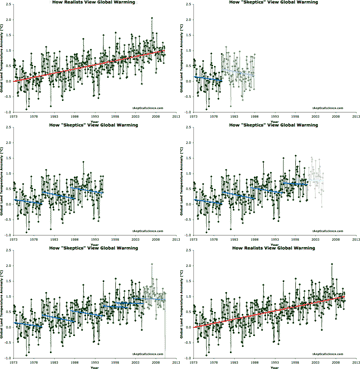
(free to republish)













.png)






.jpg)



 English (US) ·
  French (CA) ·