

PROTECT YOUR DNA WITH QUANTUM TECHNOLOGY
Orgo-Life the new way to the future Advertising by Adpathway



Organic Bytes
Newsletter #958: Monsanto Won in Court. Don't Let the EPA Win Too.

MILLIONS AGAINST MONSANTO
Bill Jeffery, The Conversation:
“In June, the United States Supreme Court ruled that state governments’ duty-to-warn laws do not oblige chemical manufacturer Monsanto to disclose a cancer risk on its pesticide labels. Monsanto manufactures the well-known pesticide Roundup that has been the subject of thousands of lawsuits in the U.S. and Canada.
The company argued that if the U.S. Environmental Protection Agency (EPA) does not require a cancer warning label, states cannot hold it liable in court for failing to warn consumers about cancer risks.
In their decision, the U.S. Supreme Court made no pronouncements on whether glyphosate causes cancer, only that the EPA is the sole arbiter of label warnings.
The decision also forbade anyone else from issuing cancer warnings — including states, lower courts and manufacturers — unless the EPA approves.”



The EPA is reviewing which scientific studies it will use to decide whether glyphosate, the world’s most widely used weedkiller, is safe. Public comments are open until November 23, 2026.
For years, the EPA has told the public that glyphosate is safe at the levels we’re exposed to in food and water. The study behind that claim has now been retracted. It relied on unpublished Monsanto data, and the authors never disclosed that Monsanto paid them for the work.
Bayer has already paid out roughly $11 billion to settle more than 100,000 Roundup cancer lawsuits. Tens of thousands more are still pending.
Tell the EPA its glyphosate review needs to be based on independent, peer reviewed science, not a retracted, industry funded study.
LEARN MORE: EPA and HHS Teaming up on Expanded Review of Glyphosate Weedkiller Safety

Dipa Kamdar, The Conversation:
“Historically, rosemary has been linked to memory and mental clarity. In ancient Greece and Rome, students and scholars used rosemary in the hope of sharpening concentration and recall. Modern science is finding there may have been something in this: in one study, people who inhaled rosemary’s scent performed better on memory tasks compared to those in an unscented environment.
So, how does rosemary work on the brain? There are several mechanisms at play. For starters, rosemary stimulates blood circulation, including to the brain, helping deliver more oxygen and nutrients, which may improve mental clarity. It also has calming properties; some studies suggest its aroma can reduce anxiety and improve sleep. Lower stress can mean better focus and memory retention.”
Rosemary contains compounds that interact with the brain’s neurotransmitters.

REGENERATION INTERNATIONAL
On October 16, 2026, World Food Day, the 6th Annual People’s Food Summit travels through every time zone on earth for 24 hours, bringing together farmers, researchers, activists, and communities from Asia Pacific, Europe, Africa, Latin America, and North America.
The summit showcases the work being done in fields, forests, and community gardens by the people who grow most of the world’s food. In Australia, farmers are building new certification models and community food economies rooted in slow, local, and organic principles. In Kenya, women are leading grassroots land restoration while youth reshape how Africa’s environmental story gets told. In Guatemala, Indigenous youth are defending food sovereignty through the milpa system and traditional maize culture. In North America, filmmakers and ranchers are showing what regeneration looks like at scale.
Why We Host a Food Summit in Parallel to the UN Event
The UN Food Systems Summit has been shaped by corporate agribusiness since a 2019 partnership with the World Economic Forum sidelined the farmers who grow our food.
So we built The People’s Food Summit, a 24 hour virtual gathering led by the small-scale farmers, pastoralists, and foresters who grow 70 to 80 percent of the world’s food. It’s where agroecology, permaculture, and agroforestry get shared by the communities practicing them.
Join the Regeneration International mailing list for updates and to explore the full lineup.

Pamela Ferdinand, U.S. Right to Know (USRTK):
“Children exposed during pregnancy and early life to combinations of chemicals that disrupt hormones and metabolism may face a greater risk of excess weight that persists into adolescence, a new study suggests.
Published this month [September 2026] in Environment International, the study followed 1,301 mother-child pairs from six European birth cohorts. Researchers measured prenatal and childhood exposure to 45 endocrine-disrupting chemicals (EDCs) across nine chemical classes. These included per- and polyfluoroalkyl substances (PFAS), phthalates, pesticides, polychlorinated biphenyls (PCBs), flame retardants, metals, parabens, and phenols, including bisphenol A (BPA) and triclosan.
Researchers found that greater exposure to certain combinations of EDCs was associated with higher BMI. They also found links to more body fat and higher odds of being overweight.”
About 28% of the children were overweight or obese at age 8, rising to about 30% by age 15.

This week’s issue pretty overwhelming in terms of what we as a country are up against and it shows how important it is to our health to protect ourselves from chemical exposures.
The Supreme Court sided with Monsanto. Atrazine is in a quarter of our rivers and a new study links chemical exposure to childhood weight gain.
The EPA is still deciding whether to trust independent science or industry funded studies on the herbicide glyphosate, sprayed across millions of acres of American farmland.
With mounting scientific evidence linking glyphosate to cancer and other severe health issues in humans and animals, growing concern about its impact on pollinators and ecosystems, and the devastating consequences of continuing to spew toxic sewage sludge over our farmland, we need to act now.
Will you help us fuel these efforts?
Every comment we help generate, every new campaign we take on, every candidate questionnaire that gets sent, every dollar that goes toward our on-the-ground organic and regenerative farmer training, comes from people who read something like this and decided to do something about it.
If you can, please chip in today. It’s how we keep showing up to these fights.
Make a tax-deductible donation to Organic Consumers Association, a 501(c)(3) nonprofit
Make a tax-deductible donation to Regeneration International, our international sister organization

Tom Perkins, The Guardian:
“The hormone-disrupting herbicide atrazine is contaminating nearly 25%, or about 860,000 miles, of all continental US rivers at levels that can harm wildlife and may threaten human health, a new review of federal records has found.
The waterways cover over 20% of surface drinking water intakes across the country, and over 675,000 private and commercial wells.
Atrazine can have severe impacts on human and animal hormones, especially for developing children. It was found to ‘chemically castrate’ frogs, and cause some to change sexes. The herbicide is so dangerous that it has been effectively banned in 60 countries, including the European Union, since 2003. Litigation in the US seeks to strike down its approval, but it remains the second most widely used pesticide here, with about 70m pounds sprayed on the nation’s cropland annually.”
The report, compiled by the Center for Biological Diversity, which advocates for stricter pesticide regulations, marks the first time anyone has analyzed all the EPA’s atrazine records and identified the threat’s extent.
Read the report: Pernicious Pesticide: Atrazine’s Growing Threats To Drinking Water, Rivers, People, and Wildlife

Heads up: the EPA pushed back its comment deadline on the PFAS biosolids guidance from September 4 to October 5, so there’s still time to weigh in if you missed the original date!
Tell the EPA:
Protect human health and the environment, the Environmental Protection Agency should stop industry from releasing harmful chemicals into wastewater and at the very least, ban contaminated sewage sludge from being disposed of on land or used as “fertilizer.”
PFAS-contaminated toxic sludge should never be spread on farmland, and the EPA should ban the practice outright. More than that, it should stop the pollution at its source by banning fire-retardant, non-stick, water-resistant, herbicidal, and insecticidal PFAS chemicals across consumer products, manufacturing, the military, firefighting, and food and farming. Please protect human health from every harmful forever chemical, with enforceable limits, not voluntary guidance.
TAKE ACTION BY OCTOBER 5: Tell the EPA to Ban Toxic Sludge From Farmland!

Beyond Pesticides just released a nonpartisan questionnaire for every U.S. House and Senate candidate on the ballot this November, and anyone can send it to candidates running in their own district or state.
The questionnaire covers three issues at the center of OCA’s work: whether pesticide labels should have to disclose cancer and other health risks, whether Congress should invest in helping farmers transition to organic practices, and what candidates will do about PFAS contamination, including PFAS laced pesticides and sewage sludge fertilizer.
It takes candidates about 10 minutes to fill out. Responses are posted to a public map, and you can search for them by district and state.
We encourage you to send the questionnaire to every candidate on your ballot and find out where they stand on these important health and environmental issues!

Researchers in Singapore have built a prototype data center powered by about 16 million living human neurons grown on chips. The project is a partnership between data center company DayOne, the National University of Singapore, and the Australian startup Cortical Labs, which is funded by the CIA’s In-Q-Tel. Its backers call it a greener answer to the AI boom, saying brain cells could someday do certain computing jobs with far less energy than the current conventional data centers.
What we know about the huge carbon footprint of lab grown meat (a similar cell culture) belies the claim that brain cells would reduce the energy use of data centers.
These are human cells, grown in a lab, kept alive for about six months and then thrown away and replaced. Companies are already selling access to them, and there are no rules written for this kind of use. There are so many ethical questions: did the people who donated these cells know their tissue could end up being used this way? Who owns the cell lines and profits from them? And if these neurons can learn, as the companies say, when do they deserve protection?
OCA has watched new technologies like GMOs, synthetic biology and lab-grown food get rushed to market with weak oversight, while the public is left to deal with the risks later. That’s why we believe in the precautionary principle.
Before living human tissue becomes just another tech product, we need open public debate, independent research on what the real costs and risks will be and oversight that covers consent, we also need transparency in who owns it, who profits from it, as well as the true environmental cost.
READ: NUS Medicine, DayOne and Cortical Labs Unveil Biological Data Center Prototype
LEARN MORE: Computers Made From Human Brain Tissue Are Coming.
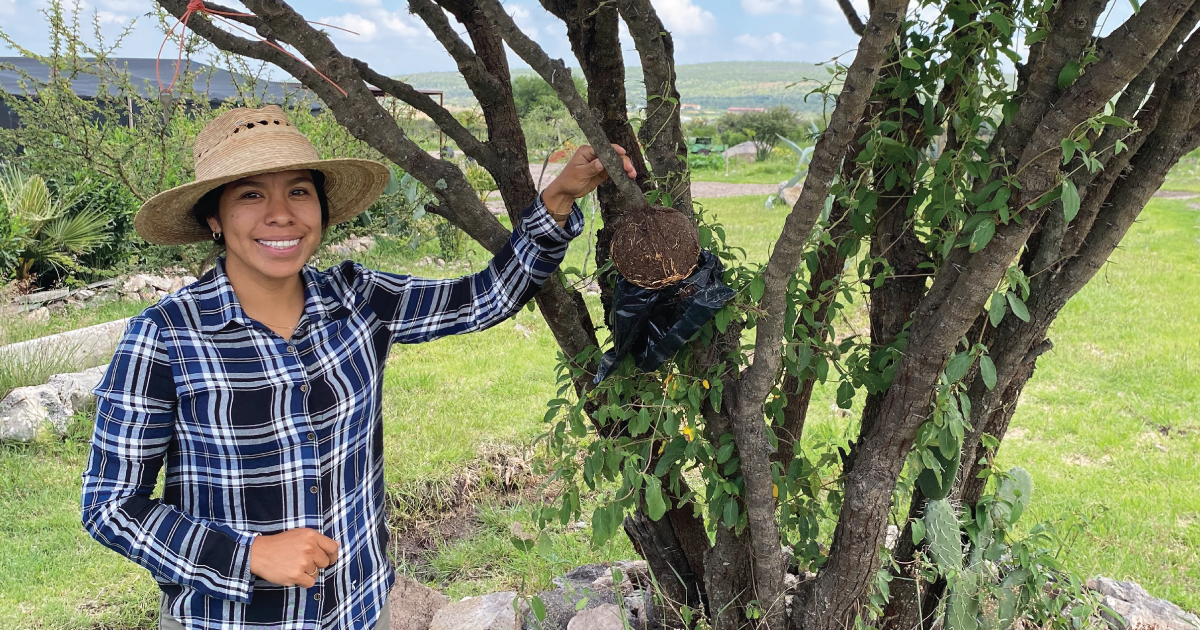
Our sister organization’s Regenerative Solutions monthly newsletter shares innovative farming and hopeful messages, bringing to light both ancient and exciting new agroecological, organic and regenerative farming practices from around the world. Our mission is to share knowledge and grow a healthy, climate-friendly and just food system. Founded in 2015, RI now works with more than 740 partners worldwide.
This month, a Consumer Reports investigation looks at regenerative farms in Minnesota, and RI founding member Reginaldo Haslett-Marroquin’s Salvatierra Farms shows what a truly regenerative system looks like in practice. A new report from the Alliance for Food Sovereignty in Africa finds that 20 years of the Green Revolution in Africa has failed, with hunger up 58% in targeted countries since 2006. Plus, scientists left a farm field alone for 11 years and thousands of orchids appeared, and organic farming is outperforming conventional on profits.
Also find important information on The People’s Food Summit on October 16, World Food Day: a 24-hour virtual journey around the globe celebrating the farmers, researchers, and communities building a different food system from the soil up. We hope you’ll join us!
Learn more about The People’s Food Summit!












.png)






.jpg)



 English (US) ·
  French (CA) ·