

PROTECT YOUR DNA WITH QUANTUM TECHNOLOGY
Orgo-Life the new way to the future Advertising by Adpathway



Organic Bytes
Newsletter #952: Give Farmers Back Their Right to Process Their Own Animals

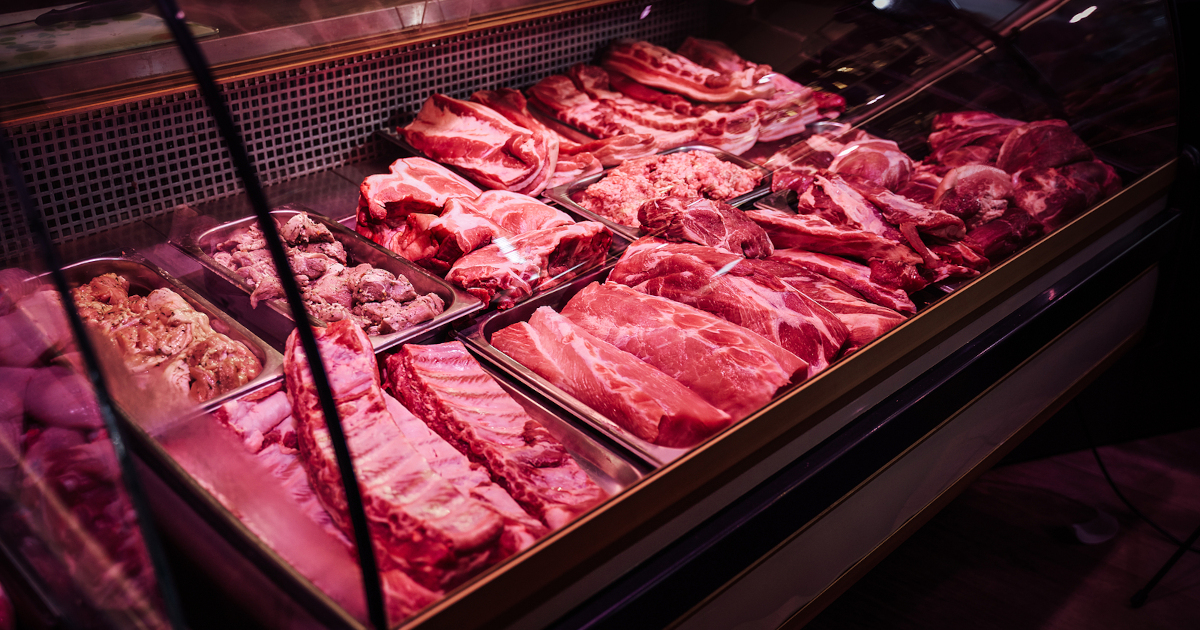
The nutrients in animal foods touch nearly everything: mood and brain health, a healthy pregnancy, strong bones, a working immune system, a healthy heart. Most of them are hard to get anywhere else, and nearly all of them are richest in meat, eggs, and dairy from animals raised the old way, on pasture. Tryptophan and DHA feed the brain. Choline and B12 matter enormously in pregnancy. Cholesterol and saturated fat, so often cast as villains, are the raw materials the body uses to build hormones and fight infection.
But getting meat that’s actually good for you starts with how the animal was raised and treated. Animals on pasture live the way they’re built to live. Animals in industrial systems often don’t, and the transport alone, according to the UN Food and Agriculture Organization, is “the most stressful and injurious stage in the chain of operations between farm and slaughterhouse.” The farther an animal has to travel to a distant, overbooked slaughterhouse, the worse that toll becomes.
So it matters how it’s raised, and who’s allowed to raise it.
Getting real, pasture-raised meat depends on farmers having the right to raise and process it themselves. New Hampshire tried to make small-scale, on-farm processing easier this year with HB 396, a bill that would let farmers slaughter and sell a limited number of animals right from their own land. The governor vetoed it. The legislature can still override that veto, and every state should be moving in the same direction, because the fewer places farmers can process their own animals, the fewer farmers we have raising them the right way in the first place.
TAKE ACTION: Tell Your State Legislators to Recognize Farmers’ Right to Process Their Own Animals!



Film review by John Stauber for Organic Consumers Association:
I have just viewed a powerful new documentary film: The Sludge War, by Galassia Grassetto. For the very first time, a major documentary exposes the massive, ongoing poisoning of every state in America, as each year billions of pounds of toxic sewage sludge is spread on crops, pastures, gardens, parks and lawns, disguised as ‘harmless organic fertilizer and compost.’
The film began with a personal discovery, when Galassia learned that her own community in California had been built on land contaminated by sewage sludge. From there, she embarked on a five-year investigation, traveling across 10 states to uncover the national scope of the story.
In previewing The Sludge War, I agreed not to give away its details, since the film has not been publicly released yet, but I can tell you, as the investigator who first exposed the toxic sludge scam in 1995, that this film will catalyze public awareness and action like nothing before it, if millions of people have the opportunity to view it.
For now, you can watch the film’s trailer at www.TheSludgeWar.com

Organic Consumers Association:
The FDA announced this week that food companies will be required to notify the agency when they decide a new lab-grown, synthetic, or genetically engineered chemical ingredient is safe. Some headlines are calling this a major reform that closes the so called GRAS (Generally Recognized As Safe) loophole. It does not.
Companies will still decide for themselves when they intend to take advantage of the generally recognized as safe loophole to the Food Additives Law. The FDA isn’t changing that. It’s only asking to be told about the ingredient after the fact, and it still can’t say no. A company can still sell a product before it ever tells the FDA anything, or while a notice is just sitting there, unreviewed.
The agency’s own acting commissioner admitted as much, saying this proposal doesn’t give the FDA premarket approval power. And the confidentiality rules that keep most safety data hidden from the public will remain in place. Packaging chemicals, the ones that leach into your food, were left out of the rule completely.
Nutritionist and public health advocate Marion Nestle summed up the reaction: “That’s ALL??? What took them so long for something so simple and obvious?” OCA shares that sentiment. This is a step in the right direction, but we are skeptical that it will bring about real change, since companies are still avoiding the FDA’s food safety regulations. As Peter Lurie of the Center for Science in the Public Interest put it, “mandatory without enforcement is not mandatory at all.”
Rosa DeLauro has proposed best legislation. Her Toxic Free Food Act would end self-certification and force the FDA to actually approve new ingredients before they end up in our food. That is what closing the loophole should actually mean, and it’s a bill OCA would be happy to endorse.
The comment period on the FDA’s new rule is just opening now, and it runs through early December. We will be sending out an action alert soon with an easy way for you to submit your own comment.

The same story repeats itself. Regulators write new rules that sound like reform but leaves the food industry policing itself. A state legislature passes something helpful for family farmers, and a governor kills it under pressure from industry. An industry spends decades selling toxic sludge to spread on our farmland, calling it fertilizer.
But that isn’t the whole story either. Farmers in New Hampshire are still pushing to win their right to slaughter their own animals. A documentary that took five years to make is about to reach an audience the sludge industry never wanted it to reach. Scientists keep publishing the research that proves what we have been saying for years about glyphosate and the dependency of our food system on a myriad of chemical inputs and fake food. That’s the positive story people refusing to accept that this is just how it has to be.
OCA exists to dig up these stories, connect the dots between movements and struggles that don’t always seem connected, and give you the opportunity to do something about it, a legislator to call, a comment to file, a bill to back. That work costs money and it never runs on its own.
Can you please help us move to a healthier, more just food system, starting from the soil and ending at your dinner table?
Make a tax-deductible donation to Organic Consumers Association, a 501(c)(3) nonprofit
Make a tax-deductible donation to Regeneration International, our international sister organization

by Sarah Zimmerma, Food Dive:
“The court’s ruling tees up a major rewrite of the U.S.’ bioengineered labeling rule, which for the first time mandated companies to disclose when they used genetically modified ingredients. It’s also a significant win for consumer advocacy groups and the grassroots ‘Make America Healthy Again’ movement, which has lobbied vigorously against pesticide use in foods.
Highly refined oils, which are predominantly used in ultraprocessed foods, have remained exempt from labeling requirements because these ingredients often do not have detectable levels of genetic modification following processing.
The Center for Food Safety, which led the lawsuit against the USDA, argued that the original rule’s exemption of highly refined ingredients meant that the vast majority of processed foods in grocery stores would be allowed to circumvent labeling requirements. Around 70% of all GMO food ingredients were exempted from disclosure requirements under the current rule, CFS said, vastly undercutting the impact of the label.”

UC San Diego:
“Researchers at the University of California San Diego have found that an intensive retreat combining multiple mind-body techniques, including meditation and healing practices, produced rapid and wide-ranging changes in brain function and blood biology. The researchers found that the retreat engaged natural physiological pathways promoting neuroplasticity, metabolism, immunity and pain relief. The findings, published in Communications Biology, provide insights into how consciousness and psychological practices can enhance physical health.
Meditation and other mind-body practices have been utilized by cultures worldwide for thousands of years to promote health and wellness; however, the underlying biology of these approaches remains poorly understood. The new study, part of a multi-million-dollar research initiative supported by the InnerScience Research Fund, is the first to comprehensively quantify the biological effects of multiple mind-body techniques administered together over a short period.”

Michelle Perro, MD, GMO Science:
“For decades, industrial forestry operations have been dumping record-breaking quantities of glyphosate onto our public lands, often in the wake of catastrophic wildfires. While regulators justify this chemical assault as ‘fire restoration,’ they consistently ignore a dangerous reality: when glyphosate-treated forest burns, it doesn’t simply disappear. Instead, the herbicide and its significantly more toxic metabolite, AMPA, undergo complex thermal transformation, creating decomposition products including amines and phosphorus-containing compounds that may become incorporated into smoke plumes.
Despite the millions of people exposed to this smoke annually, no state or federal agency has ever measured these chemicals in wildfire plumes or conducted bio-monitoring on firefighters and downwind communities. We are currently presiding over a massive, uncontrolled chemical experiment, applying industrial toxicants to our forests and then watching them vaporize into the air our children breathe.”

MILLIONS AGAINST MONSANTO
Sustainable Pulse:
“The most comprehensive multigenerational study on glyphosate and Roundup herbicides has found dose-dependent anxiety-like behavior in rats exposed to doses regulators call ‘safe’. The findings, which will soon be peer-review published, add fuel to multiple smaller studies that have shown glyphosate to have a possible role in autism spectrum disorder.
Glyphosate-based herbicides are sprayed on everything from soybean fields to suburban sidewalks. Regulators in the United States and Europe have long maintained that the doses most people encounter are safe. However, this new comprehensive study, posted this month as a preprint by researchers from the Ramazzini Institute, University of California Santa Cruz, George Mason University and Boston College suggests that assumption deserves a harder look — at least when it comes to the brain.”
The new paper is one arm of something larger: The Global Glyphosate Study

By Angela Symons, EuroNews:
“Far from being simply reactive, Sergi has spent more than a decade preparing to defend his farm from Spain’s worsening wildfires. At Mas Les Vinyes, that has meant mapping out the most vulnerable areas, removing fire-prone pine trees while keeping fire-resistant oaks and holm oaks, using wood chippers to turn dead branches into soil fertilizer, and grazing livestock on dry grass before it can turn into fuel.
‘The single most important thing we can do is stop grass from drying out and building up – keeping it grazed – and managing the forest understory with livestock,’ Sergi says. ‘That is the key.’
These practices have helped triple the farm’s soil organic matter, increasing the land’s ability to retain water. Sergi Caballero says using grazing to stop the grass from drying out is ‘the single most important thing’ for preventing wildfire spread.
‘Our most underused tool to fight wildfires is restoring our landscapes. As well as moving away from a fossil fuel economy, we must invest in green infrastructure as a vital risk management tool, focusing on strengthening our natural reserves to protect communities from the devastating impacts of extreme weather.’”

The Art Newspaper:
“‘Art is the forgotten fifth pillar of health,’ writes Daisy Fancourt. In Art Cure she adds to the growing evidence confirming what humankind has long intuited: art is good for our wellbeing. Drawing on scientific studies and testimonies, she argues that, alongside diet, sleep, exercise and nature, art (or the ‘arts’) can enhance mental and physical health, even boosting longevity.
Fancourt’s path is shaped by her experiences. Drawn to both the piano and science, she initially led hospital music programs, witnessing their positive impact. Years later, her mission became to demonstrate these benefits through research. Fancourt’s concept of art is all-encompassing. She argues that we are all creative beings and activities like pottery, baking, dancing and singing along to your favorite tune are all art.”

California Phasing Out Herbicide Linked to Parkinson’s Disease California is canceling all paraquat products, giving companies two years to sell off or destroy what’s left, after years of pressure from farmworker groups and environmental advocates. The state uses more of the herbicide than anywhere else in the country, most of it concentrated in just eight San Joaquin Valley counties. It’s already banned in over 70 countries and has been linked to Parkinson’s disease, along with kidney and lung damage. Read more at The New Lede.
We’re Getting Mealtimes Wrong, Here’s the Best Time to Have Dinner Eating dinner too late, past around 7pm for a lot of people, throws off digestion, blood sugar, and sleep more than most of us realize. Read more at BBC Future.
Wildlife in the Eastern U.S. Are Making a Comeback Kentucky now has roughly 10,000 elk spread across a 16 county restoration zone, the largest herd east of the Mississippi, and as New England’s forests grow back in, moose, bears, fishers, and otters are quietly reclaiming ground too. Read more at Mongabay.
Barefoot Walking Improves Cognitive Ability in Adolescents Teenagers who walked barefoot scored better on cognitive tests than kids who kept their shoes on, according to a new study. Turns out kicking off your shoes might do more than toughen up your feet. Read more via PubMed Central.
Common Sugar Appears to Loosen Cancer Cells and Help Them Spread Cancer cells damaged by chemotherapy release fructose, and that fructose seems to help nearby, still healthy cancer cells break loose and spread, Wistar Institute researchers found. Mice on a high fructose diet developed more metastatic tumors than mice fed glucose. Read more at ScienceAlert.
Earth’s Vast Fungal Networks Are Unraveling Fast, and Scientists Are Scrambling to Understand Why About 70 percent of Earth’s plant species rely on underground fungal networks that store carbon equal to four to six times the weight of every human on the planet. Plowing and chemical fertilizer are tearing through them, and grasslands are being converted to farmland four times faster than forests are cut down. Read more at BBC Science Cyclospora Spreads Through Human Waste, So How Did It Get on Food? About 200 billion gallons of treated sewage wastewater goes onto US crops every year, and the standard treatment process doesn’t kill off the Cyclospora parasite. That gap is part of why an outbreak now sickening more than 22,000 people has been so hard to stop. Read more at The Conversation.
Why Are Ultra-Processed Food Firms Panicking and Suing? Because They Know Time Is Running Out UPF makers have filed 235 lawsuits against governments since 2010, nearly 600 cumulative years of litigation, and Coca-Cola, PepsiCo, and Mondelez alone account for more than a third of them. The author’s read: companies sue this hard when they know the science has already turned against them, the same playbook tobacco and fossil fuel companies used. Read more at The Guardian.
The Clover Variety That’ll Fill Your Yard With Low-Maintenance Pink and White Flowers Strawberry clover spreads on its own, chokes out weeds, and shrugs off salty or clay soil that would kill a regular lawn, all while blooming pink and white from May into June. Mow it once or twice a year and you’re basically done. Read more at House Digest.
Elephants in Your Midst: In Boston, an Art Exhibit Tells the Story of an Indian Herd A hundred life-size elephant sculptures, made from an invasive weed by 300 Indigenous artisans in southern India, have taken over Boston’s Commonwealth Avenue Mall through September 13. The region they represent has the densest human-elephant overlap anywhere on Earth, and the whole thing is free to walk through. Read more at The Christian Science Monitor.
The Ornithological Artist Drawing 1,000 Birds by Hand, All for an App That Wants You Off Your Phone Keith Hansen is 420 paintings into a personal goal of hand-illustrating all 1,000 bird species recorded in the US and Canada. His work is becoming the visual backbone of Flock, an app built to nudge birders outside instead of keeping them scrolling. Read more at The Guardian.
Common Food Packaging Plastic May Contribute to Fatty Liver Disease Texas A&M researchers found that polyethylene, the plastic in food packaging and disposable bottles, worsened fatty liver disease in mice on its own, and made things considerably worse when paired with a typical Western diet. It’s mouse data so far, not human, but the mechanism they found, the plastic acting as a carrier for other toxicants, is worth watching. Read more at Newsweek.
The Second Life of Saris In Maharashtra, farmers string up their families’ old, brightly colored saris as fences to keep bison and wild boar out of their fields when the forest food supply runs low. They’re cheap, they come down easily before rice season, and photographer Indrajit Khambe has been documenting just how beautiful they look doing it. See for yourself at at Imagine5.
Sheep Wool to Make Seaweed Farming Plastic Free Queen’s University Belfast engineers grew seaweed on ropes made from sheep wool instead of plastic, and it worked at industrial scale in Norway and Iceland, a first for the industry. When harvest is done, the wool and leftover seaweed just get turned into fertilizer, instead of adding to the roughly 383 tonnes of plastic rope Norway alone loses to the ocean every year. Read more at Belfast Live.
Taxi Drivers Rarely Die of Alzheimer’s, How Complex Mental Maps and Spatial Reasoning Protect Your Brain A study of nearly 9 million death certificates found that about 1 in 100 taxi and ambulance drivers died of Alzheimer’s, compared to 1 in 60 people overall. Bus drivers and pilots, who follow fixed routes instead of navigating fresh each time, got no such benefit, pointing to real time mental mapping as the thing that’s actually protective. Read more at Nautilus.
Ultra-Processed Food Companies Hindering Health Drives by Suing Countries, Says WHO WHO director general Tedros Adhanom Ghebreyesus is calling out the same 235 lawsuits directly, saying they drain government resources and slow down public health measures even when countries eventually win. Governments have prevailed in 75 percent of resolved cases, but by the time a ruling comes down, the delay has often already done its job. Read more at The Guardian.
Transforming Farms With Holistic Design In this episode, we’re joined by Darren Doherty, internationally renowned farm designer, educator, and pioneer in regenerative agriculture. Drawing on decades of experience across diverse climates and farming systems, Darren shares why successful farm design begins with understanding the whole system—not just its individual parts.
When Dreaming Gets Your Heart Moving Swiss researchers tracked 25 people’s brain activity during sleep and found that in the most vivid dreaming phase of REM sleep, people become more attuned to their own heartbeat, some even more so than while awake, while tuning out sounds from the outside world. It’s a small study, but it hints at why dreams feel so immersive and why you can sleep through a loud TV but still wake up for an alarm. Read more at Nautilus.










.png)





.jpg)



 English (US) ·
  French (CA) ·