

 1 day ago
16
1 day ago
16
PROTECT YOUR DNA WITH QUANTUM TECHNOLOGY
Orgo-Life the new way to the future Advertising by AdpathwayWe learned the old lessons about fear, cowardice, courage, suffering, cruelty, and comradeship. Most of all, we learned about death at an age when it is common to think of oneself as immortal. Everyone loses that illusion eventually, but in civilian life it is lost in installments over the years. We lost it all at once, and, in the span of months, passed from boyhood through manhood to a premature middle age. (Philip Caputo, A Rumor of War)
Fifty-three million Americans came of age between 1964—when passage of the Tonkin Gulf Resolution took place, authorizing a massive increase in U.S military presence in Southeast Asia—and 1975, the year when the war finally and ignominiously ended with the fall of Saigon into the hands of the victorious Communist North Vietnamese. During that 11-year period, fewer than three million Americans would be asked to serve, of which less than six percent would see actual combat.
In other words, more than 80 percent of those born in the aftermath of World War II, who came of age in the 1960s, did not participate in the principal event of their time. And yet, for all that, Vietnam remains the defining experience of an entire generation—a generation to which, by God’s grace and the accident of birth, I happen to belong.
Even for those who had nothing directly to do with the war, either because they were spared having to serve or simply refused to serve, the fact that it happened at all has been viewed by many as an ineffaceable stain upon the nation’s memory. Indeed, it became a kind of litmus test of loyalty for or against the nation that was waging it, especially for those of us old enough to be sent to this faraway country on the other side of the world, whose exact location on a map few of us at the time could have identified.
But for me, certainly, Vietnam has always been one of the two or three most formative and decisive experiences of my life. I say that because I was one of those few young Americans sent over there to fight it. And not a few of us would never come home again—nearly 58,000, to be exact. I know that because their names are inscribed on two black granite slabs in our nation’s capital, a grim reminder of their sacrifice, even as it has since become the most visited memorial on the National Mall.
That’s a lot of body bags to be sending back to the States, among which were the remains of friends I knew and loved. Not a week goes by that I do not think about them nor, despite the passage of all these years, continue to mourn their passing.
And, yet, I never wanted to go. I very much hoped that my student deferment would go on forever. But that was not to be. Thanks to the low number I drew in the Presidential Lottery my senior year of college, I realized soon enough that it would not be long before I’d be going off to war.
There was never any question that, when called up, I would refuse to go. Running off to Canada was simply not an option, for a couple of reasons. One, I was a patriot, which meant that I loved my country; and if she asked me to fight and possibly die for her, I would do so. Besides, I believed in the war. For me, and for a great many others at the time, the defense of South Vietnam seemed a noble and necessary endeavor, absolutely essential to the cause of freedom and the defeat of Communism, whose ambitions were to take over the world. Nor have I changed my mind on that score since.
The other reason, of course, was that my father, along with most of my uncles on either side of the family, had been soldiers, eager to serve in World War II. One of them, the fabled eldest son of a family of five brothers, was a pilot whose plane was shot down over Yugoslavia in the last year of the war in Europe. I never knew him, having been born two years after his death; but his widow became my godmother, while his two sons remained close and admired figures in my childhood. I don’t think I could have looked such men in the eye had I refused to serve.
And so I went to Vietnam, spending an entirely uneventful year in Saigon, a city that had once been regarded as “the pearl of the Orient,” so elegant and lovely were its buildings and boulevards. But that was during the French Occupation of Indochina, which ended embarrassingly in 1954 with the collapse of their colonial empire, so that by the time I arrived in 1970-71, the place had been ravaged by a great deal of misery and war. The poor and the dispossessed were everywhere, on whose sad faces the fear was palpable that at any moment the enemy would overrun the place.
In fact, by 1975, the combined force of the North Vietnamese Regular Army and brigades of Vietcong guerrillas had managed not only to surround the city but had effectively taken over—ending, in the most humiliating fashion, America’s presence in Southeast Asia.
The image of U.S. Army helicopters fleeing the U.S. Embassy from the rooftops, while frantic Vietnamese civilians struggled desperately to climb on board, is not easily forgotten, especially for those of us who had gone there thinking we were helping secure the freedom and safety of a beleaguered ally.
“So, Papa, what did you do in the war?” It was a question sometimes asked of me by my children when they were very young. I suppose I told them that I tried to win the damn thing, embroidering endlessly on how heroic I was in fighting off this or that battalion of the enemy. But they cottoned on soon enough to the fact that these were just tall tales told to amuse and divert. The fact is, I had very little to do with the war. My experience was not in the least comparable to that of Philip Caputo, save that we each happened to be in the same country, if not at the same time.
I was no warrior putting his life at risk. Rather, I was a clerk-typist assigned to a helicopter repair unit, who drove an occasional colonel or two around town in a jeep. The only war I witnessed was the one on television when I finally came home. And, like all the other returning servicemen, there were no parades to welcome us back. By then, of course, most Americans had grown so weary of the war that all anybody wanted was to see it end.
Which, not too long thereafter, is exactly what happened, leaving a nation more divided and disillusioned than ever, waiting for better days, I suppose. They would come, but not right away.
In the meantime, I do not repine. There were lessons to be learned in the year I spent in Vietnam, and I learned them. In fact, I’d do it all again.
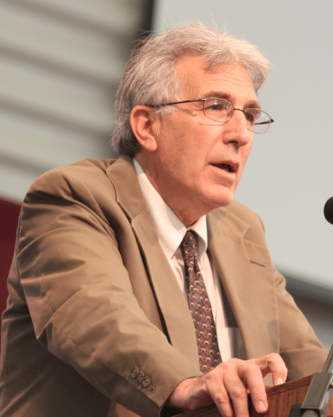
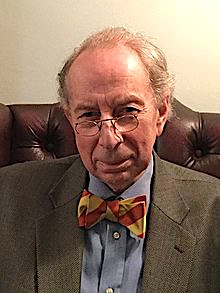
Regis Martin is Professor of Theology and Faculty Associate with the Veritas Center for Ethics in Public Life at the Franciscan University of Steubenville. He earned a licentiate and a doctorate in sacred theology from the Pontifical University of St. Thomas Aquinas in Rome. Martin is the author of a number of books, including Still Point: Loss, Longing, and Our Search for God (2012) and The Beggar's Banquet (Emmaus Road). His most recent book, published by Sophia Institute Press, is March to Martyrdom: Seven Letters on Sanctity from St. Ignatius of Antioch.











.png)



.jpg)


 English (US) ·
  French (CA) ·