

 3 weeks ago
36
3 weeks ago
36
PROTECT YOUR DNA WITH QUANTUM TECHNOLOGY
Orgo-Life the new way to the future Advertising by Adpathway
The aims of the transhumanist movement are summed up by Mark O’Connell in his book To Be a Machine, which last week won the Wellcome Book prize. “It is their belief that we can and should eradicate ageing as a cause of death; that we can and should use technology to augment our bodies and our minds; that we can and should merge with machines, remaking ourselves, finally, in the image of our own higher ideals.”
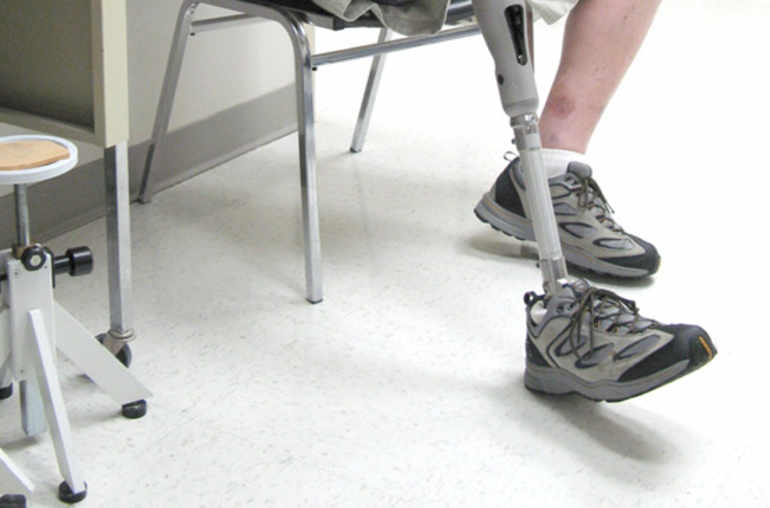
The idea of technologically enhancing our bodies is not new. But the extent to which transhumanists take the concept is. In the past, we made devices such as wooden legs, hearing aids, spectacles and false teeth. In future, we might use implants to augment our senses so we can detect infrared or ultraviolet radiation directly or boost our cognitive processes by connecting ourselves to memory chips. Ultimately, by merging man and machine, science will produce humans who have vastly increased intelligence, strength, and lifespans; a near embodiment of gods.
Is that a desirable goal? Advocates of transhumanism believe there are spectacular rewards to be reaped from going beyond the natural barriers and limitations that constitute an ordinary human being. But to do so would raise a host of ethical problems and dilemmas. As O’Connell’s book indicates, the ambitions of transhumanism are now rising up our intellectual agenda. But this is a debate that is only just beginning.
There is no doubt that human enhancement is becoming more and more sophisticated – as will be demonstrated at the exhibition The Future Starts Here which opens at the V&A museum in London this week. Items on display will include “powered clothing” made by the US company Seismic. Worn under regular clothes, these suits mimic the biomechanics of the human body and give users – typically older people – discrete strength when getting out of a chair or climbing stairs, or standing for long periods.
In many cases these technological or medical advances are made to help the injured, sick or elderly but are then adopted by the healthy or young to boost their lifestyle or performance. The drug erythropoietin (EPO) increases red blood cell production in patients with severe anaemia but has also been taken up as an illicit performance booster by some athletes to improve their bloodstream’s ability to carry oxygen to their muscles.
And that is just the start, say experts. “We are now approaching the time when, for some kinds of track sports such as the 100-metre sprint, athletes who run on carbon-fibre blades will be able outperform those who run on natural legs,” says Blay Whitby, an artificial intelligence expert at Sussex University.
The question is: when the technology reaches this level, will it be ethical to allow surgeons to replace someone’s limbs with carbon-fibre blades just so they can win gold medals? Whitby is sure many athletes will seek such surgery. “However, if such an operation came before any ethics committee that I was involved with, I would have none of it. It is a repulsive idea – to remove a healthy limb for transient gain.”
Scientists think there will come a point when athletes with carbon blades will be able to out-run able-bodied rivals. Photograph: Alexandre Not everyone in the field agrees with this view, however. Cybernetics expert Kevin Warwick, of Coventry University, sees no problem in approving the removal of natural limbs and their replacement with artificial blades. “What is wrong with replacing imperfect bits of your body with artificial parts that will allow you to perform better – or which might allow you to live longer?” he says.
Warwick is a cybernetics enthusiast who, over the years, has had several different electronic devices implanted into his body. “One allowed me to experience ultrasonic inputs. It gave me a bat sense, as it were. I also interfaced my nervous system with my computer so that I could control a robot hand and experience what it was touching. I did that when I was in New York, but the hand was in a lab in England.”
Such interventions enhance the human condition, Warwick insists, and indicate the kind of future humans might have when technology augments performance and the senses. Some might consider this unethical. But even doubters such as Whitby acknowledge the issues are complex. “Is it ethical to take two girls under the age of five and train them to play tennis every day of their lives until they have the musculature and skeletons of world champions?” he asks. From this perspective the use of implants or drugs to achieve the same goal does not look so deplorable.
This last point is a particular issue for those concerned with the transhumanist movement. They believe that modern technology ultimately offers humans the chance to live for aeons, unshackled – as they would be – from the frailties of the human body. Failing organs would be replaced by longer-lasting high-tech versions just as carbon-fibre blades could replace the flesh, blood and bone of natural limbs. Thus we would end humanity’s reliance on “our frail version 1.0 human bodies into a far more durable and capable 2.0 counterpart,” as one group has put it.
However, the technology needed to achieve these goals relies on as yet unrealised developments in genetic engineering, nanotechnology and many other sciences and may take many decades to reach fruition. As a result, many advocates – such as the US inventor and entrepreneur Ray Kurzweil, nanotechnology pioneer Eric Drexler and PayPal founder and venture capitalist Peter Thiel have backed the idea of having their bodies stored in liquid nitrogen and cryogenically preserved until medical science has reached the stage when they can be revived and their resurrected bodies augmented and enhanced.
Read More: No death and an enhanced life: Is the future transhuman?












.png)






.jpg)



 English (US) ·
  French (CA) ·