

 8 months ago
95
8 months ago
95

A major new review paper titled, High-dose vitamin C: A promising anti-tumor agent, insight from mechanisms, clinical research, and challenges, analyzed 150+ studies and found that when vitamin C reaches true pharmacologic levels (20–30 mM), it behaves like a targeted, tumor-selective therapy — something past trials missed by under-dosing. The evidence base spans decades of laboratory, animal, and early-phase clinical research.
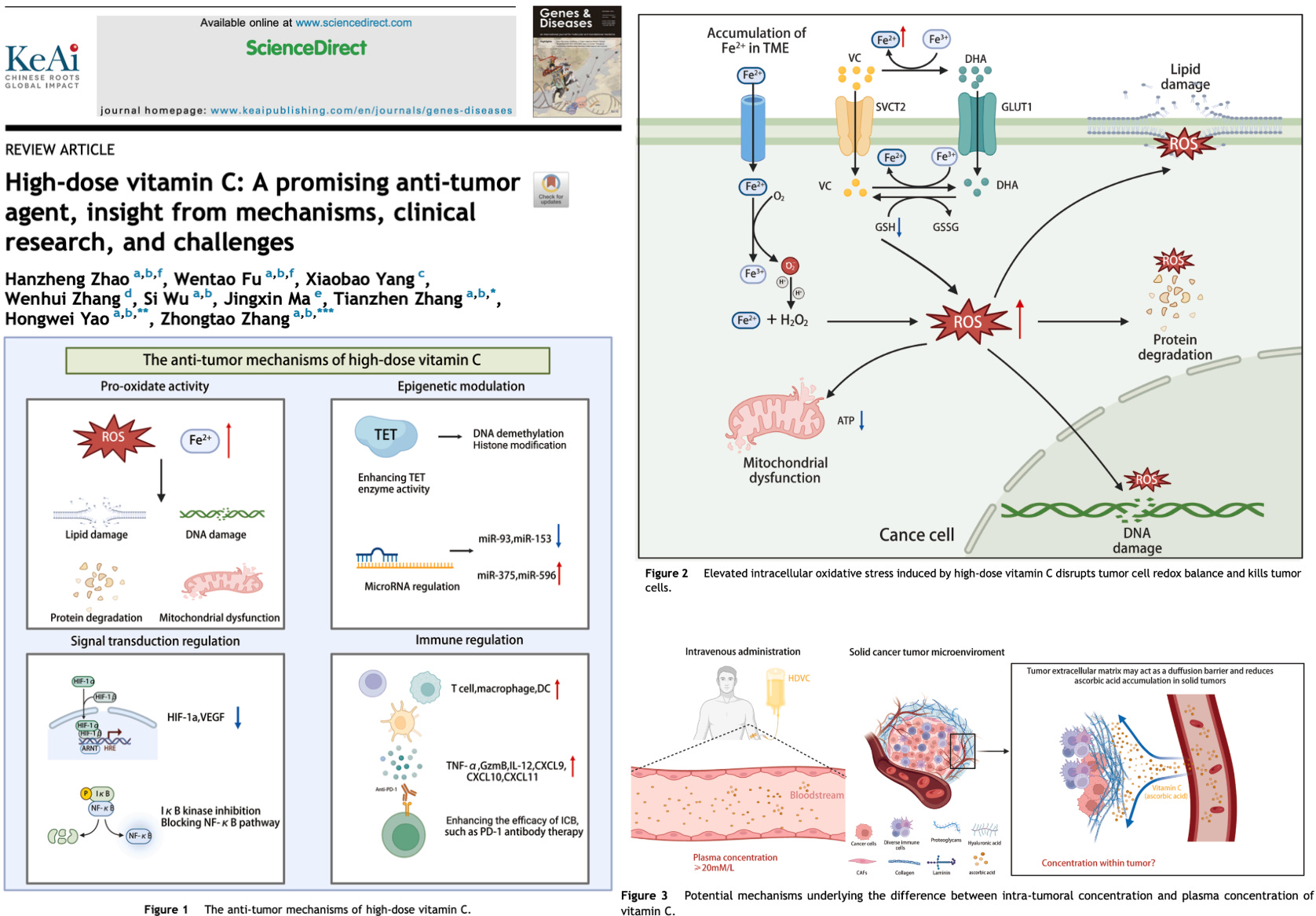
The authors outline four major anti-cancer mechanisms of high-dose vitamin C — pro-oxidative tumor cytotoxicity, epigenetic reprogramming, suppression of oncogenic signaling pathways, and powerful immune activation.
.
.
For a therapy this safe, inexpensive, and mechanistically potent, the findings are striking. Here’s what they found:
When plasma levels reach the 20–30 mM range, vitamin C switches from antioxidant to pro-oxidant, generating hydrogen peroxide and hydroxyl radicals inside tumors — while sparing normal tissues.
Tumors are uniquely vulnerable because they accumulate:
- excess labile iron
- high GLUT1 expression (massive vitamin C uptake)
- weakened redox defenses
This combination creates a selective chemical trap that cancer cells cannot escape.
The review highlights a major vulnerability: KRAS- and BRAF-driven colorectal, pancreatic, and lung cancers are selectively disrupted — even destroyed — by pharmacologic vitamin C.
These mutations cause:
- extreme GLUT1 overexpression
- glycolytic addiction (the “Warburg effect”)
- rapid NADPH and glutathione depletion
This makes the cancer cells especially sensitive to vitamin C–induced metabolic collapse.
A Phase III clinical trial even reported significantly improved survival in KRAS-mutant colorectal cancer patients when high-dose intravenous vitamin C was added to standard therapy.
Vitamin C is a required cofactor for the enzymes that degrade HIF-1α, a central regulator of tumor aggressiveness. At pharmacologic doses, high-dose intravenous vitamin C shuts down:
- angiogenesis
- metastatic signaling
- hypoxia tolerance
- GLUT1 upregulation
Very few agents directly dismantle this survival pathway.
Pharmacologic vitamin C reactivates TET enzymes, reversing abnormal DNA hypermethylation and restoring tumor-suppressor gene expression.
Multiple studies show induced differentiation and suppressed proliferation following high-dose intravenous vitamin C exposure.
High-dose intravenous vitamin C also strengthens the immune system’s ability to attack cancer. It has been shown to:
- Increase CD4⁺ and CD8⁺ T-cell infiltration into tumors
- Boost granzyme B and IL-12, enhancing cytotoxic activity
- Upregulate CXCL9/10/11, drawing more tumor-infiltrating lymphocytes
- Synergize with PD-1 and CTLA-4 checkpoint inhibitors
- Enhance T-cell function and proliferation
- Improve natural killer (NK) cell cytotoxicity
- Activate dendritic cells, strengthening antigen presentation
Together, these actions amplify immune-mediated tumor destruction.
The review summarizes multiple Phase I/II trials where high-dose intravenous vitamin C strengthened standard therapy:
- Pancreatic cancer: major tumor shrinkage in 8/9 patients
- Glioblastoma: median overall survival increased from 14.6 → 19.6 months
- NSCLC: response rates roughly doubled
- Ovarian cancer: reduced chemotherapy toxicity + longer progression-free survival
Across all studies, safety and tolerability were excellent.
The review identifies the dosing regimen required to achieve tumor-selective, cytotoxic plasma levels:
75–100 grams IV per infusion, or >1.0 g/kg IV per infusion
Given 2–3 times per week for 6–8 cycles.
This reliably produces ≥20 mM plasma concentrations — the range associated with selective cancer cell killing — while remaining well-tolerated.
The authors also emphasize that most patients in clinical trials never reached the maximum tolerated dose, suggesting the therapeutic ceiling is likely far higher than what past studies explored.
*
This paper makes something very clear: Pharmacologic intravenous vitamin C is a multi-mechanistic, tumor-selective anti-cancer therapy that has been under-dosed, under-studied, and consistently underestimated.
Given its safety profile, low cost, and robust mechanistic data, high-dose vitamin C urgently warrants modern Phase III trials with appropriate pharmacologic dosing regimens.
*
Click the share button below to email/forward this article. Follow us on Instagram and X and subscribe to our Telegram Channel. Feel free to repost Global Research articles with proper attribution.
Nicolas Hulscher, MPH, Epidemiologist and Foundation Administrator, McCullough Foundation
Featured image copyright Tobias Arhelger – Fotolia
Global Research is a reader-funded media. We do not accept any funding from corporations or governments. Help us stay afloat. Click the image below to make a one-time or recurring donation.
















.png)






.jpg)



 English (US) ·
  French (CA) ·