

 11 hours ago
9
11 hours ago
9

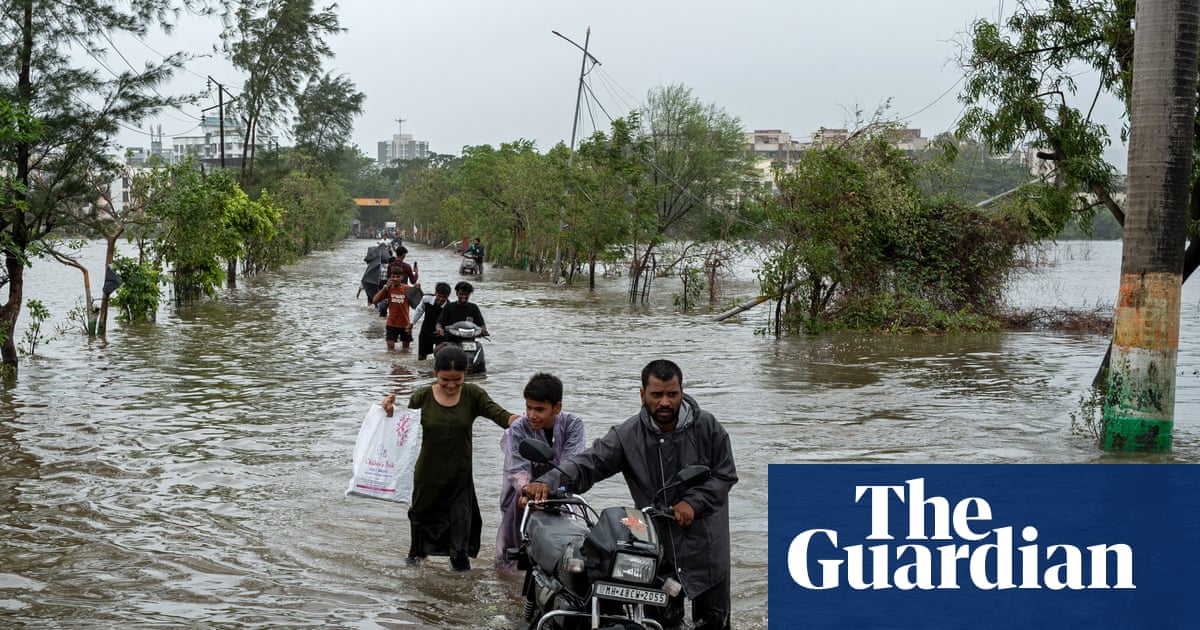
The recent Nepal floods are a huge tragedy and their enormous destruction has caused distress on a mass scale. The victims will need to be helped over a much longer time to recover from the losses and the shock of the disaster. Neighboring country India, which too has suffered in the disaster, has done well to rise immediately for providing assistance and this should continue over a longer time.
While immediately the emphasis should of course be on life-saving relief and rescue, over a longer time a significant change towards more ecologically protective policies should get urgent attention. The extent to which the highly destructive flash flood in Nepal and nearby areas has been caused by climate change and other man-made factors can be debated, but what is beyond doubt in this and several other recent Himalayan disasters is that the extent of the damage would have been much lesser if more ecologically protective development path had been followed. There is no doubt that climate change is a reality, it is a big factor in the various changes taking place in most places but all the more so in the more fragile and vulnerable regions like the Himalayan region, although the precise role in any particular disaster takes time to find out. On the other hand, it is more visible that if the disaster affected areas had not already been much disrupted and disturbed in various ways and instead tree and forest cover had been improved and precautions taken to avoiding overconstruction or misplaced construction, indiscriminate mining and blasting, then the damage and deaths would be much lesser. In many disasters more damage has been caused by the mass of boulders and debris that had already been spread loosely and ready to be carried away by any fast flowing waters.
The trail of destruction including floods, landslides and land sinking in the Himalayan region that has sometimes led to even bigger floods in the plains below must lead to wider realization of the very heavy costs of indiscriminate construction and ‘development’ work in the ecologically fragile region. As someone who has been reporting on these issues for a long time I am deeply worried that those who are either not adequately aware of the special vulnerability of the Himalayan region or are not sensitive towards the issues related to this may again ignore the warnings once the days of high visibility floods have passed.
A big question before us is—despite the clear opinion of very serious mistakes having been made will the promoters of various indiscriminate constructions including high risk dams and highways involving loss of trees and icreased landslide risks wake up in time regarding their responsibility of protecting environment and safety?
The Himalayas stretch majestically over a vast area and well inhabited even in several very high and remote areas. However the number of people whose life is closely influenced by the Himalayas is many times more, with a heavy concentration in the much more densely populated plains below. Hence there is a strong case for allocation of special funds to support more ecologically protective protective policies in the Himalayan region which increase safety and protection not only for the population here but for a multiple number of people.
For all their outward grandeur, the Himalayas are geologically young and fragile formations, highly prone to disturbances. Most of this region falls in high seismicity zone. Hence policies for this region should take extra care to be protective towards the environment, particularly forests and rivers, towards the people living here and the much larger number of people influenced by what happens in the Himalayan region.
People often tend to discuss the Himalayan region more in terms of tourism and pilgrimage destinations, but greater attention should be given to the lives and livelihoods of common people living in the Himalayan region as well as the need to protect environment in such ways that the impact of Himalayan conditions locally and more widely remains protective. Cooperation among various Himalayan countries should also be based on sharing such concerns and minimizing conflict to the extent possible given the geopolitical realities.
The Himalayas with their varying heights and slopes, peaks and valleys are suitable for preserving rich biodiversity. The traditional farming practices have made good use of this to provide a diversity of nutritious food, which is particularly rich in millets and herbs. Some farm scientists who were trained in green revolution monocultures could not appreciate these strengths and so very disruptive new crops and technologies were introduced at some places. Fortunately this mistake is being realized at several places. There are several initiatives to base farming more on organic and natural methods. This is welcome, but often a holistic approach of natural farming is missing in official efforts. At the same time it is disturbing that many ecologically very harmful agricultural practices still continue to be reported,including use of high risk chemical herbicides and pesticides that are likely to be even more harmful in these fragile environs.
Forests are crucial for protecting Himalayan ecology, but with due care and understanding, they can also play the most important role in supporting sustainable livelihoods of local people. This would be based on providing people livelihoods in protecting forests and biodiversity, regenerating mixed natural forests with due place for more soil and water conserving indigenous trees , and giving people much better rights over sustainable use of minor forest produce. A rural economy based on such protective livelihoods, fruits and dry fruits, organic farm produce in raw and processed forms, supported further by eco-friendly tourism and pilgrimage can provide a firm livelihood base without endangering environment.
Unfortunately not just tourism but even pilgrimages are getting highly commercialized, with record numbers of helicopter sorties bringing pilgrims to their favored shrines. Instead of allowing all this to be guided mainly by commercial factors, we must bring in important factors like protecting environment and promoting livelihoods of common hill people.
There has been a lot of controversy around several big development projects, particularly dam and highway projects. A time has come when the government should make room for a completely unbiased evaluation of the overall impact of these projects so that future policy is guided entirely by the most unbiased conclusion that can be drawn from the experiences so far. There are several concerns—loss of forests and trees, destabilization of slopes and land-slides, displacement of people among them—but a particularly serious concern is that of avoiding any massive disasters.
The role which hydel projects had played in aggravating the highly disastrous floods in Uttarakhand in 2013 has been widely discussed and even a committee appointed at the initiative of the Supreme Court had drawn attention to this. We cannot forget that about 6,000 human lives were lost in these floods, perhaps more. A big priority should be to avoid this kind of big disasters. More than one officially appointed committee has drawn attention to very serious risks associated with the Tehri Dam Project in Uttarakhand, for instance, and we should not ignore or neglect such well-documented warnings, supported by scientific evidence and voiced by eminent experts. Among upcoming projects, most concern has been expressed regarding some gignatic Chinese hydel projects which have been linked to very high risks for downstream areas.
Sunderlal Bahuguna had devoted his life to protecting Himalayan ecology as well as sustainable livelihoods. He used to say—Ecology is permanent economy. He went on long foot marches to hundreds of villages to find practical ways of applying this principle. He as well as his companions contributed much in this direction.
They emphasized that ecological tasks cannot be taken up in social isolation. Hence they placed equal emphasis on justice for women and pleaded for wider social roles for them. Women have justified this trust by playing very important role in the chipko movement, anti-liquor movements and peace initiatives.
As I realized in the course of closer involvement with them, these activists also emphasized equal opportunities and empowerment of poorest sections including dalits and also placed great emphasis on inter-faith harmony. Their work is a valuable guide for evolving a socio-economic and ecological agenda for the Himalayan region, integrating many-sided justice with environmental concerns.
Some Himalayan regions are affected by open or simmering discontent of people, and we have also seen recent manifestations of this. If very protective policies are evolved on the lines indicated above in participative ways by involving local people closely, keeping in view the real needs of people and integrating these with protection of environment, then there will be hardly any chances for discontent to increase. We must integrate protective policies at the environmental level and social level.
*
Click the share button below to email/forward this article. Follow us on Instagram and X and subscribe to our Telegram Channel. Feel free to repost Global Research articles with proper attribution.
Bharat Dogra is Honorary Convener, Campaign to Save Earth Now. His recent books include Protecting Earth for Children and Planet in Peril. His website is bharatdogra.in and his YouTube channel is Bharat Dogra| Save Earth Campaign. He is a regular contributor to Asia-Pacific Research.
Featured image: Flood hitting the Gyirong Port crossing on the China–Nepal border seven minutes after a Ms 5.2 tremor (Public Domain)
Global Research is a reader-funded media. We do not accept any funding from corporations or governments. Help us stay afloat. Click the image below to make a one-time or recurring donation.













.png)






.jpg)



 English (US) ·
  French (CA) ·