

.png) 3 weeks ago
50
3 weeks ago
50
PROTECT YOUR DNA WITH QUANTUM TECHNOLOGY
Orgo-Life the new way to the future Advertising by AdpathwayOver the years, we’ve had numerous opportunities to watch President Donald Trump put his allegedly “Teflon” charms to the test in high-profile and high-stakes media exchanges.
With a very distinct way of speaking, a unique (if not Freudian) dynamic with his base and a notoriously combative relationship with the press and anyone he deems “bad,” it can be difficult to tell if Trump is particularly gifted at navigating this world. That’s how stark his departure is from the traditional political media training that we’ve all come to know in recent decades (while still using a few familiar rhetorical and sartorial tricks).
HuffPost spoke with communications professionals who actually provide media training to get a feel for how Trump’s style actually measures up.
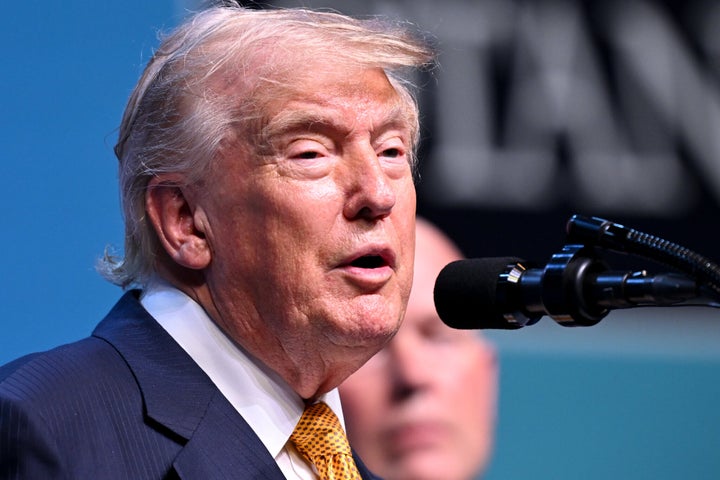
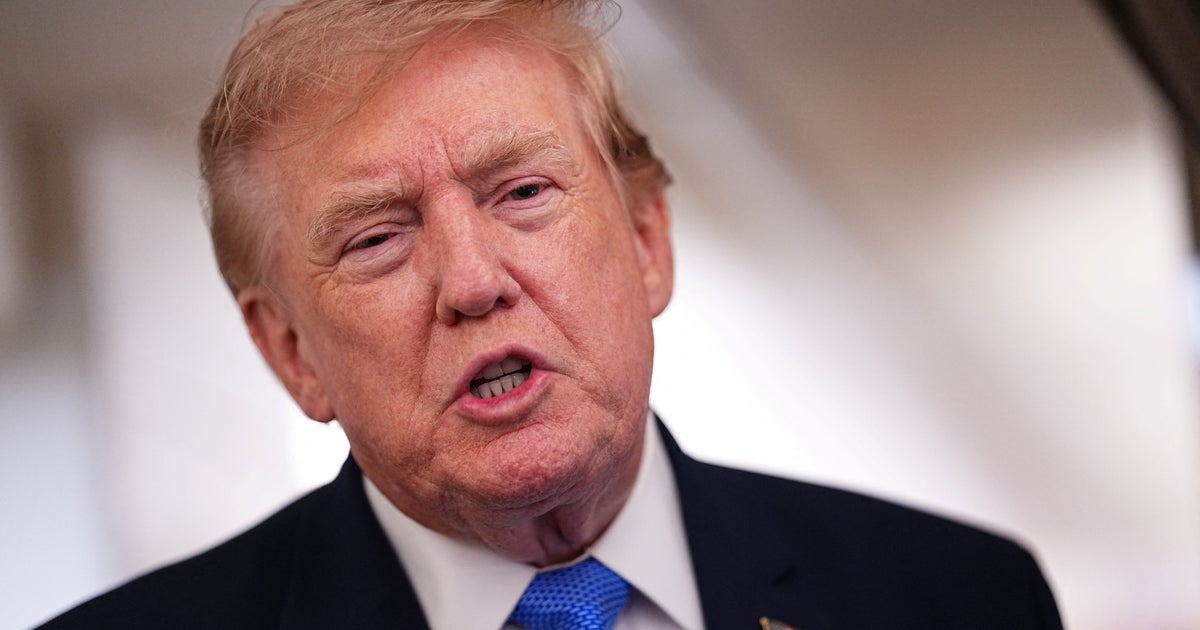
Anadolu via Getty Images
Media training for American politicians used to look one way. Trump consistently departs from it.
“American politicians are probably among the most media-trained public figures in the world,” Beth Dawson, a communications expert who also provides media training to clients, told HuffPost. “Unlike celebrities, whose goal is often to appear relatable, or technical experts, whose goal is to educate and inform, politicians are primarily trained to persuade while managing risk.”
Dawson explained that this style of speaking and handling the media has been “remarkably consistent” across party lines over the years.
“Candidates are typically coached to develop three key messages before every interview, answer in concise soundbites, bridge difficult questions back to those messages, avoid speculation, stay emotionally composed under pressure and never let an interviewer dictate the agenda,” she said. “They’re also encouraged to avoid repeating negative language, even to deny it, because repeating a phrase often reinforces it in the audience’s mind.”
Eddie Tabakman, a communications expert and content creator known as Eddie the Media Trainer, told HuffPost something similar — noting that, traditionally, “elected officials and diplomats needed to be a bit more ‘cautious’ when they were speaking in public,” particularly when compared to other public figures.
“There are a lot of reasons for that, but fundamentally, it’s because a) their political opponents would use anything they say against them, and b) because it’s a game of trade-offs,” he said. “When you pick a policy and advocate for a particular issue, there are, by definition, winners and losers. Well, elected officials wanted to ensure that they hurt as few people as possible with what they said.”
Dawson even notes that the access Trump gives the press — via his repeated willingness to give off-the-cuff comments “on [an] airport tarmac, outside a courtroom” — presents an interesting “calculated trade-off.”
“One of the reasons he’s so difficult to prepare for is that he often appears comfortable abandoning the planned route entirely, so for a journalist, he’s unpredictable,” she continued. “Rather than answering questions in a structured way, he’ll follow whatever thoughts come into his mind.”
Dawson also notes that this manner of speaking “creates an impression of spontaneity” — and it can create a bit of a Rorschach test for whoever is on the receiving end of the communication: “Supporters often interpret this as ‘he’s speaking his mind.’ Critics tend to interpret exactly the same behavior as lacking discipline.”
“The benefit is that it creates an impression of accessibility and confidence,” Dawson said. “The downside is the longer anyone speaks spontaneously, the greater the likelihood they’ll produce a phrase that becomes the next day’s headline.”
Tabakman said he ultimately believes that Trump is a “singular communicator,” but adds that when it comes to the foundational advice he is often recommending to his clients, the president consistently “does the opposite.”
“Honestly, I don’t know if he has been media trained,” Tabakman said, adding, “nothing I’ve seen from him over the past 10 years would indicate that.”
Where other politicians respond, Trump “negotiates.”
Dawson also finds that Trump seems to have “largely ignored many of these conventions” in his time in politics. This is something you can see in his more aggressive or argumentative exchanges with reporters that can, at times, tilt the encounters in his favor.
A habit that she continually noticed is the ways that Trump consistently rejects the “frame” of questions from reporters.
“If a journalist asks, ‘Why did you do X?’, many politicians will try to explain or justify their decision — they may redirect or reframe,” Dawson said. “But Donald Trump often does something different; he questions the premise of the question itself.”
“From a behavioral perspective, he’s not answering questions, he’s negotiating what the conversation is actually about.
- Beth Dawson, communications expert and media training professional
“That’s a powerful communication technique because it shifts the conversation onto his terms. When you change the question, you change the conversation.”
She said you can see this frequently when the president is “asked about criticism of one of his policies.”
“He may respond by questioning the accuracy of the criticism, shifting attention to another issue, or drawing attention to what he sees as the media’s role in creating the narrative,” Dawson said. “From a behavioral perspective, he’s not answering questions, he’s negotiating what the conversation is actually about.”
But, unsurprisingly, this move isn’t going to get the full media trainer stamp of approval: “I mean, I don’t think it’s a good idea to insult and escalate tensions with reporters in the middle of your interview,” Tabakman said, “which he clearly does from time to time. I generally tell my clients that that’s not a recipe for success.”
For better or worse, his most notorious speaking quirk stands out.
Trump himself has a name for one of his most recognizable speaking techniques: “the weave.” He uses it to describe when he seemingly rambles from topic to topic, including via anecdotes, asides and apparent “stream of consciousness” recounting of his thoughts.
Both Dawson and Tabakman identified this as something counter to the conventional wisdom of media training — but note that it ultimately does seem to be effective for Trump.
“Most media-trained politicians deliver polished, carefully edited answers. [Trump] will often change direction mid-sentence, add another example or circle back to an earlier point,” Dawson said. “While that can frustrate interviewers looking for a direct answer, it can also make him sound less rehearsed and hence more relatable.”
There can be some notable risks to this approach, however, particularly for a public figure or politician who holds many lives in their hands in matters of diplomacy or strategy.
“Traditionally, when leaders talk about national security or military action, they tend to slow down, choose their words more carefully and sound more measured. That’s partly because every sentence will be analysed by allies, adversaries, intelligence agencies and financial markets, not just the public,” Dawson said. “Trump often doesn’t make that shift. He speaks in a much more conversational way, even when the stakes are incredibly high. Some people see that as confidence and authenticity. Others see it as sounding too casual for the situation.”
This can run the risk of interfering with the information people receive, from desensitizing audiences to blurring lines between “official positions and opinions” to giving people a less-than-reliable understanding of the gravity of the topic at hand.
“In international politics, people don’t just listen to what leaders say, they pay close attention to how they say it. Sometimes the tone becomes just as important as the words themselves,” Dawson noted. “[Trump’s] tone doesn’t always change to match the seriousness of the topic.”
It’s not “polished,” but it gives audiences something they seem to crave.
The traditional route of carefully rehearsed and thoroughly measured comms served its purpose for many years. However, Dawson notes that audiences today are significantly more skeptical if a politician’s comment comes off as “overly rehearsed.”
“The biggest change in political communication isn’t that politicians have become less polished; it’s that audiences have become much better at spotting polish, and in today’s world of AI, audiences are starting to reject anything that doesn’t look human,” Dawson said. “I think the biggest shift in the Trump era has been a move away from polished communication towards perceived authenticity.”
In this way, Trump is able to make more of an emotional impact on his desired audience, too — even if there’s a lack of clarity (or accuracy) in his message. “One thing I often tell clients is that audiences don’t connect with perfection, they connect with authenticity,” she continued. “Of course, authenticity still needs to be balanced with clarity, but speaking in a way that feels natural is often more engaging than sounding as though every sentence has been memorized.”
“What he does do effectively (and this is something I do teach my clients — especially more, over the last 2-3 years) is communicate with authenticity,” Tabakman notes. “Anyone who listens to him feels like they really know what he thinks in the moment.”
Tabakman said that he tends to talk to his clients about striking the right balance between these ideals, but that undeniably there is a spectrum of what’s appropriate depending on the situation a person is in.
“The default I recommend all my clients start with is roughly 80% authentic; 20% polished, and then go from there,” he said. “[Trump is] probably closer to 95% authentic; 5% polished… but again, it seems to be getting him the results he wants, so he’s an exception.”
Dawson does warn against relying purely on authenticity over the “discipline” of making sure you’re still speaking carefully, accurately and with clarity: “Audiences want communicators who sound genuine, but they also expect them to be clear, consistent and credible. Those aren’t opposing goals, but they do require practice to get it right.”







.png)




.jpg)


 English (US) ·
  French (CA) ·