

 1 week ago
37
1 week ago
37
PROTECT YOUR DNA WITH QUANTUM TECHNOLOGY
Orgo-Life the new way to the future Advertising by Adpathway
A grim medical reality is unfolding across Middle America, predominantly Iowa’s farmland. In the land of pesticides and industrial agriculture, where policies have made farming dependent on cancer causing chemicals, cancer rates are rising faster than any other place in the nation. While federal regulators and agricultural conglomerates continue to insist that chemical-intensive farming practices pose no threat to human health, a growing coalition of oncologists, cancer survivors and investigative journalists is challenging that official narrative with data that is becoming impossible to ignore.
The convergence of multiple environmental carcinogens is turning Iowa into a public health warning for the entire country. Radon levels six times the national average. Nitrate contamination from fertilizer that routinely threatens drinking water supplies. Pesticide use that ranks fourth in the nation. PFAS chemicals detected in 94 percent of surface waters. These factors are not operating in isolation. They are building on one another in a state where 13 of 16 cancer sites linked to these pollutants already exceed national incidence rates.
Key points:
Iowa has the second-highest rate of new cancers nationally and is one of only three states with rising cancer rates.
A new 88-page report from the Iowa Environmental Council and Harkin Institute links pesticides, nitrate, PFAS and radon to the state’s cancer crisis.
Cancer incidence for people under 50 in Iowa is rising faster than the national average.
Rural areas with heavy agricultural activity show significantly higher rates of leukemia, lymphoma and breast cancer.
Glyphosate use in Iowa has more than tripled between 1999 and 2019.
Radon exposure is estimated to kill more Iowans per year than drunk driving.
Cancer survivors, doctors and journalists weigh in on industrial agriculture
During an Investigate Midwest panel discussion on pesticides and public health held May 7, speakers painted a picture of a system deliberately engineered for chemical dependency. The virtual event featured Dr. Richard Deming, an oncologist from the MercyOne Cancer Center in Des Moines, investigative journalist Carey Gillam, Iowa Environmental Council policy director Kerri Johannsen, Food & Water Watch research director Amanda Starbuck and Hardin County resident Lisa Lawler, a breast cancer survivor diagnosed in 2025.
Lawler, who grew up on a farm and returned to care for her parents, pursued genetic testing after her diagnosis. The test did not identify common hereditary breast cancer markers, raising questions about environmental triggers. “They are people that are hard working and consider themselves good stewards of the land,” Lawler said of farmers. “What are they being told that they need to use on their land? That’s the crux of it.”
Johannsen described the haunting moment that has played out repeatedly across the state. During listening sessions held with the Harkin Institute, one question consistently revealed the depth of the crisis. “One we would ask was, ‘Have you or someone close to you had a cancer diagnosis?’ And in every room, every hand would go up, and people would kind of look around at each other and it was just kind of a moment of realization that this was a real problem in their community,” Johannsen said.
Gillam, author of “Whitewash” and “The Monsanto Papers,” traced the explosion of glyphosate use directly to the introduction of genetically engineered crops designed to survive heavy herbicide spraying. “We sit here today, with our agricultural production, our food production, very much directed by the company selling the seeds and the chemicals, who direct our lawmakers, policymakers, our leaders, and our regulators how to oversee these crops and what to say about their safety,” Gillam said.
Starbuck argued that the U.S. has become chemically addicted to commodity production that serves ethanol, animal feed and processed food ingredients rather than feeding people directly. Farmers, she insisted, are not the problem. “They didn’t build this system. And in fact, it’s the system that really is not profitable for the majority of farmers. Most farmers are in the red year after year, and it’s very difficult to break free from it,” Starbuck said.
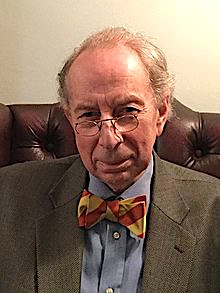
Dr. Deming said Iowa’s cancer rate, the second highest in the nation, likely stems from a combination of factors, but he pointed directly at the widespread use of agrichemicals and the state’s unusually high radon exposure. “The reason that we need to look at the environment is there’s a great percentage of our land that is under cultivation utilizing chemicals, and there’s ample evidence that some of these chemicals increase the risk of cancer,” Deming said.
The report that federal regulators do not want you to read
On March 25, 2026, the Iowa Environmental Council and the Harkin Institute released an 88-page document titled “Environmental Risk Factors and Iowa’s Cancer Crisis” that synthesizes peer-reviewed medical research on the environmental carcinogens saturating the state.
The report’s summary is blunt: “Peer-reviewed research demonstrates that environmental risk factors, including pesticides, PFAS, nitrate, and radon are associated with increased cancer incidence and risk for numerous cancer types. Our analysis shows that all of these carcinogens are present at high levels in Iowa. These factors combine and build on one another as well. While cancer is multifactorial and complex, we know enough to act to mitigate these modifiable risk factors.”
The findings are staggering. All of the most common cancers in Iowa, breast, prostate, lung, colorectal and skin melanoma, have associations with these environmental risk factors. Of the adult cancers identified as linked to pesticides, nitrate, PFAS and radon, 11 of 15 cancer types are increasing in the total Iowa population. For people under 50, six of 10 cancer types associated with these pollutants are on the rise.







.png)






.jpg)



 English (US) ·
  French (CA) ·