

On March 9, 2004, Gregory Velasquez walked into the Red Caboose Child Care Center, then located on Williamson Street, and threatened to harm children and adults with meat cleavers. He was shot and killed by two Madison police officers, Phil Yahnke and Shane Puechner. Months later, they’d receive a Medal of Valor for their actions to deter him. So would three employees at the day care center.
In an interview with Isthmus more than a decade later (March 12, 2015), Yahnke described the “heavy toll” that what are termed justified killings can take on police officers.
"To have done anything less would have been an abdication of our moral and legal responsibility to those kids and the day care staff. We had to deal with the threat,” said Yahnke, describing the shooting. He also described the agony while waiting to be officially interviewed by investigators about the shooting: "I wanted to scream that to people. This was a righteous shoot. He gave us no recourse,” he added.
In 2006, Madison police officer Kip Kellogg shot and killed Victor Montero-Diaz at a BP gas station at 1130 Williamson St. Kellogg was stabbed, and officer Kirby Harless was also injured; both were hospitalized.
At the time, one resident who lived across the street told the Capital Times: "There are a lot of people here who are affected by this," she added. "This sort of shatters the feeling of safety we had in this neighborhood."
In the intervening years, four more people have been killed by police in the Williamson-Marquette neighborhood — each generating broader conversations about police procedures, reform, and community control. Isthmus has covered each.
On Nov. 9, 2012, Paul Heenan was shot and killed by Madison police officer Stephen Heimsness after entering the house of a neighbor in the 500 block of South Baldwin Street.
Heenan was a musician and sound engineer, and his death was a loss to the local music community (Nov. 12, 2012) as well as family and friends. Isthmus profiled how Heenan’s death prompted his friends and roommates —Amelia and Nathan Royko Maurer — to become leading advocates for police reform (May 16, 2013).
The case was investigated by the Department of Justice at the request of the Madison police department, and by the Madison police department itself — which found that Heimsness was justified in shooting (Jan. 9, 2013).
Despite that, scrutiny into Heimsness uncovered other troubling behavior. He received a dozen complaints in his time on the Madison police force, more than half of which were for excessive uses of force — including a 2006 incident that prompted a $27,000 settlement (Aug. 19, 2010). Years later, Isthmus also reported how he hid another cop’s rifle without being punished (March 8, 2018).
Calls to remove Heimsness from the force clogged the city’s email system (Feb. 5, 2013). Facing a complaint filed with the Police and Fire Commission to remove him, Heimsness agreed to resign one year after he shot and killed Heenan (July 1, 2013).
Protestors called for an independent investigation into Heenan’s death (Jan. 13, 2013), and Madison Police Chief Noble Wray said at a community meeting that wasn’t necessary (Jan. 30, 2013). A former captain pointed out how the shooting revealed how the police department needed to change its training (Feb. 1, 2013), a review that protestors also sought (Oct. 15, 2013).
Isthmus covered how Chief Wray acknowledged that the shooting damaged trust (Jan. 11, 2013), and how the Madison police department sought to regain that trust (July 17, 2013).
Heenan’s family filed a lawsuit against the city (Aug. 29, 2013), and when the city paid out a $2.3 million settlement — at the time, the largest settlement in state history — the family and its lawyers expressed the hope that would motivate the police department to update its use-of-force policy (Aug. 11, 2015).
Heenan’s death also helped prompt a 2014 change to state law, spearheaded by then-Madison Rep. Chris Taylor, that required all police-involved deaths to be investigated by an outside police agency. That bill was signed into law by former Gov. Scott Walker, in a Republican-led Legislature (March 12, 2015). Now, most police killings are investigated by a statewide agency — the Department of Justice’s Division of Criminal Investigation.
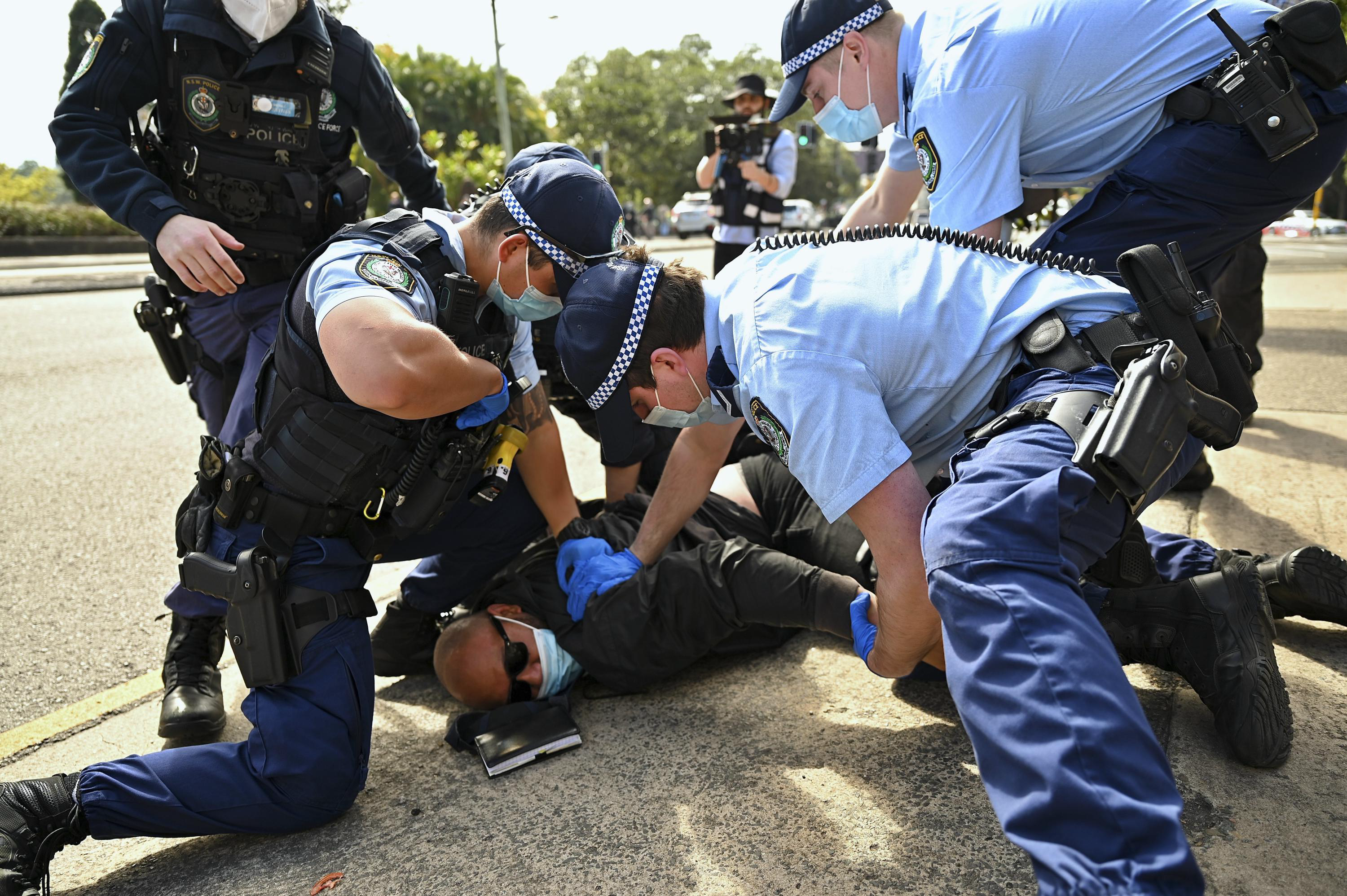
On March 6, 2015, Madison police officer Matt Kenny shot and killed Tony Robinson at 1125 Williamson St. In the more than a decade since then, Isthmus has published dozens of articles about it, including about the protests that emerged from the killing (March 10, 2015) and developing movement against police violence (March 15, 2015). Dane County District Attorney Ismael Ozanne announced, 67 days later, that his office would not be filing charges against Kenny (May 12, 2015), which prompted another round of protests(May 14, 2015).
We covered Robinson’s family as they announced a civil suit against the city (May 15, 2015), and detailed why Madison ended up paying $3.35 million (Feb. 23, 2017), which, at the time, was the largest settlement of its kind in state history, but no longer is. The settlement, the family said, brought “no vindication or peace” (March 30, 2017).
These payouts have taken a financial toll on the city, prompting higher insurance premiums and deductibles that are paid by taxpayers (Aug. 17, 2017). As of 2026, the city’s premium has risen to $992,859, according to city risk manager Eric Veum; taxpayers now directly pay $500,000 per claim; the rest is covered by insurance.
Nearly one year after Robinson’s killing, Isthmus reported how the lives of his family had been turned upside-down (Jan. 7, 2016). Andrea Johnson, Robinson’s mother, said Madison had become a constant reminder of her son’s killing, forcing her decision to move from the city (May 31, 2018).
The officer who killed Robinson was cleared by an internal police review (June 3, 2015) but, five years later, calls to “fire Matt Kenny” would continue to reverberate in the 2020 racial justice protests (June 10, 2020). In 2022, Robinson’s family and a team of lawyers used a state statute to ask a judge to investigate whether Kenny should face criminal charges, despite the DA’s failure to pursue charges (Aug. 4, 2022). The effort failed.
On June 30, 2016, Madison police officer Hector Rivera shot and killed Michael Schumacher during a home invasion on Morrison Street. East-side residents expressed “utter fatigue” from police killings at the time (July 1, 2016).
And on July 22, 2026, a yet-unnamed Madison police officer shot and killed Corey Ruiz mere blocks from the other shootings in this round-up. For the neighborhood, it’s evoked outrage and deja vu (July 22, 2026).
In addition to an autonomous zone that’s sprung up at the intersection (July 28, 2026), Ruiz’s killing has generated another round of conversation around police use of force and other operating procedures — one very familiar to neighborhood residents. So, what’s changed?
Madison still has not implemented body cameras, but are poised to begin doing so this fall. (More than half the city council, when asked this summer, were cautiously poised to go along with a three-year plan to fund the cameras themselves. The human cost to maintain the cameras, and manage records, is still undetermined). A dozen years ago, it was “just a question of when” (Aug. 19, 2014). Nearly a decade ago, Madison was already bucking the trend of outfitting police with body cameras (Nov. 22, 2017). In 2021, former police chief Shon Barnes told Isthmus the cams would “only capture behavior,” not change it (Feb. 2, 2021). Last fall, alders rejected a last-minute proposal to pit funding for the independent monitor against body cameras (Nov. 12, 2025).
The city of Madison now has a Police Civilian Oversight Board, which faced a rocky start after it was implemented in November 2020 (Jan. 5, 2022). It took several years for the PCOB to hire the city’s first independent police monitor, Robin Copley. The monitor has no disciplinary authority over police, discussed at a community conversation about the limits of the monitor’s power (Jan. 23, 2025).
We’d also report on how that office ignored records requests and ghosted the city attorney’s office (Aug. 28, 2025). Months later, Copley resigned (October 2025).
Last fall, during the city’s budget process, the embattled office survived a threat to pull its funding (Nov. 12, 2025) and Aeiramique “Meeka” Glass was hired as the interim independent monitor. Amid a continued tense relationship between that office and city hall, Glass has threatened legal action against the city (April 22, 2026).
And the city now has a new police chief, John Patterson, a nearly 30-year veteran of the Madison police force, who was sworn in as permanent chief in October 2025. In a July 2026 cover profile, Patterson discussed the many challenges lying ahead, including addressing public concern over traffic safety and getting approval for funding to outfit his officers with body cameras (July 2, 2026).








.png)



.jpg)

 English (US) ·
  French (CA) ·