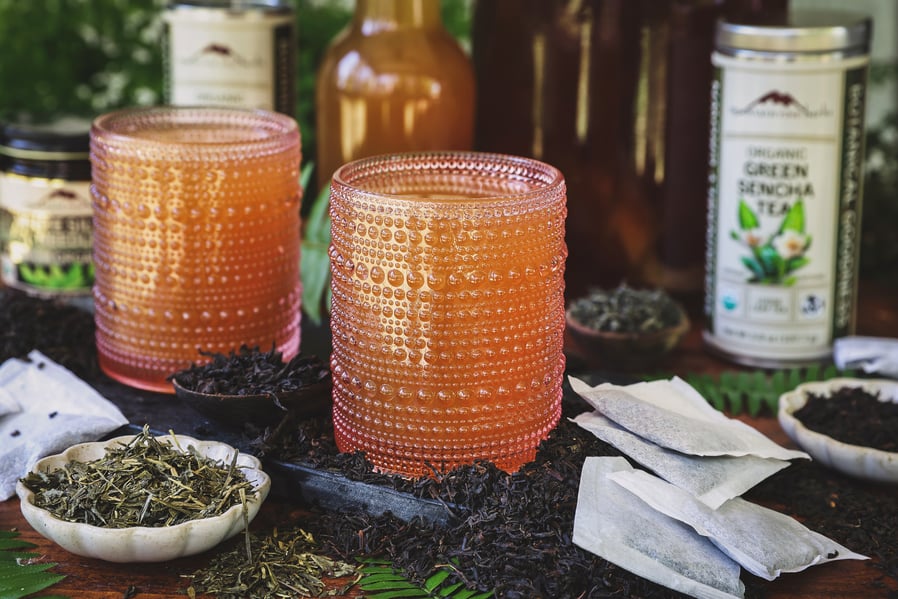
Chances are that if you have been grocery shopping within the last 25 years, you have heard about or seen kombucha. In fact, these days it is hard to throw a rock in a food store and not hit a bottle of the oftentimes brightly colored, effervescent, and vaguely mysterious brew. As a fermented beverage, kombucha is rife with naturally occurring probiotics, which are believed to help promote healthy gut flora and aid in digestion. Pair the health benefits with the countless delicious flavors available, and it is easy to make store-bought kombucha a daily habit. While your tummy and taste buds might scream yes to this, your bank account might be slightly less enthusiastic. Fortunately, making your own kombucha is cost-effective and much easier than you might think!
Though kombucha may seem like a newer health trend here in the US, it has ancient roots globally. Kombucha boasts origin stories in Russia, Japan, China, and Korea. In China, the beverage was first documented as early as 221 BCE and was believed to be an elixir of immortality, while in Japan, the lore is that it was first used in 441 CE by a Korean doctor named Kombu. Though the true origin may be lost to time, what we do know is that it has stuck around this long for a good reason.
What is Kombucha?
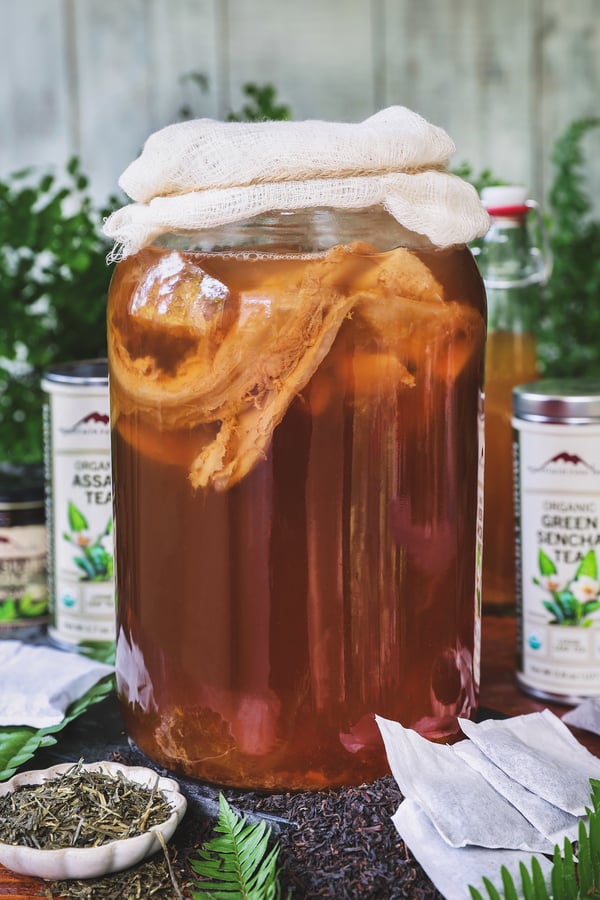
Kombucha is a fermented tea beverage containing a symbiotic culture of bacteria and yeast (commonly abbreviated to "SCOBY”). It is a living culture containing microorganisms and nutrients.
A SCOBY, sometimes referred to as a "mother" or "mushroom," is the otherworldly-looking, gelatinous substance that transforms tea into tangy, fizzy kombucha. As your kombucha ferments, the SCOBY will grow, creating an airproof seal at the top of your vessel. It's actually a living home for the bacteria and yeast that are a necessary part of the kombucha-making process.
To the new brewer, a kombucha SCOBY can have an unusual appearance, scent, and feel, but don’t let this discourage you! You’ll quickly grow accustomed to its odd looks and will get used to handling it.
What Are the Best Teas for Kombucha?
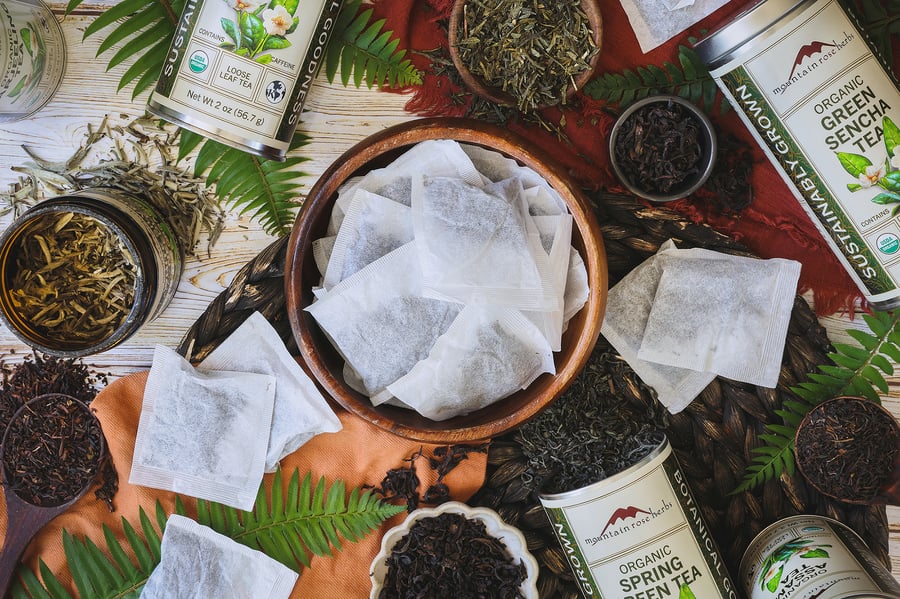
Our favorite tea for kombucha is our organic Assam bagged tea, which offers all the depth of flavor in a convenient form that does not sacrifice earth consciousness. It's easy to remove the bags, and it's the perfect measurement each time!
Our favorites for loose-leaf tea include:
How to Brew Kombucha
Makes 1 gallon (scale to fit the size of your fermentation vessel).
Ingredients
- 3/4 gallon of spring or distilled water (chlorinated or treated water can harm the kombucha culture)
- 7 organic assam tea bags or 2 Tbsp. organic loose-leaf black tea
- 1 cup organic cane sugar
- Kombucha SCOBY
- 1-2 cups starter liquid (brewed kombucha reserved from a previously brewed batch)
Directions
- In a large pot, bring water to a boil, then turn off heat.
- Add tea bags and sugar to water and stir to dissolve.
- Remove from hot burner and let tea steep to desired strength, then remove tea bags from liquid.
- Cover with lid and allow to cool to room temperature.
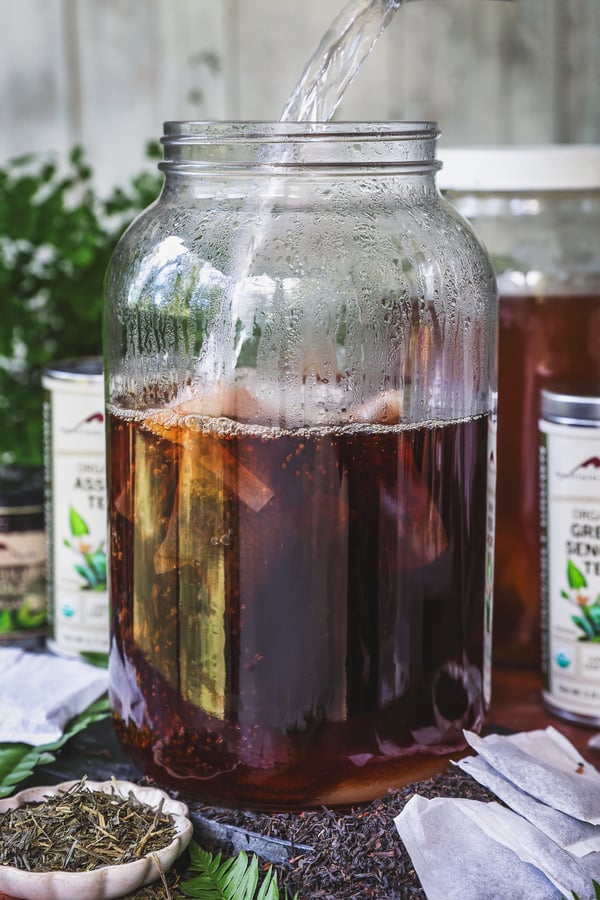
- Pour liquid into fermentation vessel (glass or lead-free ceramic work best).
- Add SCOBY and starter liquid.
- Cover container with a clean piece of cloth, or kitchen towel and secure with string or rubber band. Make sure the cloth cover is breathable but with a tight enough weave to keep fruit flies out.
- Taste kombucha periodically. Most batches will be ready in 7 to 14 days, but the temperature of your home and how sweet or sour you like it will vary your optimal fermentation time.
- When fermentation has reached your taste preference, carefully remove the SCOBY and place it in clean bowl.
- Reserve 2 cups kombucha to be used as starter liquid for your next batch. Store with SCOBY.
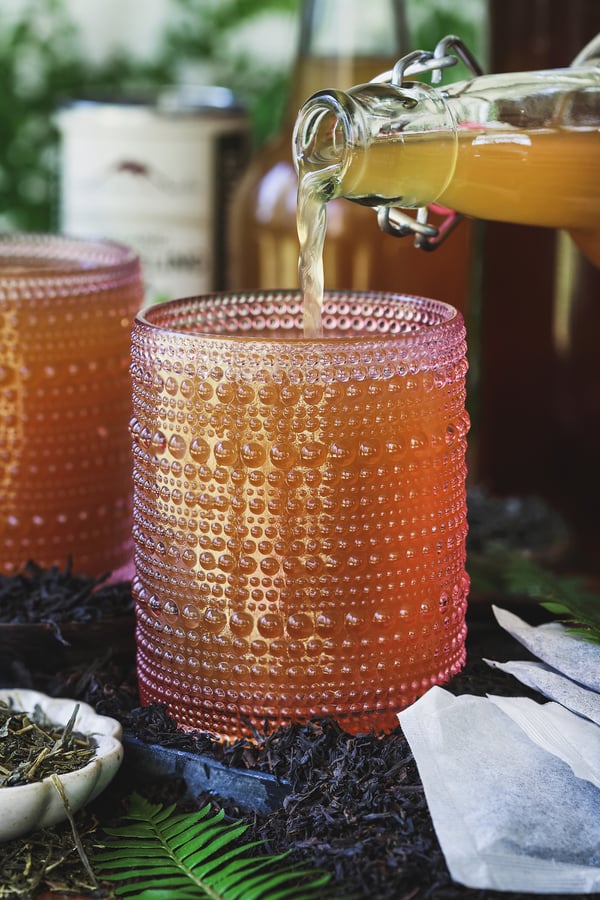
- Use a funnel to pour the fermented tea into bottles.
Pro Tips:
- The easiest way to acquire a SCOBY is from a friend with extra "babies." Most kombucha brewers have at least a SCOBY or two waiting for a new home. If you can’t find a SCOBY locally, you can purchase one online or grow a SCOBY from a plain unpasteurized bottle of store-bought kombucha.
- Always clean your hands, utensils, and anything that might touch your kombucha with hot water and distilled vinegar.
- Ensure that the base tea is unflavored, as flavorings can adversely affect the health of the culture.
- Figuring out how much loose leaf tea to use for your kombucha may require some experimentation, as some teas will come through more strongly than others.
- You may leave the kombucha unflavored or include any number of tasty additions. Learn more about flavoring your kombucha and get recipes here.
- The mother SCOBY may sink or float on the top; both are okay. In 2 to 3 days, you may see a translucent, jelly-like mass floating on the top of your tea. This is a new SCOBY beginning to form. Leave it undisturbed so that the baby can grow properly.
- Separate the new SCOBY from your original one. You can give the new SCOBY to a friend or start a “kombucha hotel” in a separate glass jar. Simply include some kombucha starter liquid to cover each SCOBY. Each time you brew a batch of kombucha, a new baby will grow to join your kombucha family!
- If the SCOBY grows mold, throw both it and the liquid into the compost and begin with fresh materials.
- Store your kombucha away from your stove and other cooking appliances. The aroma, smoke, and flavor can all be imparted to your culture.
- Kombucha will naturally have a slight fizziness. To increase the carbonation and level of tartness, leave the bottled kombucha on a countertop for several days after bottling. Keep bottles stored in the refrigerator once fermentation is complete. Open with care.
Looking to take your Fermented Tea to the next level?
You may also enjoy:















.png)






.jpg)



 English (US) ·
  French (CA) ·