

PROTECT YOUR DNA WITH QUANTUM TECHNOLOGY
Orgo-Life the new way to the future Advertising by AdpathwayIf you’ve ever endeavored to brew your own kombucha, you know that the result of your initial ferment has a rather plain flavor when compared with your favorite professionally made varieties, but it doesn’t have to stay that way! The combinations of herbs, spices, fruits, and juices that can add flavor to your homemade kombucha are almost endless, allowing you to transform your original tangy tea canvas into countless quaffable masterpieces. I’m often asked at what point in the kombucha making process should flavors be added. While thoughts on this subject vary somewhat by personal method and the ingredients used, in general, I like to allow my kombucha to fully ferment before adding my favorite flavor combinations (as noted in our earlier post on kombucha making, plain kombucha usually takes one to two weeks to develop). The reason for adding flavoring after fermentation is that some botanicals can interfere with the fermentation process, and even if they don’t, they can add distinctive flavors to your starter tea that will come through in future batches, which can somewhat limit your flavoring options. Since some flavoring ingredients will affect the health and/or flavor of your SCOBY, you’ll likely want to remove most of it before adding herbs, spices, or other ingredients. My years of working at Mountain Rose Herbs have built up my spice cabinet to near bursting, so I tend to gravitate towards dried ingredients for my kombucha flavorings. However, fresh ingredients can definitely be used and are a fun way to infuse seasonal flavors into your ‘buch rotation. In general, no special preparation is required for adding fresh herbs and other plant material to your kombucha. Keep in mind that, just like with making a tincture or tea, ingredients infuse more quickly and completely when you expose more surface area, so you may wish to roughly chop roots or lightly mash berries to help unlock their flavors. I avoid using powders, as they tend not to strain out well and leave an undesirable grittiness behind in the final beverage. Make sure you are using clean plant material grown without toxic pesticides/herbicides (this is particularly important to keep in mind when wildharvesting ingredients). If properly stored in an airtight glass container in the refrigerator, most flavored kombuchas will last about as long as plain kombuchas. However, if you are using very perishable ingredients like fresh fruit, you may find that your kombucha will spoil more quickly, so you’ll want to be sure to keep these batches refrigerated and consume within a week. In order to increase carbonation, I transfer my kombucha into individual glass bottles with secure lids, then leave the sealed bottles on a countertop for 2 to 3 days before popping them into the fridge. Some folks find that adding a bit more sweetener or fresh fruit before this final countertop ferment can encourage more natural fermentation. Here are some of our favorite blends, but feel free to be creative and experiment with your own favorite flavors! Each blend is intended to flavor one gallon of plain kombucha but can be scaled down for smaller batches. For this variation we recommend infusing the elderflowers first and then adding your lemon juice during the straining and bottling phase. You may also enjoy: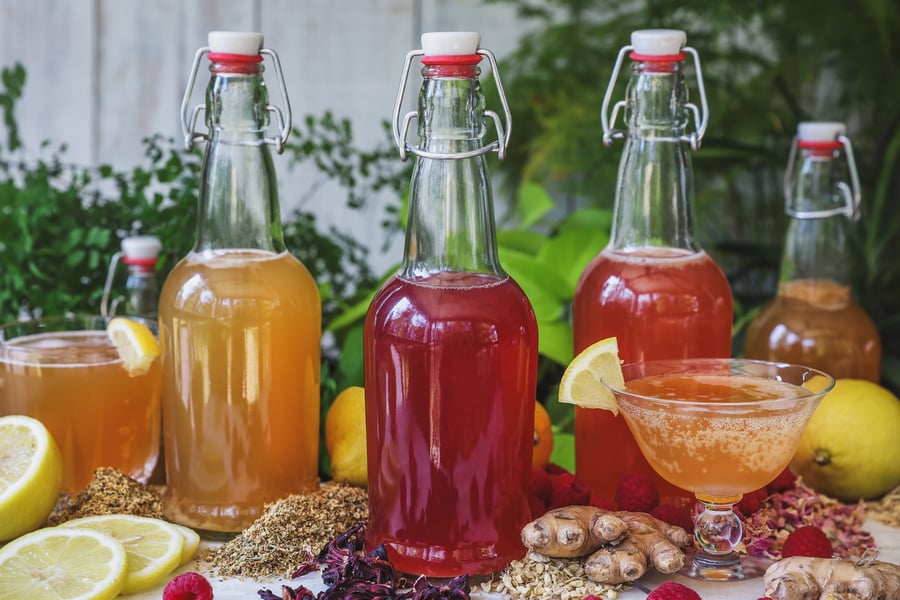
How to Flavor Kombucha: The Basics
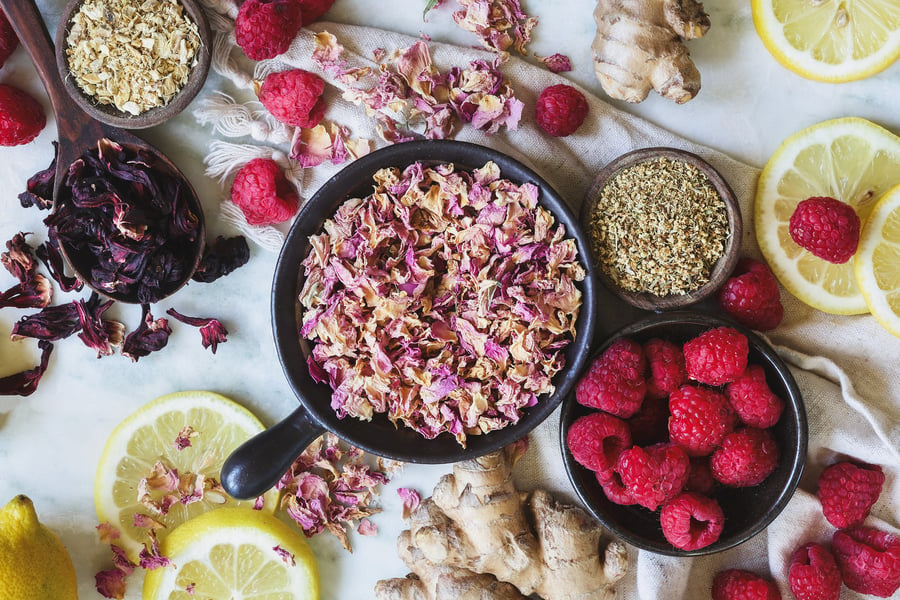
Kombucha Flavoring FAQs
When do I add flavoring to my kombucha?
can I leave the SCOBY in my kombucha when flavoring?
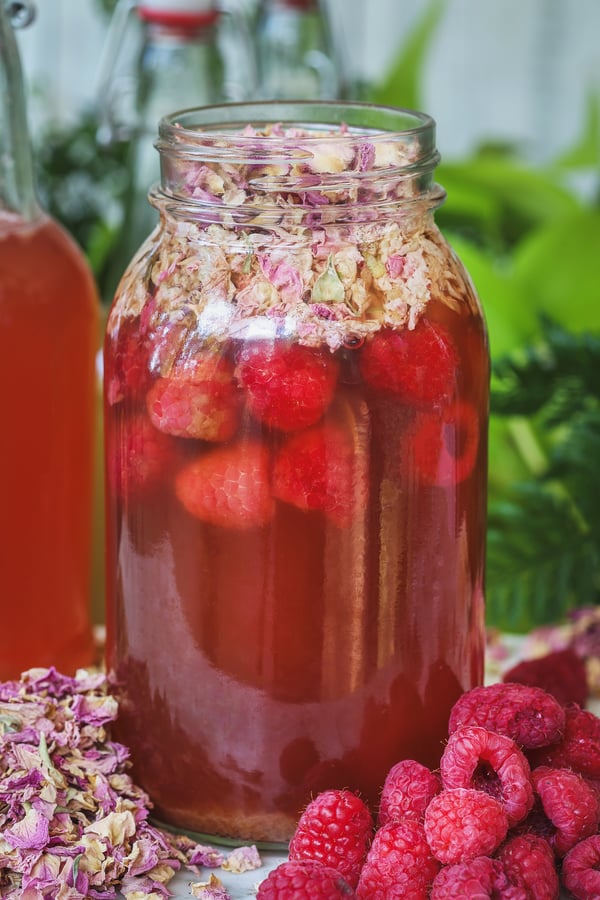
Can fresh ingredients be used to flavor kombucha?
Will flavoring affect the shelf life of my kombucha?
How do I make my kombucha fizzy after flavoring?
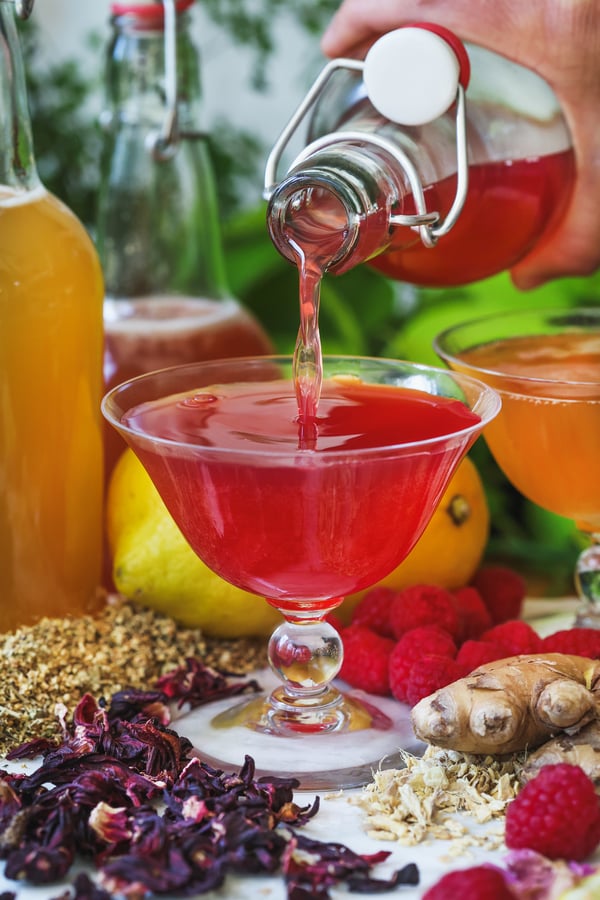
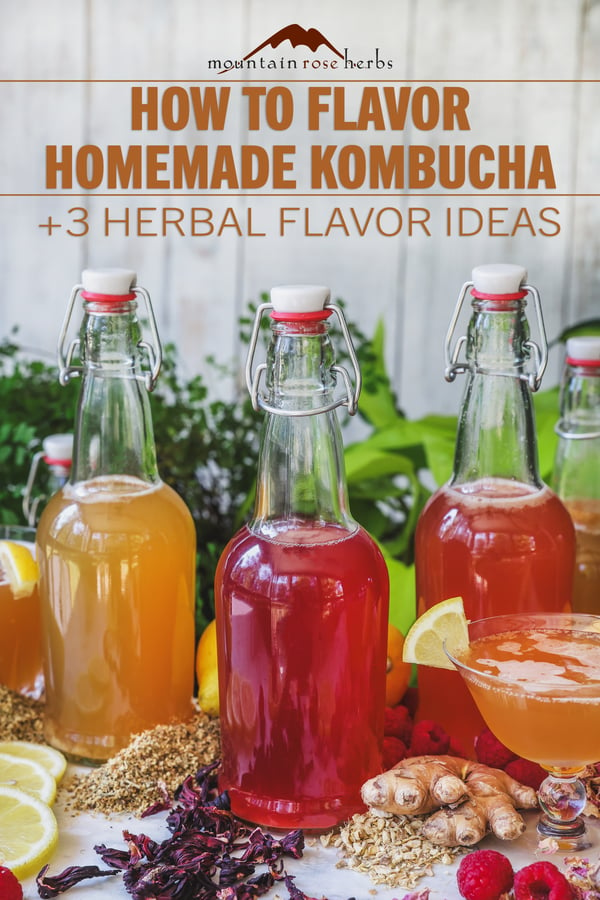
Homemade Kombucha Flavor Ideas
Elderflower lemon
Raspberry Rose
hibiscus ginger
READY TO GET Back to ‘Bucha Basics?
Learn How to Make Your Own Kombucha!












.png)






.jpg)



 English (US) ·
  French (CA) ·