

 4 months ago
54
4 months ago
54
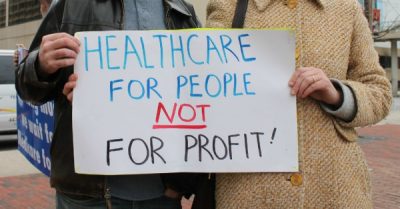
For over 50 years, there has been no concerted or successful effort to bring down medical costs in the American healthcare system. Nor are the federal health agencies making disease prevention a priority. Regardless whether the political left or right sponsors proposals for reform, such measures are repeatedly defeated by both parties in Congress. As a result, the nation’s healthcare system remains one of the most expensive and least efficient in the developed world. For the past 30 years, medical bills contributing to personal debt regularly rank among the top three causes of personal bankruptcy. This is a reality that reflects not only the financial strain on ordinary Americans but the systemic failure of the healthcare system itself.
The urgent question is: If President Trump and his administration are truly seeking to reduce the nation’s quickly approaching $39 trillion deficit, why is there no serious effort to reform the most bloated and corrupt sector of the economy? A key obstacle is the widespread misinformation campaign that falsely claims universal health care would cost an additional $2 trillion annually and further balloon the national debt. However, a more honest assessment reveals the opposite. If the US adopted a universal single-payer system, the nation could actually save up to $20 trillion over the next 10 years rather than add to the deficit. Even with the most ambitious efforts by people like Elon Musk to rein in federal spending or optimize government efficiency, the estimated savings would only amount to $500 billion. This is only a fraction of what could be achieved through comprehensive healthcare reform alone.
Healthcare is the largest single expenditure of the federal budget. A careful examination of where the $5 trillion spent annually on healthcare actually goes reveals massive systemic fraud and inefficiency. Aside from emergency medicine, which accounts for only 10-12 percent of total healthcare expenditures, the bulk of this spending does not deliver better health outcomes nor reduce trends in physical and mental illness. Applying Ockham’s Razor, the principle that the simplest solution is often the best, the obvious conclusion is that America’s astronomical healthcare costs are the direct result of price gouging on an unimaginable scale. For example, in most small businesses, profit margins range between 1.6 and 2.5 percent, such as in grocery retail. Yet the pharmaceutical industrial complex routinely operates on markup rates as high as 150,000 percent for many prescription drugs. The chart below highlights the astronomical gap between the retail price of some top-selling patented pharmaceutical medications and their generic equivalents.
.

.
The corruption extends far beyond price gouging. Many pharmaceutical companies convince federal health agencies to fund their basic research and drug development with taxpayer dollars. Yet when these companies bring successful products to market, the profits are kept entirely by the corporations or shared with the agencies or groups of government scientists. On the other hand, the public, who funded the research, receives no financial return. This amounts to a systemic betrayal of the public trust on a scale of hundreds of billions of dollars annually.
Another significant contributor to rising healthcare costs is the widespread practice of defensive medicine that is driven by the constant threat of litigation. Over the past 40 years, defensive medicine has become a cottage industry. Physicians order excessive diagnostic tests and unnecessary treatments simply to protect themselves from lawsuits. Study after study has shown that these over-performed procedures not only inflate costs but lead to iatrogenesis or medical injury and death caused by the medical system and practices itself. The solution is simple: adopting no-fault healthcare coverage for everyone where patients receive care without needing to sue and thereby freeing doctors from the burden of excessive malpractice insurance.
A single-payer universal healthcare system could fundamentally transform the entire industry by capping profits at every level — from drug manufacturers to hospitals to medical equipment suppliers. The Department of Health and Human Services would have the authority to set profit margins for medical procedures. This would ensure that healthcare is determined by outcomes, not profits. Additionally, the growing influence of private equity firms and vulture capitalists buying up hospitals and medical clinics across America must be reined in. These equity firms prioritize profit extraction over improving the quality of care. They often slash staff, raise prices, and dictate medical procedures based on what will yield the highest returns.
Another vital reform would be to provide free medical education for doctors and nurses in exchange for five years of service under the universal system. Medical professionals would earn a realistic salary cap to prevent them from being lured into equity partnerships or charging exorbitant rates. The biggest single expense in the current system, however, is the private health insurance industry, which consumes 33 percent of the $5 trillion healthcare budget. Health insurance CEOs consistently rank among the highest-paid executives in the country. Their companies, who are nothing more than bean counters, decide what procedures and drugs will be covered, partially covered, or denied altogether. This entire industry is designed to place profits above patients’ lives.
If the US dismantled its existing insurance-based system and replaced it with a fully reformed national healthcare model, the country could save $2.7 trillion annually while simultaneously improving health outcomes. Over the course of 10 years, those savings would amount to $27 trillion. This could wipe out nearly the entire national debt in a short time. This solution has been available for decades but has been systematically blocked by corporate lobbying and bipartisan corruption in Washington.
The path forward is clear but only if American citizens demand a system where healthcare is valued as a public service and not a commodity. The national healthcare crisis is not just a fiscal issue. It is a crucial moral failure of the highest order. With the right reforms, the nation could simultaneously restore its financial health and deliver the kind of healthcare system its citizens have long deserved.
*
Click the share button below to email/forward this article. Follow us on Instagram and X and subscribe to our Telegram Channel. Feel free to repost Global Research articles with proper attribution.
Dr. Gary Null is host of the nation’s longest running public radio program on alternative and nutritional health and a multi-award-winning documentary film director, including his recent Last Call to Tomorrow. He is a regular contributor to Global Research.
Global Research is a reader-funded media. We do not accept any funding from corporations or governments. Help us stay afloat. Click the image below to make a one-time or recurring donation.

















.png)






.jpg)



 English (US) ·
  French (CA) ·