

In the end, it came down to money. Two animal rights groups brokered a deal to purchase 1,500 of the roughly 2,000 beagles at Ridglan Farms, the now-notorious dog breeding and research facility about 30 miles from Madison in rural Dane County.
Under the agreement, Big Dog Ranch Rescue and the Center for a Humane Economy will buy the beagles for an undisclosed amount. They will then work with groups including the Beagle Freedom Project, the Wisconsin Puppy Mill Project and the Dane County Humane Society to rehabilitate and find homes for the animals. “Every one of these dogs will be treated as an individual deserving of care, healing and a home,” said Shannon Keith of the Beagle Freedom Project, in a press release.
“We have been asking our political officials to help these dogs for almost 10 years,” said Rebekah Robinson, president of Dane4Dogs, during a recent protest in the state Capitol. “We have bought billboards. We have had yard signs. We have done protests. We have done vigils. We have done email campaigns and phone call campaigns asking our elected officials to help the dogs at Ridglan Farms. And thus far, they have not, despite overwhelming evidence of animal cruelty happening there.”
But the exposure that activists in Wisconsin and throughout the nation have brought to Ridglan Farms has played a role in the company’s declining fortunes. Last fall, after six decades in business breeding “purpose-bred” beagles for use in scientific and medical research, Ridglan agreed to relinquish its state breeding license to avoid felony animal cruelty charges. And the facility’s head veterinarian, Rick Van Domelen, had his licence suspended for serious repeat violations.
Ridglan Farms has even stirred bipartisan concern in Congress. At a House Appropriations Committee hearing on April 16, Rep. Mark Pocan grilled U.S. Health and Human Services Secretary Robert F. Kennedy Jr. about Ridglan, saying his National Institutes of Health is still funding research “using beagles from this highly questionable farm.” Kennedy promised to look into it, saying, “What you’re describing should not be happening.”
Pocan didn’t wait for Kennedy to act. On April 29, he got the committee to pass an amendment to the federal farm bill that could lead to the loss of Ridglan’s federal dog-breeding license. It is in the bill that passed the House and awaits Senate action.
In recent weeks, the pressure on Ridglan has been compounding exponentially. On March 15, about 60 activists led by Wayne Hsiung staged an “open rescue” at Ridglan, and were able to successfully remove 22 beagles. Hsiung and three others have since been charged with felony burglary. A similar action on April 18, attended by an estimated 1,000 activists, was met with brutal force.
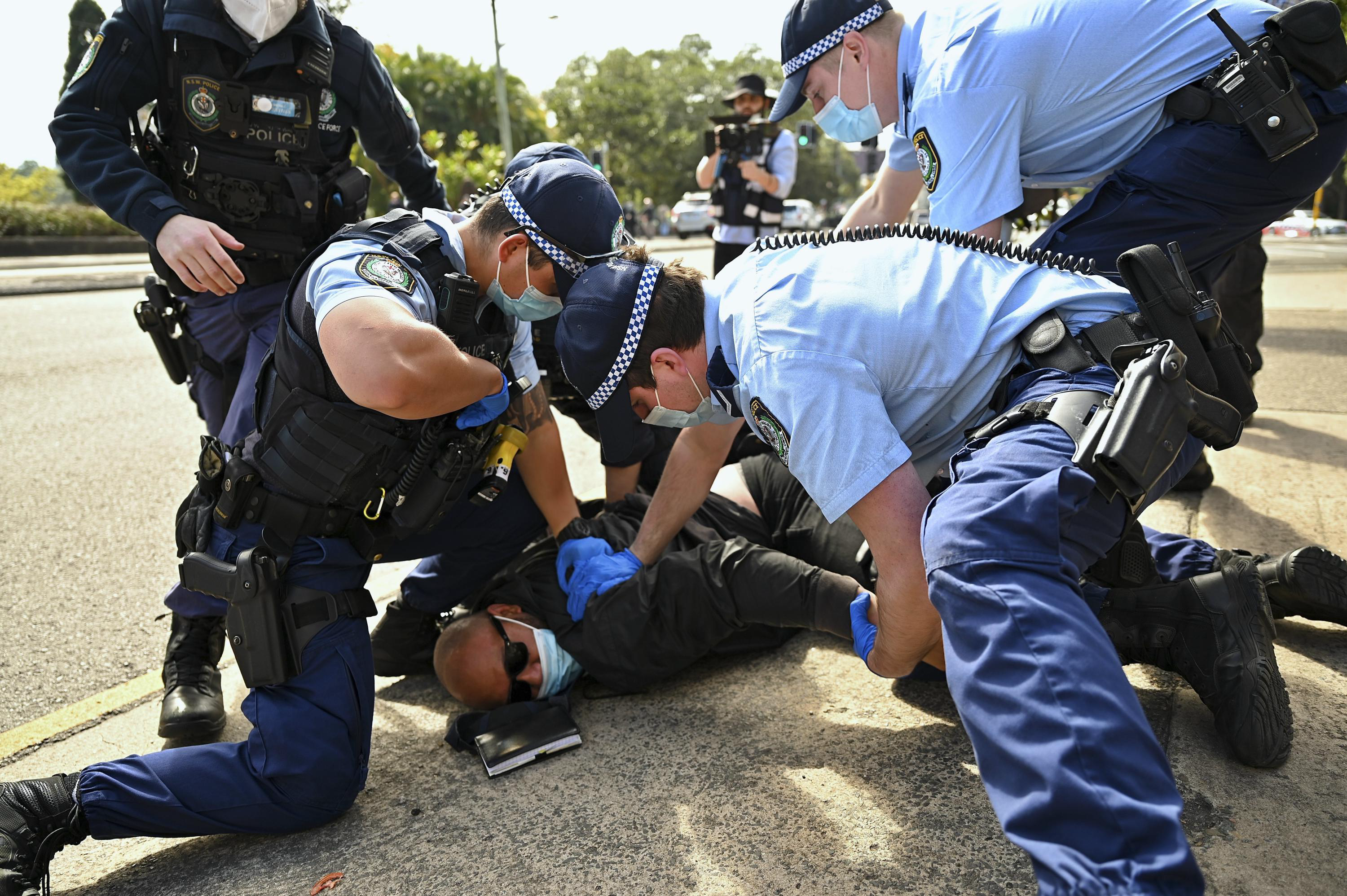
Officers from at least 17 law enforcement agencies, along with private security guards hired by Ridglan, deployed tear gas, pepper spray, rubber bullets, and, as Isthmus reported April 24, two Stinger Ball Grenades—devices that project rubber fragments and a chemical agent within a 50-foot radius. Twenty-nine people were arrested, most cited and released. Hsiung spent three days in jail. No dogs were freed. The protest garnered massive media attention, including from The New York Times, CNN, CBS, USA Today and The Guardian.
Dane County Sheriff Kalvin Barrett defended the use of force as “appropriate and decisive” to the risk posed when between 300 and 400 activists attempted to break into the facility.
The activists beg to differ.
“We saw dozens of black-clad, armed law enforcement, many of them wearing gas masks and riot gear, standing inside the fence chatting and laughing as they hurled tear gas canisters and sprayed pepper spray at us,” said activist Daniel Zellman at a press conference on April 20. He said he also witnessed “the guards, the police, I’m not sure who it was” remove the goggles from a woman lying on the ground “in order to be able to spray her eyes with pepper spray.”
On April 23, a federal class-action lawsuit was filed against Ridglan and Dane County officials on behalf of activists at this event, saying the use of excessive force violated their constitutional rights. “Ridglan Farms’ business depends on the suffering of innocent beagles bred and sold for painful experiments,” states the lawsuit complaint. “It is therefore no surprise that Ridglan did not hesitate to inflict the same pain and suffering on peaceful rescuers.”
But Ridglan, in a statement, placed the blame squarely on Hsiung, who “decided to encourage lawlessness and vigilantism because he did not personally agree with the results of the legal process.”
It’s true that Hsiung, an activist and attorney, has been a constant thorn in Ridglan’s side. In April 2017, he and two other activists entered the facility at night and left with three beagles. They admitted their role and were charged with multiple felonies. But in March 2024, 10 days before the trial was set to begin, the charges were dismissed, at the request of Ridglan Farms, which reported receiving threats.
After renewed efforts to get Dane County District Attorney Ismael Ozanne to pursue criminal charges against Ridglan went nowhere, the activists petitioned the courts to appoint a special prosecutor, as Wisconsin law allows. In October 2024, Dane County Circuit Court Judge Rhonda Lanford held an all-day hearing to garner testimony from veterinary professionals and former Ridglan employees. They spoke of painful surgical procedures being performed by inadequately trained staff without anesthesia or post-surgery pain relief, as well as other serious problems with dog waste and ventilation.
In January 2025, Lanford found probable cause to believe that Ridglan “has committed multiple criminal violations” of state animal cruelty laws and agreed to appoint a special prosecutor to look into possible criminal charges. The prosecutor, La Crosse County District Attorney Tim Gruenke, conducted an eight-month investigation, after which he reached a settlement with the company not to bring charges in exchange for Ridglan surrendering its dog breeding license by July 1, 2026, which meant getting rid of most of its dogs. But the agreement allowed Ridglan to keep around 150 beagles for use in its own research. And the business was free to dispose of its canine inventory however it wished, likely selling them for use in sometimes painful and often fatal research.
The deal to buy 1,500 beagles changes all that. The dogs will surely have severe physical and psychological problems that will require a lot of work and patience, but they will find their way to loving homes, a process that has already begun. And efforts to secure the release of the remaining 500 dogs are ongoing.
“This is a testament to the determination and perseverance of activists in Wisconsin and around the country who never gave up on the dogs,” said the Animal Activist Legal Defense Project at the University of Denver Sturm College of Law, which has represented Hsiung and others. “This is their achievement. Every single one of the Ridglan dogs deserves a loving forever home just as much as those we already welcome into our families.”
Persons interested in adopting one of these beagles through the Dane County Humane Society should visit giveshelter.org/news/ridglan-farms. As-yet-undetermined adoption fees will apply.
See all of Isthmus' coverage on Ridglan Farms here.









.png)






.jpg)



 English (US) ·
  French (CA) ·