

 5 months ago
49
5 months ago
49

Trump’s hunt for the Arctic Circle presents Europe with a historic ultimatum. Will it meet economic intimidation with a clenched fist, or will it once again make a cowardly bow to the aggressor?
Русский, Español, 中文, Portugues, Français, عربي, Hebrew, Deutsch, Farsi, Italiano, 日本語, 한국어, Türkçe, Српски. And 40 more languages.
A New Munich Moment at the Arctic Circle
In Munich, September 1938, Nazi Germany, France, the UK, and Italy sat around the table. Czechoslovakia itself was not invited. Afterward, it was forced to accept that part of its territory, the Sudetenland, would be ceded—supposedly to avoid war with Germany.
Hitler presented the annexation of the Sudetenland as a necessary protection of ethnic Germans living there, who he claimed were oppressed by Czechoslovakia and denied their right to self-determination. He framed this as a legitimate correction of an alleged injustice and assured the world that it was his “last territorial demand.”
In reality, the Sudeten crisis was deliberately staged to weaken Czechoslovakia and enable the next step in Germany’s war of expansion. Great Britain and France agreed to the annexation under the assumption that it would satisfy Hitler’s hunger.
British Prime Minister Chamberlain spoke of “peace for our time,” but less than a year later, Hitler seized the rest of Czechoslovakia and invaded Poland. The lesson was harsh: giving in makes aggression cheaper, not less likely.
.
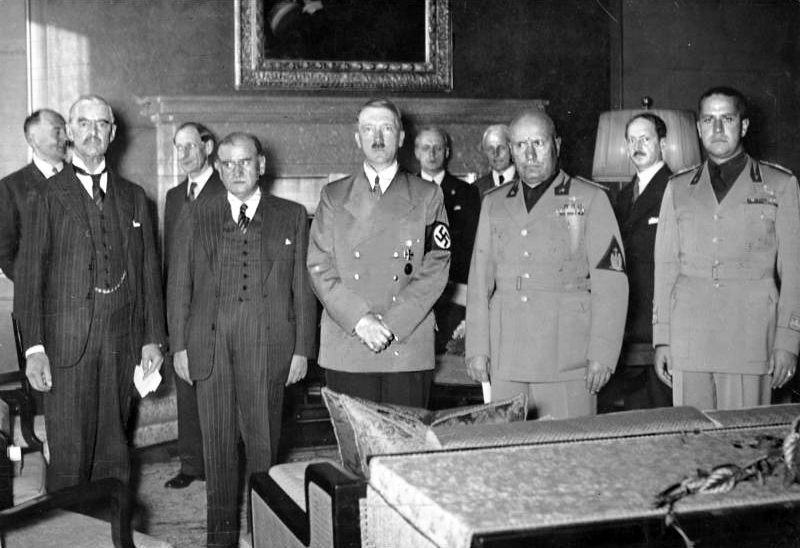
Conference of Munich with Chamberlain, Daladier, Hitler, Mussolini, and Count Ciano. (Photo: Bundesarchiv / CC-BY-SA 3.0)
.
The parallel with Greenland is not one-to-one, but the logic rhymes. On Truth Social, Trump has repeatedly stated that he wants to “acquire” Greenland. He is threatening economic sanctions and has not ruled out military action.
Why Greenland Is Suddenly Deemed “Indispensable”
The US is anything but a newcomer to Greenland; they have been firmly anchored there for decades. The Pituffik Space Base forms an indispensable link in their network of radar and space infrastructure. Although Washington gives the impression that it is only now trying to gain a foothold, in reality, it has occupied the front row for a very long time.
What has changed are the stakes. Greenland is a geopolitical goldmine: its location, sea routes, and especially its raw materials. The European Commission labels dozens of materials “critical” for industry and the energy transition, and Greenland possesses a striking number of them.
In its most recent Security Report, the US does not beat around the bush: securing critical minerals is an absolute top priority. The United States needs these raw materials to sever its dependence on China and to prepare for a future conflict with that country.
Washington is therefore pulling out all the stops to establish new supply chains that are completely detached from Chinese control. This is also the reason why it wants to “control” Venezuela, and why the Panama Canal and even Canada are in the crosshairs.
Tariffs as a Club
The novel element of this crisis is the weapon: trade. In response to Trump’s threats, several European countries sent soldiers to Greenland, to which Trump promptly responded with tough sanctions. From 1 February, he will introduce import duties of 10 percent for these countries, with the possibility of increasing them to 25 percent from 1 June.
European leaders find the threat of import duties “unacceptable”. The European People’s Party, the largest group in the European Parliament, has announced that the trade agreement with the US cannot be approved under these circumstances. Two other groups, the Social Democrats and the Liberals, had already reached this decision earlier.
On Sunday, 18 January, the EU convened ambassadors in an emergency session. It was decided to prepare countermeasures worth 93 billion dollars, while still opting to give dialogue with Trump a chance before implementing retaliatory measures.
European capitals hope to find a compromise with Trump at the World Economic Forum in Davos this week to prevent a rupture in the Western military alliance (NATO).
Within the EU, there are also voices calling for the so-called “bazooka.” This is the Anti-Coercion Instrument (ACI), an EU law that allows for retaliation against economic pressure from another country through countermeasures such as tariffs, import restrictions, or exclusion from public procurement.[1]
However, the question remains whether European countries will dare to use it. When Trump started his trade war at the beginning of 2025, the EU—unlike China—did not dare to make a stand. The result was a very disadvantageous agreement, while China managed to limit the damage. This time, however, Europe seems more determined.
The President of the European Council, António Costa, has announced an extraordinary EU summit to discuss the crisis. The outcome of the talks in Davos will be decisive for the future course of action.
Ukraine or Greenland?
For the moment, this does not seem to make much of an impression on Washington. US Secretary of the Treasury Scott Bessent refused to back down, stating that Europe is too weak to guarantee the security of Greenland.
Besides economic measures, Trump holds an even bigger trump card: Ukraine. Without military and logistical support from the US, the Ukrainian army cannot hold out for long. In an interview, Trump suggested that NATO is powerless without the US.
According to UN top adviser Jeffrey Sachs, Europe has placed itself in a difficult position. Following the US lead after the fall of the Soviet Union, it failed to establish a balanced security infrastructure on the European continent—balanced in the sense that Russia would also have a place within it.
Instead, since 1991, NATO has expanded further toward Russia, weapons treaties were canceled, and missile systems aimed at Russia were installed. It was partly at the impulse of the US that no peace agreement was reached between Russia and Ukraine in the spring of 2022.
Ironically, in recent months, Trump has fully committed to a peace agreement, while Europe continues to play the militaristic card, even as it remains heavily dependent on Washington for its defense. If Europe maintains this line, it risks an impossible split: either losing Greenland or “losing” the war in Ukraine.
But another path is possible, provided Europe breaks its “war fever” and prioritizes diplomacy once again. According to Jeffrey Sachs, this requires direct talks with Moscow aimed at a negotiated peace and new European security arrangements.
He argues that there must also be a clearer EU diplomatic mandate; Europe must decouple its foreign policy from NATO logic and organize its defense more realistically, focusing on “defense” rather than intervention.
Avoiding a Fatal Bow
In a certain sense, the crisis surrounding Greenland offers Europe a chance to break with its war logic and invest in its own security architecture. One thing is certain: if we ultimately sacrifice Greenland to avoid “losing” the war in Ukraine, we will find ourselves on a dangerous path.
The Munich agreement teaches us that peace is not built by using small countries as bargaining chips. Doing so merely signals to the aggressor that they have free rein.
We must realize that Trump’s cabinet is filled with warmongering figures, that he intends to increase the US defense budget by as much as 50 percent next year, that he has bombed seven countries in recent months, and that he has just kidnapped a president.
If Europe wants to preserve “rules” and “international law,” it will have to draw a hard line: declare Greenland unconditionally non-negotiable, answer economic blackmail with joint countermeasures, and stop pretending that intimidation is “diplomacy.”
Another bow to Washington will, just as in 1938, have fatal consequences. These will be decisive days and weeks.
*
Click the share button below to email/forward this article. Follow us on Instagram and X and subscribe to our Telegram Channel. Feel free to repost Global Research articles with proper attribution.
Marc Vandepitte is a member of the Network of Intellectuals and Artists in Defense of Humanity and was an observer during the presidential elections in Venezuela. He is a regular contributor to Global Research.
Notes
[1] The law was established following pressure from China on Lithuania a few years ago.
[2] That agreement was very disadvantageous for Europe. A tariff of 15 percent was imposed on European exports, compared to 0 percent for exports from the US to Europe. The agreement has yet to be voted on in the European Parliament.
[3] This refers to Venezuela, Nigeria, Somalia, Syria, Iran, Yemen, and Iraq.
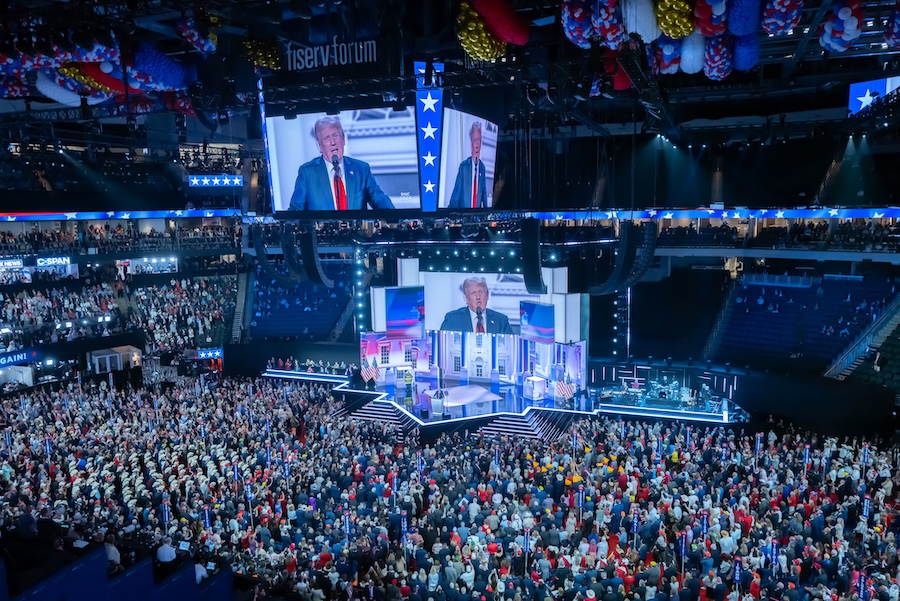
Featured image is from Heinrich Hoffmann, Wikimedia Commons / CC BY-SA 3.0 DE & Gage Skidmore, Flickr.
Global Research is a reader-funded media. We do not accept any funding from corporations or governments. Help us stay afloat. Click the image below to make a one-time or recurring donation.












.png)






.jpg)



 English (US) ·
  French (CA) ·