

 8 months ago
108
8 months ago
108

Every year, not only does Santa Claus come around, but also a report on global arms production and trade by SIPRI. SIPRI stands for Stockholm International Peace Research Institute.
The international peace research institute in Sweden’s capital has now taken a close look at the sales and profits of arms companies[1].
And it turns out that never before in human history has so much money been spent on armaments as it is now. Some of the increases in sales can be described as exorbitant. Or should we say obscene? At a time when sheer deprivation in certain areas, such as Gaza, has reached absolutely unbearable levels; at a time when farmland is becoming infertile and forests are being destroyed; at a time when education and healthcare can no longer keep pace with the increasing challenges – at such a time, many governments have the audacity to literally vaporize more and more taxpayers’ money on armament.
This can only be good news for arms manufacturers, their shareholders and asset managers. SIPRI has only included the hundred largest arms manufacturers in its calculations. So these figures do not document the full extent of the economic waste. Nevertheless, for the year 2024, we arrive at the staggering sum of 676 billion dollars that has been diverted from the coffers of the taxpayer solidarity community into the pockets of arms profiteers. That was almost six per cent more than a year earlier. Mind you, we are only talking about the purchase of new weapons and ammunition here. Not the maintenance of equipment and buildings. Not the personnel costs and retirement pensions for former soldiers, the often traumatised or maimed veterans of various perverse excursions to foreign countries.
First of all, it is interesting to observe the large regional differences in the purchase of new war toys. It will come as no surprise that US-based arms manufacturers, with an order volume of 336 billion US dollars, account for the lion’s share of the business with 49 per cent. And anyone who already has such a dominant position can be satisfied with year-on-year growth of around four per cent. However, US companies would be wise not to rest on their laurels too much. After all, the relatively slow growth of the US arms industry may well be its own fault. Table leader Lockheed Martin has severely tested the patience of its customers with its F-35 fighter jet. The F-35 is delivered to customers on average three quarters of a year after the promised delivery date. And then the metal bird is significantly more expensive than originally promised. It is precisely this unreliability that is also attributed to other arms manufacturers Made in the USA. This is not exactly helpful for long-term customer loyalty.
A study from the United States had already complained in 2009 that the government awards arms contracts without tenders[2]. And that every member of Congress in Washington only approves an arms project if it creates jobs for their constituency. Arms projects are therefore not planned with a view to finding the best technical solution. Instead, the aim is to find a solution that all members of Congress can agree on. It could therefore be that the enormously inflated American war machine is a paper tiger. We will see if this is the case when the US eventually encounters a truly equal opponent.
Arms Bonanza in Europe – Stagnation in China
The real action in the arms industry is currently taking place in Europe. The war in Ukraine is seen as a suitable pretext to really show off. As a result, the business of European arms companies rose by 13 per cent in 2024 compared to the previous year. Overall, European killers are represented in the Top One Hundred chart with 151 billion dollars and a 22 per cent market share. Twenty-six European companies share the pie. With BAE Systems, the United Kingdom has a real heavyweight in fourth place in the world rankings with 52.2 billion dollars and growth of 7.7 per cent. With sales of $26 billion and growth of 12 per cent, France has just half the potential of the British. New entry to the charts is the Czechoslovak Group, with a phenomenal 193 per cent increase in sales and a value of $3.6 billion. The Czech arms manufacturer owes this meteoric rise to lucrative orders from Ukraine. The Ukrainian defence contractor JSC Ukrainian Defence Industry posted a 41 per cent increase in sales last year, with a turnover of three billion dollars.
Russia, on the other side, has lost market share on the international export market. However, this is being offset by its involvement on the Ukrainian front. The Russian arms industry is concentrated in the state-owned Rostec corporation. However, Rostec’s turnover is only slightly higher than that of French corporations, namely 27.1 billion dollars, with growth of 26 per cent[3]. The Russian defence budget is actually rather modest, and is even set to be reduced next year. In order to inflate the destructive power of the Russian bear, the German media are repeatedly reporting that Russia wants to increase its budget for 2026 to a whopping 12.93 trillion roubles[3]. However, they fail to convert this amount into euros. This is because one rouble is equivalent to one euro cent[4]. The Russians therefore want to spend around 129 billion euros on their defence next year. That is less than a tenth of what the Western community of values spends on its armaments.
While Japan and South Korea are also recording fabulous growth with their arms companies, developments in China are moving in the opposite direction. With a total volume of 88.3 billion dollars, Chinese arms companies have suffered a ten per cent decline compared to the previous year. However, this is not the result of an increasingly pacifist attitude in China – unfortunately not. Rather, the Chinese arms industry has been rocked by a huge corruption scandal. Large numbers of senior staff have had to be dismissed. And now a restructuring process is underway that is paralysing the industry for a certain period of time. However, this should have settled down again by next year.
Germany Is World Champion – In Armament
You may well have wondered whether, in the heat of the moment, I might have forgotten Germany. Not at all. I am now turning my attention specifically to Germany. This is because the German arms industry stands out in all this arms race madness. Germany has a total of four arms companies in the top one hundred. And only the Czech Republic, as already mentioned, has higher growth rates than Germany. The Diehl Group increased its share by 53 per cent to 2.1 billion dollars. And the much better-known Rheinmetall Group, ranked 20th in the charts, increased its share by 47 per cent to 8.2 billion. Plans assume that Rheinmetall could move up to second place in the ranking of the world’s largest arms companies in a few years.
This is very strange, however. German politicians are actively promoting the unilateral restructuring of their own economy towards militarisation. While Germany is showing serious signs of increasing deindustrialisation, the federal government is willingly allowing this undesirable development to happen. It is simply pushing an arms industry as a new model over the flattened civilian economy. And because an exorbitant increase in the military budget cannot be financed from the regular federal budget, they are simply brazenly ignoring the debt brake, which has so far been used to reject pretty much every funding measure in the areas of education, health and infrastructure. A ‘special fund’, i.e. rapid debt accumulation outside and parallel to the federal budget. In the coming fiscal year 2026, 108.2 billion euros are actually to be squandered on armament[5]. Around 80 billion euros will come from the regular federal budget pot. An additional 25 billion euros will come from the so-called special fund. To pay for this, pensioners, among others, will have to tighten their belts. Other areas will also have to tighten their belts.
With this model, the German government is following in the footsteps of the United States after the Second World War. At that time, just a few years after the fighting ended, a gigantic military-industrial complex was built up, which gradually stifled the civilian economy more and more. The USA no longer produced for civilian purposes. Everything that was not nailed down was imported: food, consumer goods. Because less and less was being invested in broad-based development, the USA brought in skilled workers from abroad – a phenomenon known as brain drain. The USA could afford to do this because, after the Second World War, it had gathered the rest of the world around it and was able to dictate the rules of the game. With the dollar as the reserve currency, the US was able to gain advantages that no other country in the world is allowed to enjoy. The US was able to determine the terms of the oil trade at its own discretion. And if any country in the world refused to accept the Pax Americana, there were harsh punitive expeditions and regime change manoeuvres.
Have the German elites not understood anything? A complete conversion of the economy into a military-industrial complex is something you have to be able to afford. Germany is not the centre of the world. Germany is a decapitated limb of the American power machine. The German military will never be in a position to subjugate other countries and cover them with punitive expeditions. Meanwhile, Germany has repeatedly attempted to become the hegemon in the European Union. However, these attempts have failed miserably time and again, falling short halfway. The attempt to break out of the dead end of deindustrialisation through militarisation is doomed to failure from the outset. We can already write off Germany’s military power as a pitiful ruin.
It may be that the failure of this project to establish Germany as a military power will cause the elites to flee, leaving a political vacuum, just as in 1918. If we can counter this militaristic nonsense with a concept of civil society, there will be a unique opportunity for a more humane Germany.
*
Click the share button below to email/forward this article. Follow us on Instagram and X and subscribe to our Telegram Channel. Feel free to repost Global Research articles with proper attribution.
Hermann Ploppa is a freelance journalist and author. He has just published his latest book, ‘Der Neue Feudalismus – Privatisierung, Blackrock, Plattformkapitalismus’ (The New Feudalism – Privatisation, Blackrock, Platform Capitalism), which is now available.
Notes
[1] https://www.sipri.org/sites/default/files/2025-11/fs_2512_top_100_2024.pdf
[2] https://www.sup.org/books/politics/americas-defense-meltdown
[3] https://meta-defense.fr/de/2025/12/02/Wachstum-des-russischen-Milit%C3%A4rbudgets-2026/
[4] https://www.xe.com/de/currencyconverter/convert/?Amount=1&From=RUB&To=EUR
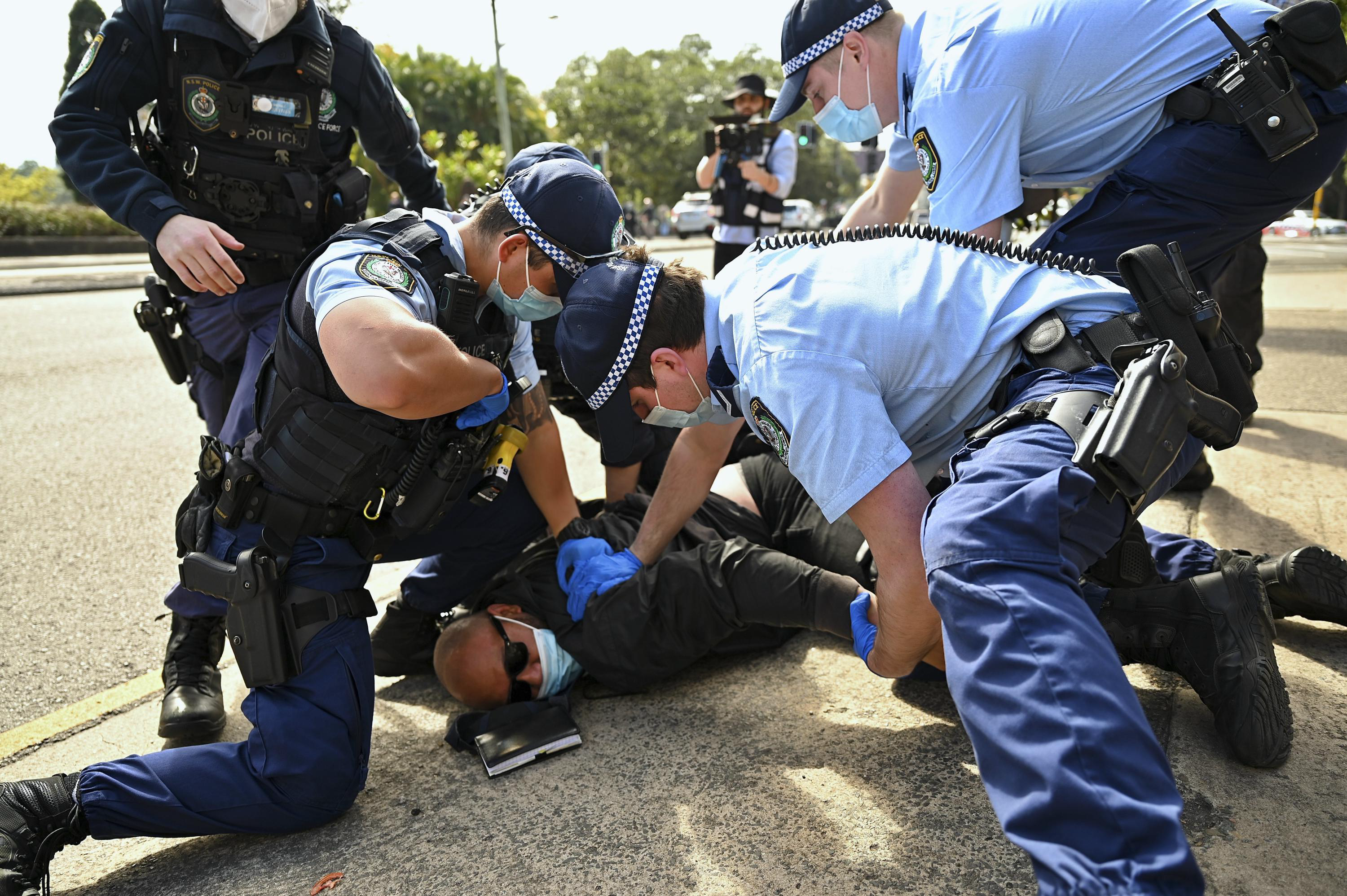
Featured image is from the author
Global Research is a reader-funded media. We do not accept any funding from corporations or governments. Help us stay afloat. Click the image below to make a one-time or recurring donation.















.png)






.jpg)



 English (US) ·
  French (CA) ·