

 3 weeks ago
31
3 weeks ago
31

With the Iran-US ceasefire all but retired to the infirmary of international politics,
Washington has conducted air strikes on Iran for a third straight night.
On early July 14, Iran’s state-run IRNA news agency reported explosions in the southern port city of Bandar Abbas and six explosions on Kish Island, with further blasts on Qeshm Island.
To read this article in the following languages, click the Translate Website button below the author’s name.
Farsi, عربي, Hebrew, українська мова, Español, Portugues, Русский, 中文, Français, Deutsch, Italiano, 日本語, 한국어, Türkçe, Српски. And 40 more languages.
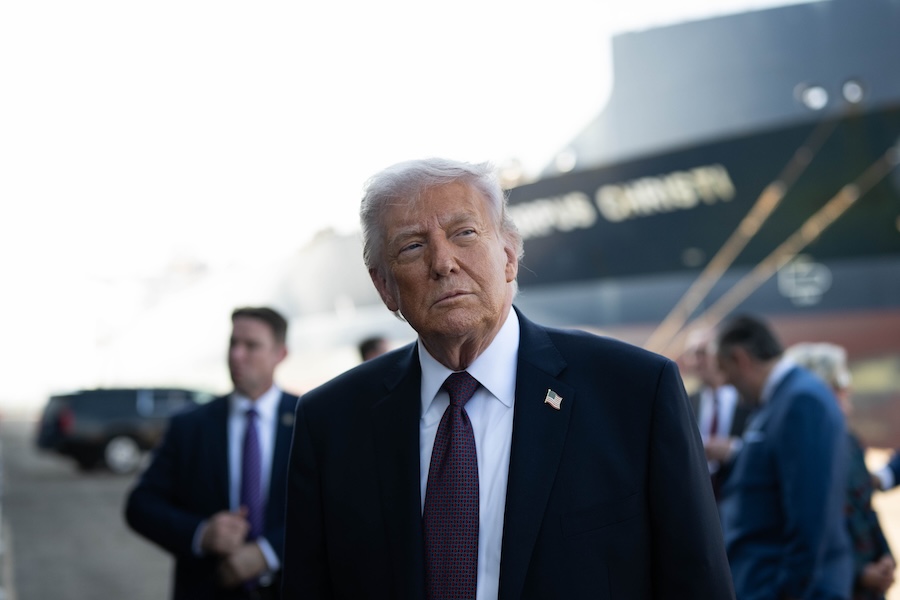
Prior to those strikes, President Donald Trump told reporters at the White House that,
“We’re attacking them tonight, and we’re taking out all their capability for anything having to do with the Strait of Hormuz”.
That bit of wishful thinking was also accompanied by the hope that a diplomatic agreement with Tehran might still be reached, despite the latest mayhem. US Central Command (CENTCOM) then posted a note confirming that a “third consecutive night of strikes against Iran” had been ordered at Trump’s direction.
“These strikes will continue to impose a heavy cost on Iranian forces and degrade their ability to attack innocent civilians and commercial shipping in the Strait of Hormuz.”
In a reversion to old positions, CENTCOM also announced that it would “resume blockading maritime traffic entering and exiting Iranian ports on July 14 at 4 p.m. ET.” The US military would continue supporting “traffic flow through regional waters for all vessels not violating the blockade.” The previous blockade by US naval forces, lasting from April 13 to June 18, saw the redirection, if we are to rely on CENTCOM’s figures, of over 140 compliant vessels, the disabling of nine recalcitrant ships, and the permitted transit of “over 50 commercial vessels supporting humanitarian aid”.
Trump, ever burdened by an estranged idea of the factual record, also took to Truth Social (it tends to be neither), his preferred medium of miscommunication, blustering that,
“The Hormuz Strait is OPEN, and will remain OPEN, with or without Iran.” (This was at odds with the reporting of Iranian state media on July 11, declaring that the Strait was closed “until further notice”.)
The president went on to announce a reinstituting of the blockade of Iran’s shipping and customers “from entering or leaving. All other countries will have fair and open use of the Strait.” Never one to be shy about the matter of might, the president also bellowed that the US would be “from this point forward, known as ‘THE GUARDIAN OF THE HORMUZ STRAIT,’ but as such, as a matter of FAIRNESS, will be reimbursed, at the rate of 20% on all cargo shipped, for any and all costs necessary to do the job providing safety and security to this very volatile section of the World.”
For students of maritime transit fees, Trump’s assertions remain pure babble. A fee structure applicable for such transit ways as the Panama Canal or Suez Canal involve sophisticated structures of administration, billing and tariff schedules shaped by decades of practice. The Trump fee proposal is the stuff of ether, lacking any mechanism of collection, let alone enforcement. His position also deliciously contradicts statements made by his own aides. Consider these June 23 remarks to the press by US Secretary of State Marco Rubio made in Abu Dhabi:
“No country is allowed to charge tolls or fees on an international waterway. That’s existing international law. That’s the way it is in international waterways all over the world, and that’s the way we expect it’ll be here.”
To Trump’s shouty remarks, Iran’s response was needling.
“POTUS is absolutely right,” chortled Iran’s foreign minister, Seyed Abbas Araghchi. “Whoever provides secure and safe passage of commercial vessels through the Strait of Hormuz should be compensated for this service.”
Reiterating the critically affirmed importance of the waterway to Tehran, the foreign minister went on to declare that
“Iran has always been the GUARDIAN of the Strait and will remain so FOREVER.”
There would be some budging on a 20% fee, as it was “too much. We will be fair.”
Colonel Ebrahim Zolfaqari, that sternest of spokesmen for the Khatam al-Anbiya Central Headquarters, was more severe in reproaching “America’s repeated adventurism and malicious acts to interfere in the management of the Strait of Hormuz”. These had “seriously endangered regional security, international trade, and the passage of oil tankers and commercial vessels.” With notable menace, Zolfaqari also rebuked “the cooperation of some regional countries” as an incitement to a further widening of the war.
“Regional heads of state are warned that any cooperation with America and any logistical support for its aggressive army will be considered an act of war against Iran’s sovereignty and national security.”
The Iranians, true to form, have continued their barrages against various Gulf states and various vessels. On July 13, they were accused by the United Arab Emirates of a “brazen” attack on two tankers in the Strait, killing an Indian crew member and wounding eight, four seriously. This was, according to the UAE Ministry of Defence, “a serious violation and a clear breach of international law, threatening the security and stability of the region.” While such claims are hard to dispute, they should be placed in the context of an imbecilic, illegal war that began on February 28, conducted by two hubristic monomaniacs in the form of Trump and Israel’s Benjamin Netanyahu against an Iranian regime that promises to be more durable and ruthless than ever. All bets, be it in terms of security for the Gulf states or any equilibrium in energy markets, are off.
*
Click the share button below to email/forward this article. Follow us on Instagram and X and subscribe to our Telegram Channel. Feel free to repost Global Research articles with proper attribution.
Dr. Binoy Kampmark was a Commonwealth Scholar at Selwyn College, Cambridge. He currently lectures at RMIT University. He is a Research Associate of the Centre for Research on Globalization (CRG). Email: [email protected]
Global Research is a reader-funded media. We do not accept any funding from corporations or governments. Help us stay afloat. Click the image below to make a one-time or recurring donation.















.png)






.jpg)



 English (US) ·
  French (CA) ·