

 11 hours ago
1
11 hours ago
1
PROTECT YOUR DNA WITH QUANTUM TECHNOLOGY
Orgo-Life the new way to the future Advertising by AdpathwayExtreme marine heatwaves could reduce the UK's water quality and lead to Britons contracting illnesses, leading experts warned.
Elevated temperatures rapidly developed across Britain's coast following last month's heat dome, with the heatwave currently strongest off the coasts of eastern and southern England.
The Met Office has said that waters have already reached temperatures typically expected in August and are on average 2C warmer than usual - climbing 4C to 5C above average in certain areas.
This week's ongoing heatwave is expected to peak on Thursday and Friday when temperatures will widely exceed 30C across the UK, with some areas in England set to hit 36C.
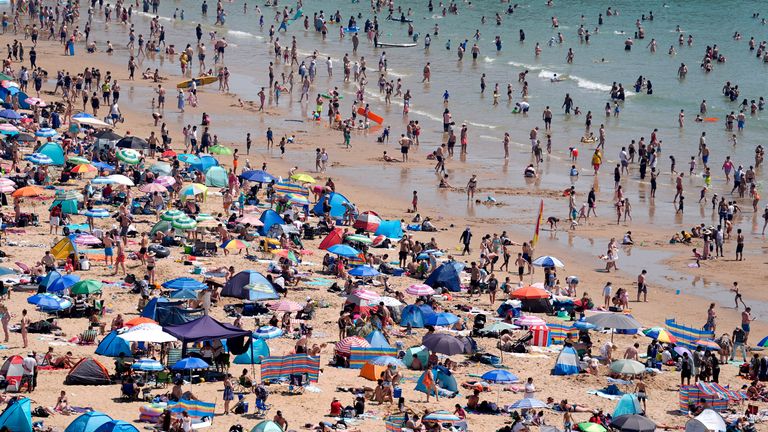
If these temperatures are met, the current marine heatwave could intensify further and reach extreme levels rarely recorded in UK waters.
Discussing its potential impact on the coast, Dr Zoe Jacobs of the National Oceanography Centre told Sky News: "There is a possibility that marine heatwaves will bring harmful algal blooms to our waters, which reduce water quality and could potentially lead to illness if ingested.
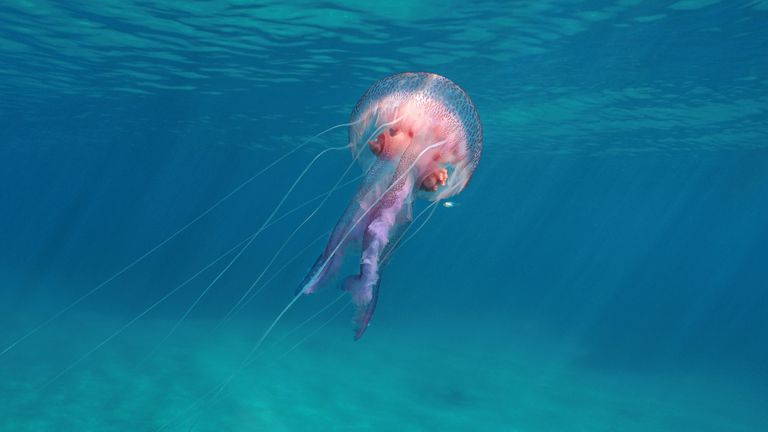
"Additionally, it could increase human interaction with some jellyfish species, with stings potentially more common."
This algae includes seaweeds and microscopic plants called phytoplankton, which can harm marine creatures by producing toxins or clogging the gills of fish - and eating shellfish contaminated with these toxins can pose health risks.
While extreme marine heatwaves have been relatively rare for the UK, they could become more commonplace in the near future.
Dr Jacobs added: "This could be our 'new normal'.
"Marine heatwaves haven't been a regular occurrence in UK waters until June 2023, where we had a short-intense event, then again in 2025 a longer intense event, and this year potentially the most intense on record for the UK as we near 'extreme' category.
"With the developing El Niño, it is likely that we could see these events year on year."
The shift in temperatures has also caused longer-term changes to the UK's marine life, with cold-water species such as cod moving further north, and warm-water species such as octopus and jellyfish becoming more prevalent.
Read more from Sky News:
FIFA accused of World Cup 'fix'
Children able to use passport e-gates
Marine researcher Dr Russell Arnott added: "The potentially more important story is happening at the bottom of the food chain with the tiny zooplankton that cod larvae depend on for food.
"These plankton (called copepods) underpin many marine food webs and have shifted further north in recent years.
"Warmer seas also increase the risk of harmful algal blooms, which as well as being unsightly and not nice to swim in, also threaten mussel, oyster and fish farms - and also damage seagrass and kelp habitats that the wider marine ecosystems rely on."














.png)






.jpg)



 English (US) ·
  French (CA) ·