

 2 months ago
139
2 months ago
139
PROTECT YOUR DNA WITH QUANTUM TECHNOLOGY
Orgo-Life the new way to the future Advertising by AdpathwayPreviously: The Women In Black Of Wat Samian Nari.
Type: Unclassifiable. Subject may be any or all of the following: MO (Malevolent Object); SV (Spiritual Vessel); LD (Living Doll); and/or UCD (Unusual Communication Device) — or, more accurately, a variation thereof. (E.g., perhaps not a device, but the act of communication itself.)
Period/location of origin: Unknown, Japan. Given the nature of subject — called Mary-san no denwa (in the original Japanese, メリーさんの電話), or “Mary-san’s phone call” — it cannot have existed prior to the invention of the telephone, and — crucially — the widespread adoption of telephone usage within the home. (See: Additional notes.)
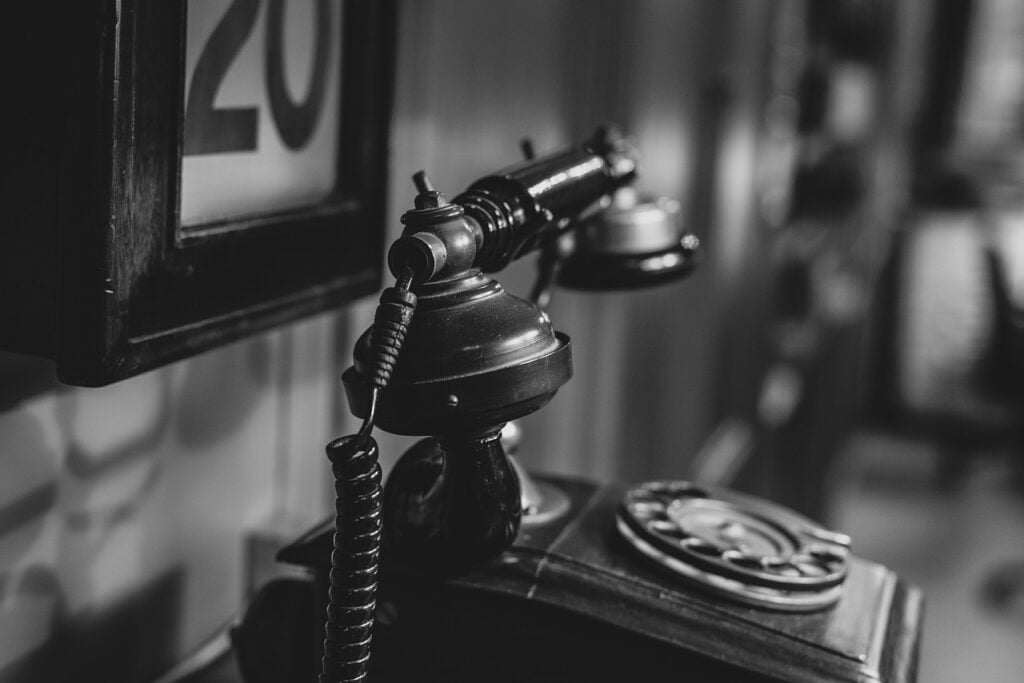
Appearance: Unknown. The circumstances of subject’s initial activation seem to suggest that subject is a doll (see: Modus operandi); indeed, many re-tellings of subject and its activity make the outright assumption that, following the initial activation, subject must necessarily be the doll involved. However, it is worth noting that, within older reports and accounts, subject is never seen — only heard — and is subsequently never explicitly described.
[Like what you read? Check out Dangerous Games To Play In The Dark, available from Chronicle Books now!]
Subject may be a doll…
…But subject may also be something else.
Subject may be a non-corporeal entity.
Or — perhaps most unsettling of all — subject may be human.
Modus operandi: Subject is initially activated following a specific event — typically a child’s family preparing to move, and one of the child’s toys accidentally getting thrown out or otherwise misplaced in the process of packing. The toy is usually said to be a doll, which the child refers to as “Mary.”
Upon discovering that the toy is missing, the child’s parents may attempt to console the child by offering to buy them a replacement for the discarded toy. If the replacement is acquired, the child then becomes a target.
Sometime after the family has settled into their new home, with the replacement having been supplied for the target, target may — if left home alone at night, without parental supervision — receive a phone call on the home’s telephone. Should target answer the telephone, target will hear a voice — subject’s — on the other end: “It’s Mary-san,” the voice will say. “I am in the trash right now.” Subject will then end the call.
Some minutes later, target will receive another telephone call. Should target answer it, target will again hear subject’s voice on the other end: “It’s Mary-san,” the voice will say. “I am at OO Station right now.” Subject will then end the call.
Target will recognize the station identified by subject as the public transit station nearest their home.
Some minutes later, target will receive yet another telephone call. Should target answer it, target will hear subject’s voice once more: “It’s Mary-san,” the voice will say. “I am at OO shop on the corner right now.” Subject will then end the call.
Target will recognize the shop identified by subject as a shop quite near their home.
Some minutes later, target will receive a fourth telephone call. Should target answer it, target will hear subject’s voice a fourth time: “It’s Mary-san,” the voice will say. “I am in front of your home right now.” Subject may additionally identify target specifically by name at this time. Subject will then end the call.
At this point, target may attempt either to remove subject’s ability to reach them by unplugging the telephone, or check to see if subject is as much of a threat as she seems by looking outside the window that provides the best view of the front of their home.
It is, however, too late for these actions to be effective.
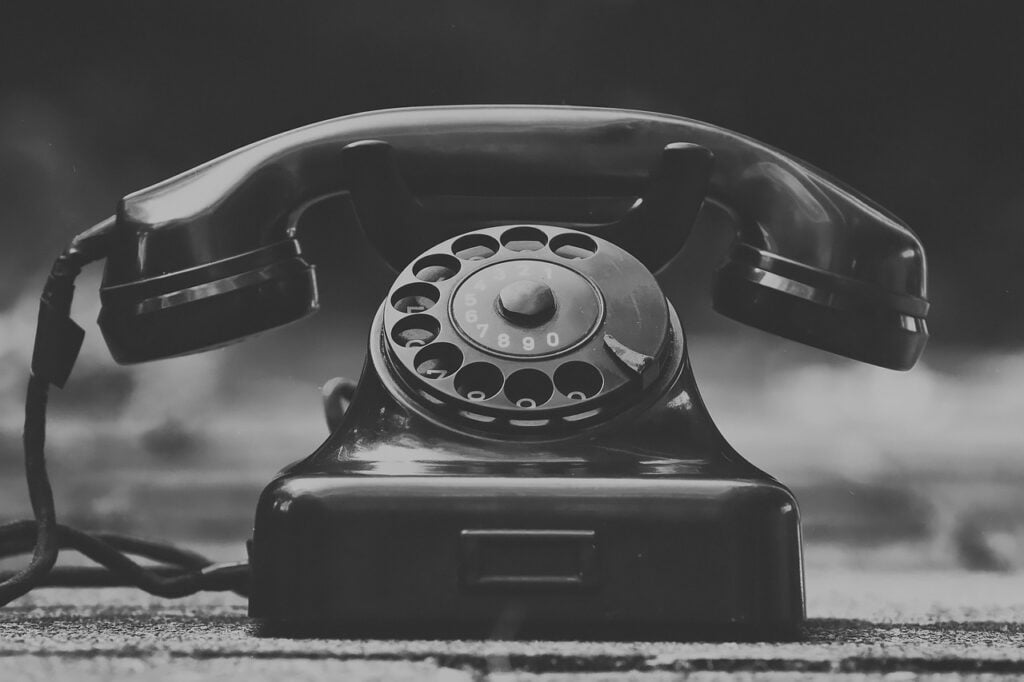
Some minutes later, target will receive one final telephone call — even if the phone has been unplugged or disconnected. Should target answer it, target will hear subject’s voice for the last time: “It’s Mary-san,” the voice will say. “I am right behind you now.”
Some reports specify the harm that then comes to targets at the hands of subject; most, however, do not, simply ending there, and leaving whatever befalls target up to the imagination.
Either way, the results are… not good for target.
It is worth underling at here that it is not clear who — or what — may be “behind” target at the end of the sequence of telephone calls.
Yes, the activation incident in many cases is the loss of a doll.
However, reports generally do not include visual evidence of the doll returning after this activation incident. Reports tell only of what targets hear: They hear subject. They not see subject.
Not until it is too late, at least — and by then, they are in no state to report what they have seen.
It is true that at that point, it ceases to matter whether subject is a doll, or an entity, or another human; the outcome for targets remains the same (e.g., expiration).
But still: It is worth remembering that whoever is calling target…
…May not be who or what you think it is.
Containment: Several containment methods have been suggested, should targets find themselves facing subject. These methods include the following:
- Do not answer the telephone, particularly once it has become clear that Mary-san has targeted you.
- Close and lock any and all doors to the location in which you currently are. Doing so will impede her access to you.
- Place piles of salt around the room, and/or at the threshold or door to the room in which you currently are. Doing so will, again, impede her access to you.
- Stand with your back to the wall. This is to ensure that she may not get behind you.
- Change your phone number. She cannot call you if she does not have your number, after all.
However: Targets should be warned that not answering the telephone may or may not have the desired effect. It is sometimes reported that refusing to answer Mary-san’s calls or otherwise ignoring her will, rather than prevent her from accessing you, simply make her angrier, and/or intensify her grudge. Proceed with caution.
Additional notes: Subject’s modus operandi may vary, depending on the target. For instance:
- Should target live in an apartment building, rather than a single-family detached or semi-detached house, subject may announce its approach not by landmarks near target’s home, but by floor number — e.g., “It’s Mary-san. I am on the first floor now”; “It’s Mary-san. I am on the second floor now”; etc. Targets subject successfully subdues in this fashion will still hear “It’s Mary-san. I am right behind you now” as their final phone call.
- Should target have been told of subject, but not experienced subject themself (yet), target must tell five other people the story of subject as soon as they can. Otherwise, subject will come for them next. The passing on of the story may occur by word of mouth, by telephone call, or by chain letter; in the case of the use of chain letters, these letters may either be sent via traditional post, or via email. Typically, the passing on must be carried out in the same communication medium in the initial target was told about subject.
- Target may be not a child, but an adult whose profession is taxi driver. If target is a taxi driver, subject’s activation event will be the driver committing a hit-and-run. Subject is, in this case, the victim of the hit-and-run. When target begins receiving phone calls, the voice they will hear on the other end belongs to the person they hit — who is still named “Mary.”
Additionally, similarities between Mary-san and previous Encylopaedia subject the three-legged Licca-chan or Rika-chan doll may be observed: One version of the Rika-chan legend includes a doll — in this case, an unusual Rika-chan doll — being discarded by its owner, after which the discarded doll targets the previous owner via telephone call much the same way Mary-san is said to.

Regarding subject’s date of origin: As previously noted, both the existence of the telephone in general and widespread usage of the telephone within the home dictate the earliest date at which subject could have first appeared. Although the telephone itself first arrived in Japan circa 1893, it would not be widely used within everyday homes until sometime later. For further context, the first prototype for a rotary phone was developed in Japan in 1933, while the NTT — the nationwide telecommunications company Nippon Telegraph and Telephone Public Corporation — was formed in 1952.
However, although subject could very well have first developed sometime during that roughly 20-year period, it is, in the opinion of this researcher, more likely that subject may have first arrived in 1962 or later. This is the year in which the 600 model telephone — colloquially referred to as kurodenwa, or black telephone — was first introduced, becoming the standard household telephone for many years to come.
A further possible inspiration for the stories and tales associated with subject may also date to roughly this time. As Tara A. Devlin of the excellent Kowabana content network notes, the story of Mary-san may have been based on the real-life personage known as Yokohama Mary.
Little is known of Yokohama Mary’s early life, although it is believed she was born around 1921, and moved to the Kansai region in early adulthood, either during or in the years directly following the Second World War. She may have been a sex worker, but may not have been; she may have been unhoused, but may not have been; rumors about her life and situation abounded, though they were generally neither confirmed nor disproven.
What is known of her was her presence: Beginning around the 1960s, she became a fixture of the streets of Yokohama, where her striking appearance garnered much attention: She wore frilled dresses embellished with a plethora of ruffles, and she painted her face stark white and lined her eyes with heavy black paint. She looked, it is sometimes said, like a living doll.
Although some found her appearance off-putting, Yokohama Mary was widely beloved among her community, with many showing her kindnesses and remembering her own kindness in return. Her life in Yokohama was documented in the early 1990s with her permission by photographer Hideo Mori, and she was further memorialized in the 2006 documentary Yokohama Mary, directed by Takahiro Nakamura.
Yokohama Mary disappeared from the public eye in the mid-1990s. For some time, it was not known precisely what had happened to her; however, Nakamura found during production of the documentary about her that she had moved away from Yokohama at the end of 1995 and was living in a nursing under her given name. She left the Yokahama Mary persona — along with its frilled dresses and distinctive makeup — behind, and lived out her final years in the nursing home in contentment. She passed away in January of 2005 at the age of 83.
Although Yokohama Mary herself was not a malevolent person — and, indeed, was known for her kindness — it has been proposed that her physical appearance and her presence on the streets of Yokohama may have inspired the Mary-san no denwa story. In particular, it accounts for the use of the name “Mary” for subject; as “Mary” is not a Japanese name, but a Western one, it has long puzzled researchers, targets, and others who encounter the legend that subject bears this name in the first place.
This theory does, however, remain just that: A theory.
Recommendation: Look after your things.
Be careful when you answer the phone.
And keep your back to the wall.
Resources:
Mary-san at Kowabana.net.
What Is Mary’s Phone Call? (In Japanese.)
The Truth Behind Mary’s Phone Call. (In Japanese.)
Yokohama Mary: Looking Back At The Life Of One Of The City’s Most Mysterious Figures at the Japan Times.
The Public Life Of Japan’s Private Eccentrics at Nippon.com.
Yokohama Mary (2006), dir. Takahiro Nakamura.
Meri-san no denwa (2011), dir. Mitsuhiro Mihara.
***
Follow The Ghost In My Machine on Bluesky @GhostMachine13.bsky.social, Twitter @GhostMachine13, and Facebook @TheGhostInMyMachine. And for more games, don’t forget to check out Dangerous Games To Play In The Dark, available now from Chronicle Books!
[Photos StockSnap, Alexas_Fotos, Pixabay/Pixabay








.png)





.jpg)


 English (US) ·
  French (CA) ·