

 7 months ago
127
7 months ago
127
PROTECT YOUR DNA WITH QUANTUM TECHNOLOGY
Orgo-Life the new way to the future Advertising by AdpathwayPreviously: The House In Kita Ward.
Type: LC (Legendary Creature).
Period/location of origin: Unknown, Valcamonica (Camonica Valley) in the Lombardy region of Italy. Subject, known as the Badalisc, is most frequently associated with the municipality of Cevo, specifically the town of Andrista. The period of origin remains unclear, although the one thing that is certain is this: Subject is old. Very, very old. Ancient, possibly.
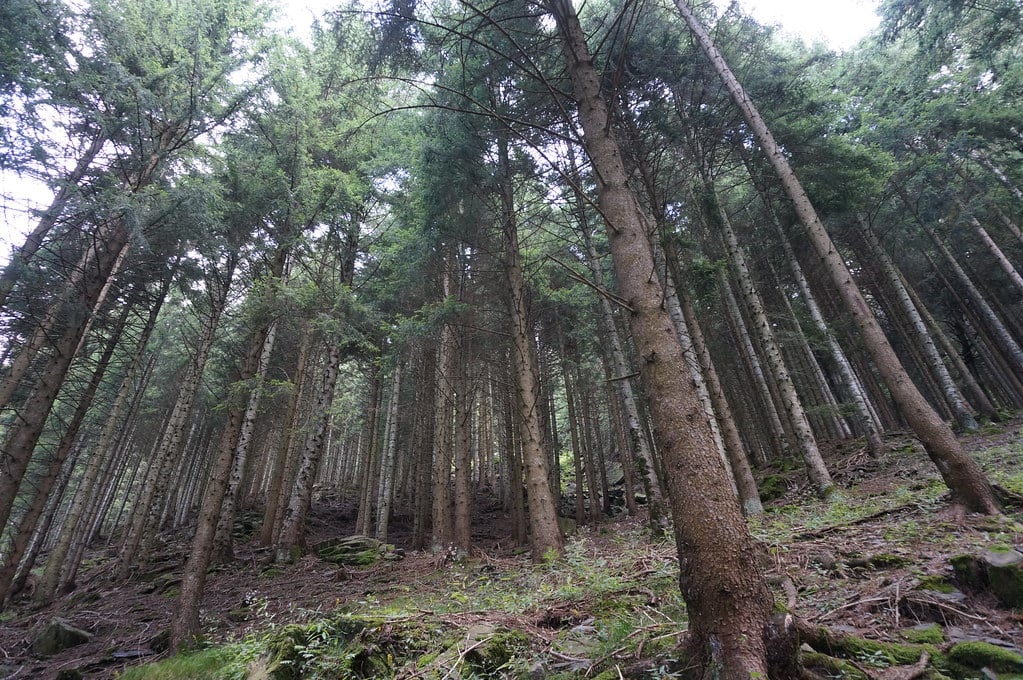 The forests of Valcamonica, where subject lives.
Appearance: Subject, the Badalisc — not to be confused with the similar-sounding basilisk, although it is not out of the question that there may be a connection between the two creatures — appears to resemble a serpent crossed with a goat. It has a snake-like body, a goat-like head, two horns, an uncomfortably large mouth, and glowing eyes that may or may not be red. (Some reports specify the color, while others do not.)
[Like what you read? Check out Dangerous Games To Play In The Dark, available from Chronicle Books now!]
Subject is large. Very large. Not quite a giant, but… definitely bigger than your average snake.
Modus operandi: Subject does not have a modus operandi, per se; it just simply desires to live its life. Most of the year, it resides in the forests near Andrista, existing quietly and unbothered. It does, however, spend that time collecting gossip — all the goings-on in Andrista between the town’s inhabitants, largely focusing on wrongdoings: Who was wronged, by whom, and what they did, precisely, to cause such feelings of betrayal and disloyalty.
It is not entirely clear why subject feels the need to keep this running tally of the village’s internal drama, though it does eventually make used of it in a piece of public speaking (see: Containment). Indeed, it is possible that subject keeps its tally specifically for the purposes of the procedures detailed in Containment; it is ammunition and revenge both, though of a non-violent, verbal-only variety.
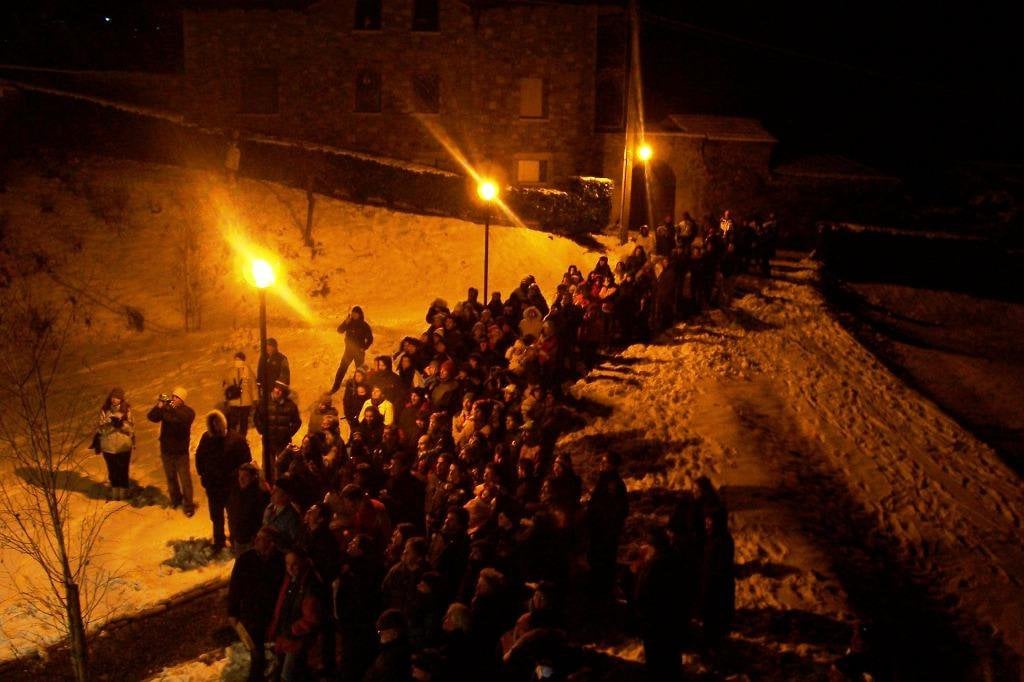 Crowds gathered to hear subject’s airing of Andrista’s grievances.
It is not uncommon for the threat of subject’s gossip-collecting to be used to keep bad behavior in line. A simple statement of “Be careful! The Badalisc will hear!” may be all it takes to prompt the behavior to cease, so as to avoid becoming a topic addressed in the speech described in Containment.
Containment: The primary method for subject’s containment is termed the Festa del Badalisc, the Festival of the Badalisc. The festa unfolds as follows:
On Jan. 5 every year — the observation of Epiphany — a hunt is undertaken by the people of Andrista. Traditionally, only the town’s men have gone on the hunt; in recent years however, people of all genders have taken part. During this event, an actor is dressed as a young woman, La Signorina, to lure subject out from hiding; then, subject is hunted, captured, and paraded into town, where it proceeds to give a speech, called la ‘ntifunada, via a translator or handler, referred to as Il Nonno or Vecchietto.
In this speech, the Badalisc airs all of the gossip about the village and its inhabitants it has gathered over the course of the previous year. The speech is traditionally given in dialect, although more recently, it has been given in modern Italian. It is often comical — what might be termed a roasting.
The speech is followed by feasting and celebrations, which may include bonfires, dancing, and a meal featuring a specific kind of polenta served only at this time and other foods such as various cheeses and salami, sausages, and other meats. The Badalisc is considered the guest of honor at these festivities.
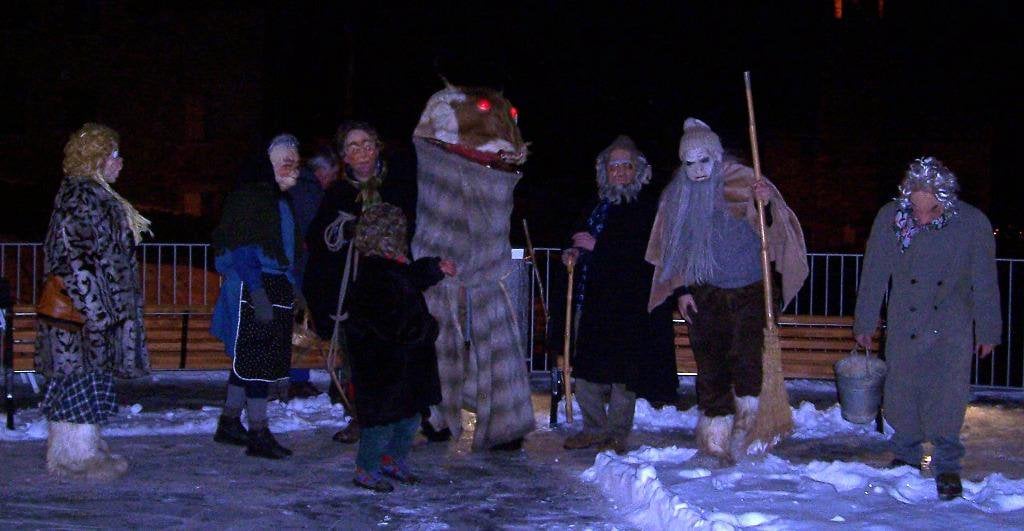 Subject, captured.
On the evening of Jan. 6, subject is released and permitted to return to the woods from whence it came. Then, the process begins anew, with subject starting its tally of the village’s wrongdoings yet again in preparation for the following year’s hunt.
And thus, balance is restored, and the cycle continues.
Additional notes: Like previous Encylopaedia subjects Gryla, Jólakötturinn, Père Fouettard, the kallikantzaroi, the mari lwyd, Krampus, and the Elf On The Shelf, subject is associated with the winter holidays that occur in December and January — in this case, Epiphany, the observance following Twelfth Night that marks the end of the 12 days of Christmas.
However, subject is unique in that, in the hyperspecific geographic locale in which it operates, it takes the place of several more common figures associated with the winter holidays in general and Epiphany in particular. For instance, whereas it is more typical throughout Italy for Befana, a holiday witch or hag, to bring gifts or punishment to children, the Badalisc’s hometown sees only the arrival of the Badalisc itself. There is also, as academic and researcher Francesca C. Howell points out in her excellent work “Sense of Place, Heterotopia, and Community: Performing Land and Folding Time in the Badalisc Festival of Northern Italy,” published in 2013 in the journal Folklore, no appearance in the Badalisc’s home arena of the Three Magi, despite the observation of Epiphany primarily celebrating the visit of said magi to a particular manger.
Historically, the tradition of the Festa del Badalisc was carried out as a tool of protection, per Howell’s work — a means ensuring the village’s safety and encouraging fertile harvests in the coming year. The community is, however, no longer a farming community in quite this way anymore, and as such, the festival no longer serves this purpose. Despite this shift, though, the festival continues to serve an important function for Andrista, with many former residents who have built their adult lives far from the village in which they grew up returning at Epiphany to take part: It fosters community. It brings the town together.
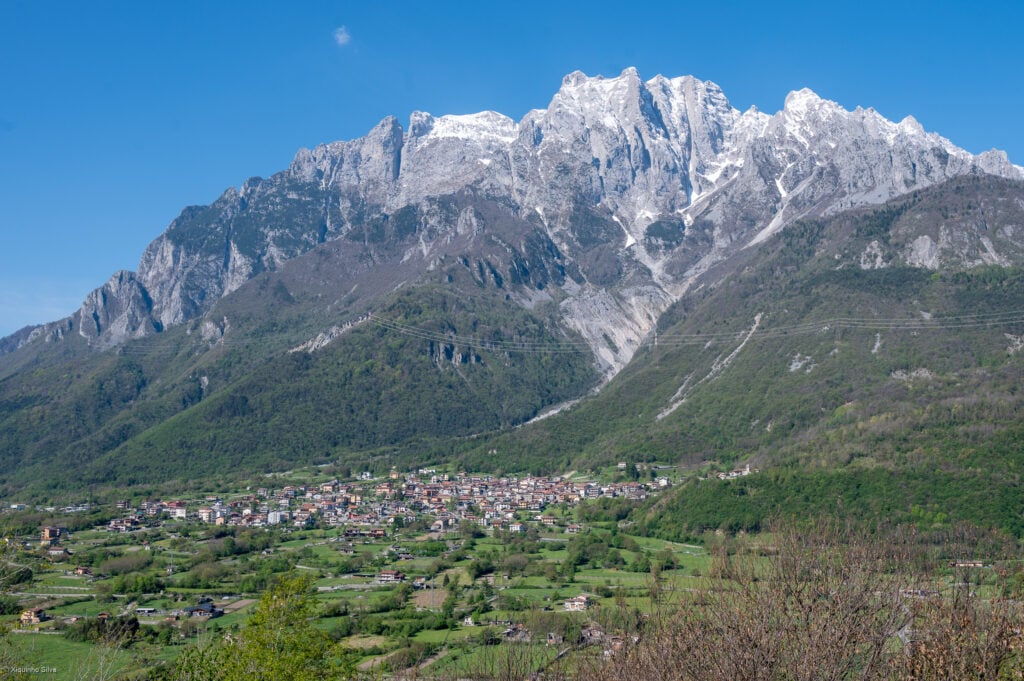 Capo di Ponte, where many petroglyphs may be seen.
Regarding subject’s age and origin: It has been posited that there may be a connection between the development of the legend of the Badalisc and images depicted in petroglyphs in some of Valcaominca’s many petroglyph parks.
The rock drawings of Valcamonica represent the largest collection of prehistoric petroglyphs in the world; here are at least 200,000 and possibly as many as 300,000 such petroglyphs within the Valcamonica petroglyph parks.
The Seradina-Bedolina Park in Capo di Ponte features a variety of serpent petroglyphs form the Copper and Bronze Ages, which may account for the serpent-like qualities ascribed to subject; elsewhere, petroglyphs depicting horned goats have been located which may serve as the origin point for subject’s head and horns.
Regardless of where or when subject may have come from, though, one thing is clear: It is a much-beloved figure of the area it calls home.
Recommendation: The Festa del Badalisc may be attended and enjoyed by all who wish to witness it. It occurs from Jan. 5 to Jan. 6 each year in the town of Andrista, should you desire to visit at that time.
Happy hunting!
Resources:
“Sense of Place, Heterotopia, and Community: Performing Land and Folding Time in the Badalisc Festival of Northern Italy” by Francesca C. Howell, Folklore.
“You’ve Probably Never Heard Of These Christmas Customs In Italy” at Italy Magazine.
Badalisc.it, archived. (In Italian.)
“The Badalisc Becomes A Gastronomic Occasion” at Bresciaoggi.it. (In Italian.)
“Every Country Has Its Hero: In Andrista, It Is Without A Doubt The Badalisc!” at Parcoa dell’Adamello. (In Italian.)
“The Badalisc Of Andrista” at Saliinvetta. (In Italian.)
Valcamonica: Ancient Petroglyphs And Their Significance.
Rock Drawings In Valcamonica via UNESCO.
Parco Seradina-Bedolina. (In Italian.)
***
Follow The Ghost In My Machine on Bluesky @GhostMachine13.bsky.social, Twitter @GhostMachine13, and Facebook @TheGhostInMyMachine. And for more games, don’t forget to check out Dangerous Games To Play In The Dark, available now from Chronicle Books!
[Photos via diuis, xiquinhosilva/Flickr, available under CC BY-SA 2.0 and CC BY 2.0 Creative Commons licenses; Luca Giarelli (1, 2)/Wikimedia Commons, available under a CC BY-SA 3.0 Creative Commons license]













.png)






.jpg)


 English (US) ·
  French (CA) ·
 .jpg)
.jpg)