

.png) 3 days ago
25
3 days ago
25
PROTECT YOUR DNA WITH QUANTUM TECHNOLOGY
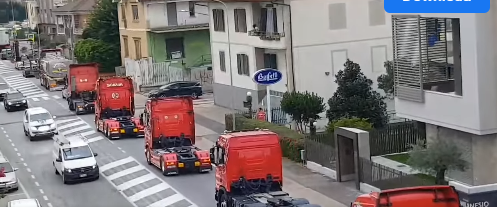
Orgo-Life the new way to the future Advertising by AdpathwayLight goods vehicles — the small vans and pickups that keep e-commerce warehouses, courier networks and last-mile grocery delivery running — make up barely 1.2% of Delhi-NCR’s active vehicle fleet. Yet according to the Commission for Air Quality Management (CAQM), they’re responsible for roughly 3.3% of particulate emissions from that same fleet — nearly three times their share of pollution as their share of vehicles on the road.
That mismatch is exactly why CAQM’s Full Commission, at its 29th meeting on 18 August 2026, approved Direction No. 102: a phased, multi-year mandate to stop new registrations of conventionally fuelled light goods vehicles across the National Capital Region, starting with Delhi itself in 2027.
The Timeline, Category by Category
The restriction applies in stages, split by vehicle weight class and geography:
- N1 category (under 3,500 kg) — the smaller courier and delivery vans — face restricted registration of new diesel, petrol and CNG vehicles from 1 January 2027 in Delhi, extending to the high-vehicle-density districts of Gurugram, Faridabad, Sonipat, Ghaziabad and Gautam Buddha Nagar from 1 July 2027, and to the rest of NCR from 1 January 2028.
- N2 category (3,500–7,500 kg) — larger delivery trucks — follow a similar staggered rollout starting 1 January 2028, reaching the remaining NCR districts by 1 January 2029.
Why Small Delivery Vehicles, Specifically
The logistics behind this decision matter as much as the mandate itself. LGVs run far more kilometres per vehicle than an average private car — they’re on the road constantly, ferrying goods between warehouses, dark stores and doorsteps across the metro region, which is precisely why a comparatively small fleet segment punches so far above its weight in emissions. The explosive growth of quick-commerce and e-commerce delivery over the past several years has meant a corresponding growth in exactly this vehicle category, much of it still running on diesel.
Part of a Wider Package
The LGV mandate wasn’t the only decision to come out of the 29th Commission meeting. CAQM also approved Direction No. 103, tightening dust-control requirements at stone crushing units across NCR — folding CPCB’s 2023 dust-mitigation guidelines directly into operating consent conditions, backed by continuous remote monitoring including PM2.5/PM10 sensors and video surveillance. The Commission additionally noted that six thermal power plants had been fined ₹61.85 crore for missing biomass co-firing targets, with half already recovered, and reviewed plantation progress against a 2026-27 target of over 4.6 crore trees, shrubs and bamboo across the region — with roughly 2.53 crore achieved so far.
Why This One Is Different From the Usual Enforcement Update
CAQM issues frequent, recurring status updates — inspection counts, closure orders, compliance reviews — that read more as periodic administrative housekeeping than genuine policy movement. Direction No. 102 isn’t one of those. It’s a new regulatory mandate that will reshape a specific, fast-growing vehicle segment’s fuel mix over the next two years, timed to arrive just as India’s own EV manufacturing base for commercial vans and light trucks is scaling up to meet exactly this kind of demand.
Whether the phase-out actually moves the needle on Delhi’s air quality will depend on how quickly electric alternatives become commercially viable at the price point and range that delivery fleets need — but as a piece of regulatory design, tying a hard registration deadline to a measurable, disproportionate pollution source is a sharper tool than the broad seasonal restrictions Delhi-NCR has relied on in winters past. For more on how India’s sustainable transport transition is unfolding on the ground, see our earlier coverage of India’s growing EV ecosystem.
Source: Press Information Bureau, Government of India — CAQM approves Phased Shift towards Cleaner Light Goods Vehicles in Delhi-NCR; Strengthens Dust Control at Stone Crushing Units














.png)






.jpg)


 English (US) ·
  French (CA) ·