

 2 months ago
121
2 months ago
121

Finance capital thrives in times of war.
War produces fear, and fear produces debt.
During wartime, states assume burdens they would never accept under normal conditions.
To read this article in the following languages, click the Translate Website button below the author’s name.
Deutsch, Türkçe, Farsi, Русский, Español, Portugues, عربي, Hebrew, 中文, Français, Italiano, 日本語, 한국어, Српски. And 40 more languages.
Finance capital is often deliberately made to appear complex and inaccessible. It hides behind charts, algorithms, central bank reports, interest rate curves, derivatives markets, and technical terminology understood only by a narrow circle of specialists. A dense smokescreen of banking jargon is created in such a way that ordinary people, and often even state administrators, struggle to see the naked truth at the core of the system. Yet the mechanism we call finance capital is not an abstract academic theory or merely a technical model discussed in economics faculties. It is a very concrete and ruthless power structure that has repeatedly shaped human history over the last few centuries, influencing the rise and fall of empires, directing states through debt, financing wars, and creating new fields of power for itself out of every major crisis. Because finance capital does not produce, does not build factories, is not tied to the land, and feels no belonging to any nation. It has no flag, no border, and no anthem. Yet it is often more disciplined than states, more patient than armies, and capable of thinking far more long term than politicians. It does not act according to electoral calendars, but according to transfers of power designed to last for generations.
Of course, the imperatives imposed by geopolitics have existed throughout every period of history. After the Industrial Revolution, Germany had to reach the seas and gain access to colonial routes in order to sustain its industrial production capacity. Japan, as an island state, regarded dominance in the Pacific as a vital necessity. For England, maritime routes were the veins of the empire. Russia viewed access to warm seas as a strategic imperative. All of these were historical compulsions imposed by geography upon states. However, especially after the 17th century, the world order ceased to be a field of struggle determined solely by geography. Fate was no longer shaped only by ports, straits, mountains, or armies. Debt itself became fate. Credit turned into a weapon. Liquidity emerged as a strategic instrument of power, at times as decisive as navies. In many cases, controlling a state’s treasury became more effective than controlling its army.
This is precisely why finance capital thrives in times of war. War produces fear, and fear produces debt. During wartime, states assume burdens they would never accept under normal conditions. They are compelled to purchase weapons, expand armies, stockpile ammunition, and secure energy and logistics lines. All of this is financed through enormous borrowing. This is where finance capital enters the scene, because credit circulates through the battlefield just as much as bullets do. In fact, throughout history, the outcome of wars has often been determined not only by soldiers at the front, but also by financing capacity behind the lines. When wars are lost, it is not only the treasury of the defeated state that falls under external influence. Its ports, mines, energy resources, railways, banks, and even its political decision-making mechanisms gradually come under the control of the victors and the financial forces backing them. History is full of such examples. From the Ottoman Empire to Latin America, from Africa to modern Europe, debt crises have rarely produced only economic consequences. They have also eroded sovereignty itself. Because the most favorable environment for finance capital is not lasting peace, but continuous uncertainty and manageable crisis. As crises deepen, debt expands. As debt expands, dependency grows. And as dependency grows, the invisible domination of finance capital widens even further.
Separation from Production Capital and the Virtualization of Money
In classical capitalism, capital was fundamentally tied to production. Factories were built, workers labored, goods were manufactured, and surplus value emerged from production itself. In the age of finance capital, however, production was gradually pushed into the background. The primary objective was no longer to produce wealth through industry, but to generate money directly from money. Wealth accumulation increasingly depended on market openings, speculative flows, algorithms, derivatives, and investment funds operating at the speed of digital transactions. As a result, a massive gap emerged between the real economy and the financial economy. Today, the world consumes roughly 100 million barrels of oil per day. Yet in global financial markets, volumes many times greater than this are traded daily through futures contracts, derivatives, and speculative instruments tied to oil that has not even been extracted from the ground. This is not merely a statistical anomaly. It is a symbol of the very nature of finance capital itself. The widening rupture between tangible production and paper-based financial expansion lies at the heart of the system’s growing fragility.
The historical turning point of this transformation came in 1971. With the abandonment of the gold standard, money was detached from a concrete material equivalent and transformed into an instrument based almost entirely on political, military, and systemic power. From that moment onward, the value of money no longer rested on gold reserves or direct production capacity, but increasingly on confidence in the geopolitical and military dominance standing behind it. Once the world accepted the premise that “the United States stands behind this paper,” money ceased to be anchored to a physical standard and instead became anchored to power itself. This marked the true beginning of the golden age of finance capital.
Debt and the Unseen Yoke
The most effective weapon of finance capital is debt. Debt takes control not only of states, but also of individuals. Through credit cards, consumer loans, mortgages, and installment systems, modern societies are encouraged to spend before they produce and consume before they earn. In this system, the future itself becomes collateral. The indebted individual gradually loses the capacity to question, while the indebted state loses the ability to resist external pressure. Historically, debt can be a manageable instrument when it is tied directly to production. A loan taken to establish a factory, build infrastructure, or expand industrial capacity can eventually repay itself through production and economic growth. However, debt accumulated primarily for consumption creates long-term dependency rather than development. Today, there is almost no major state in the world free from this burden. From Japan to the United States, from France to Italy, debt has become a structural condition of the modern international system. This reality reveals how sovereignty itself can gradually erode under the weight of financial dependency.
The Ottoman Empire offers one of the earliest and most striking examples of this process. The 1838 Baltalimanı Trade Agreement opened Ottoman markets to British goods and capital. In the short term, it provided relief and commercial integration. In the long term, however, it weakened domestic production, undermined local craftsmen and manufacturers, and steadily reduced the empire’s economic independence. During the Crimean War, the Ottoman Empire took its first major foreign loans in 1854 and 1855. What initially appeared as temporary financial support eventually evolved into structural dependency. By 1881, the empire had effectively declared bankruptcy and was forced to accept the establishment of the Düyûn-ı Umûmiye Administration, which transferred control over major sources of state revenue to foreign creditors. From that point onward, financial sovereignty increasingly passed into external hands. History repeatedly demonstrates the same principle, when debt enters through the door, sovereignty often leaves through the window.
States Formed Through Bonds and the True Meaning of Navarino
In the nineteenth century, finance capital did not merely indebt states, it also played a decisive role in the creation of some states themselves. During the Greek rebellion against the Ottoman Empire, bonds were issued on the London Stock Exchange in the name of a Greek state that did not yet formally exist. In other words, before a sovereign political structure had fully emerged on the ground, a financial structure representing that state had already been established in international markets. A political project was effectively transformed into a financial asset.
Once large amounts of capital became tied to these bonds, the issue ceased to be solely a matter of diplomacy, ideology, or humanitarian concern. It became a matter of protecting financial interests. As the value of Greek bonds fluctuated and financial risks increased, the pressure exerted by finance capital also intensified. Within this context, the Navarino Raid of 1827 must be understood not merely as a military intervention, but also as an event shaped by the financial dynamics of the era.
At the time, the Ottoman Empire was attempting to suppress a rebellion within its own territory. Yet the combined navies of England, France, and Russia intervened directly and destroyed the Ottoman-Egyptian fleet at Navarino without a formal declaration of war. Behind this intervention stood not only geopolitical calculations, but also concerns related to risky receivables, falling bond values, and the broader interests of European finance capital. Navarino represents a historical threshold demonstrating that finance capital, when necessary, can ultimately rely on military force to secure its interests. The Greek forces themselves played no decisive military role in the destruction of the Ottoman-Egyptian fleet during the battle. Nevertheless, the political outcome was written in their favor. This reveals an enduring reality of modern history, military victories are often shaped not only by armies on the battlefield, but also by financial networks operating behind the scenes.
The Chinese Opium Wars (1839–1842 / 1856–1860)
One of the clearest historical examples of the moral limits of finance capital is found in the Opium Wars. In the nineteenth century, Britain faced a growing trade imbalance with China. Britain was purchasing enormous quantities of tea, silk, and porcelain from the Chinese market, yet China demanded payment largely in silver and showed little interest in British manufactured goods. As silver steadily flowed out of Britain, the balance of trade increasingly turned against the British Empire. The solution ultimately adopted was not productive competition, but narcotics.
.

Naval battle in the First Opium War (Public Domain)
.
Opium cultivated in British-controlled India under the East India Company was systematically smuggled into China on a massive scale. As addiction spread and silver began flowing out of China instead, the trade imbalance reversed in Britain’s favor. When the Qing government attempted to stop the opium trade in order to protect public health, social order, and state stability, Britain responded with military force. Chinese ports were bombarded, coastal cities were occupied, and the superior firepower of the Royal Navy was used to impose British demands upon China.
These wars were not fought for “free trade” in the liberal sense often presented in Western narratives. They were fought to preserve financial balance, commercial supremacy, and the collection of receivables. The Opium Wars revealed how economic interests, backed by military power, could override morality, sovereignty, and even the well-being of entire societies.
For China, this period marked the beginning of what is officially remembered as the “Century of Humiliation,” stretching roughly from 1839 to 1949. During this era, China experienced foreign occupation, unequal treaties, territorial losses, economic dependency, and internal fragmentation. The memory of this period continues to shape Chinese strategic thinking today. It is one of the reasons modern China remains deeply cautious regarding debt dependency, foreign financial influence, uncontrolled capital flows, and the surrender of state control over strategic sectors.
The Opium Wars stand as one of history’s starkest demonstrations that finance capital, when operating without restraint, does not necessarily recognize morality, public health, human suffering, or even legal principles as binding limits. Its primary concern is the preservation of financial advantage, trade balance, and the collection of debts. When these interests are threatened, economic pressure can rapidly transform into political coercion and ultimately military intervention.
World Wars and the Structure That Financed Both Sides Simultaneously
The First and Second World Wars remain among the clearest examples of how finance capital became deeply intertwined with geopolitics. These wars were fought not only on the battlefield, but also at the credit desk. States borrowed enormous sums in order to wage war, and those debts later became the foundation of new postwar crises, economic dependencies, and political realignments.
During the First World War, the withdrawal of the Tsarist Russian Army from the conflict following the Bolshevik Revolution gave Germany a major strategic advantage on the Eastern Front. At that stage, a German victory no longer appeared impossible. However, American financial circles that had extended vast loans to Britain and its allies were unwilling to accept the possibility of London’s defeat and the collapse of the financial system built around Allied war debt. In this context, the influence of major banking networks, particularly those associated with J.P. Morgan, played a significant role in shaping the climate surrounding President Woodrow Wilson’s decision to enter the war. In the end, victory belonged not only to armies on the battlefield, but also to the Anglo-American financial order that emerged stronger after the conflict.
Following the Treaty of Versailles, Germany was placed under severe economic pressure through reparations and financial restrictions. Yet paradoxically, during the same period, major Wall Street banks extended substantial loans to the German economy and contributed to the reconstruction of German industrial capacity. Heavy industry, chemicals, steel production, and infrastructure gradually recovered. Over time, this economic rebuilding also formed part of the industrial foundation upon which Nazi Germany later constructed its war machine. Industrialists such as Fritz Thyssen played important roles in financing the Nazi movement during its rise to power.
During the Second World War, the picture became even more striking. Certain American and European corporations maintained direct or indirect commercial and financial relations with sectors of the Nazi economy. Cooperation between Standard Oil and IG Farben contributed to technologies related to synthetic fuel and rubber production that were critical for the German war economy. Financial networks associated with Thyssen-linked interests also maintained connections with segments of the international financial system. It was later revealed that Union Banking Corporation, whose directors included Prescott Bush (the father of future US Presidents), had been connected to some of these financial relationships. Although certain corporate assets were seized by the U.S. government in 1942 under wartime regulations, many of the same financial circles retained considerable influence within the postwar American political and economic order.
.

IG Farben Building, Frankfurt, completed in 1931 and seized by the Allies in 1945 as the headquarters of the Supreme Allied Command. In 2001 it became part of the University of Frankfurt. (CC BY-SA 3.0)
.
Perhaps even more remarkable was the ability of global financial structures to maintain simultaneous relationships with opposing sides during the war itself. The Bank for International Settlements, (BIS) founded in 1930, became one of the most notable examples of this phenomenon. Throughout the Second World War, the BIS continued financial contacts involving both Nazi Germany and the Soviet Union. Even while millions died in battles such as Battle of Stalingrad, international financial mechanisms did not entirely cease functioning. This reality demonstrated that finance capital often operates beyond flags, ideologies, and moral boundaries. At the end of the war, entire states had collapsed, millions of people had perished, and cities across Europe and Asia lay in ruins. Yet many major financial institutions not only survived the destruction, but in some cases emerged even more powerful than before. Thus, finance capital secured its place in modern history not merely as an economic actor, but also as a strategic force capable of sustaining the material infrastructure of war itself during the two great global conflicts of the twentieth century.
Marshall Plan, Debt, Market, and Security
In the post–Second World War era, finance capital did not retreat. On the contrary, it became far more institutionalized and global in scope. One of the clearest examples of this transformation was the Marshall Plan, introduced under the leadership of George C. Marshall, who had risen to prominence during the war as a senior military commander. Officially presented as an economic recovery program for war-torn Europe, the Marshall Plan was not merely a humanitarian development initiative. It also functioned as a strategic mechanism for integrating Europe into an American-centered economic, financial, and security order.
The aid provided under the plan came with long-term structural consequences. European markets were increasingly opened to American capital and goods, financial systems became more closely connected to the American banking structure, and economic dependency gradually merged with military dependency. It is therefore no coincidence that the same geopolitical environment that produced the Marshall Plan also produced NATO-North Atlantic Treaty Organization. Economic integration and military security became mutually reinforcing pillars of the postwar Western order. In this framework, finance capital secured its receivables not only through banks and credit systems, but also through military alliances and strategic protection structures. Economic dependency was effectively insured through collective security arrangements.
The 1971 Break, From the Gold Standard to the Power Standard
The 1971 decision by Richard Nixon to suspend the convertibility of the dollar into gold was not merely a technical monetary policy adjustment. It represented a historic turning point and an axis shift within the post-1945 Bretton Woods system. With the abandonment of the gold standard, money was severed from a concrete material anchor. From that moment onward, the value of the dollar depended less on gold reserves and increasingly on the geopolitical, military, and systemic power of the United States itself.
This transformation opened an enormous field of maneuver for finance capital. Under the gold standard, monetary expansion had been constrained by physical reserves. The new system of fiat paper money, followed later by digital financial mechanisms, enabled virtually unlimited monetary expansion. Borrowing capacity expanded dramatically, and government bonds gradually became the backbone of global liquidity and international financial circulation.
From this point forward, finance capital evolved into not merely an economic mechanism, but also a strategic instrument of global power. Neoliberalism emerged as the dominant ideological framework of this transformation. Under the slogan that “the market knows best,” states deregulated financial systems, liberalized capital movements, and reduced restrictions on global banking activity. Financial systems became increasingly interconnected and globalized. Yet the so-called “free market” was never entirely abstract or self-regulating. Behind the rhetoric of liberalization stood highly concentrated networks of financial and institutional power.
The 1980s marked the period during which this new order became fully institutionalized. During the leadership of Ronald Reagan in the United States and Margaret Thatcher in Britain, privatization accelerated, public assets were transferred into private hands, and the financial sector expanded rapidly in influence and scale. In Türkiye, the January 24 Decisions of 1980 and the economic restructuring implemented afterward under the leadership of Turgut Özal, alongside the political environment shaped by General Kenan Evren, represented the local manifestation of this broader global transition, from a production-centered economic model toward a finance-centered economic structure.
The Logic of Controlled Chaos
Finance capital does not necessarily favor long-term stability, because prolonged stability narrows the space for speculation, extraordinary profits, and rapid financial expansion. For this reason, periods of uncertainty, crisis, and controlled instability often create far more favorable conditions for the expansion of financial influence. War, geopolitical tension, and persistent insecurity inflate public budgets, legitimize large-scale borrowing, intimidate societies, and suppress public questioning in the name of national security.
At the same time, however, completely uncontrolled war is also undesirable for finance capital. A total collapse of global trade routes, the interruption of energy flows, or the destruction of the international financial system would create systemic risks too large even for dominant financial actors to manage. For this reason, the preferred model has often been neither total peace nor total war, but fragmented states, prolonged regional instability, internal conflicts, proxy wars, and low-intensity crises that remain manageable within the broader global economic system. In such environments, state authority weakens, markets become more accessible to external influence, and strategic resources can increasingly be transformed into financial collateral.
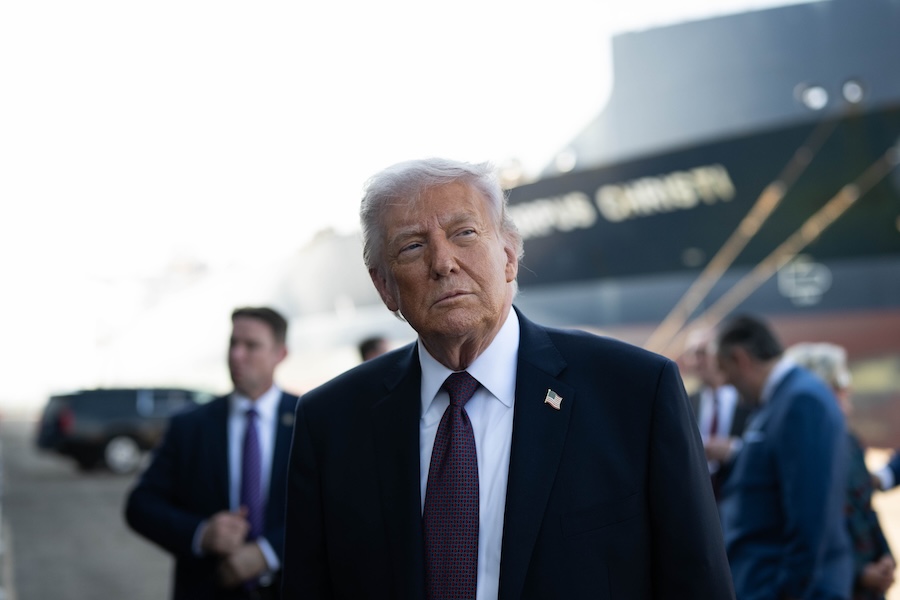
After the end of the Cold War, the traditional military-industrial complex gradually merged with digital technology and advanced financial systems. The defense sector expanded beyond tanks, aircraft, and conventional weapons into areas such as surveillance technologies, cybersecurity, artificial intelligence, satellite systems, space technologies, unmanned platforms, and data infrastructure. These sectors require enormous capital flows and long-term financial investment, making them highly attractive fields for global finance capital. Today, defense expenditures are no longer limited to conventional military procurement. Data centers, artificial intelligence systems, satellite constellations, unmanned aerial and naval vehicles, cyber defense infrastructure, and digital command-and-control systems have all become central components of the modern security economy. In this context, repeated calls by North Atlantic Treaty Organization and political leaders such as Donald Trump, Keir Starmer, Friedrich Merz, and Emmanuel Macron to increase defense spending are not solely related to military preparedness. They also serve as mechanisms for generating economic activity, industrial demand, technological investment, and financial expansion.
Arms production creates employment, sustains industrial capacity, generates large state contracts, and deepens the integration between governments, corporations, and financial markets. From this perspective, the modern security economy functions not only as a military structure, but also as a major engine of economic and financial circulation. This system therefore tends to remain uncomfortable with prolonged peace. Peace encourages predictability and stability, while stability often reduces speculative opportunities and limits extraordinary financial expansion. As a result, the discourse of permanent threat is continuously reproduced and sustained. In the modern era, “threat” itself has increasingly become a strategic instrument within the broader logic of finance capital.
The Financial System of Hegemony Is Under Strain
Today, the finance-capital-based functioning of the American hegemonic order, built upon the petro-dollar system, appears to be facing a serious structural crisis. After the abandonment of the gold standard in 1971, the dollar ceased to function merely as a currency. It evolved into a geopolitical instrument of power supported by American military dominance, global maritime control, energy trade, and the international bond market. In particular, the pricing of global oil trade in dollars granted Washington perhaps the greatest borrowing capacity in modern history. Through this mechanism, the United States established a hegemonic system sustained not primarily by its own savings, but by the accumulated savings and trade surpluses of the rest of the world.
As export-oriented economies accumulated large dollar reserves through global trade, those dollars were recycled back into American Treasury bonds and other dollar-denominated assets. This enabled the United States to finance massive budget deficits, sustain global military expansion, maintain overseas bases, and preserve its worldwide intervention capacity without facing the traditional financial constraints that historically limited great powers. Yet the structural vulnerability of the system also emerged from this very mechanism. After 1971, as the American economy increasingly shifted away from production-centered growth toward financialization, the connection between the real economy and the financial economy gradually weakened. Industrial production steadily moved toward Asia, while the United States increasingly relied on debt expansion, consumption, asset inflation, and financial engineering as the primary engines of growth. The reserve currency status of the dollar allowed Washington to sustain this structure for decades. However, the same mechanism now appears to be struggling under its own weight. The system requires the continuous generation of ever-larger volumes of debt, while at the same time depending on the uninterrupted confidence of global markets in order to roll over that debt.
At this stage, the structural pillars of the petro-dollar order are beginning to show visible strain. Today, the 30-year U.S. Treasury bond functions as one of the principal anchors of the global financial system. Much of the trust sustaining the dollar-centered international order rests upon the credibility of American government debt. Yet increasing volatility in bond markets suggests that this anchor no longer appears entirely unquestionable. The relationship between bonds and interest rates remains fundamentally inverse. As interest rates rise, the value of previously issued bonds declines. Markets now closely price in potential interest-rate decisions by the Federal Reserve System. However, rising interest rates simultaneously increase the borrowing costs of the United States itself.
As borrowing costs rise, global liquidity increasingly flows back toward dollar assets and the American financial system. This process narrows the external financing available to developing economies and places additional pressure on the broader global economy. The resulting high-interest-rate and high-debt spiral now places growing strain not only on the American Treasury, but also on American society and the productive sectors of the economy itself. As interest rates increase, debt rollover costs expand, budget deficits deepen, and the overall structure becomes more fragile.
Today, the United States faces mounting fiscal pressure with a national debt approaching 40 trillion dollars and annual interest payments exceeding 1 trillion dollars. Under such conditions, every major movement in the bond market produces geopolitical consequences alongside purely economic ones.
One of the clearest indicators of this structural pressure can be observed in the changing behavior of countries that traditionally finance American debt. Japan remains among the largest holders of U.S. Treasury securities, with holdings exceedingly 1.2 trillion dollars, followed by countries such as China and the United Kingdom. In other words, a substantial portion of the American state’s financing continues to depend on foreign capital flows. Moreover, this structure extends beyond Treasury bonds alone and includes mortgage-backed securities and local government debt issued across the United States.
However, recent trends indicating reductions in American bond exposure by Japanese and Chinese investors have attracted increasing attention. Japanese investors, for example, recorded tens of billions of dollars in sales of U.S. debt securities in recent quarters, representing one of the largest outflows since 2022. China has likewise been gradually reducing its holdings of American government debt over a longer period. These developments are not merely technical portfolio adjustments. Large-scale movements in the Treasury market directly influence foreign exchange markets, interest rates, capital flows, equity valuations, and global liquidity conditions.
In short, the military and geopolitical reach of American hegemony remains deeply dependent upon the reserve-currency status of the dollar and the credibility of the American bond market. If the United States increasingly struggles to finance its global military commitments, and if it becomes less capable of transferring the costs of war-making and global power projection onto the international system, Washington may become more inclined toward harsher, more aggressive, and more coercive strategies. Throughout history, hegemonic powers have rarely accepted relative decline calmly or voluntarily.
Conclusion
Today, the world is witnessing not merely an economic fluctuation, but the historical limits of a financial-capital order that has been expanding for nearly three centuries. The process that began with commercial capital in the seventeenth century evolved through industrial capitalism and ultimately transformed into a global system of domination centered on the dollar-based financial order of the twentieth century. Especially after the abandonment of the gold convertibility of the dollar in 1971, money ceased to rest upon production and became increasingly dependent on American geopolitical power and global military dominance. From that point onward, a virtual financial system emerged, detached from real production and sustained through debt expansion and liquidity creation.
Today, the enormous imbalance between a global financial volume exceeding approximately 800 trillion dollars and a real global production economy of around 130 trillion dollars demonstrates that the system is increasingly struggling to sustain its own internal reality. This asymmetry generates not only economic fragility, but also political, military, and geopolitical instability. Such a structure cannot expand indefinitely without consequence. Income inequality has deepened, institutional legitimacy has weakened, and political systems have increasingly fallen under the shadow of financial influence. Without understanding finance capital, it becomes impossible to fully explain modern wars, recurring crises, or many of the seemingly irrational decisions made by states. This issue is therefore not merely economic. It is fundamentally linked to sovereignty, democracy, and national independence.
Throughout history, finance capital has relied not only on markets, but also on wars, coups, debt crises, and ideological transformations in order to preserve and expand its own order. From Battle of Navarino to the Opium Wars, from the two World Wars to the Marshall Plan era, history offers countless examples of how economic interests have been reinforced through military and geopolitical power. For finance capital, the primary objective has rarely been production itself. Rather, it has been the continuity of debt. Debt, in this sense, is not merely an economic instrument but also an invisible mechanism that gradually erodes sovereignty. As states become increasingly indebted, their ability to make independent strategic decisions diminishes. As financial dependency deepens, political sovereignty contracts. The crisis facing the world today is therefore not simply a crisis of inflation, interest rates, or bond markets. It is increasingly becoming a crisis of sovereignty itself.
The petro-dollar system, which has long functioned as one of the central pillars of American hegemony, is now confronting growing structural pressure. The gradual tendency of major actors such as China and Japan to reduce portions of their dependence on American debt instruments, combined with efforts to expand trade in local currencies, particularly in energy markets, increasingly challenges the trust mechanism underlying the global dollar order. For decades, the United States has been able to sustain massive military expansion, global intervention capabilities, and large budget deficits because the dollar’s reserve-currency status enabled Washington to effectively export its debt burden to the rest of the world. If this mechanism weakens significantly, the United States may, for the first time on a historical scale, be forced to finance a much larger share of its geopolitical commitments through its own domestic economic resources. This would make the maintenance of American global hegemony at its current scale substantially more difficult. Historical experience demonstrates that hegemonic powers rarely accept relative decline peacefully or voluntarily. Periods of financial contraction often produce harsher foreign policy behavior, more aggressive pressure mechanisms, and heightened geopolitical tension.
The central conflict of the coming era is likely to emerge from the widening rupture between virtual financial values and real productive capacity. For many years, the global financial system has expanded far beyond the limits of the real economy that ultimately sustains it. The gap between paper wealth and material production is structurally unsustainable. Recent volatility in global energy markets during crises involving Iran, the United States, and Israel has demonstrated how rapidly geopolitical tensions can destabilize fragile financial expectations. Historically, periods marked by such imbalances have often ended with large-scale economic purges, severe geopolitical ruptures, and at times even global wars. The “controlled chaos” mechanisms of finance capital may be capable of managing crises within certain limits, but a systemic collapse of confidence spreading across the entire structure could become impossible to contain. For this reason, the coming period may represent not merely an economic transition, but a strategic and civilizational transformation on a global scale.
The states most likely to endure this transformation successfully will be those that prioritize production capacity, technological development, energy security, industrial strength, maritime trade, and financial independence rather than speculative financial expansion alone. This is one of the central lessons modern China drew from its historical “Century of Humiliation.” Beijing placed productive power, long-term planning, and strong state coordination at the center of its national strategy because it understood that financial dependency ultimately produces political dependency as well. In the coming era, sovereignty will increasingly be measured not only by military power, but also by debt management, industrial resilience, technological capacity, and economic self-sufficiency. The defining struggle of the new age may therefore emerge between fragile economies dependent on financialized hegemonic structures and production-centered sovereign state models. The world increasingly appears to be approaching the historical limits of the dollar-centered unipolar financial order. From this point forward, the future may bring either a controlled transformation of the system or a far more disruptive global confrontation, as history has repeatedly shown in earlier periods of hegemonic transition.
*
Click the share button below to email/forward this article. Follow us on Instagram and X and subscribe to our Telegram Channel. Feel free to repost Global Research articles with proper attribution.
This article was originally published on Mavi Vatan.
Ret Admiral Cem Gürdeniz, Writer, Geopolitical Expert, Theorist and creator of the Turkish Bluehomeland (Mavi Vatan) doctrine. He served as the Chief of Strategy Department and then the head of Plans and Policy Division in Turkish Naval Forces Headquarters. As his combat duties, he has served as the commander of Amphibious Ships Group and Mine Fleet between 2007 and 2009. He retired in 2012. He established Hamit Naci Blue Homeland Foundation in 2021. He has published numerous books on geopolitics, maritime strategy, maritime history and maritime culture. He is also a honorary member of ATASAM.
He is a Research Associate of the Centre for Research on Globalization (CRG).
Featured image is from the author
Global Research is a reader-funded media. We do not accept any funding from corporations or governments. Help us stay afloat. Click the image below to make a one-time or recurring donation.















.png)






.jpg)



 English (US) ·
  French (CA) ·