

 2 months ago
23
2 months ago
23

The Third Gulf War is now in its fourth week since it began with the US-Israeli strikes which included strikes on nuclear facilities, missile infrastructure, civilian infrastructure and the country’s leadership as of February 28, 2026.
This operation was initially expected by the Trump administration to last “four to five weeks” but has instead continued, challenging the President’s usual “less is more” doctrine of rapid intervention with boots on the ground on their way.
Throughout this period, the Strait of Hormuz has remained effectively closed for most transit except for some in which Iran has installed a toll on the Strait of Hormuz, charging ships for safe transit. Albeit with some conditions such as only ships to or from Gulf States that 1) do not host US military bases, and 2) the energy sale transaction must be in currencies other than the US dollar. This is nonetheless choking global oil supplies, and the petrodollar while imposing severe limitations on both sides.
Click here to read this article in Spanish/Español.
Since the war began in late February 2026, Iran has openly engaged in retaliatory strikes against several states, with the Persian countries acknowledging them as responses to attacks from the US/Israel. The targeted nations include Israel, Saudi Arabia, the United Arab Emirates (UAE), Qatar, Kuwait, Bahrain, Iraq, and Jordan.
Yet amid this open warfare, a distinct pattern has emerged of attacks that carry significant strategic weight on countries in the region but that are met with swift Iranian denials which is different to the eight other states aforementioned.
Attacks on Cyprus, Azerbaijan and Turkiye
On March 1, 2026, an Iranian-made Shahed drone struck the runway at RAF Akrotiri in Cyprus, causing limited structural damage and no casualties with Iran officially denying launching the attack.
Then on March 4, 2026, four drones struck Azerbaijan’s Nakhchivan region, an exclave bordering Iran. Azerbaijan’s Defense Ministry stated that technical means confirmed the drones originated from Iranian territory. Iran denied involvement, with Foreign Minister Abbas Araghchi assuring his Azerbaijani counterpart the claims were “incorrect.” Iranian officials instead suggested Israel had carried out the attacks to manipulate public opinion and damage Iran’s relations with neighboring countries.”
Also on March 4, 2026, NATO air defense systems intercepted a ballistic missile launched from Iran that entered Turkish airspace. Turkey’s Defense Ministry stated the missile was detected to have been launched from Iran, flew over Iraq and Syria, and was shot down over the eastern Mediterranean, with debris landing in Hatay Province. On March 8-9, a second missile was intercepted, with debris reportedly landing near Gaziantep. On March 13, a third missile was intercepted over Turkish airspace, triggering sirens at Incirlik Air Base in Adana, a key NATO facility hosting US troops.
Iran denied all three incidents with its General Staff of the Armed Forces rejecting the claims, stating that reports of missiles fired toward Turkish territory were false and emphasizing that Iran “respects the sovereignty of the neighboring and friendly country Turkey.” Foreign Ministry spokesman Esmaeil Baghaei accused Israel of staging “false flag” operations to create tension. Following the third incident, Iran’s embassy in Ankara offered to form a joint technical team with Turkey to “thoroughly examine this matter in order to remove any ambiguity.”
The Diego Garcia And Oman Attacks
On March 20, 2026, two intermediate-range ballistic missiles were fired toward the joint US-UK military base on Diego Garcia, a remote Indian Ocean island used to stage B-2 bombers this attack was also denied by Iran. One missile failed mid-flight while the other was intercepted. Iran denied responsibility. The denial carried specific logic, Diego Garcia lies 4,000 kilometers from Iran, and Foreign Minister Abbas Araghchi had recently stated Iran had “intentionally limited ourselves to below 2,000km of range.” On March 20, 2026, the same day as the Diego Garcia incident, attacks targeted locations in Oman. Supreme Leader Mojtaba Khamenei personally denied Iranian involvement, framing them as “false flag” operations by Israel to damage Iran’s diplomatic standing. Oman has long served as a critical backchannel between Tehran and Washington, and the denial allows Iran to preserve this relationship.
The Alleged Planning of Attacks on US Targets
The FBI has warned that Iran allegedly aspired to conduct a surprise drone attack from an unidentified vessel off the US West Coast, specifically targeting California, in retaliation for American strikes. Iran has rejected claims that it poses a direct threat to the American homeland, dismissing US allegations about its missile capabilities as “big lies,” while simultaneously accusing Israel of plotting “false flag” attacks on US soil designed to frame Tehran and justify wider military escalation.
The Logic of Denial
If Iran was behind the drone strike on RAF Akrotiri, its denial serves the strategic purpose of plausible deniability whereas Tehran can demonstrate its ability to strike a NATO-affiliated target and send a message about the vulnerability of British bases without triggering a direct military response or unified NATO escalation. However, the United Kingdom’s Ministry of Defence has stated that the drone did not originate from Iranian territory, with officials believing it was likely launched by a pro-Iranian militia in Lebanon or western Iraq. If not Iran, the primary beneficiary would be Israel, as a “false flag” operation blamed on Tehran serves to draw the UK and European powers deeper into the conflict, pressure them to allow expanded use of regional bases, and damage Iran’s relations with neighboring countries. Israeli intelligence has a documented history of such operations aimed at widening regional conflicts to weaken adversaries while maintaining deniability.
If Israel or the United States were behind the denied drone and missile attacks across the Middle East, their strategy would closely mirror the tactics used reportedly in Europe amid the Ukraine scenario, of staging strikes with Russian‑made tech on Polish territory while publicly blaming Russia in order to pressure NATO into deeper involvement.
In both cases, the true attacker benefits from plausible deniability and the resulting international outrage directed at the falsely accused power, all while using the adversary’s own weapon systems to deepen the deception. Whether in Poland or over Turkey, the pattern remains the same, frame your enemy for an attack you carried out, so that NATO and others will join the war effort against a rival of the US-led west.
*
Click the share button below to email/forward this article. Follow us on Instagram and X and subscribe to our Telegram Channel. Feel free to repost Global Research articles with proper attribution.
Miguel Santos García is a Puerto Rican writer and political analyst who mainly writes about the geopolitics of neocolonial conflicts and Hybrid Wars within the 4th Industrial Revolution, the ongoing New Cold War and the transition towards multipolarity. Visit his blog here.
He is a Research Associate of the Centre for Research on Globalization (CRG).
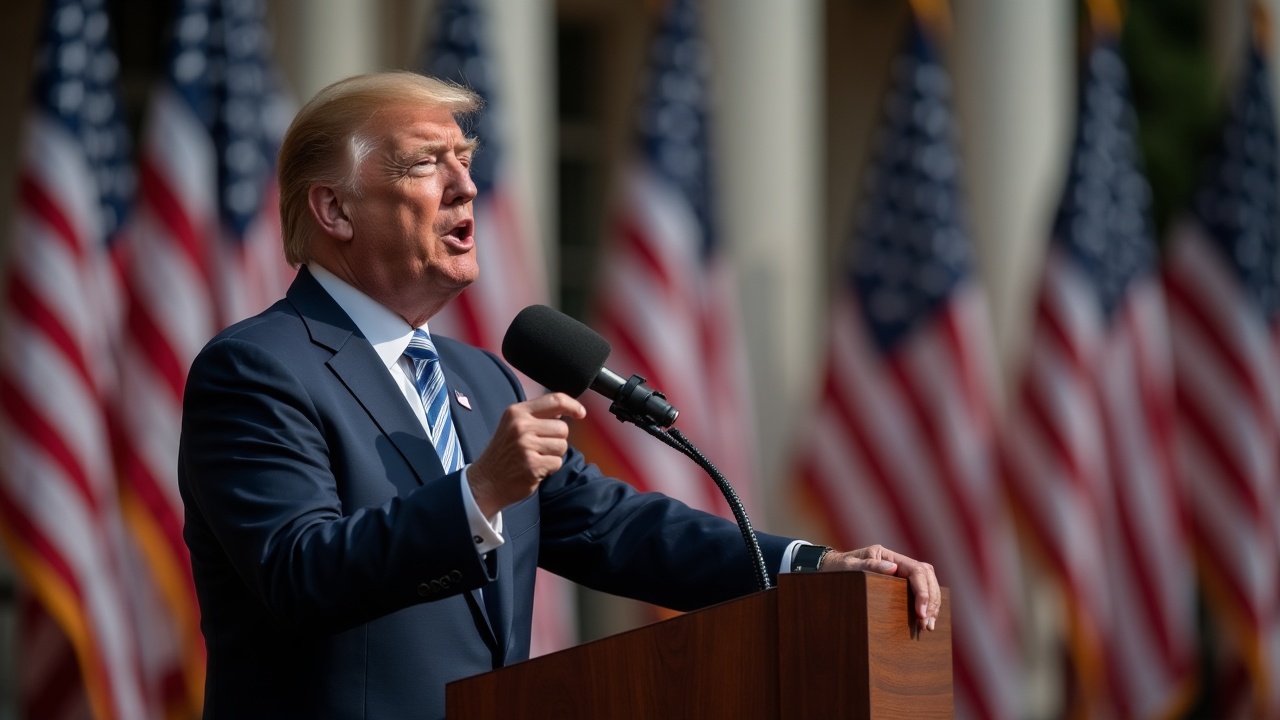
Featured image is from the author
Global Research is a reader-funded media. We do not accept any funding from corporations or governments. Help us stay afloat. Click the image below to make a one-time or recurring donation.














.png)






.jpg)



 English (US) ·
  French (CA) ·