

.png) 2 months ago
83
2 months ago
83
PROTECT YOUR DNA WITH QUANTUM TECHNOLOGY
Orgo-Life the new way to the future Advertising by AdpathwayWith the weather set fair and a heatwave under way, all around are literally making hay while the sun shines. Last year’s drought produced very little grass to make hay with, resulting in high prices and scarcity over winter. This year, the grass has received good amounts of both sun and rain – the ideal conditions.
Foxglove Farm and Manor Farm are busy at it, but it seems Rolf’s may have sold its crop standing, for someone else to make and take. Other farms on lower-lying, lusher fields made their first crop during the late May heatwave, but the fields here on the higher chalk needed more time to grow.
Haymaking can’t be hurried. The grass is mown, then “tedded” or raked with rotary tines to spread in a sweet-smelling duvet over the field to dry. The field will be passed over and tedded again, after a day or more of drying, to flick and fluff up the swathe to dry it further. Then the tines are set to “row up” the grass into long, heaped lines, or windrows, that the wind continues to dry, before it’s time for the baling machine.
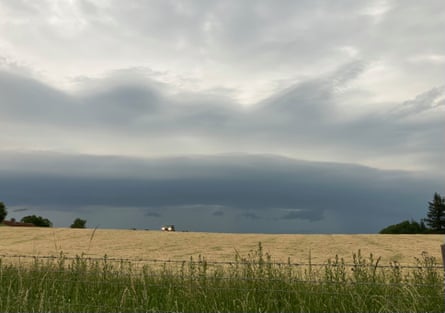
The increasingly unsteady, alarming weather of climate change can disrupt everything. The unforecast West Country storm, which delivered more than 18,500 lightning strikes on the evening of 22 June, passed its skirts over us with some thunder and a dousing, and some fields needed tedding and drying again.
Yet the heat returned so rapidly, baling continued into the following night. Damp-baled hay is to be avoided at all costs for the risk of mould and overheating: a deep-smouldering bale can spontaneously combust. The sickly green, caramelising smell of this process beginning is one that you don’t forget.
Haymaking here is usually done by farmers in older tractors without air conditioning in the hot and shadeless fields. Our days and nights are scented with sweet coumarin from the cut grasses and honeysuckle from the hedges, in a headiness I adore. It unlocks memories of the sweaty, filthy, scratchy glory that comes with a process that combines work, community, weather and nature, and knowledge just beyond our weather apps.











.png)




.jpg)


 English (US) ·
  French (CA) ·