

 2 months ago
44
2 months ago
44
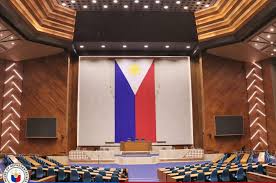
In the halls of the Philippine Senate and the House of Representatives, a long-standing assumption persists: that the people best suited to craft laws are lawyers. Today, both chambers of Congress are heavily dominated by legislators with legal training. Their expertise is undeniably valuable, especially in interpreting statutes, refining legislative language, and ensuring constitutional compliance. Yet an important question remains: should the making of laws be entrusted primarily to those trained only in the practice of law?
An increasing number of observers argue that the “lawyerization” of Congress may unintentionally limit the nation’s political imagination. When legislative bodies become overly concentrated with legal professionals, policymaking can drift toward technical precision while losing sight of broader human realities. The law may become correct in form yet insufficient in spirit.
Lawyers are trained to analyze precedent, defend positions, and operate within established legal frameworks. These skills are essential for maintaining order and consistency. However, the role of a legislator requires more than technical mastery. Legislators are not merely custodians of existing rules; they are architects of society. They are called to envision the kind of nation people aspire to build.
A country does not progress through legality alone. It progresses through wisdom, moral imagination, and a deep understanding of human needs.
The Limits of Legalism
Legal thinking plays an essential role in the legislative process. Lawyers are trained to value procedure, precision, constitutional interpretation, and careful statutory analysis. These qualities are indispensable in drafting laws that are coherent, enforceable, and consistent with constitutional principles. They help ensure that legislation protects rights, maintains institutional stability, and operates within the rule of law. However, when legal reasoning becomes the dominant framework within legislatures, it can also narrow political imagination and weaken responsiveness to the broader social realities laws are meant to address.
Legalism in legislation tends to prioritize what is technically permissible over what is morally necessary. A bill may satisfy constitutional standards, survive judicial scrutiny, and adhere to established legislative procedures, yet still fail to confront the deeper injustices experienced by ordinary citizens. Laws can be formally valid while remaining socially inadequate. Throughout history, many systems of inequality endured not because they lacked legal legitimacy, but because legislators interpreted legality too narrowly to address structural injustice. In this sense, technical legality alone cannot serve as the highest measure of effective legislation.
An excessive reliance on legal reasoning can also distance legislators from the lived experiences of the people they represent. Lawyers are trained to analyze issues through precedent, statutory language, procedural frameworks, and institutional constraints. While this analytical discipline is valuable, legislation requires more than technical interpretation. It also demands empathy, imagination, and an understanding of how laws affect communities in practical and human terms. Citizens do not experience legislation as abstract legal doctrine; they experience it through wages, healthcare, housing, education, public safety, and opportunities for dignity in everyday life. A law crafted primarily for technical efficiency may overlook the human consequences it creates.
Moreover, excessive legalism within legislatures can encourage caution at the expense of meaningful reform. Because legal training often emphasizes risk avoidance, procedural correctness, and incremental change, legislative bodies may become hesitant to pursue bold solutions to urgent social problems. Challenges such as poverty, inequality, environmental degradation, labor exploitation, and systemic discrimination frequently require imaginative and interdisciplinary responses. If lawmakers approach every issue primarily as a technical legal question, legislative debates may become more concerned with procedural compliance than with achieving substantive justice or long-term social improvement.
This critique is not an argument against lawyers serving in Congress or participating in legislative life. Their expertise remains essential in drafting legislation, interpreting constitutional boundaries, and maintaining institutional integrity. Democracies need legislators who understand legal systems and the complexities of statutory language. The concern arises only when one professional perspective becomes disproportionately dominant within the legislative process. A legislature composed too heavily of lawyers risks developing a narrow approach to lawmaking, one that privileges legal technicalities over broader social insight and practical human experience.
A healthy legislature benefits from diversity not only in ideology or demographic background, but also in professional experience and intellectual orientation. Teachers, scientists, entrepreneurs, healthcare workers, labor leaders, social workers, farmers, artists, and community organizers each contribute forms of knowledge that legal training alone cannot provide. Different professions encounter society from different vantage points, allowing legislation to become more grounded, creative, and responsive to the realities of everyday life. Broader representation within Congress encourages laws that are not only legally sound, but also socially informed and morally attentive.
Legislation should aspire to more than procedural correctness. Laws are not merely technical instruments of regulation; they are expressions of a society’s moral priorities and collective vision. Effective legislatures function best when legal expertise is balanced with practical wisdom, ethical reflection, and genuine engagement with the lives of ordinary people. A legislative culture dominated solely by legalism risks reducing lawmaking to technical administration rather than democratic problem-solving. A stronger Congress requires lawmakers capable not only of interpreting legal principles, but also of understanding human realities, confronting injustice, and crafting laws that advance the common good.
The Four Pillars of a Visionary Legislator
To genuinely serve a diverse and evolving nation, lawmakers must cultivate qualities that transcend technical expertise. Four principles are especially important.
1. Profound Social Justice
A great legislator must ask not only, “Is this legal?” but also, “Is this just?” Legality and justice are not always identical. A law may conform to constitutional standards and procedural requirements while still failing to address the inequalities and hardships experienced by vulnerable communities. True statesmanship requires the moral imagination to recognize that the purpose of law extends beyond maintaining order or preserving institutional stability. Laws should serve as instruments of fairness, dignity, and human flourishing.
Public office carries a responsibility not merely to govern efficiently, but to confront the structural conditions that prevent citizens from living with equality and opportunity. Poverty, discrimination, unemployment, unequal access to education, and social exclusion are not isolated personal failures; they are often the consequences of deeper systemic forces embedded within society. Effective legislation therefore demands an awareness of how economic and political systems affect ordinary people differently depending on their class, race, gender, disability, or social background. Without such awareness, policymakers risk creating laws that appear neutral in theory while reinforcing inequality in practice.
A commitment to profound social justice requires lawmakers to listen carefully to the voices that are frequently ignored or underrepresented. Marginalized communities often experience government in ways that differ sharply from those in positions of privilege. For the poor, the law may appear not as protection, but as bureaucracy, exclusion, or indifference. For minorities facing discrimination, formal equality under the law may not erase unequal treatment in everyday life. Legislators who are genuinely committed to justice must therefore move beyond abstract legal principles and engage directly with the realities faced by those at the margins of society.
This perspective also demands empathy as a political virtue. Good legislation cannot emerge solely from statistics, legal briefs, or administrative reports. It must be informed by human experience. A policymaker who understands the anxiety of unemployment, the insecurity of inadequate healthcare, or the humiliation of social exclusion is more likely to craft laws that respond meaningfully to public needs. Justice requires not only intellectual analysis but also moral sensitivity — the ability to recognize suffering and respond with compassion and responsibility.
Furthermore, profound social justice recognizes that neutrality alone is insufficient in unequal societies. Governments cannot simply treat all citizens identically while ignoring historical disadvantages and structural barriers. In many cases, justice requires active measures to expand opportunity, protect vulnerable groups, and correct imbalances of power. Policies concerning education, labor rights, healthcare, housing, and social welfare should not be viewed merely as administrative concerns, but as moral commitments to creating a more equitable society.
This does not mean abandoning the rule of law or constitutional principles. Rather, it means understanding that law should be guided by ethical purpose. The legitimacy of democratic institutions depends not only on procedural correctness but also on their ability to improve human lives. A society that values justice must evaluate laws not simply by whether they are enforceable, but by whether they advance human dignity and reduce unnecessary suffering.
Profound social justice calls for a broader vision of governance that combines legal knowledge with moral courage and social awareness. The best legislators are not only skilled interpreters of statutes and constitutions; they are advocates for human dignity. They recognize that democracy is strongest when its institutions serve all citizens, especially those who have historically been neglected, excluded, or silenced. In this sense, justice is not an abstract ideal separate from governance. It is the very measure by which democratic leadership should be judged.
2. The Sanctity of Human Life
At the heart of every democratic society lies a fundamental principle: the human person possesses inherent dignity and worth. Public policy, regardless of its complexity or technical sophistication, should ultimately be evaluated according to how it affects human life and well-being. Governments may pursue economic growth, institutional efficiency, and political stability, but these goals lose their moral legitimacy when they disregard the welfare of the people they are meant to serve. A society cannot call itself truly just if progress is achieved at the expense of human dignity.
Economic development is often treated as the primary measure of national success. Rising gross domestic product, expanding industries, and improved fiscal performance are frequently celebrated as signs of effective governance. While these indicators are important, they are incomplete if ordinary citizens continue to suffer from poverty, hunger, inadequate healthcare, unsafe working conditions, or social neglect. Economic systems exist to improve human life, not the other way around. Growth that benefits only a privileged few while leaving vulnerable populations behind cannot be considered genuine progress. Legislators must therefore ensure that economic policies remain connected to the broader moral purpose of promoting human flourishing.
Similarly, administrative efficiency should never become an excuse for indifference toward individual suffering. Bureaucracies are designed to organize public services and maintain order, but when institutions become overly focused on procedure and convenience, they risk treating people as statistics rather than as human beings. Policies may appear efficient on paper while producing harmful consequences in practice. A healthcare system that prioritizes cost reduction over patient care, or a welfare system that burdens struggling families with unnecessary obstacles, may satisfy administrative goals while undermining human dignity. Legislators must resist the temptation to value institutional convenience more highly than the lives affected by public decisions.
The sanctity of human life also demands moral courage in policymaking. Difficult political decisions often involve competing interests, financial limitations, and ideological pressures. In such situations, lawmakers must possess the ethical clarity to remember that every policy affects real people with real vulnerabilities. Decisions concerning healthcare, labor protections, housing, education, criminal justice, and environmental regulation are not merely technical debates; they are questions about the quality and value of human life. Responsible leadership requires sensitivity to the consequences of legislation on families, workers, children, the elderly, and marginalized communities.
Moreover, recognizing the sanctity of human life means affirming that every individual deserves respect regardless of social status, wealth, ethnicity, religion, gender, or political belief. Democratic governments exist not only to preserve institutions, but also to protect the equal dignity of all citizens. Laws that tolerate exploitation, neglect, or dehumanization weaken the moral foundation of society itself. A government that truly values human life seeks to create conditions in which people can live securely, participate meaningfully in society, and pursue lives of dignity and opportunity.
This principle becomes especially important during times of crisis. In periods of economic hardship, conflict, public health emergencies, or political instability, governments may be tempted to prioritize order, productivity, or national interests over individual welfare. Yet the true test of democratic leadership lies precisely in whether it continues to protect human dignity under pressure. Legislators must be willing to defend the vulnerable even when doing so is politically difficult or economically inconvenient. Moral leadership requires more than technical competence; it requires compassion, conscience, and a deep respect for the value of every human life.
The sanctity of human life should serve as the moral compass of public policy. Laws and institutions are not ends in themselves; they are instruments created to serve people. A humane society measures success not only by wealth or efficiency, but by the extent to which it safeguards dignity, reduces suffering, and enables individuals to live meaningful and secure lives. Legislators who understand this principle recognize that governance is not merely about managing systems but about protecting and honoring humanity itself as well.
3. Responsible Freedom
Freedom is often understood simply as the absence of restraint, i.e., the ability to act without interference from government or other individuals. While this negative conception of liberty is important, it is incomplete. True freedom is not merely the removal of restrictions; it is the presence of meaningful opportunities that allow individuals to develop their abilities, pursue their aspirations, and participate fully in society. A person cannot be considered genuinely free if poverty, discrimination, ignorance, or social exclusion deprive them of the capacity to live with dignity and purpose.
Responsible lawmakers recognize that liberty must be connected to human development. Political rights such as freedom of speech, freedom of religion, and freedom of association are essential foundations of democracy, but these rights have limited value when citizens lack access to education, healthcare, employment, or social security. Freedom becomes meaningful only when individuals possess the practical conditions necessary to exercise their rights effectively. A society committed to liberty must therefore invest not only in protecting civil freedoms, but also in creating social and economic conditions that allow all people to flourish.
This understanding of freedom rejects the idea that democracy should be built solely on radical individualism. Human beings do not exist in isolation; they live within families, communities, and institutions that shape their opportunities and responsibilities. Every exercise of freedom affects others. For this reason, rights must always be balanced with obligations toward the broader community. Freedom without responsibility can devolve into selfishness, social fragmentation, or the abuse of power. Democratic societies remain stable not because individuals pursue only personal interest, but because citizens recognize their shared duties to one another.
Wise legislators therefore understand the importance of the common good. The role of government is not simply to protect individual autonomy in the abstract, but also to preserve the social conditions that allow liberty to exist for everyone. Laws concerning public health, education, labor protections, environmental sustainability, and public safety often require balancing personal freedoms with collective welfare. Such measures are not necessarily attacks on liberty; in many cases, they are essential to ensuring that freedom remains accessible, secure, and meaningful for the entire population rather than only for the privileged or powerful.
Responsible freedom also requires civic virtue. Democracies depend not only on constitutions and institutions, but also on the character of citizens themselves. A free society can endure only when individuals are willing to participate constructively in public life, respect the rights of others, and contribute to the well-being of their communities. Voting, civic engagement, public dialogue, and respect for democratic norms are responsibilities that sustain political freedom across generations. When citizens become indifferent to these obligations, democratic institutions weaken and social trust begins to erode.
Moreover, lawmakers must recognize that unrestricted power, whether exercised by the state, corporations, or individuals, can threaten freedom itself. Economic inequality, disinformation, exploitation, and social injustice can create conditions in which formal liberties exist in theory but remain inaccessible in practice for many citizens. Protecting freedom therefore requires vigilance against systems that concentrate power in ways that undermine equal opportunity and democratic participation. Responsible governance seeks to create a society in which liberty is not merely a privilege enjoyed by a few, but a lived reality shared by all.
Responsible freedom is grounded in the understanding that liberty and responsibility are inseparable. A democratic society flourishes when citizens are empowered to pursue their own aspirations while remaining conscious of their obligations to others. Freedom is not diminished by solidarity, compassion, or public responsibility; rather, these values strengthen the moral foundations upon which genuine liberty depends. The best legislators understand that democracy succeeds not through unchecked individualism, but through a culture of mutual accountability, shared dignity, and commitment to the common good.
4. Empowering Creative Talents
The ultimate purpose of governance should not be limited to maintaining order, collecting taxes, or administering institutions. At its highest level, the government exists to create the conditions in which human beings can realize their fullest potential. A nation advances not only through economic growth or political stability, but through the creativity, intelligence, and aspirations of its people. Societies flourish when citizens are encouraged to think freely, innovate boldly, and contribute meaningfully to the common good. Effective governance therefore requires more than regulation; it requires the active cultivation of human talent.
Every individual possesses abilities that, when properly developed, can enrich society in countless ways. Scientists expand knowledge and solve practical problems. Entrepreneurs create opportunities and drive economic development. Artists and writers preserve culture, challenge assumptions, and deepen human understanding. Educators shape future generations, while skilled workers and professionals sustain the everyday functions of society. A healthy democracy recognizes that national progress depends on empowering people across all fields of endeavor, not merely on protecting institutions or preserving existing systems of power.
Education is central to this vision. Genuine freedom and opportunity cannot exist when citizens are denied access to quality learning. Schools and universities should not merely train individuals for employment; they should cultivate curiosity, critical thinking, creativity, and civic responsibility. A society that neglects education limits the potential of its people and weakens its future capacity for innovation and leadership. Legislators therefore have a responsibility to ensure that educational systems remain accessible, inclusive, and capable of nurturing both intellectual and moral development.
Scientific inquiry and technological innovation must also be supported as essential pillars of national advancement. Progress in medicine, engineering, environmental sustainability, and digital technology has transformed human life and expanded the possibilities available to society. Yet innovation thrives only in environments where intellectual freedom, research funding, and open inquiry are protected. Governments that invest in science and research are investing not merely in economic competitiveness, but in the long-term well-being and resilience of their citizens. Wise legislation encourages discovery while ensuring that technological progress remains guided by ethical responsibility and public benefit.
At the same time, a truly flourishing society must value culture and the arts alongside economic and scientific achievement. Artistic expression is not a luxury separate from public life; it is a reflection of a nation’s identity, imagination, and humanity. Literature, music, theater, visual arts, and cultural traditions help societies understand themselves and preserve the stories, values, and experiences that bind communities together. Support for the arts enriches public discourse, encourages empathy, and inspires citizens to think beyond immediate material concerns. A government that neglects culture risks creating a society that is materially advanced yet spiritually impoverished.
Entrepreneurship and economic creativity are equally important in empowering citizens. Individuals should have opportunities not only to seek employment, but also to create, innovate, and build institutions of their own. Small businesses, startups, cooperatives, and community enterprises often serve as engines of local development and social mobility. Effective legislation should therefore reduce unnecessary barriers to innovation while ensuring that economic systems remain fair and accessible. Policies that encourage creativity, reward initiative, and expand opportunity can unleash the productive energies of an entire population.
Empowering creative talents also requires lawmakers to recognize the importance of social conditions that allow individuals to pursue their aspirations. Creativity struggles to flourish where poverty, insecurity, discrimination, or political repression dominate public life. Citizens who are burdened by hunger, fear, or exclusion are often denied the freedom to explore their abilities fully. Governance must therefore address not only economic growth, but also the broader social foundations of human development, including healthcare, social protection, equal opportunity, and civil liberties.
Effective legislation should aspire to inspire rather than merely control. Laws should not exist solely to regulate behavior or preserve administrative order; they should help create a society in which human potential can thrive. The true measure of a government is not only the efficiency of its institutions, but the extent to which it enables people to live creative, meaningful, and dignified lives. A nation reaches its highest possibilities when it empowers its citizens not simply to survive, but to imagine, create, and contribute to the progress of humanity itself.
Why Philosophers Matter in Congress
Among the many professional backgrounds that should be represented in a healthy democracy, philosophers would bring a particularly valuable perspective to legislative life. Philosophers are trained not merely to discuss abstract theories, but to examine the deepest ethical foundations of society itself. Their discipline encourages rigorous reflection on questions that lie at the heart of democratic governance: What is justice? What obligations do citizens owe one another? What are the limits of state power? What does freedom truly mean? How should society balance individual rights with the common good? These are not purely academic concerns. They are questions that shape every major political decision and every enduring social institution.
Modern legislatures often operate within environments dominated by legal technicalities, partisan conflict, media pressures, and short-term political calculations. Policymaking can easily become focused on immediate electoral gains, procedural maneuvering, or narrow administrative concerns. In such a climate, there is a danger that deeper moral reflection is pushed aside. Philosophers can help counter this tendency by encouraging lawmakers to think beyond immediate expediency and consider the broader ethical implications of legislation. They are trained to identify hidden assumptions, clarify concepts, and evaluate whether policies are consistent with the values a democratic society claims to uphold.
One of the greatest strengths philosophers bring to governance is their capacity for critical thinking. Philosophical training develops habits of questioning that are essential for democratic deliberation. Philosophers do not simply accept prevailing assumptions because they are politically convenient or socially popular. Instead, they ask whether those assumptions are coherent, justified, and morally defensible. In legislative settings, this capacity can help prevent public policy from becoming trapped in unexamined traditions, ideological rigidity, or superficial rhetoric. Philosophers can challenge lawmakers to explain not only how policies function, but why they are ethically justified.
Philosophers are also uniquely equipped to analyze the moral consequences of political decisions. Every law reflects an underlying vision of human values and social priorities. Decisions regarding healthcare, education, economic inequality, criminal justice, environmental policy, and technological regulation are never morally neutral. They involve judgments about fairness, responsibility, human dignity, and the distribution of opportunity. Philosophers can contribute by helping legislatures think carefully about the ethical trade-offs involved in policymaking and by ensuring that public debates remain connected to deeper principles rather than mere political advantage.
In addition, philosophers often bring a long-range perspective that is frequently absent in contemporary politics. Electoral cycles and partisan competition can encourage short-term thinking, with lawmakers prioritizing immediate popularity over long-term societal well-being. Philosophical inquiry, by contrast, encourages reflection across generations. It asks not only what policies are beneficial today, but what kind of society current laws are shaping for the future. Philosophers can therefore contribute a broader civilizational perspective, helping legislatures consider how present decisions affect future citizens, democratic culture, environmental sustainability, and social cohesion.
The importance of philosophical insight in politics is not a new idea. Many of history’s most influential political thinkers understood that governance is fundamentally a moral endeavor as well as a legal and institutional one. Political systems are not sustained solely by constitutions, regulations, or economic structures; they are sustained by ideas about justice, human nature, civic virtue, and the common good. Philosophical reflection has historically shaped democratic ideals, human rights traditions, theories of liberty, and conceptions of social responsibility. To exclude philosophical perspectives from legislative life would therefore be to neglect one of the deepest intellectual resources available to democratic societies.
At the same time, philosophers should not replace lawyers, economists, scientists, or other professionals in public office. Rather, their value lies in complementing these perspectives within a broader and more balanced democratic institution. Lawyers contribute legal expertise and institutional knowledge. Scientists provide empirical understanding and technical insight. Educators understand the realities of learning and social development. Farmers and laborers bring awareness of economic and rural concerns. Entrepreneurs contribute knowledge of innovation and commerce. Artists and cultural workers enrich public understanding of identity and imagination. Community organizers understand local struggles and grassroots realities. Philosophers add another essential dimension: ethical reflection and moral reasoning.
A Congress composed of individuals from diverse intellectual and professional backgrounds would be better equipped to confront the complexity of modern governance. Contemporary societies face challenges that are not merely legal or technical, but deeply ethical and human. Questions surrounding artificial intelligence, biotechnology, economic inequality, climate change, social fragmentation, and democratic decline cannot be solved through procedural expertise alone. They require wisdom, moral clarity, and the ability to think critically about the direction of society itself.
Philosophers matter in Congress because democracy requires more than efficient administration or legal compliance. It requires thoughtful reflection on the values that should guide public life. A legislature enriched by philosophical voices would be more capable of examining not only what policies are possible, but what policies are right. By encouraging deeper deliberation about justice, responsibility, freedom, and human dignity, philosophers can help ensure that governance remains connected to the ethical purposes that give democracy its legitimacy and meaning.
Diversity of Thought as a Democratic Strength
A healthy democracy depends not only on fair elections and strong institutions, but also on the diversity of perspectives represented within its legislative bodies. A legislature composed of individuals from varied disciplines, professions, and life experiences is better equipped to understand the complexity of society and craft policies that respond to real human needs. Governance becomes stronger when lawmakers bring different forms of knowledge into public deliberation, because no single profession or intellectual tradition possesses a complete understanding of national life.
Scientists, for example, contribute analytical rigor, empirical reasoning, and evidence-based thinking to policymaking. In an age shaped by technological advancement, environmental challenges, public health concerns, and rapid scientific change, legislators with scientific expertise can help ensure that policies are grounded in credible research rather than misinformation or political expediency. Their training encourages careful evaluation of data, long-term thinking, and a commitment to factual accuracy. These are qualities essential for addressing issues such as climate change, healthcare, infrastructure, and technological regulation.
Educators bring another indispensable perspective. Teachers and academic professionals understand how social conditions shape learning, personal development, and civic responsibility. Because they work closely with students, families, and communities, educators are often deeply aware of the structural inequalities that affect opportunity and social mobility. Their experience allows them to recognize how policies concerning schools, public investment, youth programs, and community support systems influence the future of society. Legislatures that include educators are more likely to appreciate the long-term importance of cultivating informed, capable, and socially responsible citizens.
Farmers and workers connected to rural life contribute practical knowledge that is often overlooked in urban-centered policymaking. They understand firsthand the realities of food production, environmental stewardship, labor conditions, and the economic vulnerabilities faced by agricultural communities. Rural populations frequently experience political neglect despite their essential role in sustaining national economies and food systems. Legislators with direct experience in these sectors can ensure that public policy reflects the concerns of communities that might otherwise remain underrepresented in national debates.
Community organizers and grassroots leaders provide yet another vital dimension to democratic governance. Because they work directly among marginalized populations, they possess a close understanding of the struggles faced by the poor, minorities, informal workers, and socially excluded groups. Their perspective is grounded not in abstract theory, but in everyday encounters with inequality, discrimination, displacement, and institutional failure. Such experience can help legislatures remain connected to the realities faced by vulnerable sectors of society and encourage policies that are more compassionate, inclusive, and socially responsive.
Entrepreneurs and business leaders also contribute valuable insight into innovation, economic development, and employment creation. Their experience in building organizations and responding to changing economic conditions can help shape practical and forward-looking economic policies. Artists, writers, and cultural workers enrich public life by preserving cultural identity, encouraging creativity, and fostering empathy and imagination within society. Philosophers contribute ethical reflection and long-range thinking, while healthcare professionals understand the human realities of illness, care, and public well-being. Each profession illuminates different dimensions of national life that legal expertise alone cannot fully capture.
The presence of diverse experiences within Congress creates a government that is more grounded, adaptable, and humane. Policymaking becomes more reflective of society as a whole rather than the worldview of a narrow professional class. Laws emerge not only from legal interpretation and institutional procedure, but also from practical engagement with the realities of work, education, science, culture, family life, and community struggle. Such diversity strengthens democratic deliberation because it broadens the range of ideas, concerns, and moral perspectives brought into political decision-making.
This diversity of thought also helps prevent intellectual conformity and institutional blind spots. When legislatures are dominated by individuals with similar educational backgrounds and professional training, they may approach problems through the same assumptions and frameworks. While expertise is important, excessive uniformity can limit creativity and reduce sensitivity to experiences outside elite institutional circles. A broader range of voices encourages constructive disagreement, critical reflection, and more innovative solutions to complex social challenges.
Ultimately, democratic leadership requires more than technical competence or familiarity with legal codes. A nation needs lawmakers who understand the hopes, fears, struggles, and aspirations of the people they represent. Citizens do not experience society solely through constitutional doctrine or legislative procedure; they experience it through work, family, education, culture, health, and community life. Legislators who have lived and worked within diverse sectors of society are often better positioned to appreciate these realities and to craft laws that genuinely serve the public good.
By broadening the standards of leadership beyond legal credentials alone, Congress can evolve into a more representative and visionary institution. It can become not merely a factory for regulations and administrative procedures, but a forum where the full richness of national experience contributes to public decision-making. A legislature strengthened by intellectual, professional, and social diversity is more capable of addressing the complex realities of modern nationhood while advancing justice, creativity, and human progress.
*
Click the share button below to email/forward this article. Follow us on Instagram and X and subscribe to our Telegram Channel. Feel free to repost Global Research articles with proper attribution.
Prof. Ruel F. Pepa is a Filipino philosopher based in Madrid, Spain. A retired academic (Associate Professor IV), he taught Philosophy and Social Sciences for more than fifteen years at Trinity University of Asia, an Anglican university in the Philippines. He is a Research Associate of the Centre for Research on Globalization (CRG).
Featured image source
Global Research is a reader-funded media. We do not accept any funding from corporations or governments. Help us stay afloat. Click the image below to make a one-time or recurring donation.
















.png)






.jpg)



 English (US) ·
  French (CA) ·