

 8 months ago
95
8 months ago
95
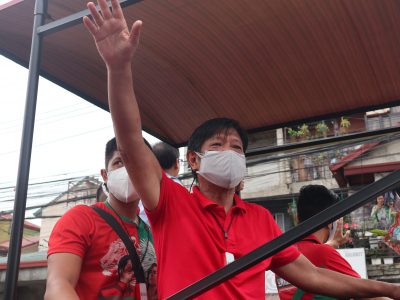
Beyond Personalities: The Real Power in Philippine Politics
In discussions about Philippine politics, the focus often falls on personalities: President Ferdinand Marcos, Jr., Vice President Sara Duterte, and the looming question of who might replace them. Yet, fixating solely on the names at the top misses the deeper structural issue. The true question is not who sits in these offices, but who ultimately chooses their replacements and the answer is painfully clear. It is the Filipino electorate, whose decisions are frequently shaped and swayed by local “warlords,” influential families, and entrenched power brokers.
These figures, operating largely behind the scenes, wield immense influence over political outcomes, often determining the trajectory of national leadership before voters even step into the ballot box. Understanding Philippine politics requires moving past the surface-level drama of personalities to see the networks of patronage and local power that truly govern political succession. Without acknowledging these dynamics, discussions about leadership risk being little more than speculation about names rather than an analysis of the forces that actually shape governance.
The Hidden Gatekeepers of Philippine Politics
These gatekeepers that consist of local strongmen, entrenched political families, and influential power brokers, effectively dictate the choices available to voters, ensuring that only hand-picked politicians rise to power. The electoral process, while ostensibly democratic, often functions more as a mechanism for legitimizing pre-determined outcomes than as a genuine avenue for change.
Change through conventional elections? Both history and political theory suggest it is highly unlikely. Machiavelli’s The Prince warns that those who hold power will go to great lengths to preserve it, manipulating appearances and public perception to maintain control. Likewise, Vilfredo Pareto’s concept of the “circulation of elites” illustrates that even when new figures appear on the political stage, they typically emerge from the same networks of influence, perpetuating the existing hierarchy rather than dismantling it.
Societal structures, deeply rooted in patronage, economic dependency, and localized authority, resist abrupt transformation. Reformist candidates may rise, but without disrupting these entrenched networks, their victories often amount to symbolic shifts rather than substantive change. In this light, understanding Philippine politics requires looking beyond the ballot, to the invisible architecture of power that quietly but decisively shapes the nation’s leadership.
The Limits of Ideological Promises
Even the promise of socialist solutions, often touted as pathways for meaningful reform, falls short in practice. These movements frequently present clever slogans and carefully crafted rhetoric designed to resonate with a so-called thinking public, projecting an image of intellectual rigor and moral clarity. Yet beneath the surface, their proposals often struggle to engage with the entrenched realities of local and national power structures.
The challenges of Philippine politics are not merely theoretical; they are rooted in decades, if not centuries, of patronage, elite dominance, and socio-economic inequality. Ideology alone cannot dismantle these networks or redistribute influence. Theory without concerted action, strategic engagement, and an understanding of the mechanisms of power remains insufficient to alter the forces that shape governance and policy.
In short, while socialist or reformist frameworks may inspire hope and offer a moral compass, their effectiveness is severely limited unless they directly address the entrenched systems that perpetuate inequality and control political outcomes. Aspirations without actionable strategies risk becoming little more than intellectual exercises, disconnected from the real levers of power in Philippine society.
The Imperative for Decisive Action
The Philippines needs more than words, debates, or incremental reforms. It requires decisive, concrete, and uncompromising action. Surface-level discussions, legislative tinkering, and well-meaning proposals cannot dismantle the deeply entrenched networks of patronage and local power that dominate political life. History is clear: no nation has ever achieved genuine government “of, for, and by the people” without revolution or upheaval that confronts existing structures head-on. True transformation demands bold steps that challenge the status quo rather than merely navigating around it.
Examples from other countries can offer inspiration and strategic insights, but they cannot replace the hard work of confronting the Philippines’ unique political realities. Electoral reform, while admirable in theory, remains largely ineffective if the electorate continues to be influenced, intimidated, or controlled by entrenched power brokers. Without addressing these structural forces, reforms risk being symbolic gestures rather than instruments of meaningful change.
Ultimately, the path forward requires a willingness to move beyond the comfortable rhetoric of debate and ideology, toward sustained, fearless action that tackles the roots of political dominance. Only by confronting the mechanisms of power directly can the promise of a truly participatory democracy begin to materialize.
Confronting Power: The Necessity of Action
The truth is uncomfortable but undeniable: words alone will not change the Philippines. Endless debates, promises, and intellectual exercises may raise awareness, but they do little to alter the entrenched networks that dictate political outcomes. Bold action, informed by historical lessons and rooted in the realities of local and national politics, is the only path forward. More than hope, transformation requires and demands strategic, uncompromising engagement with the structures of power that sustain inequality and political stagnation.
It is time to confront these structures directly, to challenge the influence of local strongmen, entrenched elites, and power brokers who continue to shape the electorate’s choices. Without decisive intervention, each election risks reproducing the same familiar order, cycling familiar names and maintaining the status quo under the guise of democratic process. Real change necessitates courage, vision, and an unflinching willingness to act before the system once again consolidates itself, leaving genuine reform perpetually out of reach. The nation cannot afford to wait since meaningful change demands confrontation, strategy, and decisive action today.
*
Click the share button below to email/forward this article. Follow us on Instagram and X and subscribe to our Telegram Channel. Feel free to repost Global Research articles with proper attribution.
Prof. Ruel F. Pepa is a Filipino philosopher based in Madrid, Spain. A retired academic (Associate Professor IV), he taught Philosophy and Social Sciences for more than fifteen years at Trinity University of Asia, an Anglican university in the Philippines. He is a Research Associate of the Centre for Research on Globalization (CRG).
Global Research is a reader-funded media. We do not accept any funding from corporations or governments. Help us stay afloat. Click the image below to make a one-time or recurring donation.











.png)





.jpg)


 English (US) ·
  French (CA) ·