

 1 week ago
37
1 week ago
37
PROTECT YOUR DNA WITH QUANTUM TECHNOLOGY
Orgo-Life the new way to the future Advertising by AdpathwayDonna Quesada: I’m very grateful for your time this morning. I know that our listeners will just love to hear your thoughts on everything that’s going on globally,
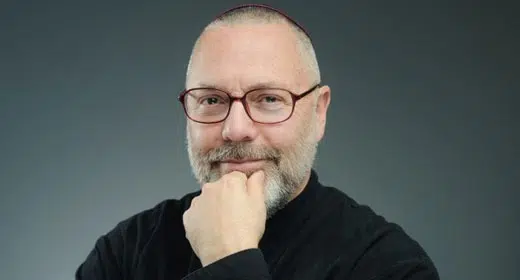
and also on some of your personal articles, which I’ve enjoyed so much, in preparing for this interview. So, if it’s all right with you, we’ll just dive right in and see where it goes?
Donna: Okay. Well, as you probably know, we always start these interviews with the question of what it means to awaken. And I do want to start that way, but I want to add a little bit to it because I think it’s undeniable that we’re going through some turbulent and troubled times.
I would like you to not only answer the question, or share your thoughts, rather, of what it means to awaken, but… Is that just an idealistic dream at this time in history, or is it more imperative and urgent than ever before?
Rabbi Rami: Both. I suppose it’s always urgent that we have… I don’t know, enough people who have achieved, whatever awakening is, to keep the world from imploding under the weight of its own ignorance and greed and violence. But it seems… and maybe only because you and I are alive at this moment… it seems that this moment is more imperative than moments I haven’t lived in or don’t remember living in.
In the Jewish tradition, there’s a teaching of the Lamed Vavniks. Lamed and Vav are two Hebrew letters. In Hebrew, there are no numbers, so letters do double duty as numbers. So, Lamed and Vav… Lamed is 30, Vav is 6. So there’s a teaching, thousands of years old, that there are always 36: Lamed 36, Vav 6. There always need to be 36 human beings awake to Shekhinah, the divine feminine presence in the world, and if we only have 35, we’re screwed.
So, there has to be 36 people awake to the divine feminine at any given moment, if the world is to survive. It doesn’t have to be the same 36 from moment to moment, but if one loses their connection, someone else has to step in. So there’s always 36. That’s just to maintain human civilization.
Donna: You need a certain number of adults in the room.
Rabbi Rami: A certain number of adults in the room, and if we don’t have those, we’re in trouble. That’s just to maintain it. If we’re going to thrive, we need more. And that’s the question… how do you up that number? Is that even possible? I think this is a dire moment, though.
Donna: And do you need to up the number, along with population? Is that an adjustable figure?
Rabbi Rami: Can you get more than 36? Sure, I think you can get more than 36.
Donna: And should we? As the population grows, we’ve got a bigger job to do.
Rabbi Rami: Yeah, well, you’re not adding to the human population growth. You’re taking people already here and helping them awaken. So yeah, the more people we have who are awake, the better off it’ll be for humans and for the planet herself. Is it possible? Yeah, it’s possible. Can we do it before AI wipes us all out? I don’t know.
Donna: And we’re going to go there. What does it mean though, first, to be awake when we talk about being awake?
Rabbi Rami: So I think… And I’m making no claims for myself as far as being awake. I think someone who’s truly awake is someone who’s awake to the fact that you and I and everything else in the universe is a manifesting of a singular, non-dual reality. You can call it God, you can call it Tao, you can call it consciousness… Brahman…
The names, as it says in the Rig Veda… Truth is ONE. Different people call it by different names. So, I’m not going to get hung up on the language that you assign to it, but there is a singular reality, a non-dual reality, that manifests all beings, the way an ocean manifests all waves. That’s what it is to be awake, and once you’re awake to that, your engagement with the world is radically different because you know that everything you meet, animate and inanimate… Everything you meet is part of you, and you’re part of that. And so you can’t harm it.
In the Bible… In Leviticus 19:18, it says, “Love your neighbor as yourself.” I taught Bible for many years, both as a Rabbi, but also in the university. My students in the university… I say, “Quote it,” and they would say, “Love your neighbor as you love yourself,” but it doesn’t say that. You don’t have to love yourself. That’s Oprah. That’s very different than the Bible. The Bible says, “Love your neighbor as yourself. “Self” with a capital S. The Atman.
Your neighbor is the one true self of which you two are a part, and when you recognize that, you can only treat that other person… doesn’t have to be human. It could be an animal, it could be a tree, it could be whatever… with absolute respect and compassion.
Just before we got on this call, there was a fly in my kitchen… This is not a brag, but first of all, flies annoy me. And so I went out of my way to catch it in a paper towel. And then I caught him, her, I don’t know how you tell the difference, but I got the fly, and I talked to him and I said, “Okay, don’t worry, I’m not squeezing you. I’m just holding you.” And we went outside. I said, “Be free,” and I let the fly go, and off he went.
Donna: I love that. You’re talking to a fellow creature relocator. I do that with spiders. I have a special cup for spider relocating purposes, with a little thing to slide under it.
Rabbi Rami: Yeah, I learned that. I just happened to have learned it from Matthew Ricard, who’s a famous Buddhist.
Donna: In France. Absolutely.
Rabbi Rami: Right. When, when I had a podcast, he was one of my guests, and we were talking about compassion toward all beings. I said, “Well, what about ants? Because I see them in my bathroom, and I just get ‘em, I kill ‘em.” And he said, “What happens when you start to bring your finger down on the ant to kill it?” And I said, “Well, the ant makes a run for it.” And he said, “Why?” And I said, “Well, it doesn’t want to die.” Because it’s conscious. It’s a conscious being. It’s trying to save its existence. He said, “When you think of that, can you snuff it out?” I thought about it and I said, “You’re right. How can I do that?” And I can’t do it anymore.
If there’s a mosquito, and I feel it, I smack it before I even think about it, but now with the ants, I try to brush them into a thing, and I take them outside. So when you’re awake to the fact that everything is consciousness, everything is alive, and part of a singular aliveness, that includes you and I, then you can only treat it with love and respect. So, that to me, is what awakening is.
Donna: Well, I love that you went there… because those who read my own stuff know that I’m an animal lover, and so is my mother, and so was my grandmother. Loving animals is a big part of my life. So I’m really glad you went there. But to sum it up, and to kind of keep us on track, being awake is seeing what one of my teachers called, the God in all, or as he put it, “if you can’t see God in all, you can’t see God at all.” That always stuck with me. I rather like that idea of seeing the divine spark in all creatures.
Rabbi Rami: Yeah, I absolutely agree. The only tweak I would make is to say, I don’t see God IN anything; I see God AS everything. So God’s not in me; God is me. God is this form, God is your form. I was once giving a talk, and this Native American elder came, and he was a gorgeous-looking guy. He was like, 5’4”… long gray hair and a ponytail. He asked me, “Have you ever seen God?” And I said, “Yeah, I see God right now.” He said, “Well, what does God look like?” And I said, “He looks like a Native American guy, about 5’4”, with a long gray ponytail.” And he just laughed. He realized that he’s God. God is manifest as this person in front of me. And that’s what being awake is: to say “That’s God.” As is the ant, as is the spider, as is everything in our existence.
Donna: It’s a rather pantheistic way of seeing the world, isn’t it?
Rabbi Rami: Yeah, it’s panentheism. Everything is in God.
Donna: God is in all. In preparing for this interview, I fell upon one of your articles that I really enjoyed, called Our Gods Are Killing Us. I was going to save that for later, but it seems to fall naturally right now, so I want to just share one of my favorite passages from that article. Again, it’s called, Our Gods Are Killing Us, and that’s your own work.
You say, “We need gods without tribes, flags, institutions, real estate holdings, bank accounts, or armies. We need gods who don’t play favorites and whose power and prestige aren’t measured by body counts or prison populations. We need gods who regard all life as sacred and whose ethic is simple and sound. Do not do to another what is hateful to you.”
A slight tweak on the old imperative that we’ve heard before. You don’t say, “Don’t do to others what you wouldn’t want done unto you.” You say, “Do not do to another what is hateful to you.” I really love that passage.
Rabbi Rami: Thank you. I’m glad you read it because I wouldn’t have remembered it. But yeah, the oldest form of the golden rule comes from Confucius and then from Rabbi Hillel. They’re both in the negative. They both say, “What’s hateful to you, don’t do to somebody else.” And then Jesus puts it in a positive spin.
Donna: Do unto others.
Rabbi Rami: Do unto others. But it’s the same general principle. Most of our gods are tribal, and most of our gods are violent. Most of our gods create a zero-sum world of winners and losers. Chosen, not chosen, saved, damned, true believers, infidels, high caste, low caste. They’re misogynistic. Everything that’s wrong with human society can be traced back to the gods that humans invented and that dominate us now. And we can’t avoid that. That’s why I say, we need gods. I never say I believe in God. I experience God. The God I experience.
Donna: I love that… I love that you say that.
Rabbi Rami: It’s this pantheistic absolute, that embraces and manifests all things. But the Gods that people believe in are human creations. They can reflect that pantheistic reality, that non-dual reality, or they can reflect the tribalist monsters that feed all of our war machines.
The extremists in Judaism, Christianity, and Islam couldn’t do what they do if they didn’t have a God backing them up, saying, “This is what I want you to do.” The Hindu nationalists in India couldn’t do what they’re doing, especially to Muslims, if they didn’t have their version of the God Ram, egging them on.
Now, this is going to be a little… maybe too far for some people, but there is no God, Ram. There’s just priests who say they know what God… what Ram wants. There is no Allah or Adonai or God the Father. There’s just men, primarily, clergy, who say, “I follow, and I know what these Gods want. And they want you to take over this land, or drive out these people, or oppress this community.” “I speak for God, and God hates LGBTQAI people… I know that.”
Well, of course you know that! You invented that God, and you hate those people. So, of course that God hates those people.
So again, back to what is being awake? Being awake is shattering all the gods you know, shattering all your beliefs, so you can see what’s true. And what’s true has nothing to do with our religions and our human-created God systems.
Donna: Well, I love that you went there because, first of all, if it didn’t shake the apple cart a little bit, it wouldn’t be as worthwhile. I think that’s what makes your point an important one. You’re saying in this article, which I think is very appropriate for now, and for what we’re going through now as a culture, as a global culture… that dangerous extremist leaders with God complexes—by the way, would you call them narcissists?—These God complexes, these mostly men with God complexes, are destroying all of us. But the funny thing is, you don’t say that we don’t need Gods. You ask instead, where do we find new gods?
Rabbi Rami: Yeah, I don’t think people can do without gods. There are some who can, but most of us need something. We just need better Gods. We need peaceful gods. In a sense… and I’d have to really think about this more, but we need a God like Jesus, before the church got ahold of him. We need a God that preaches love and compassion and justice.
Donna: You mean before it got tweaked by institution-driven agendas?
Rabbi Rami: Yeah, tweaked is a very mild term. Twisted, inverted, perverted, right? We need the God who says in the Hebrew Bible, “Love your neighbor as yourself, love the stranger as yourself,” not the God who says wipe out every man, woman, child, and cow of the Amalekites.
How can the same God say those two very different things? Well, it can’t. It’s people who said, “I want to wipe out the Amalekites.” I can’t go to my neighbors and say, “Hey, let’s go kill every Amalekite.” Someone’s going to say, “I don’t want to do that.” So they have to say, “No, I know you don’t want to do that, but God wants you to do that.” And they go, “Oh, well, if God wants me to do it, then I better do it.”
God is just a tool. That’s why it says in the… whoever wrote the 10 Commandments, “Don’t take my name in vain.” But that’s all religion does when it goes after power, is to use God’s name to motivate people to do evil. So we need better Gods, but then we need more… I don’t know, smarter people, more daring people, more spiritual people, or more awakened people.
Donna: People might be surprised to hear you, a Rabbi, speaking so frankly in that regard. And you don’t leave the Jewish traditions out of this critique, or this assessment. You say that, firstly, we see it in our own country, with Donald Trump posting images of himself as Jesus. You see Muslim extremists shouting “Allahu Akbar” as they slaughter innocent Jews. But you also see Jewish extremists labeling their enemies Amalek, which means absolute evil, while they invoke Israel’s God to justify their genocides. You speak of the Hindu mobs, and their demolishing of centuries-old mosques to make room for their own temples.
So people might be surprised to hear you, a Rabbi, speaking like this, but nobody is exempt. I actually think this is very, very laudable and objective of you to look squarely at these traditions, and how they have twisted the notion of God to suit their own agendas.
Rabbi Rami: Yeah, because we’re people. Because that’s what people do. Somehow, we have a fundamental choice, humans. Human beings are storytelling animals, and we can tell ourselves just to stick to the Bible, which is what I know best.
There are two basic stories about who we are as humans, in the Bible, in the book of Genesis. The first story is Genesis 1:26-27, after the world is created. And they’re stories; I don’t take them literally, but they’re good stories to help us understand our psyche.
So, in the first story, everything is going fine. God looks at the world and says, “It’s good.” And then God says, “Let’s make humanity in our image after our likeness,” and just poof, makes men and women. There’s no purpose for humanity. The world is working beautifully. It has everything it needs. And unlike the other creatures, like the fish grow out of the sea, people just come out of God’s brain, out of God’s mind. We’re not connected. In the first story, we’re not connected to nature, at all. We’re just plopped on the earth, and there’s nothing for us to do.
So, God says, “Multiply… Be fruitful and multiply, and then dominate every living thing on the planet. Because what else is there for you to do? There’s nothing. So, take it over, dominate it.” You and I both live in Tennessee, so we know this: the kudzu, that dangerous plant that chokes the life out of trees, you know, that takes over. We’re like the kudzu of creation. There’s nothing else for us to do. So we dominate, and then it’s a disaster.
In chapter two of Genesis… someone else writes chapter two; they have a totally different story. In chapter two, nothing is growing. It says, the earth is barren. Two things are missing, according to chapter two. First, there’s no rain. There’s no water. Second, people are missing. Because people are essential to creation.
So, God makes water come up from the earth, and then God takes the damp earth and creates the human. And the word for human… Adam, in most Bibles… it says “man,” but that’s false. The word for man is ish. The word for human is Adam. It comes from the word Adamah, which means earth. So the right translation would be “earthling.”
So, God makes the earthling from the earth, and then breathes consciousness, divine consciousness, into it. And so, now, you have the earth filled with divine awakening. And then the commandment isn’t to dominate, but it says to serve and protect. That’s the second story.
So, we have a choice as humans: Are we going to be dominators or protectors?
Our history says very clearly that most of us are going to be dominators. And so, we create a zero-sum world, winner takes all, because that’s how dominators play. But there is still the story. We read it… we just ignore it… of the protector story of a nonzero world, where everybody wins, not just humans, but everybody wins. Everyone helps everyone else in a collaborative, cooperative existence, in a thriving world. But that’s a story we just have not taken to heart.
Part two will launch next week.













.png)





.jpg)



 English (US) ·
  French (CA) ·