

 5 months ago
52
5 months ago
52

Mark Carney, Prime Minister of Canada, delivered his special address at the World Economic Forum in Davos, Switzerland on January 20, 2026. In his remarks to political and business leaders from around the world, he described the post–World War II “rules-based international order” as fading and no longer coming back.
Русский, Español, 中文, Portugues, Français, عربي, Hebrew, Deutsch, Farsi, Italiano, 日本語, 한국어, Türkçe, Српски. And 40 more languages.
Many in the audience and media circles treated his speech as a sign of political courage and clarity in a period of global uncertainty.
Carney described the world as in the midst of a rupture, with the era of predictable cooperation giving way to intensified great-power rivalry. But when exactly did that era of predictable cooperation truly exist, and for whom? A representative excerpt captures his core message:
“We know the old order is not coming back. We shouldn’t mourn it. Nostalgia is not a strategy, but we believe that from the fracture we can build something bigger, better, stronger, more just.”
Yet the “rupture” Carney invokes is less a neutral diagnosis of global transformation than a marker of elite disorientation: the moment when those long insulated from volatility now feel its full force — what has long been the normal condition for much of the world. The postwar order he mourns was never truly shared. It delivered stability, protection, and predictability to Western states while governing the Global South through extraction, intervention, debt, and containment. What registers in the West as breakdown and uncertainty has been the system’s default elsewhere.
Middle Powers and the Management of Decline
Carney argued that middle powers — states once described as developed countries — must develop strategic autonomy and coordinate in new coalitions, because alignment with powerful states no longer guarantees security. His use of the term “middle power” — rather than “developed” or “First World” states — reflects a broader political shift that accelerated after the United States lost the ability to reliably shape global outcomes on its own. This decline became visible after the 2008 financial crisis, the fallout from the Iraq war, and the broader collapse of confidence in Western leadership.
The great powers that built the postwar order — chiefly the United States — remain capable of disruption and destruction but can no longer unilaterally enforce or restore it. Countries once described as “developed” leaders of the global system are therefore now relegated to managers of instability: responsible for containing shocks and holding fractured institutions together, yet without the power to set or enforce the rules.
These middle powers now spend their political energy keeping markets, supply chains, and institutions functioning in crises they did not create and cannot resolve. They no longer shape the global rules. They manage the instability those rules now produce.
For example, Canada has poured resources since 2022 into stabilizing grain and fertilizer markets disrupted by Russia’s invasion of Ukraine — a great-power clash over NATO expansion and sovereignty that Canada neither started nor can end. Ottawa coordinates export corridors and alternative supplies — downstream crisis management, not rule-rewriting.
From Development to Risk Management
That downward reclassification — from leaders to managers — is specific to Western states. For what were once called developing or Third World countries — now commonly termed the Global South — the transformation is parallel but more severe: they are no longer framed as emerging partners advancing toward inclusion in a shared order, but as zones of risk to be contained and administered — humanitarian crises, fragile states, climate-vulnerable regions, migration routes. The promise of progress, however illusory under the old system, has given way to permanent management.
Carney’s speech engages only the Western demotion. In his framework, the Global South appears primarily as terrain — sites of debt distress, climate exposure, and food insecurity worsened by disruptions such as fertilizer and grain shortages from the Ukraine war and Gaza conflict. These regions absorb shocks; they do not shape rules.
This framing obscures the agency many Global South states have long exercised — through non-alignment, legal challenges, commodity leverage, and expanding South–South coalitions that increasingly bypass Western coordination. Their actions contest the managerial script rather than conform to it.
Candor Without Accountability
Carney’s speech was unusually forthright by Davos standards, where leaders routinely promise renewal — of multilateralism, norms, and cooperation. The forum’s deepest taboo is any language that forecloses continuity with the old order. By declaring it finished, Carney broke that norm.
Yet he frames breakdown as impersonal volatility, not as the result of decisions, power asymmetries, and selective enforcement. Rupture appears as a condition to manage through coordination and resilience — not as something produced by specific actors and policies. Responsibility becomes managerial: containment without authority, values without enforcement, stability without accountability.
Selective Enforcement and Structured Impunity
Carney gestures toward U.S. impunity without naming it as a governing method. From the postwar order’s inception, the United States shaped selective enforcement and embedded exception in its core design.
It championed veto power in the United Nations, shielding great powers from enforcement. At Nuremberg, it protected Allied bombing campaigns while prosecuting defeated enemies. During decolonization, it supported France and Britain as they treated violence in Algeria and Kenya as political necessity rather than legal crime. From the start, law operated hierarchically: constraining enemies and weaker states while protecting allies.
Within this structure, the United States made Israel its most enduring protected exception to the rules. U.S. vetoes, diplomatic cover, and military aid insulated occupation, settlement expansion, annexation, and repeated large-scale military operations from enforcement. Condemnation followed; consequences never did.
U.S. and allied elites sustained the arrangement through belief in manageability — the belief that exception could be controlled, contained, and stabilized through selective enforcement.
That belief is now collapsing. Exception has lost its limits and its cover. Actors who once contained it now operate it openly, continuously, and at scale.
Gaza marks the tipping point. Exception no longer appears as episodic deviation. It functions as permanent method. Civilian infrastructure is destroyed at scale. Humanitarian access becomes logistics management. Courts issue findings without effect. Governments invoke international law while suspending it in practice through vetoes, arms transfers, and diplomatic protection. Global media circulates what institutions once suppressed.
Systems built on managed exception depend on the perception that exception stabilizes order. When exception becomes permanent and unapologetic, law ceases to legitimize power and exposes hierarchy instead.
Carney describes the erosion but refuses to name its cause: the collapse of the postwar bargain that exempted great powers — above all the United States and its allies — from enforcement of the law they proclaim. Naming this would violate Davos’s deepest taboo. It would reveal the legitimacy crisis as structural, not contingent.
Carney’s approach assumes that capable Western states can preserve systemic stability through coordination, legal language, and institutional alignment, even as public confidence in the international order collapses and powerful allies block the enforcement of international law. Legitimacy has become something to stabilize through management rather than restore through confrontation with power.
Denmark as the Ceiling Case
Denmark shows what this approach can achieve — and where it stops. The country fits Carney’s middle-power category: high institutional credibility, EU and NATO membership, reliance on U.S. security guarantees, and limited coercive reach. It has adopted a more explicit legal posture on Gaza. At a U.N. Security Council briefing on 23 September 2025, Denmark’s ambassador stated that Israel “must comply with international law, including international humanitarian law,” and that the humanitarian catastrophe in Gaza “must be brought to an end.”
This is the upper boundary of the model. Denmark can articulate legal standards, support international courts, and speak publicly about civilian protection. It cannot impose consequences on allies. NATO alignment, U.S. pressure, and security dependence constrain its capacity to act.
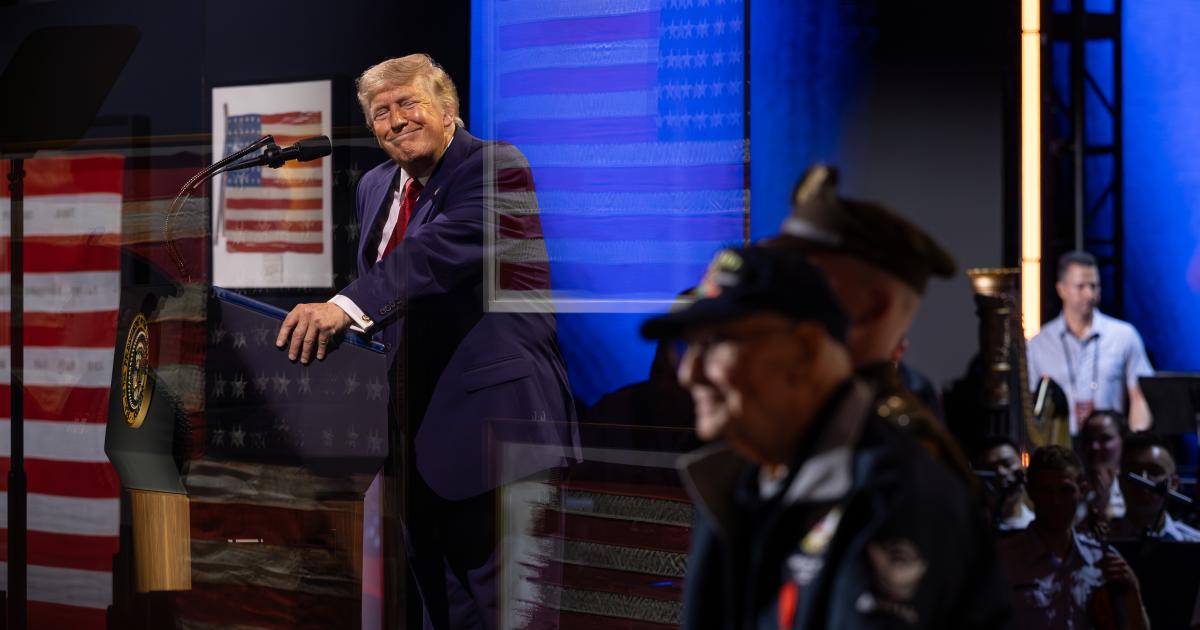
The same pattern appears in Denmark’s response to U.S. pressure over Greenland in January 2026. When Donald Trump renewed demands over Greenland’s status, Denmark responded through law and sovereignty language rather than power leverage. The prime minister stated that Greenland’s sovereignty “is not up for grabs.” Principle replaced power; law replaced coercion.
These limits reflect structure. Denmark operates inside an order that punishes enforcement more than violation. Public pressure — not elite coordination — has driven its legal language. Legitimacy re-enters politics through public pressure, not institutional management.
A middle power willing to absorb material loss in order to enforce international law would move beyond this framework. Denmark does not take that path because the system makes such action structurally costly. The model governs decline. It does not alter hierarchy.
Candor, Therapy, and the Human Applause
Carney’s courage lies in naming the old order as a “partially false” and “useful fiction,” sustained by collective performative compliance. Yet after diagnosing structured hypocrisy, he prescribes managerial therapy: resilience, coordination, and a stronger seat at a table where others still control the menu.
What remains is the human toll of a system without direction. The people in that Davos room are not only officials and representatives. They are individuals trapped in endless crisis management, ceaseless instability, and permanent contradiction. They staff institutions that deliver containment, not solutions. They shoulder responsibility without control. Year after year, they hear the same diagnoses, manage the same failures, repeat the same language.
In a forum built on ritualistic optimism, even modest honesty feels revolutionary. Simply refusing false reassurance feels like courage. The standing ovation expresses that psychology: not belief in change, but release. A moment of recognition that alters nothing. The system endures unchanged. The applause becomes an emotional permission to exhale.
*
Click the share button below to email/forward this article. Follow us on Instagram and X and subscribe to our Telegram Channel. Feel free to repost Global Research articles with proper attribution.
Rima Najjar is a Palestinian whose father’s side of the family comes from the forcibly depopulated village of Lifta on the western outskirts of Jerusalem and whose mother’s side of the family is from Ijzim, south of Haifa. She is an activist, researcher, and retired professor of English literature, Al-Quds University, occupied West Bank. Visit the author’s blog.
She is a Research Associate of the Centre for Research on Globalization (CRG).
Featured image is from the author
Global Research is a reader-funded media. We do not accept any funding from corporations or governments. Help us stay afloat. Click the image below to make a one-time or recurring donation.










.png)






.jpg)


 English (US) ·
  French (CA) ·