

 20 hours ago
8
20 hours ago
8
PROTECT YOUR DNA WITH QUANTUM TECHNOLOGY
Orgo-Life the new way to the future Advertising by Adpathway
This collection gathers articles, definitions, and maps covering the states, cultures, and events related to Unit 1: The Global Tapestry of the AP® World History: Modern curriculum. This collection is a single resource for teachers, providing the materials needed to explore how geographically distant societies developed along both similar and differing paths across the globe.
⬇️ Scroll down to see the collection!
Ideas for Teachers
- Compare state-building across regions: Divide your students into pairs and have them build a Venn diagram comparing how two different states developed and maintained power, based on their reading of the one relevant article each.
- Use the maps as visual evidence: Put the Map of the Mongol Empire and the Map of the Four Khanates side by side. Then have students discuss how and why such a large empire broke apart in such a short period of time.
- Examine a description of a capital city: Have students scan the Tenochtitlan and The Fall of Tenochtitlan articles for descriptions of the city (in the "before" and "after" states of Spanish conquest). Ask them to identify evidence to support a claim about the city's scale.
- Trace a traveler across the map set: Trace and compare Marco Polo's and Ibn Battuta's routes on the respective maps of their travels. Identify which other topics in this unit each of the routes passes through.
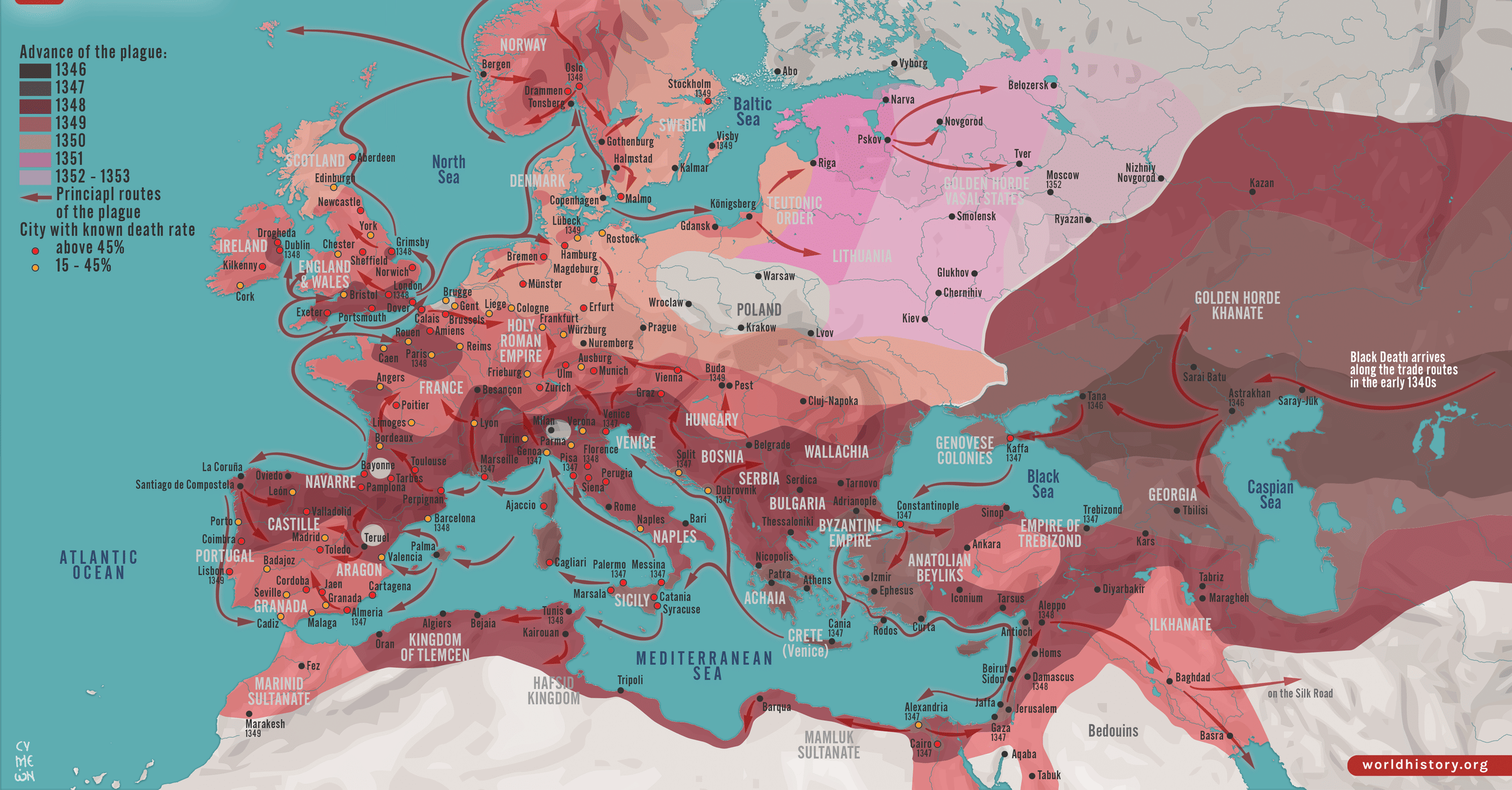
- Black Death cause-and-effect chain: Using relevant maps and articles from the list below, trace how the plague reached Europe starting with Mongol trade networks and how it led to the decline of feudalism.
- Africa comparison: The articles Great Zimbabwe, Hausaland, and Solomonic Descent in Ethiopian History match the curriculum's named examples, providing you with a perfect three-article group for a compact comparative lesson.
Browse the collection below to find materials that fit your teaching style, and feel free to adapt them to your students. Note that our articles are print-friendly, and there is a PDF export button on each article page.

The Song (aka Sung) dynasty ruled China from 960 to 1279 CE with the reign split into two periods: the Northern Song (960-1125 CE...

The Yuan Dynasty was established by the Mongols and ruled China from 1271 to 1368. Their first emperor was Kublai Khan (r. 1260-1294...

The Mongol Empire (1206-1368) was founded by Genghis Khan (r. 1206-1227), first Great Khan or 'universal ruler' of the Mongol peoples...

Kublai Khan (Qubilai-Qan) was the ruler of the Mongol Empire from 1260 to 1294. His accomplishments include establishing Mongol rule...

Marco Polo (1254-1324 CE) was a Venetian merchant and explorer who travelled to China and served the Mongol ruler Kublai Khan (l...

Confucianism is a philosophy developed in 6th-century BCE China, which is considered by some a secular-humanist belief system, by...

The Abbasids were an Arabic dynasty that initially ruled over most of the Islamic empire (save some western parts) after assuming...

The Ilkhanate (or Ilqanate, 1260-1335 CE) was that part of the Mongol Empire (1206-1368 CE) which mostly covered what is today Iran...

The Golden Horde was the European appanage of the Mongol Empire (1206-1368 CE). Begun in earnest by Batu Khan in 1227 CE, the territory...

Ibn Battuta (l. 1304-1368/69) was a Moroccan explorer from Tangier whose expeditions took him further than any other traveler of his...

Caliphate (“Khilafat” in Arabic) was a semi-religious political system of governance in Islam, in which the territories of the...

The Khmer empire was a powerful state in South East Asia, formed by people of the same name, lasting from 802 CE to 1431 CE. At its...

Angkor Wat is a temple complex in the province of Siem Reap, Cambodia originally dedicated to the Hindu god Vishnu in the 12th century...

Sukhothai or Sukhothai Historical Park was the former capital of the Kingdom of Sukhothai (1248-1438 CE), which was founded by King...

Hinduism is the oldest religion in the world, originating in Central Asia and the Indus Valley, still practiced in the present day...

Like many great civilisations, the origins of the Chola, a Tamil Hindu dynasty in southern India, are shrouded in the temporal...

The Maya are an indigenous people of Mexico and Central America who have continuously inhabited the lands comprising modern-day...

The Aztec Empire (c. 1345-1521) covered at its greatest extent most of northern Mesoamerica. Aztec warriors...

The Inca civilization flourished in ancient Peru between c. 1400 and 1533 CE. The Inca Empire eventually extended across western...
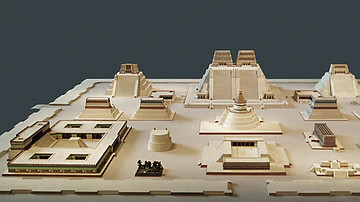
Tenochtitlan (also spelled Tenochtitlán), located on an island near the western shore of Lake Texcoco in central Mexico, was the...

The fall of Tenochtitlan on 13 August 1521 was a decisive moment in the dramatic collapse of the Aztec empire which had...
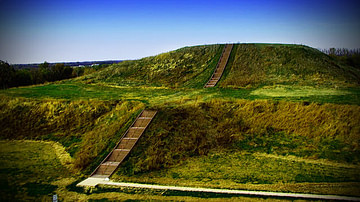
Cahokia is a modern-day historical park in Collinsville, Illinois, enclosing the site of the largest pre-Columbian city on the continent...

Great Zimbabwe is a ruined city near Masvingo, central Zimbabwe which was inhabited between c. 1100 to c. 1550 (flourishing c...

Hausaland, sometimes referred to as the Hausa Kingdoms, was a group of small independent city-states in northern central Africa between...

The Solomonic Dynasty ruled Ethiopia from the 1270s to the 1970s, and the 14th-century work, the Kebra Nagast...
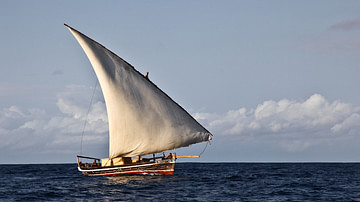
The Swahili Coast on the shores of East Africa was a region where Africans and Arabs mixed to create a unique identity from the...

The Byzantine Empire existed from 330 to 1453. It is often called the Eastern Roman Empire or simply Byzantium. The Byzantine...

The Holy Roman Empire officially lasted from 962 to 1806. It was one of Europe’s largest medieval and early modern states, but...

The Crusades were a series of military campaigns organised by popes and Christian western powers to take Jerusalem and the Holy Land...

Feudalism was the system in 10th-13th century European medieval societies where a social hierarchy was established based on local administrative...

The Black Death was a plague pandemic that devastated medieval Europe from 1347 to 1352. The Black Death killed an estimated 25-30...

The outbreak of plague in Europe between 1347-1352 – known as the Black Death – completely changed the world of...

The Hundred Years' War (1337-1453) was an intermittent conflict between England and France lasting 116 years. It began principally...
About the Author

Jan is the Founder & Chairman of World History Encyclopedia and is the organisation's Director of Design & Technology. He holds an MA War Studies from King's College, and he has worked in the field of history-related digital media since 2006.
Free for the World, Supported by You
World History Encyclopedia is a non-profit organization. Please support free history education for millions of learners worldwide for only $5 per month by becoming a member. Thank you!
World History Encyclopedia is a non-profit organization. Please support free history education for millions of learners worldwide for only $5 per month by becoming a member. Thank you!












.png)






.jpg)



 English (US) ·
  French (CA) ·