

 7 hours ago
10
7 hours ago
10
PROTECT YOUR DNA WITH QUANTUM TECHNOLOGY
Orgo-Life the new way to the future Advertising by AdpathwayAround 20,000 years ago, a cave was home to generations of owls that regularly coughed up pellets containing the bones of their prey. Those discarded bones later became an unexpected resource for another group of animals. According to a new study published in Royal Society Open Science, ancient bees used the empty tooth sockets in the fossilized jaws as tiny nests for their offspring.
The discovery marks the first known evidence that bees used animal bones as places to lay their eggs, revealing an unusual nesting strategy that had never been documented before.
Fossil Rich Cave Preserved an Ancient Ecosystem
The Caribbean island of Hispaniola, shared by Haiti and the Dominican Republic, contains thousands of limestone caves.
"In some areas, you'll find a different sinkhole every 100 meters," says Lazaro Viñola López, a postdoctoral researcher at the Field Museum in Chicago and the study's lead author.
The cave examined in this study had previously been identified by Juan Almonte Milan, curator of paleobiology at the Dominican Republic's Museo Nacional de Historia Natural, as an exceptionally rich fossil deposit. Viñola López and colleagues explored the site while he was completing his PhD research at the University of Florida and the Florida Museum of Natural History.
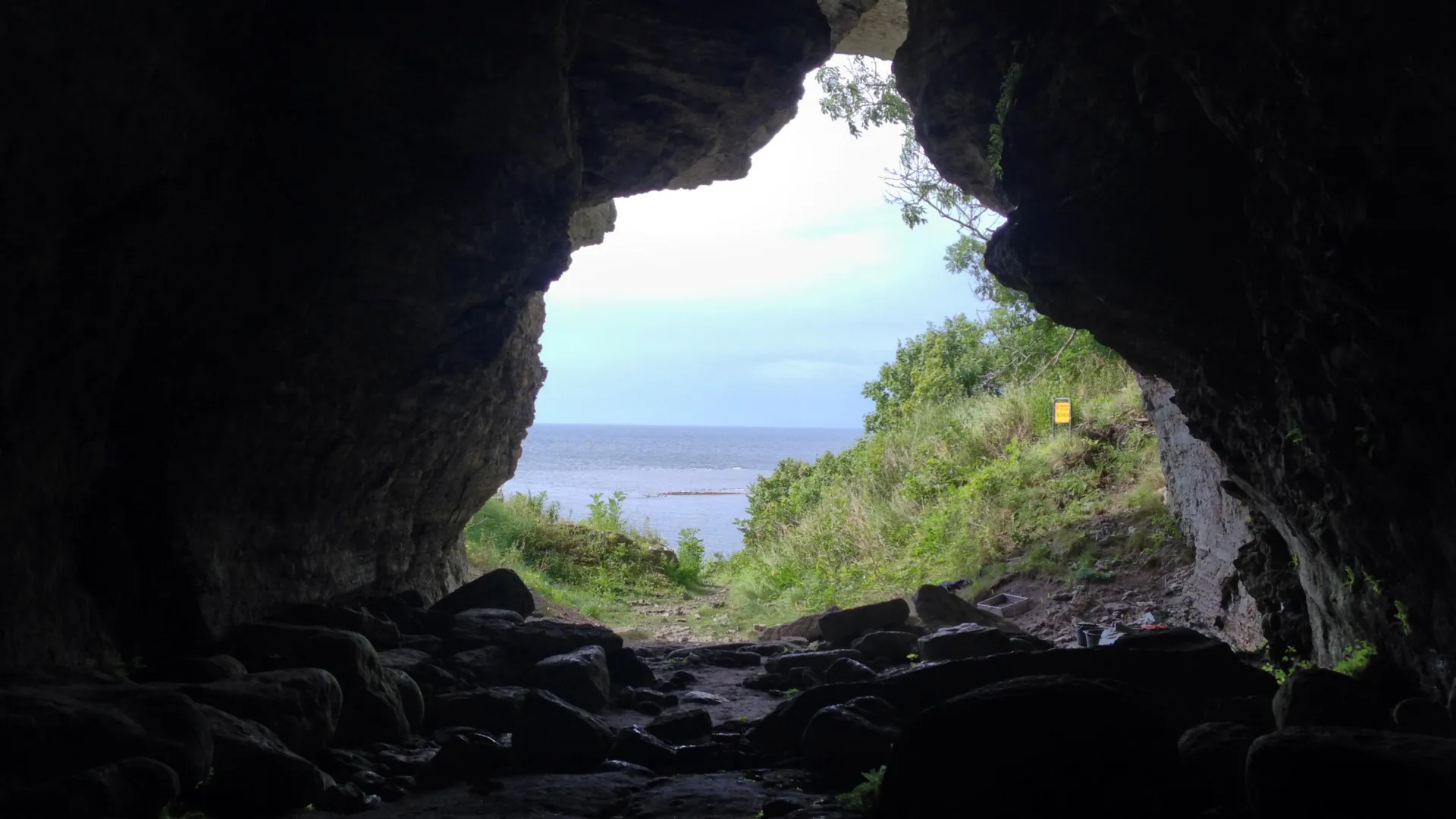
"The initial descent into the cave isn't too deep -- we would tie a rope to the side and then rappel down," says Viñola López. "If you go in at night, you see the eyes of the tarantulas that live inside. But once you walk down a ten-meter-long tunnel underground, you start finding the fossils."
The cave preserved multiple fossil layers separated by carbonate deposits that formed during ancient rainy periods. Most of the remains belonged to rodents, but researchers also recovered fossils from sloths, birds, reptiles, and many other animals, representing more than 50 species.
Together, the fossils revealed how the cave was used over a long period of time.
"We think that this was a cave where owls lived for many generations, maybe for hundreds or thousands of years," says Viñola López. "The owls would go out and hunt, and then come back to the cave and throw up pellets. We find fossils of the animals that they ate, fossils from the owls themselves, and even some turtles and crocodiles who might have fallen into the cave."
An Unusual Discovery Inside Tooth Sockets
Viñola López was mainly studying the mammal bones left behind by the owls when he noticed something unusual while cleaning the fossils.
Several jawbones contained smooth deposits inside their empty tooth sockets that looked different from naturally accumulated sediment.
"It was a smooth surface, and almost concave. That's not how sediment normally fills in, and I kept seeing it in multiple specimens. I was like, 'Okay, there's something weird here,'" he says. "It reminded me of the wasp nest."
The observation immediately reminded him of an earlier experience during an undergraduate fossil excavation in Montana. There, another paleontologist had shown him fossilized wasp cocoons, which are small mud chambers where developing larvae mature into adults. The structures closely resembled what he was seeing inside the fossil jaws.
Ancient Bee Nests Hidden in Bones
Although honey bees and paper wasps are well known for building large communal nests, most bee species actually live alone.
"But actually, most bees are solitary. They lay their eggs in small cavities, and they leave pollen for the larvae to eat," says Viñola López. "Some bee species burrow holes in wood or in the ground, or use empty structures for nests. Some species in Europe and Africa even build their nests in empty snail shells,"
To investigate further, the research team CT scanned the fossil bones. The scans produced detailed three dimensional images of the compacted material inside the tooth sockets without damaging either the fossils or the sediment.
The scans showed that the structures matched the mud nests built by some modern solitary bees. Some nests even preserved grains of ancient pollen that mother bees had stored as food for their developing offspring.
The researchers believe the bees mixed dirt with saliva to construct each tiny nest, which measured less than the size of a pencil eraser. Nesting inside the hollow bones of larger animals may also have helped shield their eggs from predators such as wasps.
A New Type of Fossil Nest
The nests contained no fossilized bees, which the researchers say is not surprising because the cave's warm, humid conditions are poor for preserving delicate insect bodies.
Without preserved bees, the scientists could not determine exactly which species built the nests. However, the nest structures themselves were distinct enough to receive their own taxonomic classification.
The fossil nests were named Osnidum almontei in honor of Juan Almonte Milan, who first identified the cave and has spent decades studying the region as one of Hispaniola's leading paleontologists.
"Since we didn't find any of the bees' bodies, it's possible that they belonged to a species that's still alive today -- there's very little known about the ecology of many of the bees on these islands," says Viñola López. "But we know that a lot of the animals whose bones are preserved in the cave are now extinct, so the bees that created these nests might be from a species that has died out."
The First Known Example of Bees Nesting in Bones
According to the researchers, this is the first documented case of bees using animal bones as nesting sites.
Viñola López believes several environmental factors likely made this behavior possible. The limestone landscape in the region has very little soil, making traditional underground nesting sites scarce. At the same time, generations of owls continually deposited bones throughout the cave, providing countless hollow tooth sockets that solitary bees could use.
"This discovery shows how weird bees can be -- they can surprise you. But it also shows that when you're looking at fossils, you have to be very careful," says Viñola López.
He notes that without his previous experience recognizing fossilized wasp nests, he might have simply cleaned away the unusual sediment during fossil preparation.
"Even if you're looking primarily for fossils of larger, vertebrate animals, you should keep an eye out for trace fossils that can tell you about invertebrates like insects. Knowing about insects can tell you a lot about a whole ecosystem, so you have to pay attention to that part of the story."














.png)






.jpg)



 English (US) ·
  French (CA) ·